Source IP65 Curved LED Profile for Decoration, Heat Sink, and Glass Wall
Compare 30 listings for IP65 Curved LED Profile from verified Chinese suppliers. Options include 6000 series aluminum, custom sizes, and anodized finishes suitable for decoration, heat sinks, and glass walls.
Key considerations
Products List


Ceiling Surface Mounted Curved Profile Rounded Square LED Linear Light
$270.80 - $275.80
MOQ: 1 Pieces


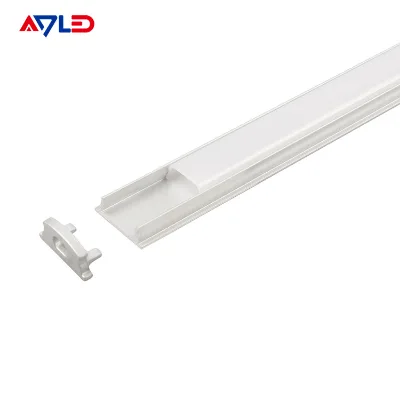

High Quality Profile Light Recessed LED Aluminum Profile for LED Strip Light
$9.43 - $10.35
MOQ: 10 Meters

16*16 Corner LED Profile for Cabinet Lighting Aluminum LED Profile Channel
$2.40 - $2.70
MOQ: 10 Meters


Comprehensive Sourcing Guide
Strategic Sourcing Guide for IP65 Curved LED Profiles
Navigating the global market for IP65 curved LED profiles requires a disciplined approach that balances aesthetic requirements with rigorous technical compliance. Buyers seeking these specialized lighting components must understand that the term "curved" often implies custom extrusion capabilities rather than off-the-shelf inventory. The following guide synthesizes available product attributes and industry standards to provide a framework for evaluating potential suppliers and defining precise procurement specifications.
Defining Technical Specifications and Material Grades
The foundation of a successful procurement strategy lies in accurately defining the technical parameters of the LED profile. In the context of the observed market data, the material composition is a primary differentiator. High-performance curved profiles are frequently manufactured using the 6000 Series aluminum alloy, which offers an optimal balance of strength, formability, and corrosion resistance. While some listings mention the 2000 Series, the 6000 Series is generally preferred for architectural and high-end decorative applications due to its superior anodizing characteristics.
When sourcing curved profiles, the diameter and thickness specifications are critical. Market observations indicate that standard diameters can range from 100mm to 320mm, with custom options available for specialized architectural curves. The wall thickness is often customizable, allowing buyers to tailor the structural integrity to the specific load-bearing requirements of the installation. For curved applications, the extrusion process must be capable of maintaining consistent wall thickness throughout the bend, a capability that is often tied to the "Customized" attribute observed in supplier listings.
The finishing process is equally vital for IP65-rated products. The "Anodized" finish is a standard requirement to ensure surface durability and UV resistance. Buyers should verify that the anodizing process is compatible with the specific aluminum grade selected. Additionally, the profile shape is not limited to simple curves; the market includes T-Profile and Square variations that can be adapted for curved installations. The ability to perform secondary processing services such as cutting, drilling, punching, and bending is essential for integrating these profiles into complex lighting designs.
Compliance and Certification Verification
For any lighting component intended for commercial or outdoor use, verifying compliance with international standards is non-negotiable. The IP65 rating itself implies a specific level of ingress protection against dust and water jets, which must be validated through independent testing. While specific test reports are not universally listed in general product summaries, buyers must demand evidence of this rating before finalizing orders.
Certification checks should extend beyond the IP rating to include electrical safety and environmental standards. The observed market data highlights several key certifications that reputable suppliers should possess. ISO certification is a baseline indicator of quality management systems, while CE marking is mandatory for products entering the European market. Furthermore, RoHS compliance is critical for ensuring the absence of hazardous substances, a requirement that is frequently cited in supplier attributes.
For lighting products specifically, additional certifications such as EMC (Electromagnetic Compatibility) and SAA (Safety Approval Authority) are often relevant depending on the target region. The presence of these certifications in supplier profiles suggests a commitment to meeting rigorous safety standards. Buyers should also look for adherence to specific quality standards, such as GB 5237-2008, which governs the aluminum and aluminum alloy architectural profiles in China. Verifying that a supplier's production aligns with these standards ensures that the profiles meet dimensional tolerances and mechanical properties required for long-term performance.
Cost Drivers and Pricing Structures
Understanding the cost drivers for IP65 curved LED profiles is essential for budgeting and negotiation. The price range in the observed market is vast, spanning from $0.37 to $3000 per unit or batch. This significant variance is driven by several factors, including the complexity of the curve, the volume of the order, and the specific finishing requirements.
The Minimum Order Quantity (MOQ) is a primary cost determinant. Listings indicate an MOQ range from 1 to 1000 units. For buyers requiring custom curved profiles, the MOQ is likely to be higher due to the setup costs associated with custom extrusion dies. The "Customized" attribute for color and shape often incurs additional charges, as does the requirement for specific packaging solutions like bubble wrap or protective film within cartons.
Lead times also influence the total cost of ownership. A typical delivery time observed in the market is 22-30 days. Rush orders or expedited shipping will inevitably increase the unit cost. Buyers should factor in the potential for price fluctuations based on the raw material market for aluminum, as the 6000 Series alloy prices are subject to global commodity trends. Additionally, the inclusion of processing services such as cutting and drilling can add to the final price, though these services are often necessary for the final installation of curved profiles.
Typical Applications and Design Integration
The versatility of IP65 curved LED profiles makes them suitable for a wide array of applications, ranging from architectural lighting to decorative accents. The observed product attributes list applications such as decoration, heat sinks, door and window systems, and glass walls. This indicates that these profiles are not limited to simple linear lighting but are integral to complex architectural designs.
In commercial settings, these profiles are often used to create seamless lighting transitions in curved ceilings, staircases, and retail displays. The "Modern" and "European" style attributes suggest that these products are designed to complement contemporary interior design trends. The ability to customize the color, including options like clear, semi-clear, opal diffuser, and black, allows designers to match the profile to the ambient lighting requirements and the surrounding decor.
For outdoor applications, the IP65 rating is crucial. These profiles are frequently employed in facade lighting, landscape illumination, and signage where exposure to the elements is a concern. The "Heat Sink" application attribute highlights the profile's role in thermal management, ensuring that the LED strips housed within the profile do not overheat, which is vital for maintaining light output and lifespan. The "Glass Wall" application further underscores their use in modern building envelopes where aesthetics and functionality must coexist.
Supplier Evaluation and Origin Analysis
Evaluating suppliers requires a careful review of their origin, capabilities, and quality assurance processes. The majority of the observed product data indicates that these profiles originate from China, with specific mentions of Qingyuan and Shenzhen as production hubs. These regions are known for their robust aluminum extrusion industries, but buyers must distinguish between trading companies and actual manufacturers.
Key indicators of a reliable supplier include the presence of a "China Top 10 Assured Quality Supply" honor and a commitment to "100% QC Testing." These attributes suggest a supplier that prioritizes quality control and has a reputation for reliability. Buyers should also verify the supplier's ability to provide OEM services, as the "Brand: Haomei or OEM" attribute indicates flexibility in branding and manufacturing.
When evaluating a supplier, buyers should request samples to verify the "Anodized" finish and the accuracy of the curve. The "Protect Film with Carton" and "Bubble" packing options are standard, but for high-value orders, customized packing as per request is a sign of a supplier willing to accommodate specific logistical needs. The "Quality Standard: GB 5237-2008" and "Standard: DIN" references provide a benchmark for the expected quality, and suppliers should be able to provide documentation proving compliance with these standards.
Quality Control and Long-Term Procurement Considerations
Ensuring the long-term success of a procurement project requires a robust quality control (QC) strategy. The "100% QC Testing" attribute observed in the market is a strong starting point, but buyers should define their own acceptance criteria. This includes verifying the IP65 rating through independent testing, checking the dimensional accuracy of the curve, and inspecting the surface finish for defects.
The "Customized" nature of many profiles means that the production process is less standardized, increasing the risk of variation. Buyers should establish clear communication channels with the supplier regarding the "Finished" state and the "Processing Service" capabilities. Regular inspections during the production phase, particularly for custom orders, can help mitigate the risk of receiving non-conforming products.
Long-term procurement considerations also involve the scalability of the supply chain. The "Delivery Time: 22-30 Days" suggests a lead time that must be factored into project schedules. For ongoing projects, buyers should negotiate framework agreements that lock in pricing and ensure consistent supply. The "Standard: 1.0-3.0m optonal" and "Standard: 6000 series" attributes indicate that while customization is available, there are standard options that may offer better lead times and lower costs for repeat orders.
Summary of Key Sourcing Parameters
To facilitate a streamlined comparison of potential suppliers, the following table summarizes the critical parameters derived from the observed market data. This table serves as a checklist for buyers to ensure all essential requirements are met during the sourcing process.
| Parameter | Observed Range / Options | Verification Requirement |
|---|---|---|
| Material Grade | 2000 Series, 6000 Series | Confirm 6000 Series for architectural use |
| Certifications | ISO, CE, RoHS, EMC, SAA | Request valid certificates for target market |
| IP Rating | IP65 (Implied by keyword) | Demand independent test reports |
| Shape | Square, T-Profile, Curved | Verify custom extrusion capability |
| Finish | Anodized | Inspect sample for uniformity and color |
| Color Options | Customized, Clear, Opal, Black | Confirm color matching accuracy |
| Packing | Film with Carton, Bubble, Custom | Ensure protection for curved geometry |
| Origin | China (Qingyuan, Shenzhen) | Verify factory location and capacity |
| Lead Time | 22-30 Days | Align with project schedule |
| MOQ | 1-1000 Units | Negotiate based on order volume |
By adhering to these guidelines and leveraging the observed data points, buyers can navigate the complexities of sourcing IP65 curved LED profiles with confidence. The focus on verified standards, material quality, and supplier transparency ensures that the final procurement meets both immediate project needs and long-term performance expectations.
FAQs
What material grades are used for IP65 curved LED profiles?
Most profiles use 6000 Series aluminum alloy for superior strength and anodizing characteristics. Some listings mention 2000 Series, but 6000 Series is preferred for architectural applications requiring high durability and corrosion resistance.
Which certifications should I verify for these lighting profiles?
Reputable suppliers typically hold ISO, CE, RoHS, EMC, and SAA certifications. Buyers must demand valid certificates for their target market to ensure compliance with electrical safety and environmental standards.
How can I customize the shape and finish of the profile?
Customization is available for shape, color, and finish options like anodized surfaces. Suppliers offer secondary processing services such as cutting, drilling, and bending to adapt standard square or T-profiles for specific curved designs.
What is the typical lead time for custom orders?
The standard delivery time ranges from 22 to 30 days for most orders. Rush orders may incur higher costs, and lead times depend on the complexity of the custom extrusion and current raw material availability.
Can I find suppliers with low minimum order quantities?
Yes, the observed market shows Minimum Order Quantities ranging from 1 to 1000 units. Lower MOQs are often available for standard items, while custom curved profiles may require higher volumes due to setup costs.
Where are the primary manufacturing locations for these profiles?
Most products originate from China, specifically hubs like Qingyuan and Shenzhen. These regions host robust aluminum extrusion industries capable of producing both standard and custom architectural lighting components.