Source Flexible Aluminum Cylinder Covers for engines, pumps, and machinery
Explore 30 listings for Flexible Aluminum Cylinder Covers designed for engines, pumps, and machinery. Buyers can compare specifications, certifications, and customization options to find suitable industrial components.
Key considerations
Products List


$30.00 - $1000.00
MOQ: 1 Pieces


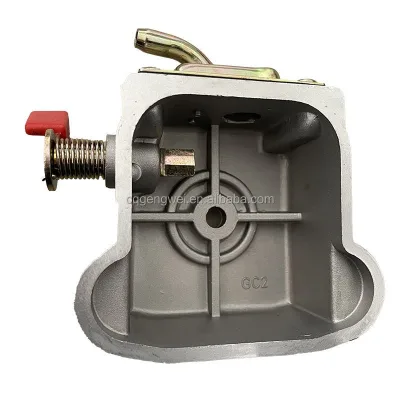


Comprehensive Sourcing Guide
Strategic Sourcing Guide for Flexible Aluminum Cylinder Covers
Understanding Product Definitions and Core Specifications
When sourcing Flexible Aluminum Cylinder Covers, buyers must first distinguish between the specific product attributes observed in the market and generic industry assumptions. The core keyword often refers to protective assemblies designed to shield mechanical components from environmental contaminants while accommodating thermal expansion and mechanical movement. In the current supply landscape, these products are frequently categorized under "Cutting Tools" or "Standard Components" depending on their specific application context, though the primary function remains protective.
The material composition is a critical differentiator. While the core keyword specifies "aluminum," the observed data indicates that "Aluminum" is a verified material attribute for specific listings, such as piston-related components. However, buyers must verify if the specific listing they are evaluating matches this material profile, as other variations may utilize different alloys or composite materials. The physical form factor is often described as a "Round Bellow Cover" or "Canvas Duct Connector," suggesting a flexible, accordion-style geometry. This design allows the cover to expand and contract, which is essential for applications involving reciprocating motion or thermal cycling.
Key technical specifications that define these units include temperature resistance and dimensional flexibility. Observed data points to a temperature operating range of -60 to 300 degrees Celsius, a critical parameter for high-performance industrial environments. The diameter is frequently listed as "Customized," indicating that off-the-shelf sizing may not be available for all requirements. Instead, buyers should expect to engage in a customization process where the diameter is tailored to the specific cylinder bore or shaft size. The color options observed include Black, Grey, and Yellow, which may serve as visual indicators for different material grades or temperature ratings, though this should be confirmed with the specific supplier.
Compliance, Certification, and Regulatory Standards
Navigating the compliance landscape for Flexible Aluminum Cylinder Covers requires a rigorous verification of certification claims. The market data presents a mix of certifications, including CE, ISO 9001, and GS. It is important to note that certification status can vary significantly between individual listings. Some products explicitly list "CE, ISO 9001" as a standard attribute, while others may show "Customized" certification, implying that the specific batch or order may require a separate verification process.
Buyers should not assume that every product labeled as a flexible cylinder cover automatically possesses these certifications. The presence of "ISO 9001" in the data suggests a quality management system is in place for the manufacturer, but this does not guarantee that the specific product unit has passed a third-party audit for that specific standard. Similarly, the "CE" mark indicates conformity with health, safety, and environmental protection standards for products sold within the European Economic Area, but its validity must be checked against the specific product documentation provided by the supplier.
In addition to product-specific certifications, the manufacturing origin plays a role in regulatory compliance. The data indicates that products originate from regions such as Zhejiang and Ningbo in China. Sourcing from these locations requires careful attention to export compliance and the specific standards applicable in the destination market. For instance, if the end-user is in the United States, the "GS" certification (Geprüfte Sicherheit) observed in some listings may be less relevant than UL or ANSI standards, which are not explicitly mentioned in the provided data. Therefore, buyers must verify that the supplier can provide documentation proving compliance with the specific regulatory framework of the importing country, rather than relying solely on the generic certification tags found in the product listing.
Cost Drivers and Pricing Dynamics
The pricing structure for Flexible Aluminum Cylinder Covers is highly variable, influenced by the degree of customization and the complexity of the manufacturing process. The observed price range in the market spans from $0.20 to $2,101.00 USD. This wide disparity suggests that the cost is not driven by a single factor but by a combination of material volume, customization level, and order quantity.
At the lower end of the spectrum, prices likely correspond to standard, non-customized units or smaller components where the aluminum content is minimal. Conversely, the higher price points reflect fully customized solutions, potentially involving complex bellow designs, specialized alloys, or large-scale production runs that require significant engineering input. The "Customized" attribute is a primary cost driver; when a buyer requests a specific diameter or temperature rating that deviates from standard offerings, the unit price will increase to cover the tooling and setup costs.
Order quantity also plays a pivotal role in the final cost. The observed Minimum Order Quantity (MOQ) ranges from 1 to 2,000 units. Buyers purchasing small quantities, such as single units or samples, will face a higher per-unit cost due to the fixed costs of setup and logistics. The data indicates that "Minimal Qty" can be as low as 1, allowing for prototyping, but this comes at a premium. As the order volume increases toward the 2,000-unit mark, economies of scale typically reduce the per-unit cost. However, buyers must balance this against inventory holding costs and cash flow implications.
Additional cost factors include packaging and shipping. The data lists various packaging methods, such as "Wooden Box," "Carton Box," "Anti-Tarnish Paper," and "by Container." Premium packaging options like wooden boxes or anti-tarnish paper add to the overall cost but are necessary for protecting the aluminum components from corrosion and physical damage during transit. Furthermore, the "Delivery Time" is listed as a variable attribute, implying that expedited shipping or specific lead time requirements could incur additional charges. Buyers should request a detailed breakdown of costs, including material, labor, packaging, and logistics, to understand the true cost drivers for their specific procurement needs.
Typical Applications and Operational Environments
Flexible Aluminum Cylinder Covers are designed for a diverse range of industrial applications where protection against contaminants and thermal management are critical. The observed product attributes, such as "Round Bellow Cover" and "Canvas Duct Connector," suggest use in environments where mechanical movement must be sealed from dust, debris, and moisture. These components are often integral to machinery involving reciprocating motion, such as hydraulic cylinders, pneumatic actuators, and engine components.
The temperature range of -60 to 300 degrees Celsius indicates suitability for extreme environments. This makes them ideal for applications in the automotive industry, where engine components experience significant thermal cycling, as well as in heavy machinery used in mining or construction. The "Piston" and "Motorcycle Engine" attributes found in the data further confirm their relevance to internal combustion engine applications, where they serve to protect moving parts from oil, fuel, and combustion byproducts.
In addition to mechanical protection, these covers often serve as thermal barriers. The aluminum material provides good thermal conductivity, which can help dissipate heat in certain configurations, while the flexible design allows for expansion without compromising the seal. The "OEM" (Original Equipment Manufacturer) and "Customized" attributes suggest that these components are frequently used in replacement parts for existing machinery or as integral parts of new equipment designs. The "Standard Component" designation implies that some variants are compatible with a wide range of off-the-shelf machinery, reducing the need for custom engineering in standard applications.
Buyers should also consider the specific operational conditions of their machinery. For instance, if the application involves high-speed movement, the flexibility and durability of the bellow cover are paramount. If the environment is particularly corrosive, the aluminum material and any surface treatments (such as the observed "Anti-Tarnish Paper" packaging) become critical factors in the selection process. The "Type: Cutting Tool" classification in some listings may indicate a secondary use or a specific variant designed for machining operations, though this should be verified against the actual product specifications.
Supplier Evaluation and Business Model Analysis
Evaluating suppliers for Flexible Aluminum Cylinder Covers requires a deep dive into their business model, location, and capacity. The data indicates that the majority of suppliers operate as "Manufacture" entities, suggesting they have direct control over the production process. This is a significant advantage for buyers seeking customization, as manufacturers can often adjust their production lines to meet specific diameter or material requirements more efficiently than trading companies.
The geographic origin of the products is predominantly China, with specific mentions of Zhejiang and Ningbo. These regions are known for their robust manufacturing ecosystems, particularly in the automotive and machinery sectors. However, buyers must verify the specific capabilities of the supplier within these regions. The "Business Type: Manufacture" attribute should be cross-referenced with the supplier's actual facility size and equipment to ensure they can handle the required order volume and quality standards.
Sample availability is another critical factor in supplier evaluation. The data notes that samples can be obtained by "Contact with Supplier," indicating that the process is not fully automated and requires direct communication. This interaction provides an opportunity for buyers to assess the supplier's responsiveness and technical expertise. Buyers should request samples to verify the material quality, dimensional accuracy, and temperature resistance claims before committing to a larger order.
The "OEM: Yes" attribute suggests that suppliers are capable of producing branded or custom-labeled products. This is essential for buyers who need to integrate these components into their own product lines or maintain specific branding standards. However, buyers must clarify the terms of OEM production, including intellectual property rights and the minimum order quantities required for custom branding.
Quality Control and Long-Term Procurement Considerations
Ensuring consistent quality in Flexible Aluminum Cylinder Covers requires a robust quality control strategy. The observed "Condition: New" attribute confirms that products are typically sold as new, but this does not guarantee the absence of manufacturing defects. Buyers should implement a multi-stage quality control process, starting with pre-production sample approval and continuing through final inspection before shipment.
The "Customized" nature of many products means that standard quality checks may not be sufficient. Buyers must define clear acceptance criteria for dimensions, material composition, and temperature resistance. The "Diameter: Customized" specification highlights the need for precise measurement tools and verification protocols to ensure that the custom dimensions meet the design requirements. Additionally, the "Temperature: -60-300c" range should be validated through independent testing or by reviewing the supplier's test reports.
Packaging plays a crucial role in maintaining product quality during transit. The variety of packaging options, from "Carton Box" to "Wooden Box" and "Anti-Tarnish Paper," indicates that different levels of protection are available. Buyers should select packaging that matches the sensitivity of the product and the duration of the shipping process. For aluminum components, protection against moisture and physical damage is essential to prevent corrosion and deformation.
Long-term procurement considerations involve building a sustainable relationship with the supplier. The "Delivery Time" attribute is listed as a variable, suggesting that lead times can fluctuate based on order volume and production schedules. Buyers should negotiate clear lead time commitments and establish contingency plans for supply chain disruptions. Regular communication and periodic quality audits can help maintain high standards and ensure that the supplier remains aligned with the buyer's evolving needs.
Furthermore, the "Standard Component" and "OEM" attributes suggest that buyers should consider the long-term availability of these parts. Customized components may be difficult to source if the supplier discontinues the product line. Buyers should ensure that the supplier has a plan for maintaining production capacity and inventory for critical components, especially if they are integral to ongoing operations. By focusing on these long-term factors, buyers can secure a reliable supply chain for their flexible aluminum cylinder cover needs.
FAQs
What certifications are available for Flexible Aluminum Cylinder Covers?
Products may feature CE, ISO 9001, and GS certifications depending on the specific listing. Some items show customized certification status, requiring direct verification with the supplier to confirm the batch meets your regulatory needs.
How is the diameter specification handled for these covers?
The diameter is typically listed as customized to fit specific cylinder bores or shaft sizes. Buyers should expect to engage in a customization process rather than relying on standard off-the-shelf sizing for these flexible units.
Can I find Flexible Aluminum Cylinder Covers with a temperature range of -60 to 300 degrees Celsius?
Yes, observed products support an operating temperature range from -60 to 300 degrees Celsius. This specification makes them suitable for extreme industrial environments involving significant thermal cycling or high-heat applications.
What is the minimum order quantity for these components?
The minimum order quantity ranges from 1 to 2000 units depending on the supplier and customization level. Single unit samples are available but typically carry a higher per-unit cost compared to bulk orders.
Which packaging options are used for shipping Flexible Aluminum Cylinder Covers?
Packaging varies by listing and includes wooden boxes, carton boxes, anti-tarnish paper, or container shipping. Premium options like wooden boxes help protect the aluminum components from corrosion and physical damage during transit.
Where are these Flexible Aluminum Cylinder Covers manufactured?
Products originate from manufacturing regions in China, specifically Zhejiang and Ningbo. Buyers should verify the specific supplier location to ensure compliance with export regulations and delivery timelines for their destination market.
Can suppliers provide custom logo printing for these covers?
The observed product attributes indicate that logo printing is generally without logo printing by default. However, customization is available, so buyers must contact the supplier directly to arrange specific branding or labeling requirements.