Source Flexible Air Conditioner Conveyor for Power Plants
Find 30 verified options for the Flexible Air Conditioner Conveyor designed for diverse industrial needs. Buyers can compare specifications, customization levels, and pricing for applications in power plants, mining transport, and grain transport; compare the available evidence and request quotations based on your requirements.
Key considerations
Products List


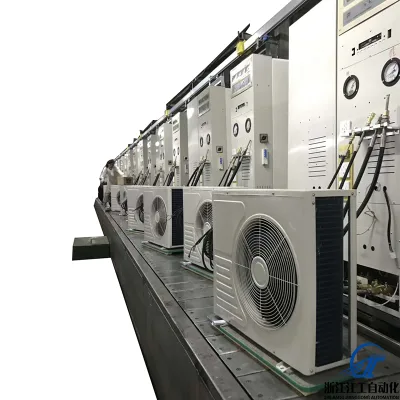
Assembly Conveyor System for Air conditioner, Air Conditioner Conveyor System
$100000.00 - $600000.00
MOQ: 1 Pieces


Factory Price Automatic Assembly Conveyor Belt Line for Air Conditioner
$4000.00 - $10000.00
MOQ: 1 Pieces




Hot Selling Vertical Conveyor Belt / Vertical Conveyor
$320.00 - $3450.00
MOQ: 1 Piece
Qingdao Zhongkang Printing and Packaging Machinery Co., Ltd.


Flexible Air Conditioner Condensing Unit for Customized Refrigeration Needs
$600.00 - $1500.00
MOQ: 1 Pieces

Robust External Motor Conveyor for Efficient Material Handling Solutions
$200000.00 - $300000.00
MOQ: 1 Pieces
Comprehensive Sourcing Guide
Flexible Air Conditioner Conveyor Sourcing Guide
Sourcing a Flexible Air Conditioner Conveyor requires aligning specific material properties with the rigorous demands of HVAC assembly lines. Buyers must prioritize systems that offer high efficiency and automatic operation to maintain throughput in modern manufacturing environments. The observed market signals indicate a strong availability of customized solutions, particularly for refrigerator and washing machine assembly lines, which often share similar logistical requirements with air conditioner production. This overlap suggests that suppliers experienced in general appliance conveyance can effectively adapt their systems for AC units, provided they understand the unique spatial and thermal constraints of the final product.
Procurement teams should focus on verifying the structural integrity and adaptability of the conveyor system before committing to a purchase. The core keyword implies a need for flexibility, which in industrial terms often translates to modular designs or adjustable configurations rather than literal bending belts. Buyers must ensure that the selected system supports the specific weight and dimensions of air conditioner components without compromising stability. Furthermore, the ability to customize the conveyor according to the client’s layout is a critical factor, as factory footprints vary significantly and rarely accommodate off-the-shelf standard equipment without modification.
Product Scope and Observed Listing Signals
The current market landscape for industrial conveyors reveals a diverse range of structural types, including belt, roller, and spiral mesh configurations, which may be adapted for air conditioner assembly. Observed listings highlight materials such as stainless steel and carbon steel, with specific belt materials like SS304 or SS201 available to meet hygiene and durability standards. These material choices are essential for environments where cleanliness and resistance to corrosion are paramount, ensuring that the conveyor does not contaminate sensitive HVAC components during the assembly process. The presence of fire-resistant and heat-resistant features in some listings further indicates that suppliers are addressing potential thermal hazards associated with testing or soldering stages in AC manufacturing.
Customization is a dominant theme in the observed data, with many suppliers offering tailored solutions for specific assembly line needs. Buyers will find that models such as ACL, NCAC, and WHXJTC-DF represent different structural approaches, ranging from conveyor systems to roller conveyors, each suited for different stages of the production workflow. The availability of suspension lines and customized packing options suggests a mature supply chain capable of handling complex logistical requirements. However, buyers must carefully distinguish between generic conveyor capabilities and those specifically optimized for the delicate nature of air conditioner units, ensuring that the chosen system prevents damage to fragile casings or internal coils.
Technical Specifications to Verify
When evaluating technical specifications, buyers must scrutinize the driven type and automatic grade to ensure seamless integration with existing factory automation. Most observed systems are electrically driven and feature automatic grades, which are standard for high-volume production lines. It is crucial to verify the chain pitch options, which range from 25.4mm to 101.6mm, as this dimension directly impacts the stability and speed of the conveyor when handling varying weights of air conditioner components. Additionally, the width of the conveyor, often customizable, must be precisely matched to the dimensions of the AC units to prevent tipping or misalignment during transport through the assembly line.
Core components and processing technologies also play a vital role in the long-term performance of the conveyor system. Buyers should inquire about the core components, such as plate belts, and the processing technology used, such as stamping, to assess the durability of the mechanical parts. The warranty periods for core components, observed to be around three months in some listings, require careful consideration, as this may indicate a need for more robust maintenance plans or extended warranty negotiations. Furthermore, the diameter of piercing rods and plate thicknesses are specific technical details that influence the load-bearing capacity and should be verified against the maximum weight of the air conditioner units being processed.
Compliance and Safety Documentation
Compliance with international standards is a non-negotiable aspect of sourcing industrial conveyors, particularly for equipment used in sensitive manufacturing environments. Buyers must verify that the supplier holds valid CE and ISO certifications, which serve as baseline indicators of adherence to safety and quality management principles. While specific standard numbers like ISO 9001:2015 are mentioned in background contexts, buyers should request current certification documents to ensure that the supplier’s quality management systems are actively maintained and relevant to the production of conveyor systems. This verification process helps mitigate risks associated with non-compliant equipment that could lead to production halts or safety incidents.
Safety features and material certifications are equally important when dealing with conveyors that may interact with various industrial chemicals or high-temperature processes. The observed material features, including fire-resistant, heat-resistant, and oil-resistant properties, suggest that some systems are designed for harsh environments, but buyers must confirm that these features meet specific regulatory requirements for their facility. Documentation should clearly state the material composition and any relevant safety testing results, ensuring that the conveyor does not pose a hazard to workers or the products being assembled. Buyers should also inquire about the standard packaging, such as sea-worthy or wooden case packaging, to ensure that the equipment arrives in compliance with international shipping regulations and remains undamaged.
Cost Drivers and Commercial Terms
Understanding the cost drivers behind flexible air conditioner conveyors is essential for accurate budgeting and total cost of ownership analysis. The primary cost factors include the customization level, material selection, and the complexity of the conveyor structure. Customized solutions, which are widely available, typically command higher prices due to the engineering and manufacturing effort required to tailor the system to specific client layouts. Buyers should also consider the impact of material choices, such as stainless steel versus carbon steel, on the overall cost, as premium materials offer greater durability but at a higher initial investment. Additionally, the inclusion of advanced features like automatic operation and high-efficiency designs can influence the price point significantly.
Commercial terms and delivery timelines are critical components of the procurement process that can impact project schedules and cash flow. Observed delivery times of approximately 30 days after payment provide a benchmark for planning, but buyers must confirm these timelines with the supplier, as customization can extend lead times. The minimum order quantity (MOQ) ranges from 1 to 100 units, offering flexibility for both small-scale trials and large-scale deployments. Buyers should also negotiate warranty terms, noting that while some listings offer one-year warranties, core component warranties may be shorter, requiring careful attention to after-sales support and maintenance costs.
Supplier Qualification and Quality Control
Supplier qualification is a pivotal step in ensuring the reliability and performance of the purchased conveyor system. Buyers should prioritize suppliers with a proven track record in manufacturing customized industrial conveyors, particularly those with experience in appliance assembly lines. The observed origin of products from China, specifically Jiangsu, indicates a concentration of manufacturing expertise in this region, but buyers must conduct thorough due diligence to verify the supplier’s production capabilities and quality control processes. Requesting references from previous clients in similar industries can provide valuable insights into the supplier’s ability to deliver on time and meet technical specifications.
Quality control measures should be integrated into the procurement process to minimize the risk of receiving defective or non-compliant equipment. Buyers should inquire about the supplier’s internal quality assurance protocols, including testing procedures for material strength, electrical safety, and operational efficiency. The availability of samples, although often not free, can be a useful tool for evaluating the conveyor’s performance before committing to a full order. Additionally, buyers should establish clear acceptance criteria and inspection protocols for the delivered equipment, ensuring that all technical specifications and customization requirements are met before final payment is released.
Long-Term Procurement Checks
Long-term procurement checks are essential for maintaining the efficiency and reliability of the Flexible Air Conditioner Conveyor over its operational lifespan. Buyers should establish a comprehensive maintenance plan that includes regular inspections of core components, such as plate belts and chains, to identify wear and tear before it leads to system failure. The observed warranty periods for core components, which may be as short as three months, highlight the importance of proactive maintenance and the potential need for spare parts inventory. Buyers should negotiate service agreements with the supplier to ensure timely access to replacement parts and technical support, minimizing downtime during critical production periods.
Continuous evaluation of the conveyor system’s performance is also crucial for identifying opportunities for optimization and improvement. Buyers should monitor key performance indicators, such as throughput rates, energy consumption, and maintenance frequency, to assess the system’s efficiency over time. Feedback from operational staff can provide valuable insights into any usability issues or bottlenecks that may not be apparent during the initial installation phase. By maintaining open communication with the supplier and staying informed about advancements in conveyor technology, buyers can ensure that their investment continues to deliver value and supports the evolving needs of their air conditioner assembly operations.
FAQs
Can the Flexible Air Conditioner Conveyor be customized to our factory layout?
Yes, customization is available. These conveyor systems are designed and built according to the client's factory layout, including line length, width, height, and turning requirements. Buyers should share their production floor drawings, product dimensions, and desired throughput so the manufacturer can propose a suitable configuration, confirm integration points, and quote accurately before production begins.
What materials are used in the Flexible Air Conditioner Conveyor construction?
Stainless steel is the primary construction material, and belt options commonly include SS304, SS201, or carbon steel. Stainless steel offers corrosion resistance and easy cleaning, while carbon steel can reduce cost for less demanding sections. Fire-resistant and heat-resistant material features are also available, which matters for air conditioner lines near heat processes or coating stations.
How long does delivery take for a customized conveyor system?
Delivery time is typically 30 days after payment for listed systems. Because configurations are customized to each client's layout, complex projects with unusual widths, multiple conveyors, or special structures may require additional time. Confirm the exact schedule with the manufacturer at quotation stage, and factor in ocean transit when planning your installation date.
What certifications and warranty do these conveyor systems carry?
Listed systems carry CE and ISO certification, and new units come with a one-year warranty on the equipment plus a three-month warranty on core components such as the plate belt. Always verify that the certificates cover your destination market's requirements and request warranty terms in writing, including what conditions could void coverage during installation and commissioning.
Which packaging is used for shipping the Flexible Air Conditioner Conveyor?
Packaging options include sea-worthy standard packaging, wooden cases, wooden boxes, and wooden packing, and packing can itself be customized. Wooden cases protect sections and components during long ocean freight, while sea-worthy packing suits larger assembled frames. State your destination port and handling conditions so the manufacturer selects packing that prevents damage to rollers, belts, and control parts.
What is the minimum order quantity and pricing for these conveyors?
Minimum order quantity starts at one unit for many listings, which suits pilot lines or single-machine replacements. Pricing varies widely with length, width, structure, and customization level, so it is quoted per project rather than as a fixed catalog price. Provide your layout and specifications to receive an accurate quotation instead of comparing list prices alone.
Can the conveyor be customized to fit our factory layout and process?
Yes, customization is available and systems are built according to the client's layout. Manufacturers can adjust width, length, structure, and packing to match your production plan, and customized assembly lines for related appliances such as refrigerators, washing machines, and televisions are offered. Provide drawings, product dimensions, and required throughput so the factory can design the line and quote accurately.
Which industries and applications use these flexible air conditioner conveyors?
These conveyor systems serve appliance assembly, including air conditioner, refrigerator, washing machine, and TV assembly lines, and similar equipment is applied in power plants, mining transport, grain transport, and the chemical industry. Automatic, electric-driven designs with heat-resistant, oil-resistant, and fire-resistant belt materials fit demanding environments. Match the structure, roller or belt type, and material features to your products and line speed.