Source Flexible Nylon Plastic Rod for gears, pulleys, and valves
Find 30 listings for Flexible Nylon Plastic Rod suitable for industrial applications. Buyers can compare material properties, dimensions, and customization options from verified Chinese manufacturers to select the right component for gears, pulleys, or valve seats.
Key considerations
Products List







Comprehensive Sourcing Guide
Sourcing Strategy for Flexible Nylon Plastic Rods in B2B Markets
Understanding Material Variants and Technical Profiles
When sourcing flexible nylon plastic rods, buyers must first navigate the distinct material profiles available in the current market. The term "nylon" often refers broadly to polyamides, yet specific product listings reveal a divergence in material composition that directly impacts performance. One primary category observed involves products explicitly identified as MC nylon Pa6. This material variant is characterized by a tensile strength ranging between 30 and 40 MPa. For applications requiring dimensional stability, the contraction percentage for this specific nylon type falls within the 1.0% to 2.5% range, with water absorption rates typically observed between 0.1% and 0.3%. These figures are critical for engineers designing parts that must maintain tolerance under varying humidity conditions.
In contrast, other listings in the same product category may reference generic "PA" (Polyamide) or even "PP" (Polypropylene) and "PTFE" (Polytetrafluoroethylene) materials. While the core keyword focuses on nylon, the market often aggregates these thermoplastics under a single search term. Buyers must verify the specific material designation before procurement. For instance, a listing labeled as "Nylon Plastic" with a model number like "nylon001" presents different thermal properties compared to a "PTFE Rod" which boasts a significantly higher tensile strength of 81 to 130 MPa and a contraction percentage of less than 0.4%. The distinction is vital because PTFE offers superior chemical resistance and a lower friction coefficient (0.6), whereas the MC nylon Pa6 offers a balance of toughness and flexibility suitable for gears and pulleys.
The thermal behavior of these rods also varies significantly. Some nylon variants exhibit a soft temperature of 120°C and a glass transition temperature of 87°C. These thresholds define the upper operational limits for the material in continuous service. Conversely, other plastic rods listed in the same search results may have a continuous temperature rating as low as 55°C. Buyers must cross-reference the specific model number and material code with the supplier's technical data sheet to ensure the selected rod can withstand the intended operating environment. The physical form factor is another key differentiator; while some products are offered as standard 1-meter lengths, others allow for custom diameters ranging from 6mm to 350mm, and lengths that can be customized to specific project needs.
Compliance Verification and Certification Standards
Navigating the compliance landscape for plastic rods requires a disciplined approach to verifying certifications, as market listings often contain mixed signals regarding standards. While some background information suggests the existence of ISO 9001, REACH, RoHS, and CE certifications, these should not be assumed to apply to every listed product without explicit confirmation from the supplier. The provided data indicates that product standards are often "Customizable," meaning a buyer cannot rely on a default standard but must negotiate the specific compliance requirements for their order.
When evaluating a supplier, the primary verification step is to request a Certificate of Analysis (CoA) or a Declaration of Conformity that explicitly references the material composition and safety standards. For example, if the application involves food processing or medical devices, the presence of REACH and RoHS compliance is non-negotiable. However, the mere mention of these certifications in general background knowledge does not guarantee that a specific batch of nylon rods meets these criteria. Buyers should treat the "Customizable" standard attribute as a directive to define the standard in the purchase order.
Furthermore, the origin of the product plays a role in compliance expectations. Many listings indicate a place of origin in China, specifically from regions like Hebei and Shandong. While these regions have robust manufacturing capabilities, the regulatory enforcement can vary by facility. Therefore, buyers should not assume that a product labeled as "Nylon Plastic" automatically meets international safety standards unless the supplier provides documented proof. The "Fumigation Wooden Box" or "Palletized" packing methods mentioned in some listings are logistical standards rather than material certifications, though they indicate a level of export readiness.
To mitigate risk, procurement teams should implement a vendor qualification process that includes a request for third-party test reports. These reports should validate the material's chemical composition, ensuring it matches the claimed MC nylon Pa6 or other specified polyamide. Additionally, buyers should verify if the supplier adheres to specific industry standards relevant to their sector, such as automotive or aerospace regulations, which often exceed general ISO 9001 requirements. The absence of a specific certification in the product listing should be treated as a gap that must be filled through direct supplier communication before finalizing any contract.
Cost Drivers and Pricing Dynamics
The pricing structure for flexible nylon plastic rods is influenced by a complex interplay of material costs, customization levels, and logistical factors. The observed price range in the market spans from $0.01 to $51 per unit, a wide variance that reflects differences in material grade, rod dimensions, and order volume. This broad spectrum indicates that the base cost of raw polyamide is only one component of the final price. The "Selling Units" are often listed as "Single item," which suggests that the minimum order quantity (MOQ) can be as low as one unit for sampling, but bulk pricing likely scales significantly with volume.
The MOQ range observed between 1 and 1000 units further complicates cost analysis. For small-batch procurement, the unit cost will be higher due to the setup costs associated with molding and cutting services. Conversely, orders approaching the 1000-unit threshold may benefit from economies of scale, particularly if the supplier offers "Customizable" dimensions. Customization is a significant cost driver; while standard lengths and diameters may be available at lower price points, requests for specific diameters (e.g., 6mm to 350mm) or custom lengths will incur additional machining fees. The "Processing Service" of molding and cutting is explicitly listed, confirming that the final price includes these value-added operations.
Packaging also impacts the total landed cost. Listings show options ranging from "Palletized" to "Fumigation Wooden Box" and "Wooden Box." The choice of packaging depends on the destination and the fragility of the product. Fumigation wooden boxes, while more expensive, are often required for international shipping to prevent pest infestation, adding to the overall cost. Additionally, the weight of the product, with some single packages weighing up to 1.300 kg, influences freight charges. Buyers must factor in these logistical costs when comparing suppliers, as a lower unit price might be offset by higher shipping fees if the packaging is not optimized.
Finally, the material type itself dictates the base cost. PTFE rods, with their high tensile strength and low friction, generally command a higher price than standard MC nylon Pa6 rods. The density of the material, such as the 1.4 g/cm³ observed in some listings, also affects the weight-based pricing. Buyers should request a detailed cost breakdown that separates material costs, processing fees, and packaging charges to understand the true cost drivers. This transparency allows for better negotiation, especially when considering long-term contracts where volume discounts and consistent material sourcing can stabilize the total cost of ownership.
Typical Applications and Performance Requirements
The versatility of flexible nylon plastic rods makes them suitable for a wide array of industrial applications, ranging from mechanical components to electrical insulators. The specific performance requirements of the application dictate which material variant is most appropriate. For mechanical uses, the tensile strength and hardness of the rod are paramount. The MC nylon Pa6, with its tensile strength of 30-40 MPa and Rockwell hardness of 82, is ideal for components subjected to moderate mechanical stress. Common applications listed for these materials include gears, turbines, pulleys, valve seats, and pins. The "Good Roundness and Straightness" advantage of these rods ensures smooth operation in rotating machinery, reducing wear and tear on mating components.
In electrical applications, the dielectric properties of the plastic become the primary selection criterion. PTFE rods, for instance, exhibit exceptional electrical insulation capabilities, with a volume resistance of ≥10¹⁵ Ω.cm and an anti-electric strength of 20-40 KV/mm. These properties make them suitable for use in high-voltage environments where electrical breakdown must be prevented. The surface resistivity of ≥10¹³ further supports their use in static-sensitive environments. The "Hard Plastic Rods" category, often associated with PTFE, is particularly valuable in sectors requiring chemical inertness and high thermal stability, although the continuous temperature rating for some variants is noted as low as 55°C, which may limit their use in high-heat electrical enclosures.
The friction coefficient is another critical factor for moving parts. A coefficient of 0.6 indicates a moderate level of friction, which can be beneficial for applications requiring grip or controlled movement. However, for low-friction applications, the inherent properties of PTFE might be preferred. The water absorption rates also play a role; materials with low water absorption (e.g., <0.01% for some variants) are better suited for outdoor or wet environments where dimensional stability is crucial. The "Nylon Plastic" rods with 0.1-0.3% water absorption are generally acceptable for most indoor mechanical applications but may require careful design consideration for outdoor use.
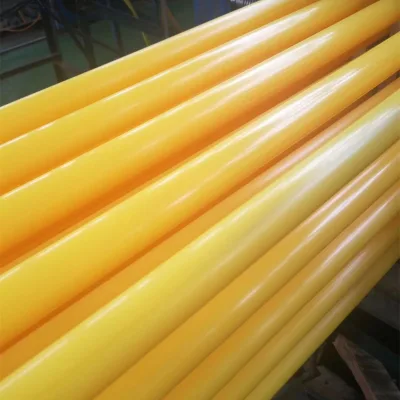
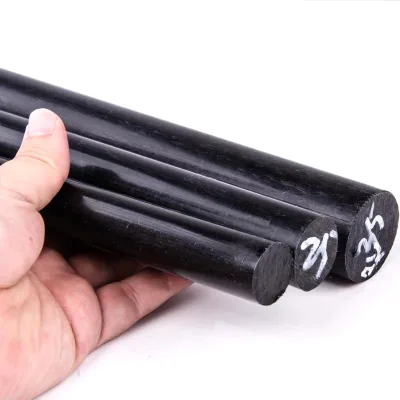
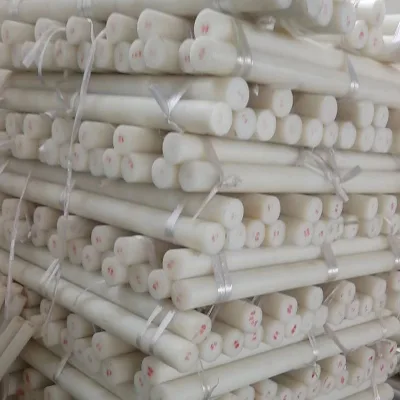
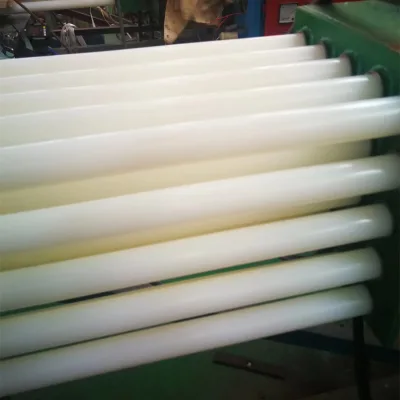
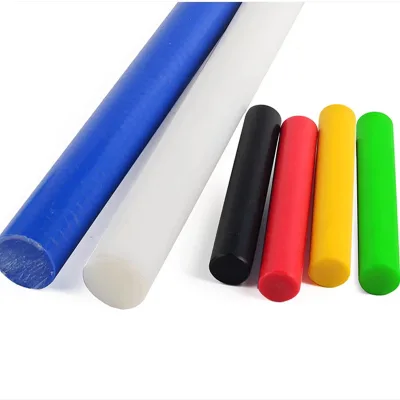
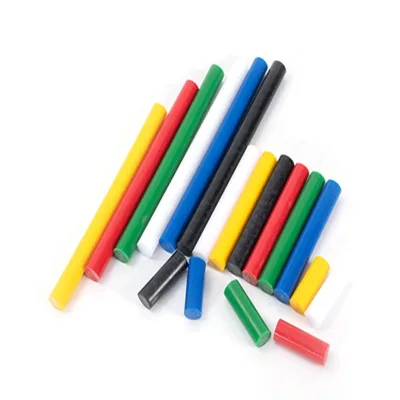
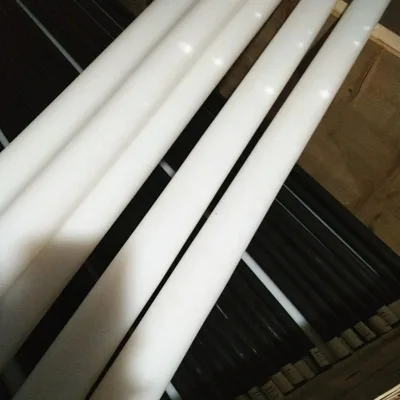
Color options, such as Natural (White), Black, Yellow, or Customized, also influence application suitability. Black rods often contain carbon black for UV protection, making them suitable for outdoor use, while white or natural rods are preferred for applications where visual inspection of wear is necessary. The ability to customize colors allows manufacturers to integrate the rods into specific product lines or use color-coding for safety and identification purposes. Ultimately, the selection of a Flexible Nylon Plastic Rod should be driven by a comprehensive analysis of the mechanical, electrical, and environmental demands of the specific application.
Supplier Evaluation and Quality Assurance Protocols
Evaluating suppliers for flexible nylon plastic rods requires a rigorous assessment of their manufacturing capabilities, quality control systems, and logistical reliability. The "Place of Origin" for many products is listed as China, with specific regions like Hebei and Shandong emerging as manufacturing hubs. While these regions offer competitive pricing and extensive supply chains, buyers must verify the specific capabilities of the supplier. The "Brand Name" such as "Fangdun" indicates that some suppliers operate under established brand identities, which can be a proxy for reliability, though this should not be the sole criterion for selection.
Quality assurance begins with the verification of material consistency. Since the product attributes list specific ranges for tensile strength, contraction percentage, and water absorption, buyers should demand batch-specific test reports that confirm the material falls within these parameters. The "Customizable" nature of the product standard means that the supplier must have the flexibility to meet unique quality requirements. This includes the ability to perform "Moulding" and "Cutting" services with high precision. The "Single package size" of 10x10x7 cm suggests that the supplier has standardized packaging for smaller units, but larger or custom orders may require different handling procedures.
Logistical reliability is another key factor. The "prod_packing" options, including "Palletized," "Fumigation Wooden Box," and "Wooden Box," indicate that the supplier is equipped for various shipping methods. However, the "Lead time" and "MOQ" are not explicitly defined in the provided data, so buyers must clarify these terms during the negotiation phase. A supplier with a low MOQ of 1 unit may be suitable for prototyping, but a higher MOQ of 1000 units might be necessary for mass production. The "Selling Units" being listed as "Single item" suggests a flexible ordering process, but buyers should confirm if there are hidden costs or minimums for custom orders.
Finally, the supplier's ability to provide technical support and after-sales service is crucial. The "Advantage" of "Good Roundness and Straightness" implies a focus on precision manufacturing, but this must be backed by a robust quality control process. Buyers should inquire about the supplier's inspection protocols, including in-process checks and final product testing. The "Process" attributes like "Surface Resistivity" and "Volume Resistance" should be verified through independent testing to ensure the supplier's claims are accurate. By conducting a thorough supplier evaluation that covers material quality, manufacturing capabilities, and logistical reliability, buyers can mitigate risks and ensure a steady supply of high-quality flexible nylon plastic rods.
Long-Term Procurement and Strategic Sourcing Considerations
Sourcing flexible nylon plastic rods is not merely a transactional activity but a strategic decision that impacts long-term operational efficiency and product reliability. The "Customization" availability is a significant enabler for long-term partnerships, as it allows buyers to adapt the product to evolving design requirements without switching suppliers. However, this flexibility comes with the responsibility of maintaining clear communication and documentation. Buyers should establish a standardized specification sheet that includes all critical attributes, such as material type (MC nylon Pa6 vs. PTFE), tensile strength, and dimensional tolerances, to ensure consistency across multiple orders.
Inventory management is another critical aspect of long-term procurement. The "Standard Length" of 1 meter and the ability to customize lengths suggest that buyers can optimize their inventory by ordering in bulk and cutting to size as needed. However, the "Contraction Percentage" of the material must be accounted for in the design phase to prevent issues during storage or processing. The "Linear thermal expansion coefficient" of 80x10⁻⁶ for some variants also highlights the need for thermal stability in storage environments. Buyers should consider the "Single gross weight" of 1.300 kg per package when planning warehouse space and handling equipment.
Sustainability and supply chain resilience are increasingly important in B2B procurement. While the provided data does not explicitly mention sustainability certifications, the "Customizable" standard and the variety of materials (PA, PP, PTFE) offer opportunities to select more environmentally friendly options if available. Buyers should explore the possibility of using recycled materials or biodegradable alternatives if they align with their corporate sustainability goals. Additionally, diversifying the supplier base can mitigate risks associated with geopolitical instability or supply chain disruptions. Given that many suppliers are located in China, buyers should consider maintaining relationships with suppliers in other regions to ensure continuity of supply.
Finally, the "Price" range of $0.01 to $51 indicates a highly competitive market, but buyers should avoid making decisions based solely on price. The total cost of ownership, including quality, lead time, and after-sales support, should be the primary driver of procurement decisions. By adopting a strategic approach that emphasizes long-term relationships, clear specifications, and robust quality control, buyers can secure a reliable supply of flexible nylon plastic rods that meet their technical and operational needs. This proactive strategy ensures that the procurement process remains efficient and effective, supporting the overall success of the buyer's projects and products.
FAQs
What materials are available for flexible nylon plastic rods?
The available materials include MC nylon Pa6, generic PA, PP, and PTFE. Buyers must verify the specific material designation as listings often aggregate different thermoplastics under the nylon keyword.
How does tensile strength vary between material types?
MC nylon Pa6 rods have a tensile strength of 30 to 40 MPa, while PTFE rods offer a higher range of 81 to 130 MPa. This difference impacts suitability for gears versus high-stress components.
Which specifications are customizable for these plastic rods?
Customization is available for diameter, length, and standard compliance. Diameters can range from 6mm to 350mm, and lengths are offered as standard 1m or custom sizes based on project needs.
Can I find rods with specific thermal properties?
Yes, some variants have a soft temperature of 120°C and a glass transition temperature of 87°C. Other listings may show continuous temperature ratings as low as 55°C, requiring careful selection.
What are the water absorption rates for these materials?
MC nylon Pa6 absorbs between 0.1% and 0.3% water, whereas some PTFE variants absorb less than 0.01%. Low absorption is critical for maintaining dimensional stability in humid environments.
How are these rods typically packed for shipping?
Packaging options include palletized, wooden box, and fumigation wooden box configurations. The choice depends on destination requirements and the fragility of the specific product batch being shipped.
What is the minimum order quantity for these products?
The minimum order quantity ranges from 1 to 1000 units depending on the supplier. Small batches allow sampling, while larger volumes may benefit from economies of scale on custom dimensions.