Source Flexible Package Bottle Unscrambler for Filling Lines
Find and compare 30 Flexible Package Bottle Unscrambler models from Jiangsu, China. Evaluate specifications like 4000-12000 bph capacity, SUS304 construction, and PLC controls to select the right automatic orientation equipment for your production needs.
Key considerations
Products List
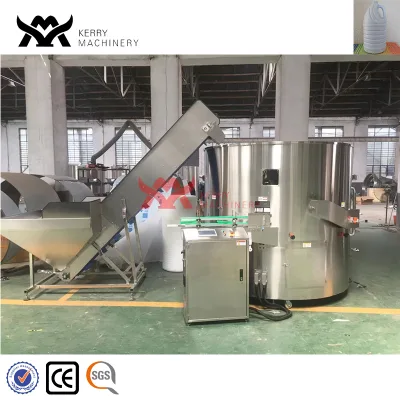


$10000.00 - $30000.00
MOQ: 1 Pieces


Automatic Bottle Unscrambler with Various Directions of Bottle Lifter
$1000.00 - $25000.00
MOQ: 1 Pieces


Hot Selling Manual Bottle Unscrambler with Easy Operation and High Quality
$1000.00 - $25000.00
MOQ: 1 Pieces


High Capacity Full Automatic Bottle Unscrambler for Plastic Bottle
$10000.00 - $30000.00
MOQ: 1 Pieces

Bottle Arrange Machine, Container Packing Machine, Box Type Bottle Unscrambler
$1000.00 - $5000.00
MOQ: 1 Pieces


Fully Automatic Bottle Unscrambler for Plastic Bottles with Wide Range of Application
$14000.00 - $17000.00
MOQ: 1 Pieces


Comprehensive Sourcing Guide
Flexible Package Bottle Unscrambler Sourcing Guide
Sourcing a bottle unscrambler for flexible packaging lines requires a precise understanding of how the machine interfaces with downstream filling and capping equipment. These machines are designed to orient empty containers from a bulk, random state into a single-file, upright position suitable for automated processing. The core challenge lies in ensuring that the mechanical handling does not deform flexible materials, such as soft plastic pouches or thin-walled bottles, while maintaining the high throughput required by modern production environments. Buyers must evaluate the machine’s ability to handle specific bottle geometries, as the mechanism often relies on friction, vibration, or mechanical guides to achieve orientation.
The procurement process is heavily influenced by the variability in container types and the desired production speed. Unlike rigid glass or thick plastic containers, flexible packaging elements require gentler handling to prevent crushing or static buildup. Consequently, the selection of the unscrambler model must align with the specific material properties of the bottles being processed. Buyers should prioritize machines that offer customization options for the feeding mechanism, ensuring that the equipment can adapt to changes in bottle diameter, height, or material stiffness without requiring extensive downtime or tooling changes.
Product Scope and Observed Listing Signals
Market listings for bottle unscramblers reveal a wide range of capabilities, with observed prices spanning from $1,000 to $35,000 USD. This significant variance reflects differences in automation levels, material construction, and throughput capacity. The minimum order quantity (MOQ) for these industrial machines is typically set at one set, indicating that these are custom-engineered or semi-customized capital goods rather than off-the-shelf consumer items. Buyers should interpret the price range as an indicator of the machine’s complexity, with higher-priced units likely featuring advanced PLC controls, higher-grade stainless steel construction, and greater throughput capacities.
Observed product attributes highlight key technical differentiators, such as the use of SUS304 stainless steel for contact parts and the inclusion of core components like PLCs and gearboxes. Many listings specify a voltage of 220V or 380V, which is a critical factor for integration into existing factory power infrastructure. The capacity of these machines varies, with some models rated for 4,000 to 6,000 bottles per hour, while others claim standards up to 12,000 bottles per hour. Buyers must verify these capacity claims against their actual production needs, as theoretical maximums often differ from sustainable operational speeds when handling flexible or irregularly shaped containers.
Technical Specifications to Verify
The physical dimensions and weight of the unscrambler are critical for factory floor planning and logistics. Typical units may measure approximately 2420x2420x2100 mm and weigh around 3,000 kg, requiring reinforced flooring and appropriate lifting equipment for installation. The machine’s footprint must be evaluated in the context of the overall production line layout, ensuring there is sufficient space for operator access, maintenance, and material flow. Additionally, the single gross weight and packaging dimensions, often listed as 0.0 kg or unspecified in some data points, necessitate direct confirmation with the supplier to ensure accurate freight cost estimation and proper crating for international shipping.
Performance metrics such as speed and power consumption are central to the machine’s operational efficiency. While some models list a max speed of 80 pieces per minute, others advertise higher hourly rates, creating potential confusion between per-minute and per-hour metrics. Buyers should verify the actual throughput in bottles per hour (BPH) under load, as this is the standard industry metric for comparison. The power rating, often cited as 1.2KW, indicates the energy consumption of the drive system, which should be balanced against the motor’s origin and brand, such as Chinese or Taiwan brands, to assess reliability and energy efficiency.
Compliance and Safety Documentation
Safety and regulatory compliance are non-negotiable for industrial machinery operating in global markets. The presence of a CE Certificate is a primary indicator that the machine meets European health, safety, and environmental protection standards. Buyers must request the full technical file associated with the CE marking to verify that all relevant directives, such as the Machinery Directive, have been properly applied. This documentation should include risk assessments, electrical schematics, and declarations of conformity, ensuring that the machine can be legally installed and operated in jurisdictions that require CE compliance.
Beyond regulatory certifications, the provision of machinery test reports is a vital quality assurance step. These reports should detail the results of factory acceptance tests, including performance validation, safety interlock functionality, and electrical integrity checks. Buyers should insist on receiving these reports before shipment to confirm that the machine has been rigorously tested by the manufacturer. Additionally, the warranty period, typically listed as 3 years, provides a layer of financial protection against early failures, but the scope of this warranty must be clearly defined to cover both parts and labor.
Cost Drivers and Commercial Terms
The total cost of ownership for a bottle unscrambler extends beyond the initial purchase price, encompassing installation, training, and maintenance. The use of high-grade materials like SUS304 stainless steel and branded components such as Mitsubishi PLCs contributes to a higher upfront cost but offers long-term durability and ease of integration with existing automation systems. Buyers should evaluate the cost implications of these premium components against the expected lifespan of the machine, particularly in high-throughput environments where wear and tear are accelerated.
Commercial terms also include packaging and shipping considerations, which can significantly impact the final landed cost. Machines are typically packed in wooden cases or wrapped in plastic film to protect against transit damage, but the specific packaging method must be confirmed to ensure adequate protection for sensitive electronic components. The place of origin, often Jiangsu, China, influences logistics options and lead times, with buyers needing to account for customs clearance and inland transportation costs. Clear agreement on Incoterms is essential to define responsibility for shipping, insurance, and import duties.
Supplier Qualification and Quality Control
Supplier qualification is a critical step in mitigating procurement risk, especially when sourcing from international manufacturers. Buyers should verify the supplier’s manufacturing capabilities, including their facility size, production capacity, and quality control processes. The presence of a machinery test report and a provided warranty suggests a level of professional oversight, but buyers should also request references or case studies from previous clients to validate the supplier’s reliability. Understanding the supplier’s after-sales support structure, including the availability of spare parts and technical assistance, is equally important for long-term operational continuity.
Quality control should be embedded into the procurement process through pre-shipment inspections and clear acceptance criteria. Buyers should define specific performance metrics, such as orientation accuracy and throughput consistency, that the machine must meet before final payment is released. The customization options available, such as adjustments for different bottle types, should be tested during the factory acceptance test to ensure flexibility. Establishing a clear communication channel for technical support and troubleshooting can prevent minor issues from escalating into significant production delays.
Long-Term Procurement Checks
Long-term procurement success depends on the machine’s adaptability to future production changes. As product lines evolve, the unscrambler must be able to handle new bottle shapes, sizes, or materials without requiring extensive modifications. Buyers should assess the ease of changeover and the availability of replacement parts, such as gears, belts, and sensors, to minimize downtime during maintenance. The automatic grade and PLC programming flexibility are key factors in determining how quickly the machine can be reconfigured for different products.
Energy efficiency and operational stability are also important considerations for long-term cost management. The electric driven type and specific power ratings should be monitored over time to ensure that the machine is operating within its designed parameters. Regular maintenance schedules, guided by the manufacturer’s recommendations, should be established to prevent premature wear of core components like the gearbox and motor. By focusing on these long-term factors, buyers can ensure that their investment in a bottle unscrambler delivers consistent value and supports the efficiency of their flexible packaging operations.
FAQs
What is the production capacity of this bottle unscrambler?
The machine operates at a capacity of 4000 to 6000 bottles per hour. This speed allows for efficient handling of various bottle types in an automatic production line setting.
Which certification does the Flexible Package Bottle Unscrambler hold?
This equipment holds a CE Certificate to ensure compliance with safety standards. Buyers can verify this certification through the provided machinery test report included with the product.
Can the machine handle different bottle types and materials?
Yes, the system supports any kind of bottle and is designed for plastic packaging materials. It features a flexible design to accommodate various shapes and sizes in unscrambling operations.
What is the warranty period for this automatic model?
The product comes with a comprehensive 3-year warranty for peace of mind. This coverage ensures long-term reliability for the automatic grade machinery used in industrial settings.
How is the machine powered and what are its core components?
The unit is driven by an electric motor with a power rating of 1.2KW. Its core components include a PLC and a gearbox to ensure high efficiency and accurate operation.
What is the minimum order quantity for this bottle unscrambler?
The minimum order quantity is set at 1 set for this single item. This low MOQ allows buyers to test the equipment without committing to large initial inventory volumes.
Is customization available for the Flexible Package Bottle Unscrambler?
Customization is available to meet specific production requirements. Buyers can request tailored solutions while the machine maintains its high accuracy and automatic operation capabilities.