Source Foam Tire Shine Spray for cleaning, protection, and gloss
Find 30 verified options for Foam Tire Shine Spray to compare prices, packaging, and customization. Buyers can evaluate liquid tire polish suppliers with varying volumes and MOQs for bulk procurement needs.
Key considerations
Products List


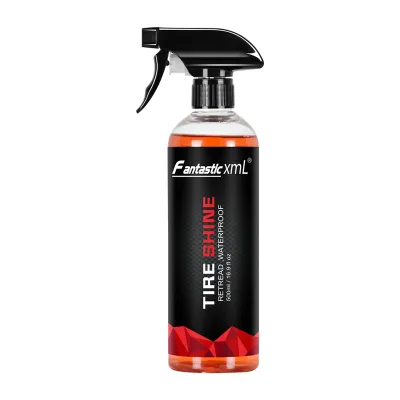
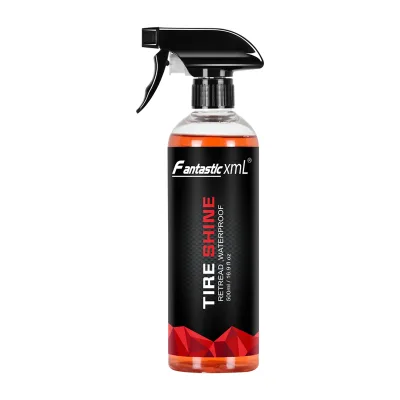
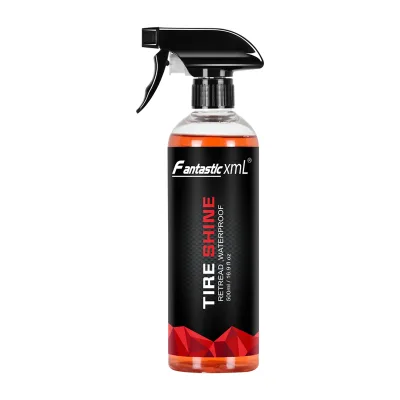
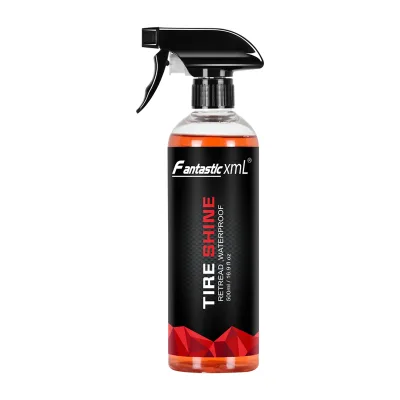
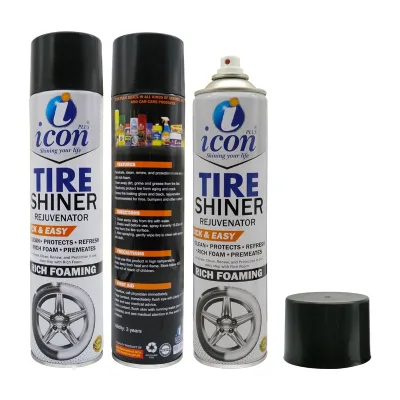
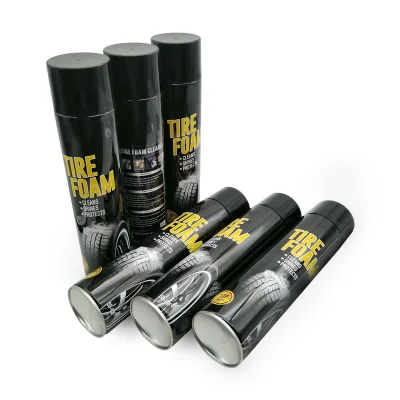
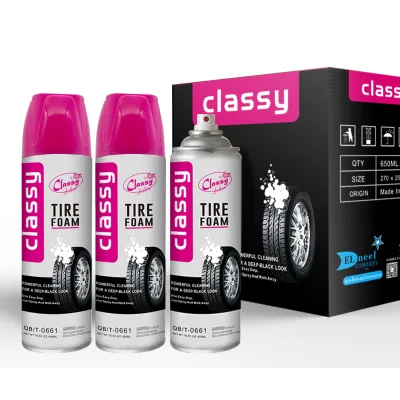
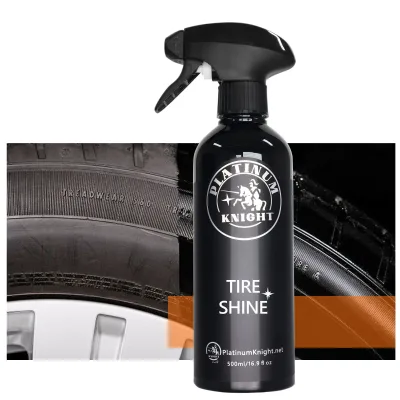


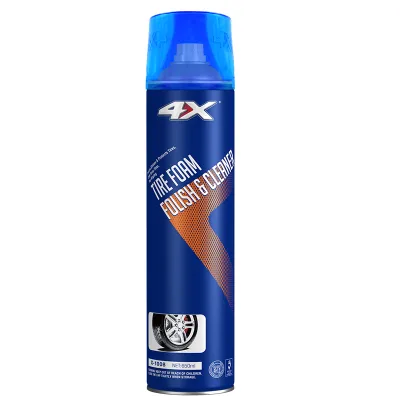
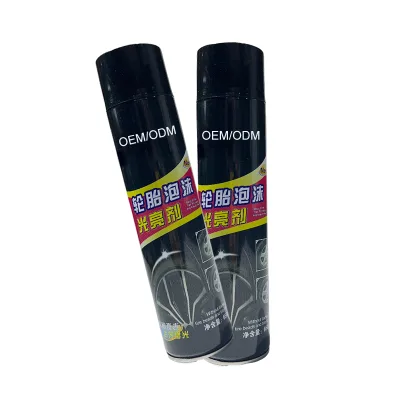


Car Tyre Brightener Cleaning and Shining Car Maintenance Tire Protection
$0.30 - $0.80
MOQ: 2000 Pieces
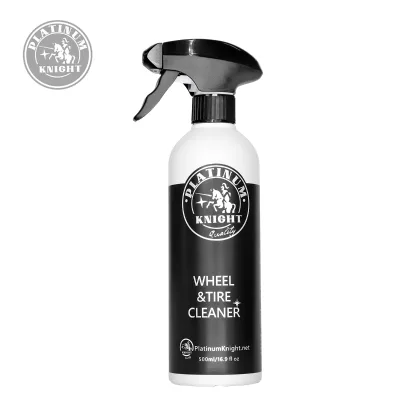
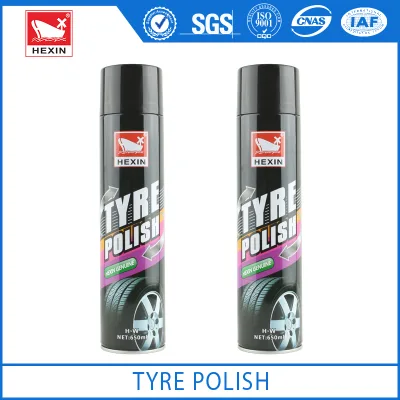
Comprehensive Sourcing Guide
Strategic Sourcing Guide for Foam Tire Shine Spray
Understanding Product Specifications and Formulation
When sourcing Foam Tire Shine Spray, buyers must first distinguish between the physical delivery mechanism and the chemical formulation. The core product is defined by its application state, which is explicitly "Liquid Spray" in many commercial listings, yet the functional output is a "Foam" that adheres to the tire surface. This distinction is critical because the foam generation often relies on specific nozzle designs or pressurized aerosol mechanisms rather than the liquid viscosity alone. The observed market data indicates a "Shape" attribute of "Aerosol" for certain variants, suggesting that the product may be delivered in a pressurized can to ensure the foam expands upon contact. However, other entries list the material simply as "Liquid," implying that non-aerosol pump sprayers are also a viable category for this keyword.
The chemical properties of the tire shine are equally vital. The "Car Cleaning Chemical PH" is noted as "Base," which indicates an alkaline formulation. In the context of tire care, a basic pH is often utilized to break down brake dust, road grime, and organic residues effectively before the shine is applied. The product functions to provide a "Shinny Gloss" and is explicitly used for "Tire shine protection." The "Strong Abluent for Engine Type" is described as "Enrichment," a term that suggests the formula is designed to condition the rubber rather than merely coat it with a temporary wax. This differentiation is important for buyers seeking long-term protection versus a quick cosmetic fix. The "State" is consistently "Liquid Spray," and the "Material" of the active ingredient is "Liquid," while the packaging material varies between "Plastic" and "Foam" components, likely referring to the bottle construction or the foam applicator head.
Buyers should verify the specific volume and weight constraints during the specification phase. The observed "Capacity" ranges from 300ml to 500ml, with specific standard sizes listed as 300ml, 400ml, and 500ml. A common standard observed is 500ml, which aligns with the "Volume" attribute of 500 mL. The physical weight of the product is another key specification; the "Weight" is observed in the range of 200-600g, with specific unit weights recorded as 0.6kg or 0.600 kg. This consistency in weight suggests a standard density for the liquid and packaging combination. The "Single package size" is frequently cited as 20X6.5X6.5 cm, though some entries list this as "XX cm," indicating that dimensions can vary by manufacturer. Understanding these physical constraints is essential for logistics planning and shelf-space allocation.
Compliance, Certification, and Safety Standards
In the automotive care sector, compliance is not merely a formality but a prerequisite for market access and liability protection. The primary certification observed in the supply chain for these products is the MSDS (Material Safety Data Sheet). This document is critical as it details the chemical composition, handling instructions, and emergency measures for the "Base" pH product. Buyers must ensure that every supplier provides a current MSDS that matches the specific batch being ordered, as formulations can change. The presence of an "Environmentally Friendly" feature suggests that some manufacturers are moving toward greener chemistries, but this claim requires verification against local environmental regulations, which vary significantly by region.
The "Expiration Date" for these products is typically listed as 3 years. This shelf-life parameter is a key quality indicator; a product that degrades quickly may lose its "Shinny Gloss" properties or separate into its constituent liquids. Buyers should verify the production date on the packaging to ensure the remaining shelf life is sufficient for their inventory turnover rates. Furthermore, the "Brand Name" can range from established names like "Fantastic Xml" to generic "customization" labels. When sourcing private label or OEM products, the brand name becomes a variable, but the underlying safety certifications must remain constant. The "Payment Terms" often include a 30% deposit, which is standard but requires careful financial planning.
It is important to note that while "MSDS" is a confirmed observation, other certifications such as ISO or specific automotive industry standards are not explicitly listed in the provided data. Therefore, buyers should not assume these certifications exist unless explicitly requested and verified by the supplier. The "OEM" attribute is marked as "Accpeted" (Accepted), indicating that customization of the product is possible. However, when OEMing, the buyer assumes responsibility for ensuring the final product meets the safety standards of the destination market. The "Design Style" of the packaging, such as "New China-Chic," is a marketing attribute and does not impact the chemical safety or compliance of the tire shine itself.
Cost Drivers and Pricing Dynamics
The pricing structure for Foam Tire Shine Spray is influenced by several variables, including volume, packaging complexity, and customization levels. The observed listed price range in USD is 0.3 to 3.63. This wide disparity suggests that the lower end of the spectrum likely represents bulk, generic, or non-branded units, while the higher end may include premium packaging, specialized formulations, or smaller order quantities. The "MOQ" (Minimum Order Quantity) range is equally broad, spanning from 6 to 26,112 units. A specific observation notes an MOQ of 50pcs for certain items, which is a common entry point for small businesses or retailers testing the market.
The "Selling Units" are typically listed as "Single item," meaning the price per unit is often calculated based on individual bottles rather than bulk cases, although the "prod_packing" is consistently "Carton." The transition from a single item to a carton affects the effective cost per unit. The "Weight" of the product, ranging from 200g to 600g, directly impacts shipping costs, which are a significant hidden cost driver in B2B procurement. Heavier units, such as the 0.6kg variants, will incur higher freight charges compared to lighter 200g units. Additionally, the "prod_packing" options include "Brown Box," "Color Box," and "Display Box." More complex packaging, such as a "Display Box," adds to the manufacturing cost and, consequently, the unit price.
Buyers should also consider the "Advantage" of "Competitive" pricing as a market observation rather than a guarantee. The actual cost is determined by the negotiation of the "MOQ" and the "Payment Terms." A higher MOQ often correlates with a lower unit price, but it increases the upfront capital requirement. The "Customization" attribute is available, which implies that adding custom branding or specific formula adjustments will likely increase the cost. The "Brand Name" being "customization" suggests that generic products are available at the lower price points, while branded products command a premium. Understanding these cost drivers allows buyers to balance their budget against their need for quality and branding.
Typical Applications and Performance Expectations
The primary application for Foam Tire Shine Spray is "Tire" care, specifically for "Tyre/Tire" surfaces. The product is designed to provide "Tire shine protection" and deliver a "Shinny Gloss." The "Other Names" for this product include "Tire Polish," indicating that it serves a dual purpose of cleaning and shining. The "Use" is explicitly defined as "tire shine protection," which implies a protective layer that shields the rubber from UV rays and environmental contaminants. The "Application" is straightforward, targeting the tire sidewall and tread area.
The "State" of the product as "Liquid Spray" and the "Shape" as "Aerosol" suggest that the application method is designed for ease of use. The foam mechanism helps the product adhere to vertical surfaces without dripping, which is a common issue with traditional liquid tire dressings. The "Strong Abluent" property suggests that the product may also have cleaning capabilities, removing dirt before the shine is applied. The "Fresh" "Smell" is a desirable attribute for end-users, as it indicates a pleasant sensory experience during the detailing process.
Buyers should manage expectations regarding the "Function" of the product. While it provides a "Shinny Gloss," the longevity of this effect depends on the formulation. The "Expiration Date" of 3 years suggests that the product is stable, but the actual performance on the tire may vary based on driving conditions and environmental exposure. The "Material" being "Foam" in some contexts likely refers to the texture of the foam applied, which is designed to penetrate the tire pores for better conditioning. The "Design Style" of the packaging, such as "New China-Chic," does not affect the performance but may influence consumer appeal in specific markets.
Supplier Evaluation and Sourcing Strategy
Evaluating suppliers for Foam Tire Shine Spray requires a focus on their ability to meet the specific technical and logistical requirements outlined in the product data. The "prod_origin" is consistently listed as "Guangdong, China" or simply "China," indicating a concentration of manufacturing in this region. This geographic concentration can be advantageous for sourcing due to the established supply chain infrastructure, but it also means buyers should be aware of potential regional risks. The "prod_model" varies, with examples including "CC-138," "CC-116," "YIQUN-061," and "CC-113," as well as "fan-01." These model numbers serve as unique identifiers for different formulations or packaging types.
When evaluating a supplier, buyers should verify the "OEM" capability, as the data confirms that "Accpeted" OEM services are available. This means suppliers can customize the product to meet specific branding or formulation needs. The "Brand Name" can be "customization," allowing for private labeling. However, buyers must ensure that the supplier has the capacity to handle the "MOQ" requirements, which can range from as low as 6 units to over 26,000 units. The "Payment Terms" of "30% deposit" are standard, but buyers should negotiate terms that align with their cash flow.
The "Single gross weight" of 0.6 kg and "Single package size" of 20X6.5X6.5 cm are critical for logistics planning. Buyers should calculate the number of units per container to optimize shipping costs. The "prod_packing" being "Carton" is standard, but the availability of "Brown Box," "Color Box," and "Display Box" offers flexibility in presentation. Buyers should request samples to verify the "Smell," "State," and "Function" of the product before committing to a large order. The "Advantage" of "Competitive" pricing should be validated through a comparative analysis of multiple suppliers, rather than relying on a single claim.
Quality Control and Long-Term Procurement Considerations
Maintaining quality control is essential for ensuring that the Foam Tire Shine Spray meets the expected performance standards. The "Expiration Date" of 3 years is a key metric for quality assurance. Buyers should implement a system to track the production date of each batch to ensure that the product is sold within its optimal shelf life. The "MSDS" certification must be reviewed for every shipment to confirm that the chemical composition has not changed. Any deviation in the "Car Cleaning Chemical PH" or the "State" of the liquid could indicate a quality issue.
For long-term procurement, buyers should consider the scalability of the supplier. The wide range of "MOQ" values suggests that suppliers can accommodate both small and large orders, but the lead times and production capacity may vary. The "Customization" attribute allows for product evolution, enabling buyers to adapt to market trends, such as the demand for "Environmentally Friendly" products. The "Design Style" of the packaging can also be updated to reflect changing consumer preferences, such as the "New China-Chic" trend.
Buyers should also monitor the "Weight" and "Volume" consistency across batches. Variations in the 0.6kg weight or the 500ml volume could indicate production inconsistencies. The "Single gross weight" and "Single package size" should be verified against the supplier's specifications to ensure accurate shipping calculations. The "Product Name" and "Other Names" should be consistent to avoid confusion in the supply chain. Finally, the "Use" and "Application" should be clearly communicated to end-users to ensure proper usage and satisfaction. By focusing on these quality control measures, buyers can build a reliable supply chain for Foam Tire Shine Spray that meets both regulatory and consumer expectations.
FAQs
What certifications are required for Foam Tire Shine Spray?
MSDS certification is required for Foam Tire Shine Spray to ensure chemical safety. Buyers must verify that every supplier provides a current MSDS matching the specific batch, as formulations can change and liability protection depends on this documentation.
How does the product state affect application on tires?
The product state is a liquid spray that generates foam upon contact with the tire surface. This mechanism helps the product adhere to vertical surfaces without dripping, ensuring effective cleaning and shine application compared to traditional liquid dressings.
Which packaging options are available for bulk orders?
Packaging options include cartons, brown boxes, color boxes, and display boxes. The standard single package size is often 20X6.5X6.5 cm, though dimensions can vary by manufacturer, and buyers should select based on their shelf-space allocation needs.
Can buyers customize the brand name and formula?
Yes, OEM services are accepted for customizing the brand name and formula. Buyers can choose from generic labels or specific names like Fantastic Xml, but they must ensure the final product meets the safety standards of their destination market.
What is the typical expiration date for this product?
The typical expiration date for Foam Tire Shine Spray is three years. Buyers should verify the production date on the packaging to ensure the remaining shelf life is sufficient for their inventory turnover rates and to maintain product stability.
How does the pH level impact tire cleaning performance?
The car cleaning chemical pH is base, which helps break down brake dust and road grime. This alkaline formulation is designed to condition the rubber effectively before the shine is applied, distinguishing it from temporary cosmetic fixes.