Source Foam RC Plane for Hobby Models, RC Drones, and Aircraft
Compare 30 Foam RC Plane options with customizable PU foam cores and various dimensions. Review specifications for impact resistance and packaging details to select the right model for your sourcing needs; compare the available evidence and request quotations based on your requirements.
Key considerations
Products List


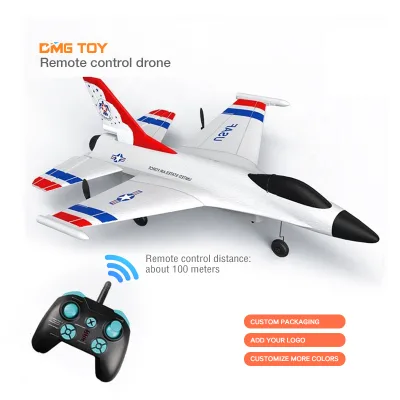
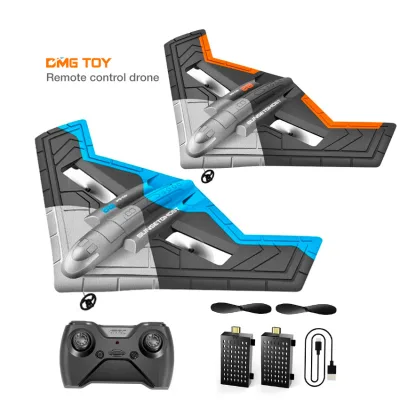
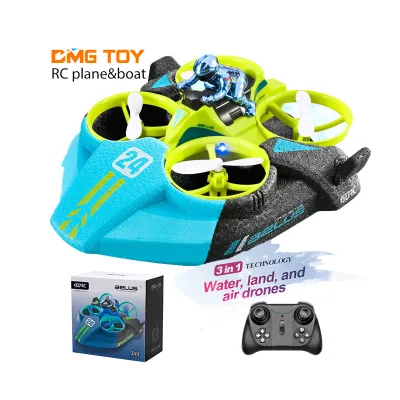
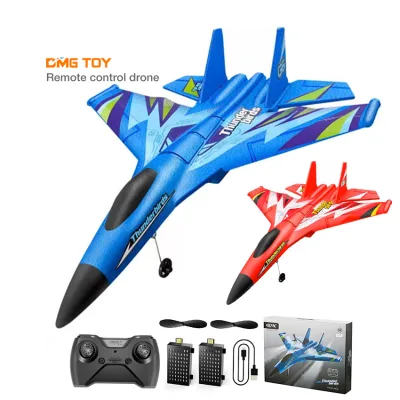
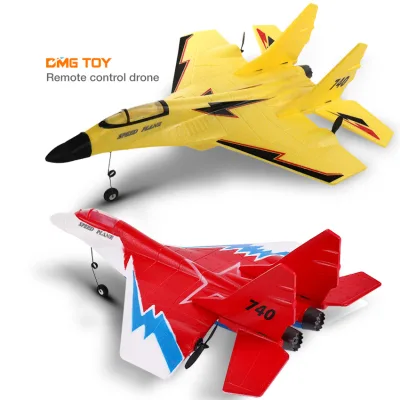
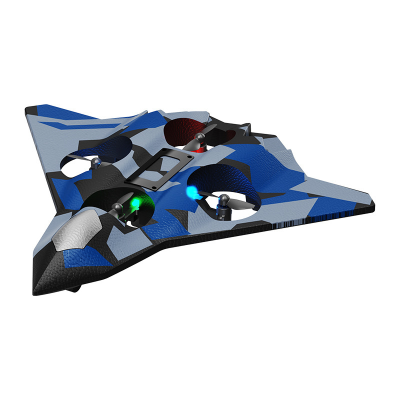


Wholesale Light up Flying Remote Control Foam RC Plane Model Aircraft for Children
$20.15 - $20.72
MOQ: 50 Pieces


Wholesale Kids R/C Airplane Children Remote Control Plane Toy Plane Plastic Toy
$9.60 - $10.60
MOQ: 60 Pieces


Comprehensive Sourcing Guide
Foam RC Plane Sourcing Guide
Foam RC planes occupy a distinctive position in the hobby and toy market, combining low material cost with the durability needed for beginner pilots and frequent crashes. Buyers sourcing this category typically fall into two camps: hobby-grade distributors supplying RC aircraft and drone enthusiasts, and toy-channel retailers stocking ready-to-fly models. The observations in this guide draw on listed product data for foam-based RC plane models, including both component-grade PU foam supplies and finished toy aircraft listings. Understanding which side of the market a listing belongs to is the first and most important sourcing decision, because specifications, packaging, and compliance expectations differ substantially between them.
This guide is written for procurement teams evaluating Foam RC Plane listings on B2B platforms. It walks through product scope, technical verification, compliance documentation, commercial terms, supplier qualification, and long-term checks. Throughout, the emphasis is on confirming what a listing actually states rather than assuming category defaults. Where the supplied listing data provides concrete values—such as carton dimensions, packing counts, or minimum order quantities—those figures are cited directly; where it does not, buyers are directed to request verification from the supplier before committing to an order.
Product Scope and Observed Listing Signals
The observed listings span two distinct product types. The first is component-grade foam: high-density polyurethane (PU) foam in integral-molded form, produced in a documented diameter specification ladder of 1.00 through 4.00 inches, positioned for RC aircraft, RC plane, RC drone, and hobby model applications. These listings emphasize material properties—high resilience, wear resistance, shock absorption—along with customization of size, hardness, color, and logo, and negotiable minimums that welcome both small and bulk orders. The second type is finished RC plane toys, such as models KSL835359, KSL837794, and KSL835449, packaged in color boxes at 36, 12, and case-level packing counts respectively, with toy certificates (EN71, ASTM, 10P, HR4040) cited in the listing data.
Buyers should classify each candidate listing before comparing it to alternatives. A PU foam supplier quoting per-specification foam blanks will discuss hardness and density; a finished toy supplier will discuss flight performance, controller range, and retail packaging. Observed MOQ values in the listing data range from 180 pieces and 120 pieces for specific toy models down to negotiable terms for foam components, illustrating how dramatically commercial structure differs across the category. Mixing the two evaluation frameworks leads directly to mispriced or mis-specified orders.
Technical Specifications to Verify
For component-grade foam, the core verification items are the specification ladder and the material formulation. The observed listing documents sizes of 1.00, 1.25, 1.50, 1.75, 2.00, 2.25, 2.50, 3.00, 3.50, and 4.00 inches, so buyers should confirm which diameters are held in stock versus produced as custom runs, since lead times and tooling costs may differ. Core material is stated as high-density PU foam with integral molding, and optional custom cores are offered; request written confirmation of density, hardness (a customization point per the listing), and whether the foam formulation is consistent across all size variants rather than only the sample size.
For finished toy models, verify the specification block in full: package size, carton size, pieces per carton, gross and net weights, and cubic volume. The observed listings provide these—package sizes such as 35207.5 cm, 3120.86.1 cm, and 34.533.510 cm, with cartons from 6135.568.5 cm to 763264 cm—but buyers should confirm the values apply to their chosen configuration and color variant. Also confirm black coloration where relevant, the four stated performance attributes (cold-resistant, heat-resistant, impact-resistant, wear-resistant) in writing, and whether product model numbers correspond to the exact items photographed.
Compliance and Safety Documentation
The finished toy listings cite EN71, ASTM, 10P, and HR4040 certificates, which are meaningful signals for European, North American, and Chinese domestic toy-channel sales respectively. Buyers should not treat a listed certificate claim as sufficient: request copies of the actual test reports, confirm they reference the correct product model and a recent test date, and check that the applicant name on the report matches the selling entity or its authorized manufacturer. If the buyer's destination market requires additional marking, labeling, or documentation beyond these four, that gap must be identified before the order is placed, not after goods arrive at customs.
Component-grade foam listings cite CE, ISO, and RoHS certification. Here the verification path is different: confirm which certified entity holds the CE or ISO registration, whether it covers the specific foam formulation being ordered (especially if a custom core material is selected), and whether RoHS compliance applies to additives, colorants, or coatings in the final part. Customization complicates compliance—any change to hardness, color, or core composition may require re-testing or a scope check with the certificate holder. Buyers should request a written statement confirming that the customized configuration remains within the certified scope before approving a custom production run.
Cost Drivers and Commercial Terms
Price is only the entry point for landed-cost modeling. From the observed data, packing configuration materially affects freight efficiency: cartons ranging from 0.148 to 0.213 CBM, with 7.52 or 5.49 cubic feet and pieces-per-carton counts of 36 or 12, determine how many units fit per container. Gross weights between 6.5 and 13.5 kilograms per carton matter for air freight quotes. Buyers should compute cost per unit on a delivered basis, incorporating packaging volume and weight, and compare candidates on that figure rather than on the listed unit price alone, which in the observed range spans broadly from around one to one hundred US dollars across different product types.
Commercial terms in the listings include negotiable MOQs with small and bulk orders welcomed for foam components, but fixed MOQ orders of 180 and 120 pieces for specific toy models. Packaging options include OPP bags, custom packaging, color boxes, and carton packing—each carrying different unit-cost and retail-readiness implications. OEM and ODM services, custom logos, and custom sizes are stated as available, but buyers should confirm whether customization changes the MOQ, unit price, or tooling cost. In-stock versus custom-order status should also be confirmed in writing, since it drives both delivery speed and price stability.
Supplier Qualification and Quality Control
Supplier qualification for this category should start with supply capacity claims. The foam listings state in-stock and custom-order availability with fast delivery from Dongguan, Guangdong, a region known for foam and toy manufacturing; the toy listings state China as origin without a city. Buyers should verify capacity through direct questions: current production lines, monthly output for the specific model or specification, and whether the stated MOQ represents real inventory or a made-to-order threshold. A factory tour or third-party audit is the strongest confirmation, particularly for toy models where assembly quality and packaging consistency affect retail acceptance.
Quality control expectations should be contractually defined before production. For PU foam components, inspect dimensional accuracy across the ordered diameter range, surface finish consistency, and resilience against an agreed reference sample; integral molding means defects such as voids or uneven density may not be visible externally. For finished RC planes, pre-shipment inspection should cover workmanship, packaging integrity against the color-box specification, carton drop performance appropriate to the stated weights, and functional checks of the model. Approve a golden sample, document acceptance criteria in the purchase order, and specify the inspection standard and AQL sampling plan the buyer expects the supplier or third-party inspector to apply.
Long-Term Procurement Checks
Long-term sourcing success in this category depends on managing the customization relationship. Because the listings offer OEM/ODM, custom size, hardness, color, and logo services, buyers planning recurring orders should establish a controlled specification document: exact dimensions, hardness reference, color standard, logo artwork files, and packaging layout. Any supplier-side change to formulation, molding process, or packaging material should trigger written notification and sample re-approval. Without this discipline, successive production runs can drift—particularly problematic for foam parts that must fit precisely into RC airframes or for retail models with consistent shelf presentation requirements.
Re-verify commercial and compliance facts at defined intervals. Certificate validity should be checked annually, especially for EN71, ASTM, 10P, and HR4040 reports tied to specific toy models, and re-confirmed whenever a design or material change occurs. Reconfirm MOQ terms, packing counts, carton dimensions, and weights each season, since suppliers may adjust configurations as tooling or packaging suppliers change. Track in-stock versus custom-order status over time, as a listing that shifts from stock to made-to-order changes both lead time and negotiating leverage. Maintaining a simple specification-and-documentation file per SKU turns reordering from a renegotiation into a routine confirmation, protecting both cost and delivery consistency across the relationship.
FAQs
What material is used for the core of foam rc planes?
The core material is High-Density Polyurethane (PU) Foam. This material provides high resilience, shock absorption, and wear resistance. It is suitable for hobby models and RC aircraft that require durability against impact and environmental stress during flight operations.
Can foam rc planes be customized for specific brand requirements?
Yes, OEM and ODM services are available for customization. Buyers can request specific sizes, hardness levels, colors, and logo applications. The structural craftsmanship allows for integral molding with optional custom cores to meet distinct design and performance specifications for your product line.
What certifications are available for Foam RC Plane products?
Products may carry CE, ISO, and RoHS certifications. Additionally, specific toy models can meet En71, ASTM, 10p, and Hr4040 standards. These certifications ensure compliance with safety and environmental regulations, which is critical for selling RC toys in regulated international markets.
What is the typical packaging for Foam RC Plane orders?
Standard packaging includes OPP bags or custom color boxes. For bulk shipments, products are packed in cartons with specific dimensions and weights. For example, one model uses a 72x47x63 cm carton holding 36 pieces, ensuring secure transport and efficient warehouse handling for B2B buyers.
How does the MOQ work for Foam RC Plane orders?
MOQ is negotiable, with small and bulk orders both welcome. Specific models may have minimum order quantities like 120 or 180 pieces. This flexibility allows buyers to test the market with smaller initial orders before scaling up to larger production runs for established retail channels.
What are the key material properties of foam rc planes?
The foam is high-resilience, wear-resistant, and shock-absorbent. It is also cold-resistant and heat-resistant, making it suitable for various environmental conditions. These properties help maintain structural integrity and performance during repeated use in RC aircraft and hobby model applications.
Where are Foam RC Plane products typically manufactured?
Products are often manufactured in Dongguan, Guangdong, China. This location offers established supply chains for RC components and foam molding. Suppliers in this region can provide in-stock items and custom orders with fast delivery options for international B2B buyers.