Source Fog Machines for Events, Weddings, and Stage Shows
Compare 26 fog machines with varying power, control modes, and output distances. Buyers can evaluate models ranging from 1200W to 3000W with options for DMX512, remote, or manual control to suit different event needs.
Key considerations
Products List


60 Meters Cooling Fog Cannon Machine
$5156.00 - $5547.00
MOQ: 1 Pieces
Qingdao Century Runde Environmental Protection Equipment Co., Ltd.


30 Meters Cooling Fog Cannon Machine
$1563.00 - $1813.00
MOQ: 1 set
Qingdao Century Runde Environmental Protection Equipment Co., Ltd.

40 Meters Cooling Fog Cannon Machine
$2656.00 - $2938.00
MOQ: 1 set
Qingdao Century Runde Environmental Protection Equipment Co., Ltd.


50 Meters Cooling Fog Cannon Machine
$3672.00 - $3969.00
MOQ: 1 set
Qingdao Century Runde Environmental Protection Equipment Co., Ltd.
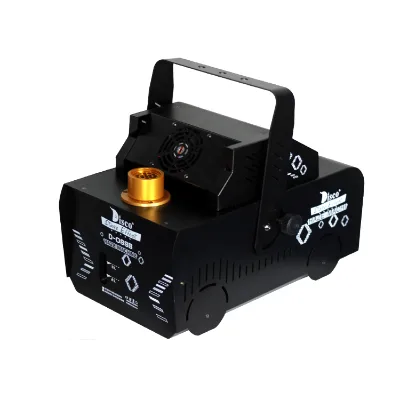


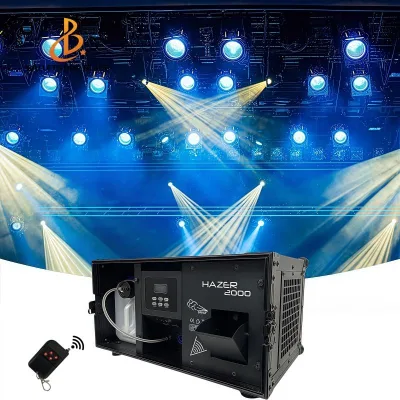

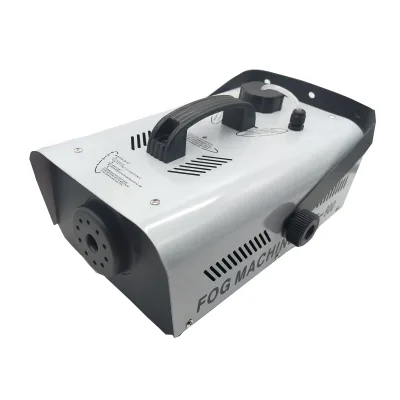
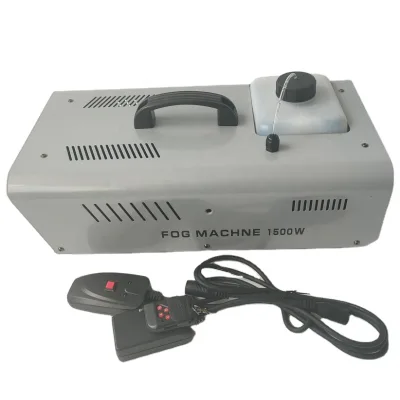
Comprehensive Sourcing Guide
Strategic Sourcing Guide for Fog Machines in B2B Procurement
Understanding Technical Specifications and Performance Metrics
When sourcing fog machines for commercial or industrial applications, the primary focus must be on aligning technical specifications with the intended operational environment. The market presents a diverse array of models, each defined by distinct power ratings, output distances, and warm-up times. A critical observation from current product data indicates that rated power can vary significantly, with specific models operating at 1500W, 1200W, or 2000W, while others reach up to 3000W. This variance directly influences the density and volume of the fog produced, which is a decisive factor for stage productions, event planning, or atmospheric effects in large venues.
The output distance is another paramount specification. Buyers must distinguish between units designed for short-range effects and those capable of projecting fog over long distances. Available data shows output distances ranging from 1 to 5 meters for compact units, extending to 5-10 meters for mid-range models, and reaching up to 12 meters for high-performance industrial units. For applications requiring wide coverage, such as concert stages or large event halls, selecting a machine with a verified output distance of at least 10 meters is essential. Furthermore, the warm-up time is a logistical consideration; observed times range from 8 minutes to 9 minutes. In fast-paced event scenarios, a shorter warm-up time can be the difference between a seamless transition and a delayed start.
Fluid capacity also plays a role in operational continuity. Some units feature a tank capacity of 2 liters, which may require frequent refilling for extended events. Buyers should verify if the machine supports continuous operation or requires periodic maintenance stops. The physical dimensions and gross weight are equally important for logistics planning. Models vary from compact units weighing 2 kilograms to heavy-duty industrial machines weighing up to 44 kilograms. The packaging dimensions, such as 470x230x200mm or larger crates measuring 68x38x55cm, must be accounted for in shipping and storage calculations. Understanding these specific attributes ensures that the selected Fog Machine meets the physical and performance demands of the project.
Compliance and Certification Verification
In the global B2B market, regulatory compliance is non-negotiable. Fog machines are electrical appliances that must adhere to strict safety and environmental standards. The most common certifications observed in the current supply chain include CE and RoHS. The CE mark indicates conformity with health, safety, and environmental protection standards for products sold within the European Economic Area, while RoHS (Restriction of Hazardous Substances) ensures that the manufacturing process limits the use of specific hazardous materials.
Some suppliers may also provide ISO certifications, though the specific standard (e.g., ISO 9001 for quality management) should be explicitly requested and verified. It is crucial to note that certification status is not universal across all listed models. For instance, while many units display CE and RoHS compliance, others may only list CE. Procurement teams must treat these certifications as specific to the model number rather than a blanket attribute of the entire product line. Buyers should request valid certification documents for the exact model they intend to purchase, as a generic claim of compliance does not guarantee that a specific batch meets current regulatory requirements.
Additionally, the electrical rating is a critical compliance factor. Most modern fog machines are designed to operate on a universal voltage range of AC 100-240V at 50/60Hz, ensuring compatibility with power grids in various countries. However, this is not a universal constant for all units. Buyers must verify the rated voltage and power input against the local electrical infrastructure to prevent equipment failure or safety hazards. Failure to verify these electrical specifications can lead to significant operational disruptions and potential safety violations.
Cost Drivers and Pricing Dynamics
The pricing of fog machines is influenced by a complex interplay of factors, including power output, build quality, control mechanisms, and packaging. The observed price range in the market spans from approximately $17 to $19,999, reflecting the vast difference between entry-level consumer units and high-end industrial systems. This wide disparity is not merely a function of brand but is driven by the technical capabilities and durability of the unit.
Higher power ratings, such as 3000W compared to 1200W, generally command a higher price due to the increased cost of components and the enhanced performance they deliver. Similarly, the inclusion of advanced control systems, such as DMX512 control, wireless remote control, or wire control, adds to the manufacturing complexity and cost. Units with robust packaging solutions, such as flycases or plywood crates, also incur higher costs compared to standard carton packaging. These protective cases are essential for transporting heavy or sensitive equipment, adding value for buyers who require frequent travel or international shipping.
Minimum Order Quantity (MOQ) is another significant cost driver. The observed MOQ range is typically between 1 and 2 units, suggesting that many suppliers are flexible for small-scale procurement. However, for large-scale projects, buyers should negotiate volume discounts, as the unit price often decreases with increased order quantities. The origin of the product, such as Guangdong, Guangzhou, or Jilin in China, can also influence pricing due to variations in labor costs, material availability, and local supply chain efficiencies. Buyers should analyze the total cost of ownership, including shipping, insurance, and potential import duties, rather than focusing solely on the listed unit price.
Typical Applications and Operational Context
Fog machines serve a wide array of applications, ranging from entertainment and events to industrial and safety testing. The choice of machine depends heavily on the specific use case. In the entertainment sector, such as concerts, theater productions, and nightclubs, the focus is often on visual impact. High-output machines with long throw distances (e.g., 12 meters) and rapid warm-up times (8-9 minutes) are preferred to create dramatic atmospheric effects that can be quickly deployed and adjusted.
For industrial applications, such as smoke testing or leak detection, the requirements shift towards precision and reliability. Machines with specific output distances, such as 1-5 meters or 5-10 meters, may be more suitable for controlled environments where fog needs to be contained or directed precisely. The tank capacity becomes a critical factor here; a 2-liter tank might be insufficient for long-duration testing, necessitating a machine with a larger reservoir or continuous feed capability.
In the event management sector, the versatility of control modes is paramount. Whether using manual control, wireless remote control, or DMX512 integration for synchronized lighting effects, the Fog Machine must be adaptable to the specific needs of the event. The packaging type also matters; units shipped in flycases are ideal for touring companies that require durable, stackable transport solutions, while carton-packaged units may suffice for stationary installations. Understanding these contextual requirements ensures that the procurement strategy aligns with the operational goals of the organization.
Supplier Evaluation and Quality Control
Evaluating suppliers requires a rigorous approach to ensure reliability and product consistency. Buyers should prioritize suppliers who provide clear and detailed product specifications, including model numbers, dimensions, and weight. The presence of multiple origin locations, such as Guangdong, Guangzhou, and Jilin, suggests a decentralized manufacturing base. While this can offer competitive pricing, it also necessitates careful vetting of the specific factory producing the ordered units.
Quality control should be a central component of the procurement process. Buyers must verify that the products meet the stated standards and certifications. For example, if a model claims CE and RoHS compliance, the supplier should provide the relevant test reports. Additionally, the consistency of packaging and gross weight is a good indicator of manufacturing quality. Discrepancies between the stated weight (e.g., 5.42kg vs. 7.4kg) and the actual delivered weight can signal quality issues or packaging inefficiencies.
Suppliers should also demonstrate a commitment to customization. The availability of customization options allows buyers to tailor the Fog Machine to specific needs, such as branding, color, or specific control interfaces. This flexibility is a strong indicator of a supplier's capability to meet unique project requirements. Furthermore, buyers should assess the supplier's responsiveness and after-sales support, as fog machines are complex devices that may require maintenance or technical assistance.
Long-Term Procurement Considerations
Sourcing fog machines is not just a one-time transaction but a strategic decision that impacts long-term operations. Buyers should consider the lifecycle of the equipment, including maintenance requirements, spare parts availability, and the potential for upgrades. Models with standard control interfaces and widely available consumables are easier to maintain over time. The durability of the unit, indicated by the packaging type (e.g., flycase vs. carton), is also a key factor in determining the equipment's lifespan.
Sustainability is another emerging consideration. Buyers should look for suppliers who adhere to environmental standards, such as RoHS, which restricts the use of hazardous substances. This not only ensures compliance but also contributes to the organization's corporate social responsibility goals. Additionally, the energy efficiency of the machine, indicated by its power rating and warm-up time, can impact long-term operational costs. Machines with lower power consumption and faster warm-up times can reduce energy usage and improve operational efficiency.
Finally, buyers should maintain a flexible procurement strategy that allows for scaling up or down based on project needs. The observed MOQ range of 1-2 units suggests that suppliers are willing to accommodate small orders, but buyers should also plan for larger orders to secure better pricing and priority support. By focusing on technical specifications, compliance, and supplier reliability, organizations can build a robust supply chain for fog machines that supports their operational goals and ensures long-term value.
FAQs
What power ratings are available for fog machines?
Available power ratings include 1200W, 1500W, 2000W, and 3000W. Higher wattage models like the 3000W unit produce denser fog suitable for large venues, while lower wattage options suit smaller spaces.
Which fog machines support DMX512 control?
The model RG-FO3000V10DW-K supports DMX512 control for professional synchronization. Other units may offer manual, wire, or wireless remote control options depending on the specific model selected.
How long does it take for a Fog Machine to warm up?
Warm-up times typically range from 8 to 9 minutes. This duration is a critical logistical factor for event planners needing rapid deployment and seamless transitions between scenes.
What certifications do these fog machines hold?
Common certifications include CE and RoHS, ensuring safety and environmental compliance. Some models also list ISO standards, though buyers should verify specific documents for the exact unit.
Can fog machines be customized for specific needs?
Yes, customization is available for various Fog Machine models. This allows buyers to tailor features like branding or control interfaces to meet unique project requirements effectively.
What is the output distance range for these units?
Output distances vary from 1 to 5 meters for compact units up to 12 meters for high-performance models. Selecting the correct distance is essential for covering the intended stage or venue area.
Which packaging types are used for shipping fog machines?
Packaging options include cartons, plywood crates, and durable flycases. Flycases are preferred for touring equipment requiring robust protection during international transport and frequent handling.