Source CO2 Particle Haze Liquid for fog machines, events, and safety training
Find 30 listings for CO2 Particle Haze Liquid suitable for stage effects, event atmospheres, and industrial safety training. Compare specifications including volume, certifications, and packaging options to identify the right consumables for your operational needs; compare the available evidence and request quotations based on your requirements.
Key considerations
Products List
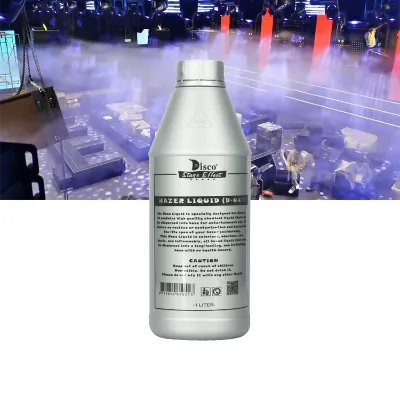
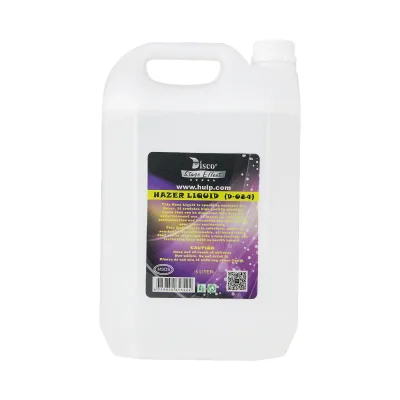


Liquified Oxygen Nitrogen Argon CO2 Cryogenic Liquid Storage Tank
$10000.00 - $200000.00
MOQ: 1 Pieces


Industrial Grade 99.9%-99.999% Liquid Carbon Dioxide CO2 Factory Price
$20.00 - $95.00
MOQ: 100 Pieces


Comprehensive Sourcing Guide
CO2 Particle Haze Liquid Sourcing Guide
Procuring CO2 Particle Haze Liquid requires distinguishing between consumable haze fluids and the industrial gas cylinders used to generate the effect. The market data indicates a product category split where some listings describe a water-based haze liquid in 5L units, while others detail high-pressure gas cylinders with specific DOT classifications. Buyers must carefully align their technical requirements with the correct product type, as the physical form and handling protocols differ significantly between a liquid consumable and a compressed gas storage unit.
The observed product attributes reveal a complex supply landscape where brands like Disco offer items with varying warranty periods ranging from three months to three years. This inconsistency suggests that buyers should not assume uniform service terms across all listings. Instead, procurement teams must verify the specific warranty duration and condition status for each vendor, ensuring that the "New" condition and "Single item" selling units match the operational needs of their specific event or industrial application.
Product Scope and Observed Listing Signals
Buyers should first verify the physical state of the product, as listings explicitly describe both "water based haze liquid" and "CO2" gas cylinders with distinct packaging. The data shows liquid products packaged in cartons with four pieces per carton, while gas solutions appear as metal tanks with capacities ranging from 40L to 50L cylinders. This distinction is critical because the storage requirements, shipping regulations, and usage methods for a liquid consumable differ entirely from those of a high-pressure gas cylinder.
Observations of the product range indicate a wide variance in weight and volume, with some items listed at 20L or 22kg while others specify cylinder pressures of 15MPa or 20MPa. Procurement teams must scrutinize the "prod_model" and "prod_packing" fields to ensure the selected item matches the intended application, whether it is for atmospheric effects or industrial gas storage. Misidentifying the product type can lead to logistical failures, as the "Normal Package" for a liquid may not suffice for the "Carton, Plastic Pallet" requirements of heavy gas cylinders.
Technical Specifications to Verify
Technical verification must begin with the cylinder standard and pressure ratings, as the data lists specific models like ZCF-20/22 and ZCF-30/22 alongside pressure ratings of 15MPa or 20MPa. Buyers need to confirm that the cylinder standard aligns with DOT, ISO, or GB requirements depending on the destination market, as these standards dictate the structural integrity and safety of the storage vessel. The molecular weight of 44.0095 g/mol and density of 1.977 kg/m3 are specific to the gas content and must be cross-referenced with the intended chemical property of non-flammable gas.
For liquid-based haze products, the focus shifts to volume and chemical composition, with listings specifying 5L per piece and a "Medical Grade" standard for certain constituents. Buyers should verify the valve type, such as Qf-2 or Cga 320, to ensure compatibility with their existing dispensing equipment. The "Industrial Pure Air" constituent and "Non-Flammable Gas" property are essential safety indicators that must be confirmed against the specific model number to prevent the procurement of incompatible or hazardous materials.
Compliance and Safety Documentation
Safety documentation is paramount when sourcing products with high-pressure components or chemical constituents, as the data explicitly cites MSDS and ISO certifications. Buyers must request the Material Safety Data Sheet to verify the handling procedures for the "Non-Flammable Gas" and the specific chemical properties of the haze liquid. The presence of an MSDS certificate is a baseline requirement, but the specific content must be reviewed to ensure it matches the listed DOT Class 2.2 and UN No. 1013 classifications.
In addition to safety sheets, buyers should verify the presence of ISO and CE certifications, which are listed as available for certain products in the supply chain. These certifications indicate that the manufacturing process adheres to international quality and safety standards, which is crucial for products intended for "Life Saving" or medical-grade applications. Procurement teams must ensure that the certification documents are current and issued by recognized bodies, as the "GB, ISO" combination suggests a mix of domestic and international compliance that requires careful validation.
Cost Drivers and Commercial Terms
Cost structures in this category are heavily influenced by the product type, with prices observed ranging from $0.25 to over $1 million USD depending on the scale and specification. The significant variance suggests that buyers must distinguish between low-cost consumable liquid units and high-value industrial gas storage equipment. Understanding the "Selling Units" as single items versus bulk cylinder orders is essential for accurate budgeting, as the cost per unit for a 50L cylinder will differ drastically from a 5L liquid carton.
Commercial terms such as MOQ and warranty periods also drive the total cost of ownership, with observed MOQs ranging from 1 to 1000 units and warranties spanning from three months to three years. Buyers should negotiate based on the specific "Customization" availability and the "Condition" of the goods, as customized metal tanks or specific valve configurations may incur additional charges. It is vital to clarify whether the price includes the "Carton, Plastic Pallet" packaging or if these are separate line items to avoid unexpected logistics costs.
Supplier Qualification and Quality Control
Supplier qualification requires a rigorous check of the place of origin, as the data consistently points to Guangdong, China, as the primary manufacturing hub. Buyers should verify the supplier's capacity to maintain the "New" condition of goods and their ability to provide the specific "prod_model" numbers like D-084 or ZCF-25M3. The presence of "Customization" capabilities indicates that the supplier can adapt the "Tank Marerial" or "Valve" specifications, but this requires a robust quality control process to ensure the customized parts meet the required standards.
Quality control protocols must address the "Grade Standard" and "Cylinder Standard" to ensure the final product meets the intended performance criteria. Buyers should request evidence of the "Medical Grade" or "Industrial Pure Air" quality assurance, as these standards directly impact the safety and efficacy of the product. The "Noise Level" being "Ultra Low" for certain equipment is another specific attribute that requires verification through test reports, ensuring that the supplier's quality control measures cover all listed performance claims.
Long-Term Procurement Checks
Long-term procurement strategies must account for the variability in warranty periods, which range from three months to three years depending on the specific product listing. Buyers should establish a clear policy for warranty claims that distinguishes between the "3 months" and "3 year" options, ensuring that the contract explicitly states the coverage duration for the specific model purchased. This clarity is essential for managing risk, as the "Condition: New" status does not guarantee a uniform warranty period across all suppliers in the market.
Sustainability and supply chain continuity are also critical, given the "Customization" options and the specific "prod_packing" requirements like "Normal Package" or "Carton, Plastic Pallet." Buyers should assess the supplier's ability to maintain consistent stock levels for the "4 pieces/carton" liquid units or the specific cylinder capacities. Regular audits of the supplier's adherence to "DOT/ISO/GB" standards and their ability to provide updated "MSDS" documents will ensure that the long-term supply remains compliant and safe for ongoing operations.
FAQs
What is CO2 Particle Haze Liquid used for?
CO2 Particle Haze Liquid is a water based haze liquid used with haze and fog machines to create atmospheric effects for stage, event, and entertainment lighting. The product is supplied as a consumables series item, commonly packaged in 5L units with four pieces per carton. Buyers should confirm compatibility with their specific machine model before ordering to ensure proper vaporization and effect density.
Can I order CO2 Particle Haze Liquid in small trial quantities?
Yes, minimum order quantities in this category start as low as a single item, so a small trial order is often possible. Many listings offer customization, and packaging is typically a carton containing 4 pieces of 5L each. Confirm the exact MOQ, package configuration, and warranty of 3 months to 1 year with the seller before placing your first order.
What certifications should CO2 Particle Haze Liquid suppliers have?
Look for suppliers listing an MSDS certificate, which documents the chemical safety profile of the haze liquid, and check for ISO or CE certification where applicable. These documents help verify handling safety and quality management. Always request the current MSDS sheet for the specific formulation before shipment, since water based haze liquids can vary between brands and production batches.
How is CO2 Particle Haze Liquid packaged and shipped?
Typical packaging is a carton holding four 5L pieces, with an overall size around 44 x 18 x 27cm and a gross weight near 20L to 22kg per listing. Product origin is commonly Guangdong, China. Because haze liquid is classified as a consumable, confirm whether sea, air, or express shipping applies to your destination, and ask the supplier about export packing options.
Which haze liquid specification should I check before buying?
Confirm the model number, such as D-084, the volume per piece, and whether the formulation is water based. Check the listed weight of about 20L per package and the carton quantity of 4 pieces. Also verify the warranty period, which ranges from 3 months to 1 year, and whether customization of the formulation or packaging is available from the manufacturer.
Can CO2 Particle Haze Liquid be customized for my brand?
Yes, customization is listed as available for products in this category. Buyers can often request adjustments to packaging, labeling, or formulation within the water based haze liquid type. Brand name examples such as Disco appear on existing listings, showing that branded supply exists. Contact the supplier with your required volume, artwork, and specification details to receive a customization proposal and timeline.