Source Fogless Waterproof Smart Mirror for bathrooms, hotels, and dressing rooms
Compare 30 Fogless Waterproof Smart Mirror options from verified suppliers. Explore models with LED lighting, touch sensors, and customizable dimensions for bathroom, hotel, and dressing room applications.
Key considerations
Products List


Rectangle Shape Fogless Round Cornor Backlight Touch Screen Smart Mirror
$20.00 - $30.00
MOQ: 50 Pieces


New Fashion Big Size Rectangle Shape Fogless Backlight Touch Screen Smart Mirror
$20.00 - $30.00
MOQ: 50 Pieces

Factory Direct Sell Round Frameless Back Light Screen Control Smart Bathroom Mirror
$12.00 - $20.00
MOQ: 100 Pieces


Stylish Design Customized Bathroom Mirror Fog Removal Smart LED Mirror for Hotel
$29.28 - $88.89
MOQ: 10 Square Meters

Wholesale Frameless Rectangular Bathroom Mirror Anti Fog Waterproof Smart Mirror
$41.79 - $44.36
MOQ: 10 Pieces


High Quality Rectangular Smart Frameless Anti Fog Dimmable Light Apartment Mirror
$33.99 - $36.96
MOQ: 10 Pieces

Rectangular Anti Fog Bathroom Mirror IP66 Waterproof LED Light Hotel Smart Mirror
$45.12 - $50.97
MOQ: 10 Pieces

Luxury Rectangular Smart Frameless Anti Fog Dimmable Light Apartment Mirror
$33.62 - $36.72
MOQ: 10 Pieces


LED Lighted Bathroom Mirror Waterproof Smart LED Mirror with Anti Fog Function
$1.36 - $25.26
MOQ: 1000 Square Meters

Smart Wall Mounted Dressing Mirror Oval Frameless Bathroom LED Mirror.
$15.72 - $25.39
MOQ: 1000 Square Meters


High Quality Fogless Advanced Design New Multi Function Durable Smart Mirror
$25.00 - $35.00
MOQ: 20 Pieces

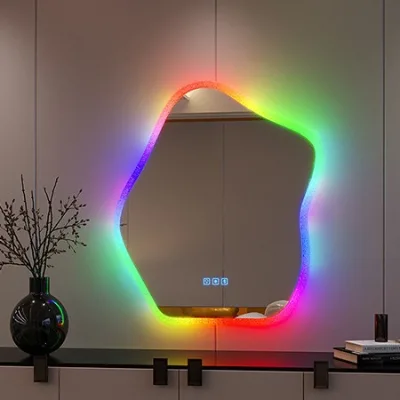

Anti Fog Touch Screen Smart LED Mirror Bathroom Mirror with LED Lights
$480.00 - $520.00
MOQ: 1 Pieces

Comprehensive Sourcing Guide
Strategic Sourcing Guide for Fogless Waterproof Smart Mirrors
The global demand for fogless waterproof smart mirrors has surged as commercial and residential spaces prioritize hygiene, safety, and technological integration in wet environments. For procurement professionals, sourcing these specialized fixtures requires a nuanced understanding of material science, electrical safety standards, and supply chain logistics. This guide synthesizes available market data to provide a disciplined framework for evaluating suppliers and selecting products that meet rigorous operational requirements without relying on unverified claims.
Technical Specifications and Material Composition
The core functionality of a Fogless Waterproof Smart Mirror relies on the integration of heating elements, anti-fog coatings, and smart lighting systems within a glass substrate. When evaluating product listings, buyers must distinguish between the structural frame material and the functional glass components. Market observations indicate a diversity in frame materials, ranging from stainless steel and wood to glass-only constructions. Stainless steel frames are frequently cited for their durability in high-moisture environments, offering superior resistance to corrosion compared to standard metals. Conversely, wooden frames provide a distinct aesthetic but require verification of water-resistant treatments to ensure longevity in shower rooms or wash areas.
The glass itself is a critical specification. Data points suggest that 4mm thickness is a common standard for these units, providing a balance between structural integrity and weight. However, buyers should verify this measurement for specific models, as thicker glass may be required for larger installations or high-traffic commercial applications. The shape of the mirror is another variable, with market offerings spanning square, oval, round, and rectangular configurations. The choice of shape often dictates the mounting hardware and the spatial layout of the bathroom or dressing room.
Lighting integration is a defining feature of smart mirrors. The observed product attributes highlight "Lighted" as a primary function, often paired with touch sensor switches for intuitive operation. The color temperature and distribution of light vary, with some models offering dual-color options to suit different user preferences. The frame finish, typically described as silver in current listings, contributes to the modern or simple aesthetic styles prevalent in the market. It is essential to confirm that the lighting components are fully sealed to maintain the "Waterproof" rating, preventing electrical hazards in wet zones.
Compliance and Certification Verification
In the realm of electrical fixtures installed in wet environments, compliance is non-negotiable. The supply chain for smart mirrors must adhere to strict safety standards to mitigate risks of electrical shock and fire. Buyers should prioritize suppliers who can provide verifiable documentation for certifications such as CE, UL, SAA, RoHS, and FC. These certifications indicate that the product has undergone testing for electromagnetic compatibility, electrical safety, and the restriction of hazardous substances.
Specific to the glass components, the standard GB15763.2-2005 is a relevant reference point for tempered safety glass used in architectural applications. This standard ensures that the glass meets specific impact resistance and fragmentation criteria, which is vital for safety in shower rooms and partitions. However, buyers must not assume that every listed product automatically complies with this standard. The presence of a standard code in a product description should be treated as a claim that requires validation through third-party test reports or direct supplier confirmation.
Furthermore, the "Fogless" and "Waterproof" attributes are functional claims that depend on the quality of the sealing and the heating element's efficiency. While some products list "Rustproof" capabilities, this is contingent on the frame material and the quality of the finish. Buyers should request specific test data regarding the IP (Ingress Protection) rating of the unit to confirm its water resistance level. Without concrete evidence of an IP rating, the "Waterproof" claim remains an observation rather than a guaranteed performance metric.
Cost Drivers and Pricing Dynamics
The pricing of fogless waterproof smart mirrors is influenced by a complex interplay of factors, including material costs, technological complexity, and order volume. The observed market price range is broad, spanning from approximately $1.36 to $520 USD. This significant variance reflects differences in product size, frame material, lighting technology, and the inclusion of advanced features like touch sensors or magnification.
Several key drivers impact the final cost. First, the frame material is a primary cost determinant; stainless steel and solid wood frames generally command higher prices than glass or composite alternatives. Second, the complexity of the electrical system, including the type of LED drivers and the sophistication of the touch sensor interface, adds to the manufacturing cost. Third, the size of the mirror directly correlates with the amount of glass and the power required for the heating element, pushing larger units into the higher price brackets.
Minimum Order Quantity (MOQ) also plays a critical role in the unit price. Market data shows an MOQ range from 1 piece to 1,000 pieces. Suppliers often offer tiered pricing structures where the unit cost decreases significantly as the order volume increases. For buyers with low volume needs, the per-unit cost will be higher, whereas bulk procurement can leverage economies of scale. Additionally, packaging requirements, such as plywood cases or wooden packages, add to the overall cost and must be factored into the total landed cost calculation.
Typical Applications and Functional Requirements
The versatility of fogless waterproof smart mirrors allows them to be deployed across a wide spectrum of applications. The primary use cases identified in the market include showcase displays, shower rooms, and room partitions. In residential settings, these mirrors are commonly installed in bathrooms, hotels, washing rooms, and dressing rooms. The specific functional requirements often dictate the choice of model. For instance, a hotel bathroom may prioritize a "Simple" style with robust waterproofing, while a luxury dressing room might require a "Modern" style with magnification and multi-color lighting.
The "Fogless" feature is particularly critical for shower rooms and high-humidity environments. This function is typically achieved through a heating element embedded within the glass or applied as a conductive coating. Buyers should verify that the heating system activates quickly and maintains a consistent temperature to prevent condensation buildup. The "Lighted" attribute serves both functional and aesthetic purposes, providing adequate illumination for grooming tasks while enhancing the ambiance of the space.
For commercial applications like showcases or partitions, the "Single Sided" attribute is often relevant, ensuring that the mirror reflects light effectively from one side while maintaining privacy or display clarity on the other. The "Folded" status, typically listed as "Unfolded" for these units, indicates that the product is delivered in its final operational configuration, simplifying installation. Buyers should also consider the "Workmanship" and "Quality" ratings, which are often described as "Mild Physique" and "Top" respectively, to ensure the product meets the durability expectations of the intended environment.
Supplier Evaluation and Operational Logistics
Selecting a reliable supplier is as important as selecting the product itself. The supply chain for smart mirrors involves multiple stakeholders, from raw material processors to final assemblers. Buyers should evaluate suppliers based on their transparency regarding product origins and their ability to provide consistent quality. The observed data indicates that products originate from locations such as Xiaogan, Hubei, and other regions in China. While this provides a geographic baseline, buyers should verify the specific manufacturing capabilities of the supplier rather than relying solely on the country of origin.
Logistics and lead times are critical components of the procurement process. Market observations suggest a shipment lead time of 10-15 days, but this can vary based on order volume and customization requirements. Customization is a key attribute offered by many suppliers, allowing buyers to tailor dimensions, shapes, and finishes to specific project needs. However, customization often extends lead times and may increase costs. Buyers must clarify the timeline for customized orders and ensure that the supplier has the capacity to meet deadlines.
Payment terms are another area requiring careful negotiation. Common terms observed include 100% T/T in advance or T/T and L/C options. While 100% advance payment is standard for smaller orders, larger contracts may benefit from more balanced terms to mitigate financial risk. The product packing method, ranging from bubble bags and PE foam to plywood cases, also impacts shipping costs and the risk of damage during transit. Buyers should specify packaging requirements that align with the fragility of the glass and the value of the unit.
Quality Control and Long-Term Procurement Strategy
Ensuring long-term reliability requires a proactive approach to quality control. Buyers should implement a rigorous inspection protocol that covers both pre-shipment and post-delivery stages. Key quality checkpoints include verifying the integrity of the glass, the functionality of the touch sensor, and the effectiveness of the anti-fog heating element. The "Quality" attribute, often listed as "Top," should be substantiated by sample testing rather than accepted as a marketing claim.
For long-term procurement, establishing a relationship with a supplier who offers consistent product standards is essential. The "prod_standard" attribute, which can be customizable or fixed at specific dimensions like 4060 or 600600mm, highlights the need for clear communication regarding specifications. Buyers should maintain a detailed record of the models purchased, such as GLY-WK001-1 or HZ1301, to ensure consistency in future orders. This documentation helps in troubleshooting any issues that arise and facilitates easier reordering.
Furthermore, buyers should consider the lifecycle of the product. The "Special Function" attributes like "Rustproof" and "Magnified" add value but also introduce potential points of failure. Regular maintenance checks and the availability of replacement parts should be discussed with the supplier. By focusing on these long-term considerations, procurement professionals can secure a supply chain that delivers reliable, high-performance fogless waterproof smart mirrors, meeting the evolving needs of their clients and end-users.
Comparative Analysis of Product Attributes
To facilitate decision-making, the following table summarizes the key attributes observed in the market, highlighting the variability in specifications that buyers must navigate.
| Attribute Category | Observed Variations | Key Verification Points |
|---|---|---|
| Frame Material | Stainless Steel, Glass, Wood | Corrosion resistance, water treatment, structural strength |
| Shape | Square, Oval, Round, Rectangle | Mounting compatibility, spatial fit, aesthetic alignment |
| Special Functions | Fogless, Waterproof, Rustproof, Lighted, Magnified | IP rating, heating element efficiency, sealing integrity |
| Certifications | CE, UL, SAA, RoHS, FC, GB15763.2-2005 | Validity of certificates, third-party test reports |
| Dimensions | 4060 to 90mm, 600600mm, etc. | Customization limits, glass thickness (e.g., 4mm) |
| Packaging | Plywood Case, Wooden Package, Bubble Bag | Protection level, shipping cost impact |
| Payment Terms | 100% T/T Advance, T/T, L/C | Risk mitigation, cash flow alignment |
This comparative view underscores the importance of detailed specification checks. While the market offers a wide array of options, the buyer's success depends on matching these attributes to the specific demands of the project. By adhering to the verification protocols outlined in this guide, procurement professionals can navigate the complexities of sourcing fogless waterproof smart mirrors with confidence and precision.
FAQs
What certifications do fogless waterproof smart mirrors have?
These mirrors typically hold CE, UL, SAA, RoHS, and FC certifications. Buyers should verify specific test reports for each unit to ensure compliance with electrical safety and hazardous substance restrictions in wet environments.
Which frame materials are available for these smart mirrors?
Available frame materials include stainless steel, wood, and glass-only constructions. Stainless steel offers superior corrosion resistance, while wood provides a distinct aesthetic that requires water-resistant treatment for longevity in shower rooms.
How can I find fogless waterproof smart mirrors with specific dimensions?
You can find units with customizable standard dimensions like 40*60, 50*70, or 600*600mm. Buyers must confirm the exact size requirements with the supplier, as models vary from small 40mm units to large 800mm installations.
Can I order fogless waterproof smart mirrors with a low MOQ?
Yes, some suppliers offer a Minimum Order Quantity of just 1 piece. However, larger orders often benefit from tiered pricing, so buyers should compare unit costs across different volume thresholds to optimize their procurement budget.
What is the typical lead time for shipping these mirrors?
The standard shipment lead time is approximately 10 to 15 days. Customized orders may extend this timeline, so buyers should clarify production schedules and packaging requirements like plywood cases or wooden packages before finalizing the order.
Which special functions are included in fogless waterproof smart mirrors?
Common special functions include fogless, waterproof, rustproof, lighted, and magnified features. These capabilities depend on the quality of the sealing and heating elements, so verifying the IP rating is essential for confirming water resistance levels.