Source Foldable Carbon Steel Baby Stroller for Travel, Shopping, and Daily Use
Explore 30 listings for the Foldable Carbon Steel Baby Stroller, featuring customizable colors, varying weights, and multiple frame options. Buyers can compare specifications like dimensions, load capacity, and wheel types to find the right model for infants aged 0-3 years.
Key considerations
Products List


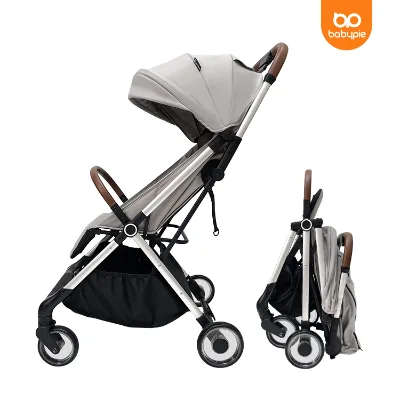


Foldable Children's Four-Wheel Stroller/High Carbon Steel Frame/New Baby Walker
$28.80 - $32.80
MOQ: 100 piece


Portable Baby Stroller with Easy Folding in Two Directions Baby Stroller
$37.00 - $38.00
MOQ: 1 Pieces

Custom Collapsable Lightweight Stroller, Baby Carriage Stroller for 0-3 Years
$30.42 - $50.42
MOQ: 50 Pieces



Comprehensive Sourcing Guide
Strategic Sourcing Guide for Foldable Carbon Steel Baby Strollers
The global market for infant mobility solutions has seen a sustained demand for products that balance portability with structural integrity. Among the various configurations available, the Foldable Carbon Steel Baby Stroller represents a specific niche where durability meets compact storage. For procurement professionals, understanding the distinction between material compositions and the specific attributes observed in current listings is critical. While the term "carbon steel" often implies high strength-to-weight ratios, actual product listings for this category frequently reveal a mix of steel alloys, including standard carbon steel and aluminum alloys, depending on the manufacturer's design philosophy. This guide synthesizes observed product attributes, standard specifications, and logistical realities to provide a disciplined framework for sourcing these items without relying on unverified marketing claims.
Material Composition and Structural Specifications
The core of any stroller procurement decision lies in the frame material and its associated engineering specifications. In the current supply landscape, product attributes indicate a prevalence of steel frames, with specific listings noting "Steel" as a primary material for structural components. However, buyers must also account for the presence of "Alloy" frames in similar product categories, as some manufacturers utilize aluminum alloys to reduce overall weight while maintaining foldability. The observed data highlights that frame selection directly influences the product's load capacity and net weight. For instance, specific models in the market have been observed with a net weight of 6.8kg and a gross weight of 8.2kg, while other robust variants reach a weight of 25kg with a stated load capacity of 40kg.
When evaluating a foldable stroller, the frame geometry is equally important. The standard dimensions observed in the market vary significantly based on the intended use and folding mechanism. Listings show standard packing sizes ranging from compact configurations like 432558cm to larger units measuring 905053cm. These dimensions are not merely packaging metrics but reflect the unfolded footprint and the folded storage volume. Buyers should verify that the "Steel" or "Alloy" designation aligns with the specific load requirements of their target demographic. A stroller designed for the 0-3 years age group, as noted in several product attributes, requires a frame capable of supporting a growing child without compromising the folding hinge integrity. The "4 Position" canopy and "EVA/Rubber" wheels are complementary features that rely on the frame's stability; a frame that is too flexible may cause the wheels to wobble, affecting the user experience.
Compliance, Certification, and Safety Standards
In the realm of child safety equipment, compliance is not optional but a fundamental requirement for market entry. While specific certification bodies are not explicitly listed in the provided product data, the existence of standardized dimensions and packing requirements suggests adherence to regional safety protocols. Buyers must verify that the "Steel" frames used in these strollers meet the tensile strength requirements of the destination market. For example, products originating from "Xingtai, China" or "Hebei" are subject to Chinese manufacturing standards, but export markets such as the EU or North America often require additional testing, such as ASTM F833 in the United States or EN 1888 in Europe.
The "Standard" field in product listings often contains dimensions (e.g., 95X46X61CM, 82X90X44CM) rather than safety certification codes. This indicates that the "standard" listed is likely a physical specification rather than a regulatory compliance mark. Procurement teams must therefore treat these dimensions as physical constraints and actively request independent test reports for stability, braking systems, and harness strength. The "OEM: Yes" attribute suggests that many suppliers are willing to customize the product to meet specific regional safety standards, but the buyer bears the responsibility of defining these requirements in the initial contract. Without explicit mention of certifications like ISO 9001 or specific safety test results in the provided data, buyers should assume that compliance verification is a post-selection step rather than a pre-verified attribute.
Cost Drivers and Pricing Dynamics
The pricing structure for foldable strollers is influenced by a complex interplay of material costs, customization levels, and order volume. The observed price range in the market spans from $3.38 to $80, a wide variance that reflects differences in frame material, component quality, and order quantity. The lower end of this spectrum likely corresponds to basic steel frames with minimal customization and standard packaging, while the higher end may include alloy frames, custom colors, and specialized features like the "Optional" awning or "Customized" packing.
Order Volume (MOQ) is a significant driver of unit cost. The observed MOQ range of 1 to 1096 units indicates that suppliers are flexible, catering to both small startups and large retailers. However, the cost per unit typically decreases as the order quantity approaches the upper limits of the MOQ range. For buyers considering the "Steel" frame option, the raw material cost of steel is generally lower than that of high-grade aluminum alloys, but the manufacturing process for folding mechanisms can add labor costs. Additionally, the "Customization" attribute is a key cost variable. Suppliers offering "Custom" colors, logos, or packing solutions will likely charge a premium over standard "Blue/Grey/Black/Red" options. Buyers must balance the desire for branding with the budget constraints imposed by the MOQ and unit price.
Typical Applications and Usage Scenarios
The versatility of the foldable stroller is evident in the diverse usage scenarios described in product attributes. The "Usage" field explicitly mentions "Palying or Travel," indicating that these products are designed for dual purposes: daily recreational use and transportation. The "Suitable for: 0-3 Years" specification defines the primary user demographic, ensuring that the stroller's dimensions and safety features are appropriate for infants and toddlers. The "4 Position" canopy is a critical feature for travel, allowing parents to adjust the shade based on the sun's angle, while the "EVA/Rubber" wheels suggest suitability for various terrains, from smooth indoor floors to outdoor pavement.
The "Foldable" nature of these strollers is particularly relevant for travel. The compact packing dimensions, such as 432558cm or 695135cm, suggest that these units can fit into standard vehicle trunks or overhead compartments, a key selling point for travelers. The "Carton" or "Carton Box" packing methods observed in the listings are designed to protect the stroller during transit, ensuring that the folding mechanism remains intact. For buyers targeting the travel market, the weight of the unit is a decisive factor; a stroller weighing 6.8kg is significantly more portable than one weighing 25kg, even if both are made of steel. The choice of material and design must align with the specific mobility needs of the target customer.
Supplier Evaluation and Origin Verification
Evaluating suppliers for foldable strollers requires a focus on origin, production capacity, and customization capabilities. The provided data identifies "China" as the primary origin, with specific mentions of "Xingtai" and "Hebei" as manufacturing hubs. These regions are known for their concentration of metalworking and toy manufacturing industries, offering a robust supply chain for steel and alloy components. The "OEM: Yes" attribute confirms that many suppliers in these regions are equipped to handle private label orders, allowing buyers to brand the product with their own "Logo" or "Custom" color schemes.
When assessing a supplier, buyers should verify the consistency of their production standards. The variation in product models, such as "GS-X06," "GS-KH06," and "PD-1101," suggests that suppliers offer a wide range of SKUs. This variety can be advantageous for buyers looking to diversify their inventory but requires careful management to ensure quality consistency across different models. The "Customized" packing and "Standard" dimensions listed for different models indicate that suppliers have the flexibility to adapt to specific buyer requirements. However, buyers must ensure that the supplier's quality control processes are robust enough to handle these customizations without compromising the structural integrity of the steel frame.
Quality Control and Long-Term Procurement Considerations
Ensuring long-term value in stroller procurement involves rigorous quality control measures and a focus on durability. The "Steel" frame is generally durable, but the folding mechanism is often the point of failure. Buyers should request detailed specifications on the hinge design and the materials used for the "Wheels" and "Fabric" (noted as "Linen/ Oxford"). The "Net Weight" and "Gross Weight" figures provide a baseline for assessing the stroller's build quality; a significant discrepancy between the two might indicate excessive packaging or the inclusion of non-essential components.
For long-term procurement, the ability to source replacement parts is crucial. The "Customization" and "OEM" capabilities of suppliers suggest that they can produce specific components, but buyers should verify if the supplier maintains a stock of spare parts like wheels, canopies, or fabric covers. The "Color" options, ranging from standard "Blue/Grey" to "Custom" shades, offer branding opportunities but also require consistent color matching across production runs. Buyers should establish clear quality acceptance criteria for color consistency, fabric durability, and frame stability before placing large orders. By focusing on these technical and logistical details, buyers can mitigate risks and ensure a reliable supply chain for foldable carbon steel baby strollers.
Comparative Analysis of Product Attributes
To facilitate decision-making, the following table summarizes the key attributes observed in the current market listings, highlighting the variations in specifications that buyers should consider during the sourcing process.
| Attribute Category | Observed Variations | Procurement Consideration |
|---|---|---|
| Frame Material | Steel, Alloy | Verify tensile strength and weight implications for the target age group (0-3 years). |
| Dimensions (Folded) | 432558cm to 905053cm | Ensure compatibility with intended storage spaces (vehicle trunks, aircraft overhead bins). |
| Weight | 6.8kg (Net) to 25kg (Total) | Balance portability needs against load capacity requirements (up to 40kg). |
| Wheel Type | EVA/Rubber | Assess suitability for intended terrain (indoor vs. outdoor travel). |
| Customization | Logo, Color, Packing, OEM | Confirm MOQ requirements and lead times for custom orders versus standard SKUs. |
| Origin | China (Xingtai, Hebei) | Verify supplier location for logistics planning and potential trade compliance checks. |
| Packing | Carton, Carton Box | Evaluate packaging efficiency and protection for the folding mechanism during transit. |
This comparative overview underscores the importance of aligning specific product attributes with the buyer's operational requirements. By systematically evaluating these factors, procurement professionals can navigate the complexities of the foldable stroller market and secure high-quality products that meet both safety standards and commercial objectives.
FAQs
What frame materials are available for foldable carbon steel baby strollers?
Steel and alloy frames are available for these strollers. Buyers should verify the specific material designation to ensure it meets load capacity requirements, as some models support up to 40kg while others weigh significantly less.
Can I customize the color and logo on these strollers?
Yes, customization for color and logo is available. Suppliers offer options like Blue, Grey, Black, Red, or custom shades, and many vendors accept OEM requests for branding on the product or packaging.
What is the typical price range for these strollers?
The observed price range spans from 3.38 to 80 USD. Costs vary based on frame material, customization levels, and order volume, with lower prices often corresponding to standard steel frames and minimal branding.
How does the MOQ affect the unit cost?
The minimum order quantity ranges from 1 to 1096 units. Unit costs typically decrease as order quantities increase, allowing buyers to balance budget constraints with the need for custom features or branding.
Which dimensions are standard for the folded stroller?
Standard folded dimensions vary from 43*25*58cm to 90*50*53cm. These measurements reflect the storage volume and ensure compatibility with vehicle trunks or aircraft overhead bins for travel purposes.
What is the load capacity for these baby strollers?
Some models support a load capacity of up to 40kg. Buyers must ensure the frame strength aligns with the target age group, typically 0-3 years, to maintain safety and structural integrity.