Source Foldable Doll Stroller for Travel, Play, and Storage
Explore 30 options for a Foldable Doll Stroller designed for travel, pretend play, and preschool activities. Buyers can compare specifications like material, age group suitability, and dimensions to find the right fit for their needs.
Key considerations
Products List
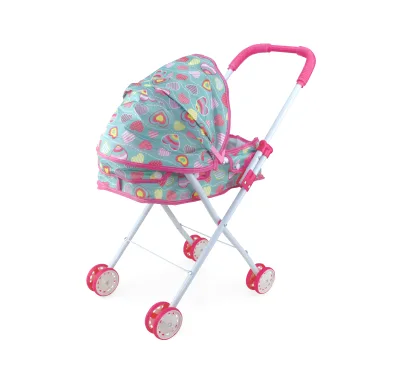
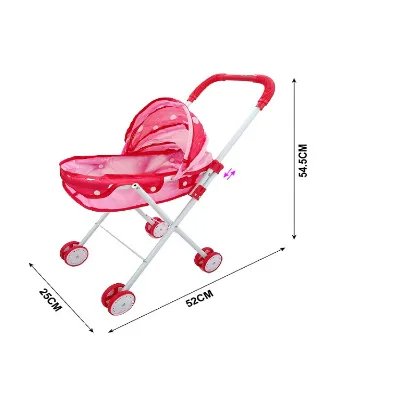


Wholesale Metal Folding Trolley Pram Baby Lovely Toy Doll Stroller for Girls
$9.50 - $15.00
MOQ: 120 Pieces


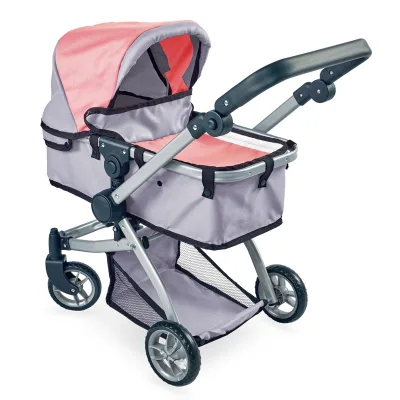


Baby-Walking Artifact Can Sit, Lie Down, Two-Way, Lightweight and Foldable
$72.00 - $82.00
MOQ: 100 Pieces


New Baby Pushchair Lightweight Baby Stroller Foldable Pram Buggy Travel Stroller
$28.30 - $30.30
MOQ: 100 Pieces


Portable Baby Stroller with Easy Folding in Two Directions Baby Stroller
$37.00 - $38.00
MOQ: 1 Pieces


Comprehensive Sourcing Guide
Strategic Sourcing Guide for Foldable Doll Strollers
The global market for pretend play and preschool toys has seen a sustained increase in demand for realistic, functional accessories that enhance imaginative play. Among these, the Foldable Doll Stroller stands out as a high-volume category due to its portability and utility. For B2B buyers, navigating this sector requires a disciplined approach to sourcing, focusing on the intersection of technical specifications, material safety, and supply chain reliability. This guide provides a comprehensive framework for evaluating suppliers and products in this category, grounded in observed market data and standard procurement practices.
Technical Specifications and Design Variations
When evaluating foldable doll strollers, buyers must first distinguish between the various design iterations available in the market. The product landscape is diverse, ranging from miniature accessories to full-sized play units. Observed data indicates a significant variation in physical dimensions, with single package sizes recorded as wide as 65x30x60 cm and as compact as 53x30x60 cm. These dimensions are critical for logistics planning, as they directly impact container loading efficiency and shipping costs.
The structural integrity of these units is often defined by the frame material. While some entries list plastic and polyester as primary materials, others specify a stainless steel frame, which suggests a higher durability tier suitable for more robust play or commercial environments. The shape of the product is another key differentiator; designs range from car-shaped units to those mimicking human forms, each catering to specific thematic play scenarios. Furthermore, the foldability mechanism is a non-negotiable feature for this category. The "Is Foldable" attribute is consistently marked as "Yes" across high-confidence data points, confirming that the collapsing mechanism is a standard expectation rather than a premium add-on.
Buyers should also scrutinize the model numbers and product codes provided by suppliers. Identifiers such as B5327-1, 336B-2, and Daily use-5875D suggest distinct SKUs that may vary in color, weight, or accessory inclusion. For instance, the single gross weight is observed at 1.500 kg for specific models, which serves as a baseline for freight calculations. However, weight can fluctuate based on the inclusion of additional components like storage baskets or canopies. The "Selling Units" are typically listed as single items, but bulk packaging often utilizes cartons or boxes, with some suppliers offering customized packing solutions to meet specific retail requirements.
Compliance and Certification Verification
Safety compliance is the most critical factor when sourcing toys intended for children. The target age groups for these products span a wide spectrum, from infants (0-6 months) to older preschoolers (3-8 years). This broad range necessitates rigorous verification of safety standards. One observed certification mentioned in the data is "ENASTM," which implies adherence to European and American safety norms. However, buyers must not assume that all listed products automatically possess this certification.
The "Customization: Available" attribute indicates that many suppliers offer tailored solutions, which can introduce complexity into the compliance process. Custom colors or shapes may require re-verification of material safety and structural integrity. Buyers should explicitly request valid test reports from accredited laboratories for every batch ordered. The "prod_standard" field in supplier data often lists dimensions (e.g., 95x46x61 cm) rather than safety standards, which can be misleading. It is the buyer's responsibility to verify that the product meets the specific regulatory requirements of the destination market, such as ASTM F963 in the United States or EN71 in Europe.
Additionally, the "Load Bearing" capacity is a relevant safety metric. An observed value of 15kg suggests a structural limit that must be clearly communicated to end-users to prevent accidents. For doll strollers, this load usually refers to the weight of the doll and accessories, but it also reflects the overall durability of the chassis. Buyers should ensure that the load-bearing specifications align with the intended age group; a stroller designed for a 3-8-year-old user might have different structural requirements than one marketed for a 0-3-year-old.
Cost Drivers and Pricing Dynamics
Understanding the cost structure of foldable doll strollers is essential for maintaining healthy profit margins. The observed price range in the market is extensive, spanning from $0.41 to $159. This wide disparity is driven by several factors, including material quality, brand positioning, and order volume. The lower end of the spectrum likely corresponds to basic plastic models with minimal features, while the higher end may include premium materials like stainless steel frames, complex folding mechanisms, or licensed branding.
The Minimum Order Quantity (MOQ) is another significant cost driver. Data shows an MOQ range from 1 to 520 units, with a specific high-confidence observation of 5 Cartons for certain models. This variability allows buyers to test the market with small orders or commit to larger volumes for better unit economics. However, the "MOQ: 5 Cartons" constraint suggests that some suppliers operate on a bulk-wholesale model, which may not suit small retailers or drop-shippers.
Shipping costs are heavily influenced by the "Single package size" and "Single gross weight." A unit measuring 65x30x60 cm with a weight of 1.5 kg occupies significant cubic volume, which can lead to "chargeable weight" issues in air freight or reduced container utilization in sea freight. Buyers should calculate the landed cost by factoring in the volume weight, not just the actual weight. Furthermore, the "Place of Origin" is predominantly Guangdong, China, with some entries from Zhejiang. These regions are established manufacturing hubs, but buyers should verify the specific factory location to assess logistics efficiency and potential tariff implications.
Typical Applications and Market Segmentation
The application of foldable doll strollers extends beyond simple play; they are categorized under "Other Pretend Play & Preschool" and are often associated with "doll accessories." The "Key Feature1: easy to travel" and "Key Feature2: Portable" highlight their utility for on-the-go play, making them ideal for travel, outdoor activities, or daycare settings. The "Application: travel" tag reinforces this positioning, suggesting that these products are designed to be lightweight and compact enough to fit in car trunks or carry-on luggage.
The "Gender: Unisex" attribute indicates that these products are marketed to a broad audience, avoiding gender-specific color coding or styling that might limit market reach. The "Style: doll accessories" classification places them in a niche that complements existing doll collections, encouraging cross-selling opportunities. For retailers, this means that foldable doll strollers can be positioned as essential add-ons to core doll lines, increasing the average order value.
The age group segmentation is particularly nuanced. While some products target the 2-4 year and 5-7 year demographics, others cater to infants aged 0-6 months or 0-3 years. This suggests a need for distinct product lines within the same category. A stroller for a 0-3-year-old might prioritize safety features like secure locking mechanisms and soft edges, whereas a model for a 5-7-year-old might focus on aesthetic details and storage capacity for accessories.
Supplier Evaluation and Sourcing Strategy
Evaluating suppliers requires a multi-dimensional approach that goes beyond price comparisons. The "Brand Name: HTL" observed in the data suggests that some manufacturers operate with established brand identities, which can be a proxy for reliability. However, many suppliers may offer "Custom" branding options, allowing retailers to white-label products. When assessing potential partners, buyers should verify the "prod_packing" capabilities, as options range from standard cartons and boxes to fully customized packaging.
The "Customization: Available" attribute is a double-edged sword. While it offers flexibility, it also increases the risk of production errors. Buyers should establish clear communication channels and require detailed pre-production samples before approving mass production. The "prod_model" identifiers, such as 2603041309 or st1, serve as crucial reference points for tracking specific product iterations. Ensuring that the supplier can consistently reproduce the exact model specifications is vital for maintaining brand consistency.
Location is another factor in supplier evaluation. With origins in Guangdong and Zhejiang, buyers should consider the logistical advantages of these regions, which are known for efficient export infrastructure. However, buyers should also be aware of potential lead time variations due to seasonal demand or raw material shortages. The "Lead Time" is not explicitly provided in the data, so it must be negotiated and confirmed in the purchase agreement.
Quality Control and Long-Term Procurement Considerations
Implementing a robust quality control (QC) protocol is essential for mitigating risks associated with toy manufacturing. Given the "Material: Plastic, Polyester, Poly, Stainless Steel" mix, buyers should inspect for defects such as sharp edges, loose parts, or color inconsistencies. The "Certification: ENASTM" observation should be treated as a target standard rather than a guarantee. Third-party inspection services should be engaged to verify that the physical product matches the submitted samples and complies with safety regulations.
Long-term procurement considerations involve building a resilient supply chain. The "Customized" packing and "Custom" color options indicate that suppliers are willing to adapt to market trends. Buyers should leverage this flexibility to stay ahead of seasonal demands, such as holiday spikes or back-to-school periods. However, reliance on customization can complicate inventory management. It is advisable to maintain a core inventory of standard models while using customized SKUs for limited-time promotions.
The "Load Bearing: 15kg" specification serves as a benchmark for durability testing. Over time, the folding mechanism and frame integrity should be monitored to ensure they do not degrade with repeated use. Suppliers should be required to provide warranties or guarantees regarding the structural integrity of the product. Additionally, the "Is Foldable: Yes" feature must be tested for ease of use and reliability. A stroller that is difficult to fold or prone to jamming will lead to high return rates and customer dissatisfaction.
Comparative Analysis of Product Attributes
To facilitate decision-making, the following table summarizes key attributes observed in the Foldable Doll Stroller market. This comparison highlights the variability in specifications that buyers must navigate.
| Attribute | Observed Range / Options | Procurement Implication |
|---|---|---|
| Material | Plastic, Polyester, Poly, Stainless Steel | Determines durability and cost; steel frames imply higher durability. |
| Package Size | 53x30x60 cm to 65x30x60 cm | Impacts shipping volume and container efficiency. |
| Weight | 1.500 kg (Single Gross Weight) | Critical for freight cost calculation and handling. |
| Age Group | 0-6 months to 8 Years | Requires distinct safety testing and marketing strategies. |
| MOQ | 1 to 520 units (e.g., 5 Cartons) | Affects entry barrier and inventory risk. |
| Certification | ENASTM (Observed) | Must be verified per batch; not automatic for all models. |
| Customization | Available (Color, Packing, Model) | Increases flexibility but requires strict QC. |
| Origin | Guangdong, Zhejiang, China | Logistics hub; verify specific factory capabilities. |
Conclusion
Sourcing foldable doll strollers requires a balanced approach that weighs technical specifications against compliance requirements and cost factors. The market offers a wide array of options, from basic plastic models to robust stainless steel units, catering to diverse age groups and applications. Buyers must remain vigilant in verifying certifications, especially when dealing with customized orders, and should prioritize suppliers who demonstrate transparency in their production processes. By adhering to the structured evaluation criteria outlined in this guide, B2B buyers can build a reliable supply chain that delivers high-quality, safe, and profitable products to the end consumer. The key to success lies in detailed due diligence, clear communication, and a commitment to maintaining the highest standards of quality and safety throughout the procurement lifecycle.
FAQs
What materials are used for foldable doll strollers?
These strollers typically use plastic, polyester, poly, and stainless steel frames. Buyers should verify specific material compositions as options vary by model to ensure durability and safety for the intended age group.
Which certifications are available for these products?
Some models carry ENASTM certification indicating adherence to safety norms. Buyers must explicitly request valid test reports for each batch, as customization or specific models may not automatically include this compliance.
Can I find foldable doll strollers with a 15kg load bearing?
Yes, certain units are rated for a 15kg load bearing capacity. This specification reflects structural durability but should be clearly communicated to users to prevent accidents, especially when selecting models for older children.
What is the typical MOQ for these items?
Minimum Order Quantities range from 1 to 520 units, with some suppliers requiring 5 cartons. Buyers should confirm specific MOQ constraints early, as bulk-wholesale models may not suit small retailers or drop-shippers.
How do package dimensions affect shipping costs?
Single package sizes vary significantly, such as 65x30x60 cm or 53x30x60 cm. These dimensions impact container loading efficiency and chargeable weight, so buyers must calculate landed costs based on volume rather than just actual weight.
Which age groups are suitable for these strollers?
Products target various ages including 0-6 months, 0-3 years, 2-4 years, and 3-8 years. Selection should align with safety features like locking mechanisms for infants versus storage capacity for older preschoolers.