Source Foldable Dual Camera GPS Drone for Surveying, Agriculture, and Inspection
Explore 30 listings of Foldable Dual Camera GPS Drone options from verified manufacturers. Buyers can compare specifications like flight time, altitude capabilities, and customization services to find the right industrial or hobbyist solution; compare the available evidence and request quotations based on your requirements.
Key considerations
Products List


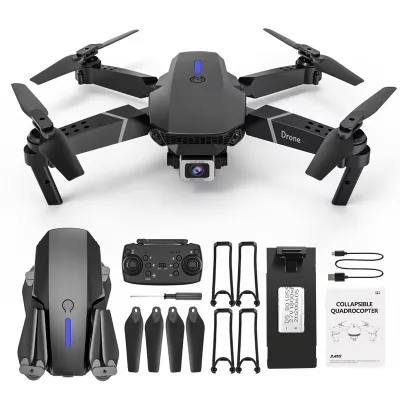
Hot Sale Mini Dual Camera Aerial Photography Quadcopter Remote-Controlled Drone
$17.61 - $19.68
MOQ: 100 Pieces



Quadcopter Drone with 10kg Payload Supporting 4K Camera and Thermal Camera
$13000.00 - $15000.00
MOQ: 1 Pieces




Comprehensive Sourcing Guide
Foldable Dual Camera GPS Drone Sourcing Guide
Sourcing foldable dual camera GPS drones requires a nuanced understanding of the intersection between consumer-grade portability and industrial-grade reliability. Buyers must navigate a market where "foldable" structures often prioritize compactness over ruggedness, while "dual camera" configurations vary significantly in sensor quality and synchronization capabilities. The core keyword suggests a device that balances ease of transport with advanced imaging potential, but procurement teams must verify whether the dual cameras serve redundant safety purposes or distinct imaging functions such as wide-angle and zoom. This distinction fundamentally alters the technical evaluation criteria and the subsequent cost structure of the procurement contract.
The observed market signals indicate a wide variance in product specifications, ranging from small, beginner-friendly units to large, heavy industrial manufacturing tools. Procurement specialists should recognize that a single listing may not represent a uniform product line, as suppliers often aggregate diverse models under broad category tags. It is critical to distinguish between OEM/ODM customized industrial drones and standard off-the-shelf consumer models. The presence of certifications like CE, RoHS, and FCC in some listings suggests a baseline for regulatory compliance, but buyers must confirm that these certifications apply specifically to the foldable dual-camera configuration being ordered, rather than to a different model in the supplier’s catalog.
Product Scope and Observed Listing Signals
The product scope for foldable dual camera GPS drones encompasses a broad spectrum of UAV types, from fixed-wing models with short-range operating capabilities to flapping-wing industrial UAVs designed for remote operations. Observed listings reveal significant diversity in size, with options ranging from small, portable units to large, heavy-duty structures. Buyers should note that the term "foldable" is not universally standardized; some models offer compact folding mechanisms for storage, while others rely on modular disassembly. The presence of GPS functionality is a key differentiator, enabling autonomous flight paths and stable hovering, which is essential for consistent image capture in both survey and inspection applications.
Listing signals also highlight variations in customization availability and supplier type. Some suppliers identify as drone manufacturers with professional factories, offering OEM, ODM, and OBM services, which is crucial for buyers seeking branded or specialized industrial solutions. Others may be trade suppliers with different lead times and minimum order quantities. The observed price range is extensive, reflecting the disparity between basic hobbyist drones and complex industrial systems. Procurement teams must correlate these signals with specific model numbers, such as V-88 or sk007GPS, to ensure accurate specification matching, as generic keywords often mask significant technical differences in payload capacity and flight endurance.
Technical Specifications to Verify
When evaluating technical specifications, buyers must prioritize the verification of flight time, image transmission distance, and camera resolution. Observed data indicates that flight times can range from approximately 10 to 15 minutes for smaller units, which may be insufficient for large-scale industrial inspections. The image transmission distance is another critical parameter, with some models supporting ranges of 30 meters to over 1 kilometer. Buyers should confirm the stability of the transmission link under interference, as this directly impacts the reliability of real-time video feeds from the dual cameras. Additionally, the power source, typically a lithium battery, must be evaluated for its voltage and capacity, such as 3.7V 1800 mAh, to ensure adequate energy density for the intended operational radius.
The physical structure and weight of the drone are equally important for logistics and deployment. Foldable designs must be assessed for their structural integrity after repeated folding cycles, as mechanical failure can compromise flight safety. The individual body weight, excluding the battery, varies significantly, with some models weighing around 133 grams and others up to 222 grams or more. Buyers should verify the unfolded and folded dimensions to ensure compatibility with existing transport cases and storage facilities. Furthermore, the control type, whether remote control or autonomous GPS navigation, must align with the operator skill level, ensuring that the interface is intuitive for beginners or robust enough for professional industrial use.
Compliance and Safety Documentation
Compliance and safety documentation form the backbone of a secure procurement process, particularly when dealing with electronic devices that emit radio frequencies. Buyers must verify that the drones possess valid certifications such as CE, RoHS, and FCC, which indicate adherence to European and international safety and environmental standards. The presence of ISO certification in some listings suggests a commitment to quality management systems, but buyers should request specific audit reports to confirm that these standards apply to the manufacturing of the foldable dual camera models. Without proper documentation, imported drones may face customs delays or regulatory penalties in the destination country.
Safety features, particularly those related to GPS and flight stability, must be thoroughly documented. The integration of GPS modules enables geofencing and return-to-home functions, which are critical for preventing loss or collision. Buyers should request detailed user manuals and safety warnings that explain the limitations of the dual camera system and the GPS module. Additionally, warranty terms, typically observed as one year for drone products, should be clearly defined in the contract, covering both hardware defects and software updates. Procurement teams must also ensure that the supplier provides clear instructions for battery handling and disposal, in compliance with RoHS directives regarding hazardous substances.
Cost Drivers and Commercial Terms
Cost drivers for foldable dual camera GPS drones are influenced by the complexity of the dual camera system, the quality of the GPS module, and the degree of customization required. OEM and ODM services, while adding value for branding and specific feature integration, typically increase the unit price and require higher minimum order quantities. The observed MOQ range of 1 to 300 units allows for flexibility, but buyers should negotiate volume discounts for larger orders. Additionally, the choice between fixed-wing and flapping-wing structures impacts manufacturing costs, with flapping-wing designs often being more complex and expensive to produce.
Commercial terms, including delivery dates and payment conditions, must be carefully negotiated. For customized products, suppliers may require a separate delivery date quote, which can extend lead times significantly. Buyers should establish clear milestones for production and shipping to mitigate supply chain risks. The packaging type, whether box pack, cardboard box, or gift box, also affects logistics costs and product protection during transit. Procurement teams should consider the total cost of ownership, including maintenance, spare parts availability, and potential software licensing fees, to ensure a comprehensive financial assessment of the procurement decision.
Supplier Qualification and Quality Control
Supplier qualification is a critical step in ensuring the reliability of foldable dual camera GPS drones. Buyers should prioritize suppliers who identify as professional drone manufacturers with dedicated factories, as these entities typically have better control over quality assurance processes. The presence of customization options suggests a flexible production line, but buyers must verify the supplier’s capacity to maintain consistent quality across customized orders. Requesting samples before placing bulk orders is essential to evaluate the build quality of the folding mechanism and the performance of the dual camera system in real-world conditions.
Quality control measures should include rigorous testing of flight stability, camera synchronization, and GPS accuracy. Buyers should inquire about the supplier’s internal testing protocols and whether they conduct pre-shipment inspections. The warranty period, typically one year, should be backed by a clear after-sales support structure, including access to technical support and replacement parts. Additionally, buyers should assess the supplier’s responsiveness to issues and their ability to provide timely updates or repairs. Establishing a strong relationship with a qualified supplier can mitigate risks associated with product defects and ensure long-term operational success.
Long-Term Procurement Checks
Long-term procurement checks involve monitoring the supplier’s performance and the product’s lifecycle sustainability. Buyers should establish key performance indicators (KPIs) to track defect rates, delivery punctuality, and customer satisfaction. Regular audits of the supplier’s quality management systems can help identify potential issues before they impact production. Additionally, buyers should stay informed about regulatory changes in drone usage and certification requirements, ensuring that the procured drones remain compliant with evolving laws. This proactive approach minimizes legal risks and ensures that the drones can be used effectively in the intended industrial applications.
Technological obsolescence is another critical factor in long-term procurement. The rapid advancement of camera and GPS technologies means that today’s models may become outdated quickly. Buyers should negotiate options for software updates and hardware upgrades to extend the product’s useful life. Furthermore, assessing the availability of spare parts and the supplier’s commitment to supporting older models is essential for maintaining operational continuity. By focusing on these long-term checks, procurement teams can build a resilient supply chain that adapts to technological changes and regulatory shifts, ensuring sustained value from the Foldable Dual Camera GPS Drone investment.
FAQs
What certifications do these drones have?
These drones typically hold CE, RoHS, FCC, and ISO certifications. These standards ensure compliance with international safety and environmental regulations for industrial and consumer use. Buyers should verify specific model documentation to confirm all required approvals for their target market operations.
Can I customize the drone structure?
Yes, customization is available for these units. Manufacturers offer OEM, ODM, and OBM services to tailor the flapping-wing or fixed-wing structures. Buyers can request specific modifications to meet unique industrial manufacturing or heavy industrial application requirements during the sourcing process.
What is the typical flight time?
Flight times vary by model, ranging from about fifteen minutes to more than ten minutes. Some units utilize a 3.7V 1800 mAh lithium battery. Buyers should check specific product specifications for exact endurance metrics to ensure the drone meets their operational mission duration needs.
What image resolution do these drones support?
Many models support 4K image capture and 4K HD video resolution. This high-definition capability is suitable for detailed industrial inspections and professional media production. Buyers should verify the specific camera sensor specifications for each model to ensure it meets their visual data quality standards.
Where are these drones manufactured?
These drones are manufactured in China, with origins in regions like Hebei and Guangdong. Professional factories provide these units with a one-year warranty. Buyers can source directly from manufacturers or trade suppliers to ensure quality control and reliable after-sales support for their procurement.
What packaging options are available?
Packaging options include box packs, cardboard boxes, gift boxes, and color boxes. Specific dimensions and weights vary by model, such as 22.2*8.1*17.4cm for certain units. Buyers should request detailed packing lists to ensure proper logistics planning and protection during international shipping and handling.