Source Foldable Non Woven Clothes Organizer for Storage, Travel, and Home
Compare 30 Foldable Non Woven Clothes Organizer options from verified suppliers. Explore diverse models with varying dimensions, customization, and features to find the ideal solution for storage, travel, and home organization needs.
Key considerations
Products List


Household Non-Woven Fabric Storage Box Clothes Organizer for Wardrobe Drawers
$1.00 - $1.14
MOQ: 200 Pieces


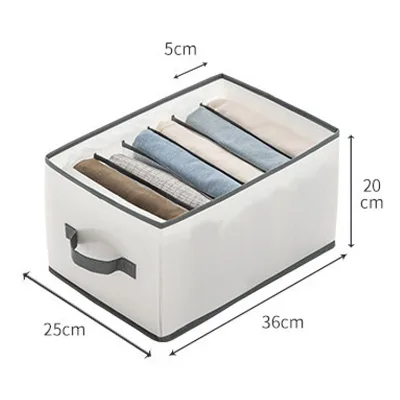


Storage Box Collapsible Clothes Organizer for Jeans Foldable Clothing Storage Box
$0.80 - $1.80
MOQ: 1000 Pieces

Multifunction Closet Storage Washable Drawer Organizer for Clothes Storage Box
$0.80 - $1.80
MOQ: 1000 Pieces


Fabric Clothing Folding Storage Box Organizers for Home Use Living Room
$0.80 - $1.80
MOQ: 1000 Pieces

Design Household Storage Foldable Storage Box Closet Organizer with Lid
$0.80 - $1.80
MOQ: 1000 Pieces

Comprehensive Sourcing Guide
Strategic Sourcing Guide for Foldable Non-Woven Clothes Organizers
Understanding Product Definitions and Core Attributes
When initiating a procurement strategy for foldable non-woven clothes organizers, buyers must first distinguish between the broad category of storage solutions and the specific technical attributes that define this niche. The core keyword "foldable non-woven clothes organizer" implies a product constructed from non-woven fabric, designed for collapsibility to maximize space efficiency, and intended for the storage of apparel. Based on observed market data, these items frequently fall under the classification of "Storage Boxes & Bins" or "Storage Holders & Racks," though specific listings may also categorize them as "Collapsible Clothing Shelves" or "Duffel Bags" depending on their structural rigidity and intended usage.
A critical observation in the current supply landscape is the variability in product nomenclature. While the core function remains consistent, specific product models such as SNY-027, SSN-115, SNY-004, and SNY-001 demonstrate that manufacturers often use distinct model numbers for similar functional items. The "Non-Woven" material specification is a primary differentiator, offering a balance between durability and lightweight portability. Unlike rigid plastic bins or woven fabric baskets, non-woven organizers typically feature a "Soft" hardness rating, which allows them to conform to irregular spaces when folded. The "Folded" attribute is a standard operational state, indicating that the product can be compressed for storage when not in use, a feature explicitly highlighted in high-confidence product attributes.
The shape of these organizers varies significantly, with "Rectangular" and "Horizontal Square" being the most common configurations observed. Dimensions are equally variable, with standard specifications ranging from compact units like 3115.511 cm to larger storage solutions measuring up to 442522 cm. Some listings indicate a capacity range of 500-1000ml, while others suggest much larger volumes suitable for bedding or bulk apparel. Buyers must verify that the specific model number aligns with their spatial requirements, as the "OEM" standard often allows for custom dimensions that deviate from the observed ranges of 313131 cm or 382625 cm.
Technical Specifications and Material Composition
The technical integrity of a foldable non-woven clothes organizer relies heavily on the composition of the non-woven material and the structural reinforcements used. The material is typically a synthetic fiber bonded together through mechanical, chemical, or thermal processes, resulting in a fabric that is both "Eco-Friendly" and "Reusable." This composition contributes to the product's "Lightweight" nature, a key selling point for logistics and end-user convenience. The "Durable" and "Strong" attributes observed in product descriptions suggest that the material is engineered to withstand the weight of clothing without tearing, provided the load does not exceed the structural limits of the non-woven fabric.
A critical technical specification to evaluate is the "Closed Way" mechanism. While some organizers utilize simple open-top designs, others feature a "Zipper" closure to enhance dust protection and security. The "Waterproof" attribute is another variable; while some products are explicitly marked as waterproof, others may only offer "Dust-Proof" protection. Buyers should verify the specific coating or lamination applied to the non-woven fabric to ensure it meets the environmental conditions of the intended storage location. For instance, a product intended for a damp basement requires a higher level of water resistance than one intended for a dry closet.
The structural design often includes "Sturdy" mounting types, such as "Hanging" or "Foldable" frames. The "Mounting Type" determines how the organizer interacts with the storage environment. Hanging organizers are designed to be suspended from rods or hooks, while foldable boxes are intended to stand independently or stack. The "Style" of the product, ranging from "Countryside Style" to "Simplicity" or "Original," often dictates the aesthetic finish, including color options like "Black" or "OEM" custom colors. The "Hardness" being "Soft" is a defining characteristic that differentiates these items from rigid containers, requiring careful handling during the folding process to prevent creasing that could compromise the material's integrity over time.
Cost Drivers and Pricing Dynamics
The pricing structure for foldable non-woven clothes organizers is influenced by a complex interplay of material costs, customization levels, and order volume. The observed listed price range in the market spans from $0.01 to $16.90 USD, a wide variance that reflects differences in size, material quality, and feature sets. A product priced at the lower end of this spectrum is likely a basic, non-customized unit with standard dimensions, while items at the higher end may include premium features such as reinforced zippers, custom branding, or specialized waterproofing.
Minimum Order Quantity (MOQ) is a significant cost driver in this category. The observed MOQ range is substantial, varying from 20 to 3000 units. However, specific high-confidence data points indicate MOQs of 2000 PCS or 3000 PCS for certain models. This high threshold suggests that the manufacturing process for non-woven organizers is optimized for large-scale production runs. Buyers attempting to source smaller quantities may face higher per-unit costs or may need to negotiate with suppliers who offer "OEM / ODM Customization" services, which often come with stricter volume requirements.
Customization is a primary factor affecting the final price. The "Accept" and "Available" customization attributes indicate that buyers can request changes to the product model, dimensions, color, and branding. While customization adds value, it typically increases the unit cost and may extend lead times. The "OEM" standard for dimensions, such as 442522 cm or 382625 cm, allows for tailored solutions but requires precise specification to avoid production errors. Additionally, the "Product Packing" method, often an "OPP Bag" or OEM-specific packaging, adds to the overall cost. Buyers should consider the total landed cost, including packaging and shipping, rather than focusing solely on the unit price, as the lightweight nature of non-woven materials can lead to inefficient shipping if the packaging is not optimized for volume.
Compliance, Certification, and Safety Standards
When sourcing foldable non-woven clothes organizers, buyers must navigate the regulatory landscape regarding material safety and environmental compliance. The "Eco-Friendly" and "Reusable" attributes suggest that these products are marketed as sustainable alternatives to plastic storage. However, buyers should verify the specific certifications that validate these claims. While the provided data does not list specific certification bodies, the origin of the products, primarily "Zhejiang, China," implies that compliance with international standards such as REACH (Registration, Evaluation, Authorisation and Restriction of Chemicals) or ISO 9001 for quality management is essential for export markets.
The material composition of non-woven fabrics often involves polypropylene or polyester, which are subject to flammability and chemical safety regulations depending on the destination market. Buyers should request test results regarding formaldehyde content, heavy metals, and flammability ratings, especially if the organizers are intended for use in children's rooms or commercial environments. The "Dust-Proof" and "Waterproof" claims should be backed by standardized test data, such as water resistance ratings or particulate filtration efficiency, to ensure the product meets the advertised performance levels.
Furthermore, the "OEM / ODM Customization" aspect introduces additional compliance considerations. If a buyer requests custom branding or specific material blends, the supplier must ensure that these modifications do not violate intellectual property rights or local safety regulations. The "Style" and "Color" options, including "Black" or "OEM" colors, must also adhere to colorant safety standards. Buyers should verify that the supplier maintains a robust quality management system that includes regular audits of the production line to ensure consistent adherence to safety and environmental standards.
Typical Applications and Usage Scenarios
Foldable non-woven clothes organizers are versatile tools designed for a variety of storage applications. The primary usage categories observed include "Bedding," "Apparel," and "Sundries." For bedding storage, the "Rectangular" shape and "Horizontal Square" orientation make these organizers ideal for storing duvets, pillows, and blankets in closets or under beds. The "Foldable" nature allows them to be easily collapsed when not in use, maximizing storage space in small living areas.
In the context of apparel storage, these organizers serve as effective solutions for categorizing and protecting clothing. The "Zipper" closure option provides an added layer of protection against dust and pests, making them suitable for seasonal clothing rotation. The "Sturdy" and "Strong" attributes ensure that the organizers can hold the weight of heavy winter coats or multiple layers of clothing without sagging. For sundries, such as accessories, toys, or household items, the "Lightweight" and "Easy to Use and Maintain" features make these organizers convenient for organizing drawers, shelves, or garage spaces.
The "Countryside Style" and "Simplicity" design aesthetics also make these products suitable for decorative storage in living rooms or bedrooms. The "Unisex" gender classification indicates that these organizers are designed to appeal to a broad demographic, making them a safe choice for general household use. The "Capacity" range of 500-1000ml suggests that some models are designed for smaller items, while larger models can accommodate bulkier goods. Buyers should match the specific product model to the intended application, ensuring that the dimensions and features align with the storage needs of the end-user.
Supplier Evaluation and Quality Control Protocols
Selecting the right supplier for foldable non-woven clothes organizers requires a rigorous evaluation process. Given the high MOQs and the potential for customization, buyers should prioritize suppliers with a proven track record in producing non-woven products. The "Zhejiang, China" origin indicates a concentration of manufacturing capabilities in this region, known for its textile and packaging industries. Buyers should verify the supplier's production capacity, lead times, and ability to handle large-volume orders without compromising quality.
Quality control is paramount in this category. Buyers should implement a multi-stage QC protocol that includes pre-production sample approval, in-process inspections, and final random sampling. The "Hardness" and "Shape" attributes should be verified against the agreed-upon specifications to ensure the product meets the "Sturdy" and "Foldable" requirements. The "Waterproof" and "Dust-Proof" claims should be tested using standardized methods to confirm their validity. Additionally, the "Product Packing" should be inspected to ensure that the "OPP Bag" or OEM packaging protects the product during transit and maintains its aesthetic appeal.
Buyers should also evaluate the supplier's responsiveness to customization requests. The "OEM / ODM Customization" capability requires clear communication and detailed specifications to avoid production errors. Suppliers should be able to provide technical drawings, material samples, and production timelines to facilitate a smooth procurement process. Finally, buyers should consider the supplier's commitment to sustainability, given the "Eco-Friendly" nature of the product. This includes verifying the source of raw materials and the environmental impact of the manufacturing process.
Long-Term Procurement and Supply Chain Resilience
Long-term procurement of foldable non-woven clothes organizers requires a strategic approach to supply chain management. Buyers should establish long-term relationships with suppliers who can guarantee consistent quality and timely delivery. The "MOQ" of 2000 to 3000 units necessitates careful inventory planning to avoid overstocking or stockouts. Buyers should consider the "Lead Time" and "Production Capacity" of the supplier to ensure that they can meet fluctuating demand.
The "Customization" aspect offers an opportunity to differentiate products in the market. Buyers should work closely with suppliers to develop unique designs, colors, and features that align with market trends. The "OEM" standard for dimensions and the "OEM" color options provide flexibility for branding and product differentiation. However, buyers must balance customization with cost and lead time considerations to maintain competitiveness.
Supply chain resilience is also critical. Buyers should diversify their supplier base to mitigate risks associated with geopolitical instability, natural disasters, or production disruptions. The "Zhejiang, China" origin, while offering cost advantages, may be subject to logistical challenges. Buyers should develop contingency plans, such as maintaining safety stock or identifying alternative suppliers, to ensure business continuity. Finally, buyers should monitor market trends and consumer preferences to adapt their product offerings accordingly, ensuring that the "Foldable Non-Woven Clothes Organizer" remains a relevant and valuable solution in the storage market.
FAQs
What materials are used for foldable non woven clothes organizers?
These organizers are typically constructed from non-woven fabric or polyester, offering a soft and lightweight structure. The material is designed to be durable and eco-friendly, allowing for reuse while maintaining stability for storing bedding or apparel items.
Can these organizers be customized for specific dimensions?
Yes, OEM and ODM customization is available to meet specific size requirements. Buyers can request standard dimensions like 31*31*31 cm or custom sizes, with the product model often adjusted to fit the requested specifications for optimal storage capacity.
What is the minimum order quantity for these storage boxes?
The minimum order quantity varies by model but typically ranges from 2000 to 3000 pieces. Specific models like SNY-027 require 2000 pieces, while others like SSN-115 may require 3000 pieces, reflecting the large-scale production nature of these items.
How are these organizers packed for shipping?
Products are commonly packed in OPP bags, though OEM packaging options are available upon request. This packaging method ensures the lightweight items are protected during transit while allowing for efficient stacking and handling by logistics providers.
Are these organizers waterproof and dust-proof?
Many models feature waterproof and dust-proof properties to protect stored items like bedding and clothing. The non-woven material is often treated to resist moisture, ensuring the contents remain dry and clean in various storage environments.
Where are these products manufactured?
These foldable organizers are primarily manufactured in Zhejiang, China, a region known for its textile and packaging industries. Suppliers in this location offer competitive pricing and can handle large volume orders with established logistics networks for international shipping.