Source Foldable Portable Silicone Wine Cup for Camping, Travel, and Events
Explore 30 listings for the Foldable Portable Silicone Wine Cup, featuring options with handles, covers, and various certifications like FDA and LFGB. Buyers can compare models, capacities, and customization support to find the right supplier.
Key considerations
Products List


Collapsable Silicone Portable Travel Cup Foldable Water Drinking Cup Coffee Cup
$1.00 - $2.00
MOQ: 200 Pieces

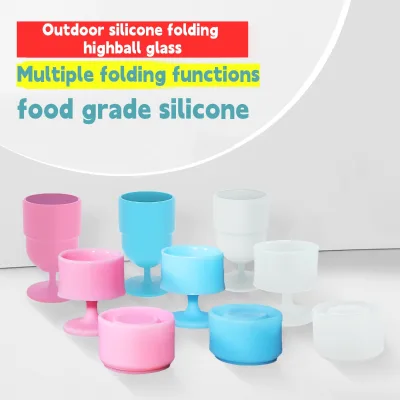

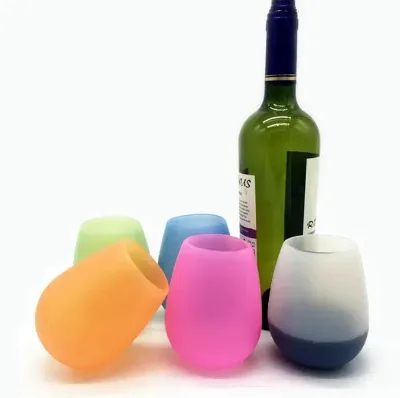


Foldable Silicone Coffee Cup Portable Reusable Sports Water Bottle Silicone
$2.00 - $2.05
MOQ: 1000 Pieces


Comprehensive Sourcing Guide
Strategic Sourcing Guide for Foldable Portable Silicone Wine Cups
Understanding Product Variants and Technical Specifications
The market for foldable portable silicone wine cups presents a diverse array of product configurations that buyers must navigate carefully. The core keyword "Foldable Portable Silicone Wine Cup" encompasses several distinct product models, each with unique dimensional and functional attributes. Based on available product data, the term "Foldable Bottle" and "Collapsible Cup" often appear interchangeably with "Silicone Wine Cup," indicating that the fundamental mechanism relies on silicone's elasticity to reduce the product's footprint when not in use.
A critical technical observation is the variation in shape and structure. While some listings describe a "Cylindrical Shape," others specify an "Irregular Shape," suggesting that the folding mechanism may alter the cup's profile significantly when collapsed. The physical dimensions provided in the source data indicate a standard collapsed size of approximately 10.65.54cm with a wall thickness of 2.7mm, while other models measure 984.5cm with a weight of 63g per piece. These variations directly impact the portability and the volume capacity when the cup is expanded. The capacity is frequently cited as 12 oz, which aligns with standard serving sizes for wine or beer, though some entries also reference a "Beer Mug" type classification.
The material properties are equally critical for performance. The product is consistently described as having a "Soft" hardness, which is essential for the collapsible function. The temperature resistance range is a standout feature, with specific data points indicating a tolerance from -40 to 230 degrees Celsius. This wide range ensures the cup can handle hot beverages without degrading while remaining flexible in cold environments. However, buyers must verify that the specific supplier's batch matches these thermal specifications, as silicone formulations can vary. The "Non-Disposable" attribute confirms that these are durable goods intended for repeated use, distinguishing them from single-use alternatives.
Compliance and Certification Verification
In the realm of food-contact silicone products, regulatory compliance is not merely a formality but a prerequisite for market access and consumer safety. The supplied data highlights several key certifications that serve as benchmarks for quality assurance. The most frequently observed certifications include LFGB (German Food Safety), FDA (US Food and Drug Administration), and ROHS (Restriction of Hazardous Substances). The presence of both LFGB and FDA certifications suggests that the product meets stringent standards for food safety in both European and American markets.
Buyers must treat these certifications as specific attributes of the listed products rather than universal guarantees for all suppliers. For instance, one product entry lists "LFGB, FDA, ROHS," while another lists only "FDA, LFGB." This discrepancy underscores the importance of verifying the specific certification documents for the batch being purchased. The ROHS certification is particularly relevant for electronic components or products containing metals, but in the context of silicone cups, it often indicates the absence of heavy metals and harmful phthalates.
When evaluating a supplier, the procurement team should request valid test reports that correspond to these certifications. The "Made in China" and "Fujian" or "Guangdong" origins noted in the data indicate that the manufacturing hubs are concentrated in specific regions of China. While these regions have robust supply chains for silicone products, the specific factory's compliance history must be validated. The "Customized" and "OEM Support" attributes suggest that suppliers are willing to tailor products, but any customization must not compromise the existing certification status. For example, changing the color or adding a logo should not introduce new materials that violate FDA or LFGB limits.
Cost Drivers and Pricing Dynamics
The pricing structure for foldable silicone wine cups is influenced by a complex interplay of material costs, customization levels, and order volume. The observed price range in the market spans from $0.12 to $15.00 USD. This wide variance is not indicative of a single product type but rather reflects differences in quality, complexity, and order quantity. The lower end of the spectrum likely corresponds to basic, non-customized units with minimal packaging, while the higher end may include premium silicone grades, complex folding mechanisms, or custom branding.
Order Volume (MOQ) is a primary driver of unit cost. The data shows an MOQ range from 5 to 3000 pieces, with a specific high-confidence fact noting an MOQ of 100 pieces for certain models. Suppliers typically offer tiered pricing structures where the unit cost decreases as the order quantity increases. For buyers with lower volume requirements, the unit price will be significantly higher due to the fixed costs of mold setup and production line allocation. Conversely, large-scale buyers can leverage economies of scale to negotiate prices closer to the lower bound of the observed range.
Packaging also plays a significant role in the final cost. The data lists various packaging methods, including "OPP Bag," "1PC/OPP Bag," "Carton," and "250PCS/Carton." The choice between individual OPP bagging and bulk carton packing affects both the unit price and the logistics cost. Bulk packing reduces the per-unit packaging cost but may require additional handling fees at the destination. Furthermore, the "Gw/Carton" (Gross Weight per Carton) of 17kgs and specific carton dimensions (e.g., 293753cm) are critical for calculating shipping costs. Buyers should factor in the volumetric weight of the product, as the collapsible nature of the cup can lead to inefficient space utilization if not packed correctly.
Typical Applications and Usage Scenarios
The versatility of the foldable silicone wine cup makes it suitable for a wide range of applications, from outdoor recreation to commercial hospitality. The "Type: Beer Mug" and "Type: Hot Water Bottle" classifications in the data suggest that these products are marketed for both alcoholic and non-alcoholic beverage consumption, as well as for thermal retention in specific contexts. The "Western" style attribute indicates a design aesthetic that appeals to international markets, particularly in Europe and North America.
Outdoor enthusiasts are a primary target demographic. The "Collapsible: Yes" and "Handle: without Handle" features make the cup ideal for camping, hiking, and travel, where space and weight are critical constraints. The ability to collapse the cup to a size of roughly 10cm allows it to fit easily into backpacks or luggage. The "Temperature Range" of -40 to 230 degrees Celsius ensures that the cup can be used for hot coffee in the morning and cold drinks in the evening, regardless of the ambient temperature.
In the commercial sector, these cups are increasingly used in festivals, events, and promotional campaigns. The "Logo Custom: Talk" and "OEM: Support" attributes highlight the potential for branding. Companies can order cups with custom colors, such as "Red, Blue, Orange, Green, Pink, Yellow," or specific designs to match their corporate identity. The "Non-Disposable" nature of the product aligns with sustainability goals, making it an attractive alternative to single-use plastic cups at large gatherings. Additionally, the "Irregular Shape" and "Cylindrical Shape" options allow for differentiation in product lines, catering to different consumer preferences.
Supplier Evaluation and Selection Criteria
Selecting the right supplier for foldable silicone wine cups requires a rigorous evaluation process that goes beyond price comparison. The data indicates that suppliers are located in "Fujian," "Guangdong," and generally "Chinamainland." While these regions are known for silicone manufacturing, the specific capabilities of each factory must be assessed. Buyers should prioritize suppliers who demonstrate a clear understanding of the product's technical specifications, such as the "thickness 2.7mm" and "Carton Size" requirements.
The "Customization" and "OEM" capabilities are key differentiators. A supplier that offers "Customized" options and supports "Logo Custom" is better equipped to meet the specific needs of a buyer than one that only offers standard products. However, buyers must verify that the customization process does not compromise the product's integrity. For example, adding a logo should not affect the cup's ability to withstand high temperatures or its food safety compliance.
Quality control is another critical factor. The presence of certifications like "FDA" and "LFGB" is a strong indicator of a supplier's commitment to quality, but it must be backed by actual test reports. Buyers should request samples to verify the "Soft" hardness and the "Collapsible" functionality firsthand. The "Packing" methods, such as "OPP Bag/PC" or "Carton," should also be evaluated to ensure they protect the product during transit. A supplier that uses robust packaging, such as the "250PCS/Carton" configuration, demonstrates attention to detail and reduces the risk of damage.
Quality Control and Long-Term Procurement Considerations
Maintaining consistent quality in the procurement of foldable silicone wine cups requires a robust quality control (QC) strategy. The "Hardness: Soft" attribute is a subjective measure that can vary between batches. To mitigate this risk, buyers should establish clear acceptance criteria for the physical properties of the cup, including the dimensions, weight (e.g., 63g/pc), and folding mechanism. The "Standard" dimensions provided, such as "10.65.54cm," should be used as a baseline for inspection.
Long-term procurement considerations involve building a sustainable relationship with the supplier. The "OEM: Support" and "Customized" attributes suggest that the supplier is willing to adapt to changing market needs. Buyers should leverage this flexibility to refine product designs over time, potentially improving the folding mechanism or enhancing the color options. The "Exist Color" list, which includes a wide spectrum of hues, offers opportunities for seasonal product launches or limited edition runs.
Sustainability is another long-term consideration. The "Non-Disposable" nature of the product aligns with global trends toward reducing waste. Buyers should ensure that the silicone used is free from harmful additives and that the production process adheres to environmental standards. The "ROHS" certification is a good starting point, but buyers may also inquire about the supplier's overall environmental management practices.
Finally, the "Lead Time" and "MOQ" constraints must be managed effectively. The observed MOQ range of 5 to 3000 pieces allows for flexibility, but buyers should plan their orders to align with production cycles. The "Carton Size" and "Gw/Carton" data are essential for logistics planning, ensuring that the shipping costs are optimized. By maintaining a proactive approach to quality control and supplier relationship management, buyers can secure a reliable supply of high-quality foldable silicone wine cups that meet their specific business needs.
Comparison of Product Attributes
| Attribute | Observation 1 | Observation 2 | Observation 3 |
|---|---|---|---|
| Product Model | Collapsible Cup | Foldable Bottle | Silicone Wine Cup |
| Shape | Cylindrical Shape | Irregular Shape | Cylindrical Shape |
| Capacity | 12 oz | 12 oz | 12 oz |
| Certification | LFGB, FDA, ROHS | FDA, LFGB | FDA |
| Packing | OPP Bag | Carton | 1PC/OPP Bag |
| Origin | Fujian | Guangdong, Cn | Chinamainland |
| Customization | Available | Customized | Customized |
| Hardness | Soft | Soft | Soft |
| Temperature | -40 to 230°C | -40 to 230°C | -40 to 230°C |
This table summarizes the key variations found in the product data. It highlights that while the core functionality remains consistent, the specific attributes such as shape, certification, and packaging can vary significantly between different product listings. Buyers should use this comparison to identify the specific configuration that best fits their requirements, ensuring that the selected product meets all necessary technical and compliance standards.
FAQs
What certifications do foldable portable silicone wine cups typically have?
These cups commonly hold FDA, LFGB, and ROHS certifications to ensure food safety. Buyers must verify specific test reports for each batch as certification levels vary by supplier and region.
Can I customize the logo and color of these cups?
Yes, OEM support and logo customization are available for most models. Suppliers offer various colors like red, blue, and green, though customization must not compromise existing safety certifications.
What is the minimum order quantity for these silicone cups?
The minimum order quantity ranges from 5 to 3000 pieces depending on the supplier. Some specific models require a minimum of 100 pieces, while others allow smaller trial orders.
How does the temperature range affect usage of these cups?
The cups withstand temperatures from -40 to 230 degrees Celsius, making them suitable for hot and cold drinks. This wide range ensures durability during outdoor activities or commercial events.
Which packaging options are available for bulk orders?
Packaging includes OPP bags, individual cartons, or bulk cartons containing 250 pieces. Buyers should consider gross weight and carton dimensions like 29 by 37 by 53 cm for shipping calculations.
What is the typical capacity of a foldable silicone wine cup?
The standard capacity is 12 ounces, aligning with typical serving sizes for wine or beer. Some models may vary slightly, so buyers should confirm specific volume details before ordering.
Where are these foldable silicone cups manufactured?
Manufacturing primarily occurs in Fujian and Guangdong provinces in China. Buyers should verify the specific origin of the batch to ensure compliance with regional quality standards.