Source Foldable Portable Soccer Goal for Racing, Entertainment, and Gifts
Find 30 options for the Foldable Portable Soccer Goal suitable for racing, entertainment, and gift purposes. Buyers can compare specifications, packaging types, and customization services from verified manufacturers in China.
Key considerations
Products List


Aluminum Movable Full Size Football Goals Portable Soccer Goal for Sale
$599.00 - $899.00
MOQ: 1 Pieces

Portable Football Goal with Net Soccer Training Goal for Backyard Hot Sale
$599.00 - $899.00
MOQ: 1 Pieces


Wholesale High Quality Portable Football Soccer Goal for Outdoor Training
$29.50 - $32.90
MOQ: 1000 Sets


Wholesale High Quality Pop up Portable Football Soccer Goal for Kids Training
$5.10 - $5.80
MOQ: 1000 Sets


Aluminum Movable Portable Soccer Goal 6X4FT Foldable Football Goal for Training Match
$500.00 - $1000.00
MOQ: 1 Pieces




Comprehensive Sourcing Guide
Strategic Sourcing Guide for Foldable Portable Soccer Goals
Understanding Product Variability and Core Specifications
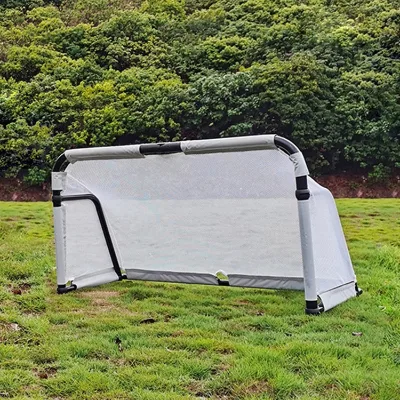
When sourcing foldable portable soccer goals, buyers must first navigate a landscape defined by significant variation in dimensions, materials, and intended use cases. The market does not offer a single monolithic product but rather a spectrum of solutions ranging from compact, pop-up units for children to robust, full-size goals for professional or semi-professional training. A critical observation from current product listings indicates that dimensions can vary drastically, with some units measuring as small as 155cm x 100cm x 74cm, while others reach full regulation sizes of 8 feet (2.44m) in height and 24 feet (7.32m) in width. This variance directly impacts the logistics of shipping and the suitability of the product for specific venues.
The structural integrity of these goals is often dictated by the frame material. While some listings specify aluminum construction, which offers a lightweight yet durable solution ideal for frequent transport, other variants utilize steel frames. The choice between aluminum and steel involves a trade-off between portability and raw strength. Aluminum models are frequently described as "foldable" and "portable," often featuring integrated wheels to facilitate movement across uneven terrain. In contrast, steel-framed goals may prioritize stability over ease of transport, though they can still be designed with portability in mind. Buyers should verify the specific material composition of any listing, as the term "portable" can be applied to products with vastly different load-bearing capacities.
Furthermore, the folding mechanism itself is a key differentiator. Some products are designed as pop-up structures that require no assembly, utilizing tension-based frames for rapid deployment. Others are collapsible metal frames that require a folding action to reduce their footprint for storage. The presence of wheels is another critical specification; while many portable models include wheels for easy relocation, this feature is not universal. Buyers must explicitly confirm whether the product includes a wheeled transport system or relies on manual carrying, as this affects the labor requirements for setup and teardown at event sites.
Compliance, Certification, and Safety Standards
For B2B procurement, particularly when dealing with sports equipment intended for public use or commercial rental, verifying compliance with safety standards is non-negotiable. The supply chain for soccer goals often includes products certified under various international standards. Observed product data indicates that manufacturers may hold certifications such as CE, ISO9001, ISO14001, and OHSAS, which speak to quality management systems and environmental standards. Additionally, specific product certifications like ENCE have been noted in certain listings, suggesting adherence to regional safety requirements.
However, buyers must exercise caution when interpreting these certifications. The presence of a certification mark on a product page does not automatically guarantee that every unit in a specific batch meets the standard, nor does it imply that the product is suitable for all intended applications without further verification. For instance, while some listings mention compliance with standards relevant to children's products, the specific standard EN 748, often associated with football goal safety, is listed here only as background context rather than a confirmed attribute for every item. Therefore, procurement teams should not assume compliance based solely on the presence of a keyword in a product description.
Instead, buyers should request current, valid certification documents directly from the supplier. These documents should be cross-referenced with the specific model number and batch being purchased. It is essential to verify that the certification covers the specific configuration of the goal, including the frame material, net tension, and stability features. For goals intended for use in schools or public parks, compliance with local safety regulations regarding tip-over resistance and structural load is paramount. The absence of a specific safety standard in a product listing should trigger a deeper inquiry rather than a simple assumption of non-compliance.
Cost Drivers and Pricing Dynamics
The pricing structure for foldable portable soccer goals is influenced by a complex interplay of factors, including material costs, manufacturing complexity, and order volume. The observed price range in the market spans from approximately $1 to $1,450 USD, reflecting the vast difference between a simple pop-up net for recreational use and a heavy-duty, steel-framed goal with wheels and custom branding. This wide disparity underscores the importance of defining precise requirements before requesting quotes.
Material selection is a primary cost driver. Aluminum frames generally command a higher price point than steel alternatives due to the cost of the raw material and the manufacturing processes required to maintain structural integrity while keeping weight low. Similarly, the inclusion of wheels, heavy-duty carry bags, and reinforced stitching on the nets adds to the overall unit cost. Customization also plays a significant role in pricing. Products offering OEM and ODM services, such as logo printing, full-color imprints, or custom dimensions, will typically carry a premium over standard off-the-shelf models.
Order volume is another critical determinant of cost. While some suppliers may offer low minimum order quantities (MOQs) starting at a single unit, others may require bulk purchases of 1,000 units to access factory-direct pricing. The observed MOQ range in the market extends from 1 to 1,000 units. Buyers seeking to minimize upfront capital expenditure might opt for higher unit prices with lower MOQs, whereas those with large-scale deployment needs should leverage volume discounts. It is also important to consider the packaging costs; options such as color boxes, cartons, or specialized safety packaging layers can impact the final landed cost, especially when calculating shipping expenses based on volume and weight.
Typical Applications and Usage Scenarios
Foldable portable soccer goals serve a diverse array of applications, ranging from professional training facilities to casual backyard entertainment. The intended usage environment dictates the necessary features of the product. For instance, goals marketed for "racing" or "entertainment" purposes often prioritize quick setup and teardown capabilities, making pop-up or foldable designs ideal. These units are frequently used in mobile sports events, school physical education programs, and community tournaments where infrastructure is temporary.
In contrast, goals designed for "outdoor" and "indoor" use must balance durability with space constraints. Indoor applications require goals that are stable on smooth surfaces without damaging the floor, while outdoor models must withstand wind, rain, and UV exposure. The "wearproof" feature noted in some product specifications is particularly relevant for high-traffic commercial rental businesses or schools with heavy usage schedules. Additionally, the age group of the intended users is a crucial consideration. Products specified for "adults" often feature larger dimensions and more robust construction, whereas "kids" models may be smaller and lighter, prioritizing safety and ease of handling.
The "purpose" of the goal also influences the sourcing decision. Whether the goal is intended for "sports" training, "outdoor playing toys," or "gifts," the required performance metrics will differ. For example, a goal used for professional training might require specific net tension and frame rigidity to withstand high-impact shots, while a toy version might focus on colorful aesthetics and lightweight portability. Buyers should align their procurement strategy with the specific operational demands of their end-users to ensure the selected product delivers value and longevity.
Supplier Evaluation and Quality Control Protocols
Evaluating suppliers for foldable portable soccer goals requires a rigorous approach that goes beyond surface-level product descriptions. Buyers should prioritize suppliers who demonstrate transparency in their manufacturing processes and provide clear documentation regarding their quality control measures. The availability of OEM and ODM services indicates a supplier's capacity for customization, but it also necessitates a thorough vetting process to ensure that custom specifications are met consistently.
Quality control should be a central component of the procurement strategy. Buyers must verify that the supplier implements robust testing protocols for critical components such as frame joints, net attachment points, and folding mechanisms. The "safety 4 layer package" mentioned in some listings suggests a commitment to protecting the product during transit, which is a positive indicator of a supplier's attention to detail. However, buyers should also request information on in-house testing procedures, including load-bearing tests and stability assessments, to ensure the goals meet safety expectations.
When evaluating potential partners, consider the supplier's origin and logistical capabilities. Many products originate from China, with specific manufacturing hubs like Hebei noted in the supply chain. Understanding the geographic location of the supplier can help in assessing lead times and shipping logistics. Additionally, the warranty terms, such as the "12 months" coverage observed in several listings, serve as a benchmark for supplier confidence in their product quality. Buyers should ensure that the warranty covers specific failure modes, such as frame bending or net tearing, and understand the claims process.
Long-Term Procurement and Maintenance Considerations
Sourcing foldable portable soccer goals is not merely a transactional activity but a strategic decision that impacts long-term operational efficiency and cost management. Buyers should consider the lifecycle of the product, including maintenance requirements and replacement cycles. Products with features like "wearproof" materials and reinforced packaging are likely to have longer service lives, reducing the frequency of replacement and the associated procurement costs.
Maintenance is a key factor in the total cost of ownership. Goals that are easy to clean, repair, and store will offer better value over time. The "foldable" nature of these products is a significant advantage for storage, but buyers should verify the durability of the folding hinges and latches, as these are common points of failure. Additionally, the availability of replacement parts, such as nets or replacement wheels, should be confirmed before finalizing a contract.
Long-term procurement also involves managing relationships with suppliers who can provide consistent quality and support. Suppliers who offer "factory direct prices" and have established OEM/ODM capabilities are often better positioned to support long-term partnerships. Buyers should establish clear communication channels for addressing quality issues and ensuring that future orders meet the same standards as the initial purchase. By focusing on these long-term considerations, organizations can build a reliable supply chain that supports their sports and entertainment initiatives effectively.
Summary of Key Procurement Factors
To summarize, successful procurement of foldable portable soccer goals requires a balanced approach that considers technical specifications, compliance, cost, and supplier reliability. The wide range of available products, from small pop-up units to large steel-framed goals, necessitates a clear definition of requirements before engaging with suppliers. Buyers must verify certifications and safety standards, as these are critical for liability and user safety. Understanding the cost drivers, including material choices and customization options, will help in negotiating favorable terms. Finally, evaluating suppliers based on their quality control processes and long-term support capabilities ensures a sustainable procurement strategy. By adhering to these guidelines, buyers can secure high-quality products that meet their specific operational needs while managing risks and costs effectively.
FAQs
What customization options are available for these goals?
OEM and ODM services are available for logo printing and custom designs. Buyers can request full color imprints or silk prints, with some models offering customized dimensions and packaging options to meet specific branding needs.
Which certifications do the manufacturers typically hold?
Many suppliers hold CE, ISO9001, ISO14001, and OHSAS certifications. Specific products may also carry ENCE certification, ensuring adherence to quality management and safety standards for sports equipment used in various environments.
How are these portable goals packaged for shipping?
Packaging varies by model, including OPP bags, color boxes, cartons, and safety four-layer packages. Some units come with carry bags, while others use specialized aluminum or steel packaging to ensure protection during transit.
Can buyers find goals with wheels for easy movement?
Yes, certain portable models feature wheels that allow for easy movement across different terrains. These units are designed for quick setup and transport, making them ideal for events or training sessions requiring frequent relocation.
What is the typical warranty period for these products?
Most listed products come with a 12-month warranty covering manufacturing defects. This warranty applies to the frame and net, ensuring durability and performance for both indoor and outdoor usage scenarios over the specified period.
Which materials are commonly used for the goal frames?
Frames are typically constructed from aluminum or steel, depending on the model. Aluminum offers lightweight portability, while steel provides robust stability, with some units specified as medium or heavy-duty for professional training applications.