Source Foldaway Orange Spine Board for hospitals, ambulances, and rescue teams
Explore 30 options for the Foldaway Orange Spine Board suitable for emergency medical use. Buyers can compare specifications, weights, and folding sizes to find the right equipment for hospital and ambulance applications.
Key considerations
Products List


$0.10 - $1.00
MOQ: 1 Pieces
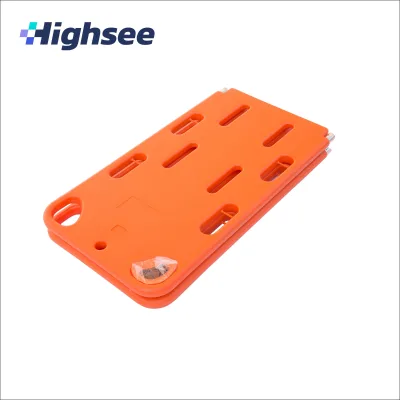
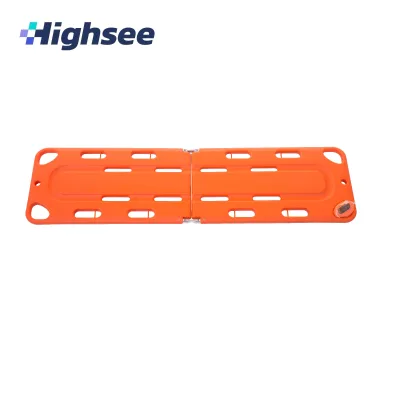
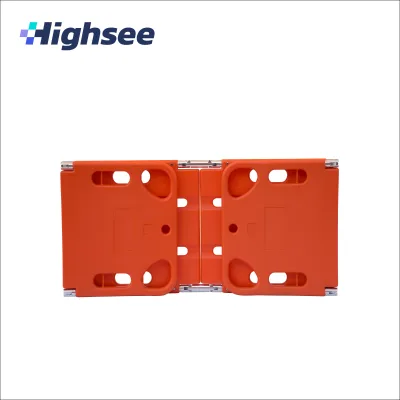


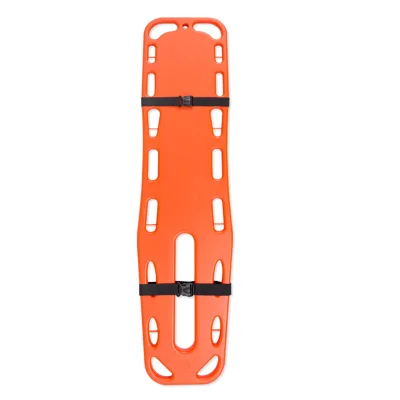

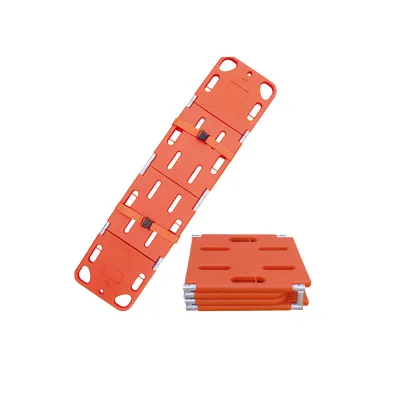
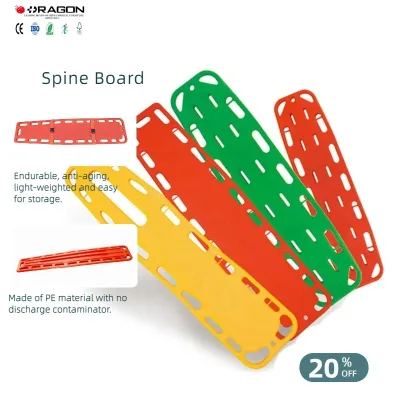


Carbon Spine Board with Strong Loading Capacity in Red/Yellow Colors (EG-009)
$90.00 - $110.00
MOQ: 1 Pieces


Carbon Spine Board in Red/Yellow with High Loading Capacity and Accessories (EG-009)
$90.00 - $110.00
MOQ: 1 Pieces
Comprehensive Sourcing Guide
Strategic Sourcing Guide for Foldaway Orange Spine Boards
Understanding the Product Category and Core Specifications
When sourcing a Foldaway Orange Spine Board, buyers must first distinguish between rigid transport boards and those designed for compact storage and rapid deployment. The core keyword implies a specific configuration: a medical device intended for spinal immobilization that features a folding mechanism, an orange color profile, and a portable form factor. Based on observed product data, the market offers distinct models that vary significantly in dimensions and weight, even when sharing similar functional descriptions.
The technical specifications for these devices are not uniform. One observed configuration, identified by model number M-J06, presents an unfolded size of 191473cm and folds down to 524713cm. In contrast, model M-J08 measures 18344.56cm in its product size state, while model M-J05 is listed with a product size of 138355cm. These dimensional variances are critical for procurement teams, as they dictate storage requirements in ambulances, emergency response vehicles, and hospital wards. The folding capability is a primary feature, allowing the device to transition from a functional stretcher to a compact unit, with some models folding to sizes as small as 524713cm.
Material composition is another foundational specification. The observed data indicates that these boards are constructed from plastic. This material choice influences the overall weight and durability. For instance, the M-J06 model has a net weight of 9.5kgs and a gross weight of 11kgs, whereas the M-J05 model is lighter, with a net weight of 5kgs and a gross weight of 6kgs. The M-J07 model sits in between with a net weight of 7kgs. The hardness of the material is explicitly noted as "Hard," which is essential for effective spinal immobilization to prevent further injury during patient transport. The color specification is diverse; while the core search term focuses on orange, the available inventory includes models described as "Orange(Normal Color)" as well as options for Red, Blue, Green, and Yellow, often available upon customization.
Compliance, Certification, and Regulatory Alignment
In the medical device sector, compliance is not merely a suggestion but a prerequisite for market entry and operational safety. Buyers must verify that the foldaway spine boards meet the necessary regulatory standards for their target market. The supplied product data explicitly lists CE certification as a high-confidence fact for several models. This indicates that the products adhere to the European Union's health, safety, and environmental protection standards. However, buyers should not assume that all listed products automatically carry this certification without verification, as the data reflects observed attributes rather than a universal guarantee for every unit in the 30-product count.
The regulatory classification of these devices is also a key consideration. The data notes a "Medical Device Regulatory Type" described as "Type Size:Medium." This classification likely correlates with the risk profile and intended use of the device. Procurement teams must confirm that the specific model they intend to purchase aligns with the regulatory requirements of their local jurisdiction. For instance, while CE is a prominent standard, other regions may require FDA clearance or other specific national certifications. The absence of specific certification names beyond CE in the provided text means buyers must request explicit documentation from suppliers to ensure the product meets the specific regulatory framework of their region.
Furthermore, the "Quality" attribute is listed as "High Quality" in the product descriptions. While this is a marketing observation, it should be treated as a claim that requires validation through third-party testing or audit reports. Buyers should not rely solely on the "High Quality" label but should instead request evidence of material testing, structural integrity assessments, and compliance with relevant medical device standards. The "Standard" attribute in the data lists specific dimensions (e.g., 138355cm), which may refer to internal manufacturing standards or specific product configurations rather than international safety standards. Therefore, verifying the actual safety standards against which the product was tested is a critical step in the evaluation process.
Cost Drivers and Pricing Dynamics
The pricing landscape for foldaway orange spine boards is influenced by a complex interplay of factors, including material costs, manufacturing complexity, and customization requirements. The observed price range in the market spans from $0.1 to $282 USD. This wide variance suggests that the market includes both basic, unbranded units and high-end, feature-rich models with extended warranties or specialized accessories. The lower end of the price spectrum likely corresponds to simpler models with fewer features or lower production volumes, while the higher end may reflect models with advanced folding mechanisms, superior materials, or bundled accessories.
Customization is a significant cost driver. The product data confirms that customization is available for these spine boards. Buyers seeking specific colors, such as the requested orange, or custom branding may incur additional costs. The ability to select from a palette including Red, Blue, Green, and Yellow, or to request specific color combinations, adds a layer of complexity to the manufacturing process. This flexibility allows organizations to match their equipment to specific branding or color-coding protocols, but it also impacts the final unit price.
Minimum Order Quantity (MOQ) is another critical factor affecting the total cost of ownership. The observed MOQ range is between 1 and 1000 units. For small clinics or emergency response teams requiring a single unit, the flexibility to order as few as one unit is advantageous, though the per-unit cost may be higher. Conversely, large-scale procurement for national health services or international distributors can leverage the higher MOQ tiers to negotiate better pricing. The "Sample" attribute indicates that samples are available, which is a valuable tool for buyers to assess quality before committing to a large order. However, the cost of samples and the lead time associated with them should be factored into the procurement budget.
Typical Applications and Operational Use Cases
The primary application for foldaway orange spine boards is in emergency medical services (EMS) and hospital settings. The data explicitly lists "Hospital" as a key application area. These devices are designed for the rapid immobilization of patients with suspected spinal injuries, ensuring that the spine remains stable during transport. The "Reusable" feature is particularly important in this context, as it allows the equipment to be sanitized and redeployed for multiple incidents, reducing long-term operational costs compared to single-use alternatives.
The folding mechanism enhances the utility of these boards in confined spaces. In an ambulance or a crowded emergency room, the ability to fold the board to dimensions like 524713cm allows for efficient storage and quick access. The "Simple" style noted in the specifications suggests an intuitive design that minimizes the learning curve for medical personnel. This is crucial in high-stress situations where speed and ease of use can impact patient outcomes. The inclusion of accessories, such as "3PCS Black Belts," further supports the operational readiness of the device, providing the necessary straps to secure the patient to the board.
The loading capacity of these boards is another critical operational parameter. The data indicates a loading capacity of 160kgs. This specification ensures that the board can safely support a wide range of patient weights, making it suitable for general use in various healthcare environments. However, buyers should verify if this capacity is consistent across all models, as the weight of the board itself varies from 5kgs to 9.5kgs. The ability to handle a 160kg load while maintaining structural integrity is a testament to the "Hard" material quality and robust design of the product.
Supplier Evaluation and Verification Protocols
Evaluating suppliers for foldaway spine boards requires a rigorous approach to ensure reliability and product consistency. The data indicates that the products originate from China, which is a major manufacturing hub for medical equipment. While this provides access to a vast supply base, it also necessitates careful vetting of suppliers to ensure they meet international quality standards. Buyers should prioritize suppliers who can provide clear documentation regarding their manufacturing processes, quality control measures, and certification status.
The "Global" market designation suggests that these products are intended for international distribution. This implies that suppliers should have experience in exporting medical devices and understanding the regulatory requirements of different countries. Buyers should inquire about the supplier's track record in meeting delivery schedules and handling logistics. The "Packing Detail" of "Packing in Carton" is standard, but the specific packing size (e.g., 185487cm for M-J07) should be verified to ensure compatibility with the buyer's storage and shipping requirements.
When evaluating suppliers, buyers should also consider the warranty terms. The data mentions a "2 Years" warranty for some models. This is a strong indicator of the supplier's confidence in their product's durability and performance. A comprehensive warranty should cover defects in materials and workmanship, providing peace of mind for the buyer. Additionally, the availability of samples allows buyers to physically inspect the product before making a bulk purchase, ensuring that the quality meets their expectations.
Quality Control and Long-Term Procurement Strategy
Implementing a robust quality control strategy is essential for maintaining the safety and efficacy of foldaway spine boards. Buyers should establish clear criteria for acceptance, including dimensional accuracy, material hardness, and structural integrity. The "Hard" attribute of the material must be verified to ensure it provides the necessary rigidity for spinal immobilization. Regular inspections of the folding mechanism are also crucial to prevent wear and tear that could compromise the device's functionality over time.
Long-term procurement considerations involve building a sustainable relationship with suppliers. This includes negotiating favorable terms for reordering, ensuring consistent supply, and maintaining open communication regarding any product updates or changes. The "Reusable" nature of the boards means that they will undergo repeated use and cleaning cycles. Buyers should verify that the materials used are resistant to degradation from cleaning agents and that the folding mechanism remains secure after multiple cycles.
The "High Quality" claim observed in the product data should be backed by tangible evidence. Buyers should request test reports, material safety data sheets, and compliance certificates to validate these claims. Additionally, the "Sample" availability should be utilized to conduct internal testing, ensuring that the product performs as expected in real-world scenarios. By combining these quality control measures with a strategic approach to supplier relationships, buyers can ensure a reliable supply of high-performance foldaway orange spine boards for their medical operations.
Summary of Key Procurement Considerations
In conclusion, sourcing a Foldaway Orange Spine Board requires a comprehensive understanding of the product's technical specifications, regulatory requirements, and operational needs. The wide range of dimensions, weights, and color options necessitates careful selection based on specific use cases. Compliance with CE certification and other regional standards is paramount, as is the verification of the supplier's ability to deliver high-quality, reusable medical devices. By focusing on these key areas and maintaining a rigorous quality control process, buyers can secure reliable equipment that meets the demanding standards of modern emergency medical care.
FAQs
What are the dimensions of the folded spine board?
The folded spine board measures 52 by 47 by 13 centimeters for compact storage. This specific configuration allows the device to fit efficiently into ambulance compartments or hospital storage areas while maintaining structural integrity for rapid deployment.
Can I customize the color of the spine board?
Yes, customization is available for the spine board color including orange, red, blue, green, and yellow. Buyers can request specific color profiles to match their organizational branding or emergency response protocols without compromising the device's medical functionality.
What is the maximum loading capacity of the board?
The spine board supports a maximum loading capacity of 160 kilograms for safe patient transport. This weight limit ensures the hard plastic material can effectively immobilize the spine during emergency situations while withstanding the stress of movement.
How long is the warranty period for this medical device?
The product comes with a two-year warranty covering defects in materials and workmanship. This coverage provides assurance of durability for the reusable board, ensuring long-term reliability for hospitals and emergency medical services teams.
What certifications does the foldaway spine board hold?
The product holds CE certification indicating compliance with European health and safety standards. Buyers should verify specific regulatory documentation for their region as the device is classified as a medium-size medical device with high-quality construction.
What accessories are included with the spine board?
The package includes three black belts to secure the patient during transport. These accessories are essential for effective immobilization and are packed within the carton alongside the board for immediate operational readiness upon delivery.