Source Folding Commode Chair for Elderly, Pregnant Women, and Children
Explore 30 options for a Folding Commode Chair for Elderly users and others needing portable support. Compare features like iron or aluminum frames, CE and ISO certifications, and varying weights to find the right fit for your sourcing needs; compare the available evidence and request quotations based on your requirements.
Key considerations
Products List


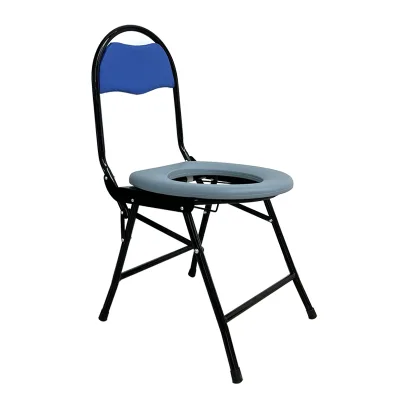


Height Adjustable Disabled Bedside Commode Commode Chair for The Elderly
$14.00 - $15.00
MOQ: 100 Pieces

Factory Hot-Selling Foldable Commode Chair for Hospital for The Elderly
$19.00 - $21.00
MOQ: 100 Pieces


Adjustable Aluminum Lightweight Folding Commode Chair for Disabled People
$11.48 - $12.90
MOQ: 300 Pieces


Comprehensive Sourcing Guide
Folding Commode Chair for Elderly Sourcing Guide
Procurement of folding commode chairs for elderly care requires careful selection based on specific user mobility needs and environmental constraints. The observed market data indicates that these units are frequently designed with a folding mechanism to facilitate storage in compact living spaces, a critical feature for home care settings. Buyers must verify that the "Folding" attribute is explicitly confirmed for the specific model, as some listings describe non-folding variants that may not suit the intended spatial requirements.
The target demographic for these products includes both elderly individuals and pregnant women, suggesting a need for versatile support structures. Sourcing strategies should prioritize units that explicitly list "Elderly" and "Pregnant Woman" under application attributes to ensure the design accommodates the specific physiological needs of these groups. It is essential to distinguish between models intended for general use and those engineered with specific weight distributions and stability features for vulnerable users.
Product Scope and Observed Listing Signals
The current market landscape presents a diverse range of folding commode chairs with varying material compositions, including iron spray paint and steel frames. Buyers should note that while some products feature a "Black" color scheme, others may offer "Gray" finishes, requiring clear specification during the ordering process to match facility aesthetics or user preferences. The presence of "Customization" as an available attribute suggests that suppliers may offer tailored solutions, though the distinction between "Customized" and "Non-Customized" models must be clearly defined in purchase orders.
Listing signals also reveal significant variation in product characteristics, with some units emphasizing "Resistance to Heavy" loads while others highlight "Beautiful," "Fashion," and "Design Sense" attributes. This divergence indicates that procurement decisions should balance functional durability with aesthetic considerations, particularly for home environments where the equipment remains visible. Buyers must scrutinize the "Characteristic" field to ensure the selected chair meets the necessary load-bearing requirements without compromising on the visual appeal required for residential care settings.
Technical Specifications to Verify
Dimensional accuracy is paramount when selecting a folding commode chair, as the "Unfold Size" and "Seat Width" directly impact user comfort and accessibility. Observed specifications include a seat width of 45cm and an unfolded size of 555186cm, which serve as critical benchmarks for verifying compatibility with bathroom layouts and user body types. Procurement teams must cross-reference these dimensions against the specific "Tube Diameter" and "Tube Thickness" values, such as 19mm and 0.7mm respectively, to ensure the structural integrity of the frame under expected usage conditions.
Weight and portability are equally critical technical factors, with observed unit weights ranging from 3.6 Kgs to 14kg depending on the model and material composition. Aluminum models tend to be lighter, offering easier maneuverability for caregivers, whereas steel or iron spray paint frames may provide enhanced stability at the cost of increased weight. Buyers should verify the "Leg Rest Type" and "Tilted" status, ensuring the chair is either "Non-Tilted" or configured appropriately for the user's specific mobility limitations to prevent safety hazards during use.
Compliance and Safety Documentation
Safety compliance is a non-negotiable aspect of sourcing medical and assistive devices, with CE and ISO certifications appearing frequently in the product data. Buyers must demand valid certification documents that explicitly cover the specific model number, such as ZBPS-HL-1 or PS-SST03, to confirm that the product meets international safety standards for medical equipment. The presence of RoHS certification in some listings further indicates compliance with restrictions on hazardous substances, which is vital for ensuring the long-term safety of users with sensitive health conditions.
Documentation verification should extend beyond simple certification labels to include detailed test reports and quality assurance records. While ISO13485 is a trusted standard for medical device quality management, its specific application to the listed products must be confirmed by the supplier rather than assumed. Procurement teams should require evidence that the "New" condition of the products is backed by rigorous factory inspections, ensuring that the "Carton Packaging" or "Box" shipping methods do not compromise the structural integrity of the chair during transit.
Cost Drivers and Commercial Terms
Pricing in this category exhibits a wide range, observed between 5 and 195 USD, driven primarily by material costs, manufacturing complexity, and certification levels. Aluminum frames and advanced customization options typically command higher price points compared to standard iron spray paint models, necessitating a clear cost-benefit analysis before finalizing orders. Buyers should be aware that the "MOQ" (Minimum Order Quantity) can vary significantly from 1 to 1000 units, influencing the unit economics and requiring careful inventory planning to avoid overstocking or stockouts.
Commercial terms must explicitly address the "prod_packing" specifications, whether "Carton Packaging," "Carton," or "Box," as these affect shipping costs and potential damage rates. The "prod_origin" being listed as China or Hebei suggests a specific supply chain dynamic that may impact lead times and logistics costs. Procurement strategies should include negotiations on payment terms and delivery schedules that account for the "Standard" packaging dimensions, such as 890480460mm for 5 pieces per carton, to optimize container utilization and reduce freight expenses.
Supplier Qualification and Quality Control
Supplier qualification should focus on verifying the "Manufacture" capability and the consistency of the "prod_model" numbers across different batches. Buyers must ensure that the supplier can consistently deliver products with the specified "Characteristic" attributes, such as "Multi-Function" or "Design Sense," without compromising the core structural requirements. The presence of specific model numbers like LIKANG-C3159 or CC-01 indicates a standardized production line, which is preferable for maintaining quality consistency over time.
Quality control protocols must include pre-shipment inspections that verify the "Condition" as "New" and confirm the absence of defects in the folding mechanism. Given the critical nature of the application for elderly and pregnant users, random sampling should be conducted to test the "Resistance to Heavy" loads and the stability of the "Leg Rest Type." Suppliers should provide a clear traceability system linking the "Iterm Number" and production batch to the final product, ensuring that any quality issues can be rapidly identified and addressed.
Long-Term Procurement Checks
Sustaining a reliable supply chain for folding commode chairs requires regular audits of the supplier's ability to maintain the "Customization" capabilities and material standards over time. Buyers should establish a schedule for re-verifying certifications like CE and ISO, as these may expire or require renewal, and ensure that the "prod_origin" remains consistent to avoid unexpected regulatory hurdles in the destination market. Long-term contracts should include clauses that mandate immediate notification of any changes in material composition or manufacturing processes.
Performance monitoring must include feedback loops from end-users to assess the durability of the "Frame Material" and the effectiveness of the "Folding" mechanism in real-world scenarios. Buyers should track the frequency of maintenance issues or component failures, such as wear on the "Seat Width" or instability in the "Unfold Size," to inform future procurement decisions. Establishing a relationship with the supplier that prioritizes continuous improvement will ensure that the equipment remains safe and functional for the vulnerable populations it serves.
FAQs
What certifications do folding commode chairs typically have?
Most folding commode chairs for elderly users carry CE and ISO certifications to ensure safety and quality standards. Some models also include RoHS compliance for material safety. These certifications indicate that the product meets rigorous manufacturing and regulatory requirements for medical and assistive devices in international markets.
Can folding commode chairs be customized for specific needs?
Yes, customization is available for many folding commode chairs to suit individual requirements. Buyers can often select specific colors like black or gray, and choose between customized or non-customized options. This flexibility allows for better integration into home environments or specific user preferences for aesthetics and functionality.
How much does a folding commode chair weigh?
The weight of a folding commode chair varies by model, ranging from approximately 3.6 kg to 14 kg. Lighter aluminum models offer portability, while heavier steel or iron frames provide greater stability and durability. Selecting the appropriate weight depends on whether the user prioritizes easy transport or maximum support.
What materials are used in folding commode chair frames?
Frames are commonly constructed from steel, aluminum, or iron with spray paint finishes. Steel and iron offer robust support for heavy resistance, while aluminum provides a lighter alternative. These materials ensure durability and longevity, making them suitable for daily use by elderly individuals or those with limited mobility.
Are folding commode chairs suitable for pregnant women?
Yes, certain folding commode chairs are designed with applications for pregnant women and the elderly. These chairs often feature ergonomic designs, such as PU backboards and specific seat widths, to provide comfort and support. The folding mechanism allows for easy storage when not in use, enhancing convenience for users.
What is the typical packaging for folding commode chairs?
Folding commode chairs are typically packaged in cartons or boxes for safe transport. Standard packaging dimensions vary by model, with some items packed in quantities of five per carton. This packaging ensures protection during shipping and handling, maintaining the product's condition until it reaches the end user or distributor.