Source Folding CE Rollator Walker with Basket for Elderly, Disabled, Shopping
Source a Folding CE Rollator Walker with Basket from 30 verified suppliers. Compare models with aluminum frames, adjustable heights, and wheel options for elderly and disabled users.
Key considerations
Products List


Four Wheel Rollator Rolling Walker with Fold up Removable Back Support
$43.00 - $45.00
MOQ: 100 Pieces


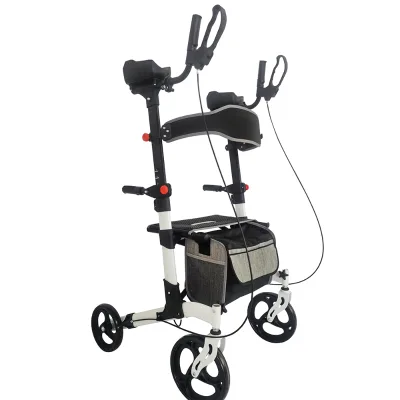


Weight Capacity Aluminium Foldable Rollator Walker with Seat for Seniors
$8.50 - $10.50
MOQ: 50 Pieces


Comprehensive Sourcing Guide
Strategic Sourcing Guide for Folding CE Rollator Walkers with Baskets
Understanding the Product Category and Core Specifications
When sourcing a folding CE rollator walker with a basket, buyers must first establish a clear understanding of the product's fundamental architecture and intended operational environment. The core keyword implies a mobility aid designed for both indoor and outdoor use, featuring a collapsible frame to facilitate storage and transport. Based on observed market data, these devices typically utilize a wheel drive principle and are constructed with either aluminum lightweight frames or steel variants, with aluminum being the preferred choice for portability. The structural integrity is often defined by a four-wheel configuration, though some models may offer three-wheel or two-wheel options depending on the specific design philosophy.
The physical dimensions of these units are critical for logistics and storage planning. Standard specifications observed in the market indicate a folded or operational size range around 706357cm, with specific models like the BME861 and BME881 adhering to similar dimensional profiles. The weight capacity is a vital safety metric, with observed limits reaching up to 135kg, ensuring the device can support a wide range of user weights. The net weight of the product itself typically ranges between 7.5kg and 17kg, influenced heavily by the material composition and the inclusion of accessories. The folding mechanism is a primary selling point, described as "easy" to operate, allowing users to collapse the frame into a compact unit for vehicle transport or home storage.
Compliance, Certification, and Safety Standards
For medical and mobility equipment entering international markets, compliance is not merely a suggestion but a regulatory necessity. The "CE" marking is a recurring and high-confidence attribute in the product data, indicating conformity with health, safety, and environmental protection standards for products sold within the European Economic Area. Buyers should verify that the CE certification is accompanied by other relevant standards such as ISO, which appears frequently in supplier data. Additionally, the RoHS (Restriction of Hazardous Substances) directive is often cited alongside CE and ISO, ensuring that the manufacturing process adheres to environmental regulations regarding hazardous materials.
While background knowledge suggests standards like ISO 13485 for medical device quality management, buyers must treat these as verification targets rather than guaranteed facts for every listing. The procurement strategy should involve requesting valid certification documents directly from the supplier to confirm the current status of these approvals. The product origin is frequently listed as China, with specific manufacturing hubs in Jiangsu and Shanghai, regions known for their established supply chains in medical equipment. Verifying the origin and the specific factory's compliance history is essential to mitigate risks associated with counterfeit certifications or outdated standards.
Cost Drivers and Pricing Dynamics
The pricing landscape for folding rollator walkers with baskets is influenced by several distinct variables, resulting in a broad observed range of 6.5 to 258 USD. This significant variance is not arbitrary but is driven by the complexity of the design, the quality of materials, and the level of customization requested. The base cost is heavily dependent on the frame material; aluminum frames generally command a higher price point than steel alternatives due to their superior strength-to-weight ratio and corrosion resistance. Furthermore, the wheel size and type are critical cost drivers. While standard wheel sizes include 3", 5", 6", and 8" options, larger wheels or specialized rubber tires designed for outdoor terrain will increase the unit cost.
Customization is a major factor in the final price. The availability of OEM services, logo printing, and specific color options (such as the observed red variant) adds layers of production complexity. Suppliers often offer logo printing for free as a promotional incentive, but this may be limited to specific order volumes or standard color schemes. The packaging configuration also impacts costs; whether the product is packed as 1PC or 2PCS per carton affects the shipping efficiency and the overall landed cost. Buyers should analyze the total cost of ownership, including shipping terms like EXW, FOB, CNF, and CIF, rather than focusing solely on the unit price. The ability to fit 600 pieces in a 40HQ container is a significant logistical advantage that can reduce per-unit shipping costs for large orders.
Functional Features and User Applications
The functional design of these rollators is tailored to meet the specific needs of elderly and disabled individuals. The primary application is to provide stability and support during ambulation, with the added convenience of a shopping bag or basket for carrying personal items. The inclusion of a soft seat for rest is a standard feature, allowing users to pause during long walks without needing to find a separate bench. The handle grip is a critical ergonomic component, with most models featuring adjustable height settings to accommodate users of varying statures. This adjustability ensures that the user can maintain a natural posture, reducing strain on the back and shoulders.
The "Using Ambient" attribute confirms that these devices are versatile, suitable for both indoor environments like homes and hospitals, and outdoor settings such as parks and sidewalks. The four-wheel structure provides a stable base, minimizing the risk of tipping, while the folding capability ensures the device does not become an obstacle in tight spaces. The presence of a cross-bar structure adds rigidity to the frame, enhancing the overall durability. Buyers should evaluate the specific accessory options, such as the inclusion of a basket or shopping bag, as these can vary between models. The choice between a model with a simple basket and one with a more complex storage solution should align with the intended daily activities of the end-user.
Supplier Evaluation and Manufacturing Capabilities
Selecting the right supplier requires a rigorous evaluation of their manufacturing capabilities and business terms. The data indicates a typical manufacturing lead time of 2 weeks, which is a competitive advantage for buyers requiring rapid deployment of stock. However, this lead time should be confirmed for each specific order, as it may fluctuate based on order volume and customization requirements. The payment terms, such as TT (Telegraphic Transfer) and LC (Letter of Credit), are standard in the industry, offering a balance of security for both parties. Buyers should ensure that the payment terms align with their company's financial policies and risk tolerance.
The supplier's ability to handle large volumes is another critical consideration. With the capacity to hold 600 pieces in a 40HQ container, suppliers demonstrate the logistical maturity required for bulk procurement. The packaging standard, often listed as 1PCS/Carton or 622285cm dimensions, suggests a standardized approach to shipping that minimizes damage during transit. Buyers should verify the supplier's history with similar products, specifically looking for experience in producing CE-certified medical devices. The availability of customization options, including logo printing and color variations, indicates a flexible production line capable of meeting brand-specific requirements. It is essential to request samples to verify the quality of the folding mechanism, the sturdiness of the basket, and the comfort of the seat before committing to a large order.
Quality Control and Long-Term Procurement Strategy
Implementing a robust quality control (QC) protocol is essential to ensure that every unit meets the specified standards. Given the variation in observed specifications, such as the difference in net weight between 7.5kg and 17kg, buyers must define clear acceptance criteria for weight, dimensions, and structural integrity. The QC process should include functional testing of the folding mechanism to ensure it operates smoothly and locks securely. The wheels must be tested for smooth rotation and durability, particularly if the device is intended for outdoor use where uneven terrain may be encountered. The load-bearing capacity should be verified against the stated 135kg limit to prevent structural failure under stress.
For long-term procurement, building a sustainable relationship with the supplier is key. The availability of spare parts, such as replacement wheels or seat cushions, should be discussed early in the negotiation process. The supplier's commitment to maintaining consistent quality over time is crucial, especially when dealing with medical equipment where reliability directly impacts user safety. Buyers should also consider the environmental impact of the packaging and materials, ensuring that the supplier adheres to relevant environmental standards. By maintaining a clear communication channel and establishing a detailed quality agreement, buyers can mitigate risks and ensure a steady supply of high-quality folding CE rollator walkers with baskets for their distribution channels.
FAQs
What certifications do these rollators hold?
The products hold CE, ISO, and RoHS certifications. These marks indicate compliance with European health and safety standards as well as environmental restrictions on hazardous substances for international markets.
How much weight can the walker support?
The maximum weight capacity is 135kg. This limit ensures safety for elderly and disabled users while maintaining structural integrity during both indoor and outdoor ambulation activities.
Can the frame be customized with a logo?
Yes, logo printing is available for free on the frame. This customization option allows buyers to brand the product while selecting from aluminum or steel frame materials.
What is the manufacturing lead time?
The standard manufacturing lead time is 2 weeks. This duration applies to standard orders, though complex customization requests may require additional processing time before shipment.
How many units fit in a 40HQ container?
A 40HQ container can hold 600 pieces of this rollator. This high capacity reduces per-unit shipping costs and makes the product suitable for large-scale distribution channels.
Are the wheels adjustable or interchangeable?
Wheel options include sizes like 3, 5, 6, and 8 inches with two, three, or four-wheel configurations. Buyers can select specific wheel setups based on terrain requirements and user mobility needs.