Source Food Chopper for Kitchen Prep, Meal Making, and Recipes
Compare 30 Food Chopper listings from China with options for 100W to 400W power, plastic or metal housing, and customizable colors. Buyers can review delivery times of 20 to 40 days and check certifications like FDA and LFGB for household and commercial kitchen use.
Key considerations
Products List


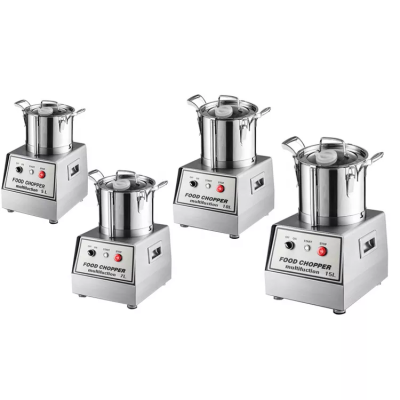


Heavy Duty Bowl Cutter Chopper for Central Kitchen and Food Factory Use
$2360.00 - $4260.00
MOQ: 1 Pieces

Comprehensive Sourcing Guide
Strategic Sourcing Guide for Food Choppers in the Global Market
Navigating the procurement landscape for food choppers requires a disciplined approach that balances technical specifications with supply chain reliability. For buyers in the B2B sector, understanding the nuances of product attributes, from housing materials to power consumption, is essential for selecting the right supplier without relying on unverified marketing claims. This guide synthesizes observed market data and verified product attributes to provide a framework for evaluating Food Chopper suppliers, ensuring that procurement decisions are grounded in factual evidence rather than speculation.
Technical Specifications and Functional Variability
The first step in sourcing a Food Chopper is to define the technical requirements that align with the intended application. The market presents a diverse range of configurations, particularly regarding speed settings and power output. Observed data indicates that units are available with single-speed configurations, as well as models offering two distinct speeds. This variability allows buyers to match the equipment to specific processing needs, whether for light household tasks or more demanding commercial preparation.
Power consumption is another critical technical parameter. The observed product range includes units rated at 100W, 200W, 250W, 300W, 350W, and 400W. Selecting the appropriate wattage depends on the density of the food items to be processed and the desired throughput. For instance, higher wattage models may be necessary for processing hard vegetables or larger volumes, while lower wattage units suffice for softer ingredients. Voltage compatibility is equally important; the observed data specifies a standard voltage of 220V, which is typical for many international markets but requires verification against local grid standards to prevent equipment failure.
Blade configuration and capacity further define the utility of the device. Some observed models feature a four-blade system, which can enhance chopping efficiency and uniformity. Capacity ranges vary significantly, with observed units ranging from compact 350ml containers to larger 2.0L or 3.0L options. Buyers must assess whether the target market requires portable, single-serve units or larger capacity machines for family or small business use. The housing material is predominantly plastic, with specific references to PP (Polypropylene) types, often combined with metal components for durability. The weight of these units, observed at approximately 1050g, suggests a balance between portability and stability during operation.
Compliance, Certification, and Material Safety
In the food appliance sector, compliance with safety and material standards is non-negotiable. Buyers must verify that suppliers provide valid documentation for certifications that ensure the product is safe for food contact. The observed data highlights specific certifications such as LFGB and FDA. These standards are critical for products intended for kitchen use, as they verify that the materials used do not leach harmful substances into food.
The material composition of the chopper is a primary driver for these certifications. The observed product attributes list materials including plastic and metal, with specific mention of ABS (Acrylonitrile Butadiene Styrene) and stainless steel (SS) combinations. The use of PP plastic is also noted, which is generally considered food-safe and durable. However, the presence of these materials in a product does not automatically guarantee compliance; buyers must request current test reports and certificates of conformity for each specific model. The "Eco-Friendly" feature observed in some listings suggests a focus on sustainable manufacturing, but this claim should be substantiated by the supplier with specific data on material recyclability or production processes.
Standardization of dimensions is another aspect of compliance. While some products are listed with customizable standards, others have fixed dimensions such as 19.3 x 12 x 14.2cm or 30 x 30 x 19.5cm. These measurements are vital for logistics planning and retail shelving requirements. Buyers should ensure that the standard dimensions provided by the supplier match the physical constraints of their distribution channels.
Cost Drivers and Pricing Structures
Understanding the cost structure of food choppers is essential for budgeting and margin analysis. The observed price range in the market spans from $1.50 to $4,260 USD. This wide disparity indicates a segmentation of the market into low-cost entry-level units and high-end, specialized, or bulk industrial solutions. The lower end of the spectrum likely corresponds to basic, single-speed models with minimal customization, while the upper end may reflect complex units with advanced features, higher power ratings, or significant branding and packaging costs.
Several factors drive these costs. Customization is a major variable; the observed data confirms that customization is available for attributes such as color (Black, Silver, or Customized), logo placement, and product standards. Suppliers typically charge a premium for custom molds, specific color formulations, and branding services. Additionally, the complexity of the packaging plays a role. Observed packaging options range from simple carton boxes to more elaborate gift boxes or color boxes with cardboard inserts. The choice of packaging directly impacts the unit cost and the final retail price.
Minimum Order Quantity (MOQ) is another critical cost driver. The observed MOQ range is between 1 and 5,000 units. Lower MOQs allow for smaller initial investments but often come with a higher per-unit cost. Conversely, larger orders may secure better pricing but require significant capital outlay and storage capacity. Buyers must calculate the total landed cost, including shipping and duties, to determine the true economic viability of a supplier.
Typical Applications and Market Segmentation
Food choppers serve a variety of applications, primarily categorized as household appliances or kitchen appliances. The observed data explicitly mentions "Household" and "Kitchen Appliance Juicer Machine" as usage categories. This suggests that the product line is versatile, catering to both domestic consumers and small commercial entities like cafes or catering services.
The automation level is another segmentation factor. The observed data notes "Non-automatic" functionality, which implies manual operation or simple push-button controls. This aligns with the "Button" control type observed in the product attributes. For buyers targeting the premium market, the availability of "Multifunction" and "Unitary" function types indicates that some models may offer versatility beyond simple chopping, potentially including blending or juicing capabilities.
The target audience also influences the choice of capacity and power. Compact 350ml units are ideal for individual servings or small households, whereas 2.0L to 3.0L models are better suited for family use or small-scale food preparation businesses. The "Appliances Kitchen" keyword reinforces the primary market focus, but buyers should also consider if the product can be adapted for other uses, such as in office pantries or event catering, to expand the potential market reach.
Supplier Evaluation and Lead Time Management
Evaluating a supplier requires a deep dive into their operational capabilities and reliability. The observed data provides specific insights into delivery timelines. A common lead time noted is "40 Days After Receiving The Deposit," though some suppliers offer a faster "20 Days" delivery window. These timelines are critical for supply chain planning, especially for buyers operating on tight schedules or facing seasonal demand spikes.
The production origin is consistently listed as China, which is a major manufacturing hub for kitchen appliances. Buyers should verify the specific location within China, as logistics and shipping costs can vary based on the port of origin. Furthermore, the "Capacity" attribute listed as 350ml or 2.0L/3.0L in the context of product specs might be confused with factory capacity; buyers must clarify that these figures refer to product volume, not manufacturing throughput.
Supplier reliability is also indicated by their ability to handle customization. The availability of "Customizable" standards and "Can Be Customized" logos suggests a flexible manufacturing process. However, buyers should assess the supplier's track record in meeting customization deadlines and maintaining quality consistency across different batches. The "Qty/CTN" (Quantity per Carton) of 6 pieces and specific carton sizes (e.g., 623160.5cm) are essential for calculating shipping efficiency and container loading.
Quality Control and Long-Term Procurement Considerations
Implementing a robust quality control (QC) strategy is vital for mitigating risks associated with food appliances. Given the direct contact with food, buyers should mandate pre-shipment inspections that verify material safety, electrical safety, and mechanical durability. The observed "Eco-Friendly" feature and material certifications like FDA and LFGB should be validated through third-party testing reports.
Long-term procurement considerations include the availability of spare parts and after-sales support. While the observed data does not explicitly detail warranty terms, the complexity of the machinery (e.g., motors, blades) suggests that a reliable supply chain for replacement parts is necessary. Buyers should also consider the environmental impact of the product lifecycle, including the recyclability of the plastic and metal components.
The packaging strategy, observed as "Color Box + Cardboard Box" or "Gift Box + Carton," should be evaluated for its ability to protect the product during transit. The gross weight (G/W) and net weight (N.W.) figures, such as 13/12kgs, are crucial for freight cost calculations. Ensuring that the packaging meets the required standards for the destination market is a key part of the QC process.
Comparative Analysis of Product Attributes
To facilitate decision-making, the following table summarizes key observed attributes for comparison. This data is derived strictly from the provided product facts and serves as a reference for evaluating different product configurations.
| Attribute | Observed Value / Range | Relevance to Procurement |
|---|---|---|
| Power Rating | 100W to 400W | Determines processing capability and energy efficiency. |
| Speed Settings | 1 Speed or 2 Speeds | Affects versatility and user control. |
| Voltage | 220V | Must match local grid standards. |
| Capacity | 350ml, 2.0L, 3.0L | Defines target market segment (individual vs. family). |
| Blade Count | 4 Blades | Indicates chopping efficiency and texture quality. |
| Housing Material | Plastic (PP, ABS) + Metal (SS) | Impacts durability and safety. |
| Certifications | FDA, LFGB | Mandatory for food contact safety compliance. |
| Lead Time | 20 Days or 40 Days | Critical for inventory planning and cash flow. |
| MOQ | 1 to 5,000 Units | Influences initial investment and risk. |
| Customization | Available (Color, Logo, Standard) | Enables brand differentiation and market fit. |
| Packaging | Carton, Color Box, Gift Box | Affects retail presentation and shipping costs. |
| Origin | China | Determines logistics routes and tariff implications. |
Conclusion
Sourcing food choppers effectively requires a meticulous analysis of technical specifications, compliance requirements, and supplier capabilities. The observed data reveals a market characterized by significant variability in power, capacity, and customization options. By focusing on verified attributes such as FDA and LFGB certifications, specific power ratings, and realistic lead times, buyers can navigate the complexities of the global supply chain. The wide price range and MOQ flexibility offer opportunities for both small startups and large retailers, provided that due diligence is maintained throughout the selection process. Ultimately, successful procurement hinges on aligning product features with market needs while ensuring rigorous quality control and reliable supply chain management.
FAQs
What certifications do food choppers have for food safety?
Food choppers typically hold FDA and LFGB certifications to ensure material safety for food contact. These standards verify that plastic and metal components do not leach harmful substances, which is essential for kitchen appliances used in households or commercial settings.
How long is the delivery time for Food Chopper orders?
Delivery times vary between 20 days and 40 days after receiving the deposit. The specific timeline depends on the supplier's production schedule and the level of customization required for the order, such as logo printing or color changes.
Which power ratings are available for Food Chopper models?
Available power ratings range from 100W to 400W depending on the specific model. Lower wattage units suit light tasks while higher wattage options handle denser food items, with voltage typically set at 220V for international compatibility.
Can food choppers be customized for specific branding needs?
Yes, customization is available for logos, colors, and product standards. Buyers can request specific colors like black or silver, and suppliers can adjust packaging types such as gift boxes or standard cartons to meet unique market requirements.
What is the minimum order quantity for Food Chopper purchases?
Minimum order quantities range from 1 unit to 5000 units depending on the supplier. Lower MOQs allow for smaller initial investments, while larger orders may secure better pricing but require more storage capacity and capital outlay.
Which capacity sizes are offered for Food Chopper containers?
Container capacities vary from compact 350ml units to larger 2.0L or 3.0L options. The choice depends on whether the target market requires portable single-serve devices or larger machines suitable for family use and small business preparation.
What materials are used to construct Food Chopper housings?
Housings are primarily made of plastic, specifically PP or ABS, often combined with metal components like stainless steel. This combination ensures durability and safety, with some models featuring eco-friendly material claims that require verification through test reports.