Source Fondant Cupcake Decorating Silicone Mold for Cake, Soap, and Dessert
Find 30 options for the Fondant Cupcake Decorating Silicone Mold suitable for baking cakes, making soap, and crafting French desserts. Buyers can compare models, sizes, and customization features from suppliers in Guangdong and Zhongshan.
Key considerations
Products List


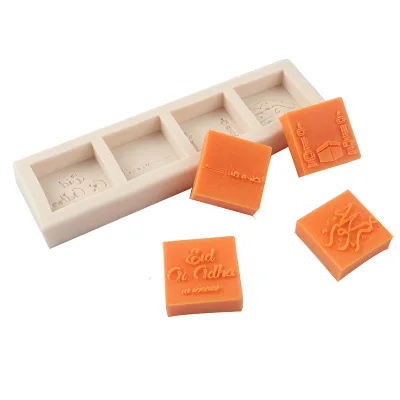


Silicone Mold Cookware Baking Tool Kitchenware Fondant Cake Decoration Tool
$1.23 - $1.99
MOQ: 1000 Pieces


Comprehensive Sourcing Guide
Strategic Sourcing Guide for Fondant Cupcake Decorating Silicone Molds
Understanding Material Integrity and Safety Standards
When sourcing silicone molds specifically for fondant cupcake decorating, the primary technical consideration is the material composition. The market offers a range of products, but the most reliable options for food contact applications are those explicitly defined as food-grade silicone. In the current supply landscape, verified product attributes indicate that high-quality molds are constructed from 100% food-grade silicone. This material classification is critical because it ensures the absence of harmful fillers such as BPA, phthalates, or heavy metals that can leach into food products, particularly when working with sugar-based confections like fondant.
Buyers must verify that the supplier can provide documentation confirming the material meets food safety standards. While specific certification bodies vary by region, the baseline requirement is that the silicone must be inert and non-toxic. The observed product data highlights a standard of "100% food grade silicone" as a key specification for certain models. This attribute differentiates premium baking tools from lower-grade alternatives that may use silicone blends with plasticizers. For fondant work, where the mold is in direct contact with edible surfaces for extended periods during setting, material purity is non-negotiable.
Furthermore, the physical properties of the silicone dictate its performance. The material must exhibit high heat resistance to withstand the baking process if used for cake bases, yet it must also remain flexible at room temperature to facilitate the release of delicate fondant shapes without tearing. The observed weight variations in the product catalog, ranging from 75g to 245g per piece, suggest differences in wall thickness and density. Heavier molds often indicate a denser silicone compound, which can provide better structural integrity for intricate 3D designs, whereas lighter molds may be more suitable for simple, flat cupcake liners. Buyers should request physical samples to assess the "feel" and flexibility of the silicone before committing to large orders.
Technical Specifications and Dimensional Accuracy
The technical specifications of a fondant cupcake mold extend beyond the material to include precise dimensions and shape consistency. In the context of cupcake decorating, the mold must produce uniform results to ensure that fondant decorations fit perfectly on standardized cupcake bases. The product data reveals a variety of standard sizes, such as 1616.23.5cm, 25.5X9cm, and 27X17X4cm. These dimensions likely correspond to different mold types, including round cake molds, 3D mousse molds, and specialized decorating tools.
For fondant work, the internal geometry of the mold is paramount. The molds observed in the supply data include "Round" shapes and specific 3D configurations like "3D Silicone Cheese Mousse Cake Baking Mold." When selecting a mold for fondant cupcake decorating, buyers should look for models with clear, sharp edges and consistent depth. The standard dimensions provided, such as 22.5817.1cm or 20.48.1cm, serve as reference points for the mold's footprint and height. It is essential to verify that the mold's internal volume matches the intended fondant thickness. A mold that is too deep may require excessive fondant, leading to waste and potential structural issues, while a mold that is too shallow may not support the weight of the decoration.
The shape of the mold also influences the decorating process. While many molds are round, the availability of customized shapes allows for unique branding or thematic designs. The product attributes list "Customization: Available" and "Logo: Customized," indicating that suppliers can produce molds with specific branding or unique geometries. However, customization introduces variables in production time and cost. Buyers should ensure that the custom design does not compromise the mold's ability to release the fondant cleanly. Complex undercuts or intricate details in the mold design can trap air bubbles or make demolding difficult, leading to damaged decorations. Therefore, technical drawings and 3D prototypes should be reviewed before mass production begins.
Cost Drivers and Minimum Order Quantity Analysis
The pricing structure for silicone molds is influenced by several factors, including material quality, mold complexity, and order volume. The observed price range in the market spans from $0.04 to $2.99 per unit. This wide disparity reflects the difference between simple, mass-produced items and specialized, high-quality molds. The lower end of the price spectrum typically corresponds to basic cupcake liners or simple round molds with minimal detailing. In contrast, the higher price points are associated with 3D molds, molds with custom logos, or those made from premium food-grade silicone with enhanced durability.
Minimum Order Quantity (MOQ) is another critical cost driver. The data indicates an MOQ range of 1 to 3000 units. For small businesses or those testing new designs, an MOQ of 1 allows for sampling and quality verification without significant financial risk. However, for established brands looking to stock inventory, the MOQ may rise to 1500 or 3000 units. The specific product data shows an MOQ of 1500 PCS for certain models, which suggests that high-volume orders are necessary to achieve the lowest unit price. Buyers should calculate the total cost of ownership, including shipping and storage, rather than focusing solely on the unit price.
The cost of customization also plays a significant role. While the product attributes confirm that customization is available, this service often incurs additional fees for mold creation and setup. The lead time for customized orders can be longer than for stock items. The observed delivery times vary, with some suppliers offering a 10-day lead time for standard orders and sample lead times as short as 3 days. Mass production lead times are often tied to payment terms, such as a 30% deposit with the balance against a copy of the bill of lading. Buyers should factor these timelines into their inventory planning to avoid stockouts, especially during peak baking seasons.
Typical Applications and Functional Versatility
Silicone molds designed for fondant cupcake decorating serve a variety of applications beyond simple cupcake baking. The product attributes highlight usage in "Making Cake/Soap," "3D Silicone Mold for Baking Cakes, French Dessert," and "Making Ice, Cake, Chocolate, Pastry, Jelly and etc." This versatility indicates that these molds are not limited to a single use case. For fondant decorators, the molds can be used to create pre-formed chocolate or jelly elements that are then applied to cupcakes, adding texture and visual interest.
The "Reusable Non-Stick Heat Resistant" advantage noted in the product data is particularly relevant for fondant work. The non-stick property ensures that delicate fondant decorations can be removed from the mold without breaking, preserving the intricate details of the design. Heat resistance allows the molds to be used in ovens for baking the cake base, eliminating the need for separate baking pans. This dual functionality streamlines the production process for professional bakers.
Additionally, the molds can be utilized for non-food applications, such as soap making or crafting. This expands the potential market for these products, making them attractive to suppliers who cater to both the culinary and craft industries. The "Eco-Friendly" feature mentioned in the product attributes further enhances their appeal, as consumers and businesses increasingly seek sustainable alternatives to single-use plastic molds. The ability to reuse these molds hundreds of times reduces waste and aligns with environmental goals.
Supplier Evaluation and Quality Control Protocols
Evaluating a supplier for silicone molds requires a rigorous assessment of their production capabilities and quality control measures. The product data indicates that suppliers are located in regions such as Guangdong and Zhongshan, China, which are known manufacturing hubs. Buyers should verify the supplier's origin and ensure they have a track record of producing food-grade silicone products. The presence of specific product models, such as GP-ECM003 and CY-289, suggests that suppliers have established production lines with standardized processes.
Quality control should be a priority throughout the procurement process. Buyers should request samples to test for flexibility, odor, and durability. The samples should be subjected to thermal cycling to ensure they do not degrade or release odors when exposed to heat. The "100% food grade silicone" standard should be verified through third-party testing reports. Additionally, buyers should inspect the molds for any flash, uneven surfaces, or defects that could affect the final product.
The supplier's ability to handle customization is another key evaluation criterion. The data shows that logos and shapes can be customized, but this requires close collaboration between the buyer and the supplier. Buyers should ensure that the supplier has the technical expertise to translate design concepts into functional molds. Communication regarding design specifications, material choices, and production timelines is essential to avoid misunderstandings.
Long-Term Procurement and Supply Chain Considerations
Sourcing silicone molds for fondant cupcake decorating is not just a one-time transaction but a long-term partnership. Buyers should consider the supplier's capacity to scale production as demand grows. The observed MOQs and lead times suggest that suppliers can handle both small and large orders, but capacity constraints may arise during peak seasons. Buyers should establish clear communication channels and agree on lead times that accommodate their inventory needs.
Payment terms are another aspect of long-term procurement. The data indicates that suppliers accept various payment methods, including T/T, Credit Card, and Paypal. Buyers should negotiate terms that balance risk and cash flow, such as partial payments or letters of credit for large orders. The "Sample: Acceptable" attribute suggests that suppliers are willing to provide samples, which is a positive indicator of their confidence in their products.
Finally, buyers should consider the environmental impact of their procurement decisions. The "Eco-Friendly" feature of the molds aligns with sustainability goals, but buyers should also evaluate the packaging. The product data mentions packaging options like "Carton" and "PVC Pet or Oppbag." Buyers should inquire about the recyclability of these materials and request eco-friendly packaging options if possible. By prioritizing sustainable practices, buyers can enhance their brand reputation and contribute to a greener supply chain.
| Feature | Standard Model | Customized Model |
|---|---|---|
| Material | 100% Food Grade Silicone | 100% Food Grade Silicone |
| Shape | Round, Standard 3D | Custom Logo/Shape |
| MOQ | 1 - 1500 PCS | 1500+ PCS (Typical) |
| Lead Time | 3-10 Days | 10+ Days (Plus Setup) |
| Packing | Polybag, Carton | Customized Packing |
| Price Range | $0.04 - $2.99 | Higher (Setup Fees Apply) |
In conclusion, sourcing fondant cupcake decorating silicone molds requires a careful balance of technical specifications, cost analysis, and supplier evaluation. By focusing on material integrity, dimensional accuracy, and long-term supply chain stability, buyers can secure high-quality molds that meet their production needs and customer expectations. The availability of customization and eco-friendly options further enhances the value proposition of these products, making them a versatile choice for modern baking and decorating businesses.
FAQs
What material is used for these silicone molds?
The molds are constructed from 100% food-grade silicone to ensure safety for food contact applications. This material is free from harmful fillers like BPA and phthalates, making it suitable for fondant and baking tasks.
Can I customize the logo or shape of the mold?
Yes, customization is available for both logos and product shapes to meet specific branding needs. Buyers should note that custom orders may involve different lead times and setup costs compared to standard stock items.
What is the minimum order quantity for these molds?
The minimum order quantity ranges from 1 unit for sampling up to 3000 units for bulk orders. Specific models may require higher MOQs, such as 1500 pieces, depending on the supplier and product configuration.
How long does it take to receive samples?
Sample lead times are typically within 3 days for standard requests. Mass production lead times vary, with some suppliers offering a 10-day delivery window for standard orders after deposit payment.
Are these molds suitable for making soap and chocolate?
Yes, the molds are versatile and can be used for making cake, soap, chocolate, pastry, and jelly. Their non-stick and heat-resistant properties facilitate easy release for various confectionery and crafting applications.
What are the typical dimensions of the molds?
Dimensions vary by model, with sizes such as 16*16.2*3.5cm or 25.5x9cm commonly observed. Buyers should verify specific standard sizes like 27x17x4cm to ensure they match their fondant decorating requirements.