Source Food Grade Carboxymethyl Cellulose for Meat, Drinks, and Baked Goods
Find 30 verified suppliers offering Food Grade Carboxymethyl Cellulose for meat, drinks, and baked goods. Compare specifications like purity, viscosity, and packaging options to select the right product for your production needs.
Key considerations
Products List


Premium Food-Grade Sodium Carboxymethyl Cellulose for Food Applications
$2000.00 - $2400.00
MOQ: 16 Tons


Versatile Excipient Grade Carboxymethyl Cellulose for Global Distribution
$2000.00 - $2400.00
MOQ: 16 Tons


Comprehensive Sourcing Guide
Strategic Sourcing Guide for Food Grade Carboxymethyl Cellulose
Procuring food-grade carboxymethyl cellulose (CMC) requires a disciplined approach that balances technical performance with strict regulatory compliance. As a versatile hydrocolloid derived from natural cellulose, this additive serves as a stabilizer, thickener, and emulsifier across a diverse range of food categories. The global market for this material is characterized by a wide spectrum of product grades, from primary standards to specialized industrial applications. Buyers must navigate this complexity by focusing on verified attributes such as purity, viscosity, and degree of substitution, while ensuring that all suppliers adhere to the rigorous standards required for food safety. This guide outlines the critical factors for sourcing high-quality CMC, leveraging observed market data to inform decision-making without relying on unverified claims.
Technical Specifications and Product Variability
The first step in any sourcing strategy is defining the precise technical specifications required for the intended application. Carboxymethyl cellulose is not a monolithic product; its properties vary significantly based on the manufacturing process and the intended end-use. Based on observed market data, the product often presents as a white powder with a specific appearance that is easily soluble in water. A critical parameter for buyers to verify is the Degree of Substitution (D.S.), which typically ranges from 0.75 to 0.9 in high-quality grades. This metric directly influences the solubility and viscosity of the final solution.
Viscosity is another paramount specification, often measured in millipascal-seconds (MPa.S) or similar units. Observed ranges for solution viscosity can span from 200% to 7000%, indicating that a single "food grade" label does not guarantee a specific flow characteristic. Buyers must match the viscosity range to their processing equipment and the desired texture of the final product. For instance, applications requiring high stability in beverages may demand a different viscosity profile than those used in baked goods. Additionally, the pH value of the solution is a crucial quality indicator, with standard ranges observed between 6.0 and 8.5. Deviations from this range can affect the product's compatibility with other ingredients in a formulation.
Purity is equally significant. Market observations indicate that high-grade CMC often boasts a purity of 99.5% minimum, with some specifications listing 99% or 100% as standard models. The loss on drying, which indicates moisture content, is another critical quality metric, typically observed to be less than or equal to 10.0%. When evaluating technical data sheets, buyers should ensure that the supplier provides specific test results for these parameters rather than generic descriptions. The distinction between different product models, such as those labeled with specific codes like CMCF or FH6 FH9, suggests that manufacturers offer tailored solutions for specific industrial needs, including oil drilling or textile auxiliary agents, which may not be suitable for food applications without careful verification.
Compliance, Certification, and Regulatory Standards
In the food industry, compliance is non-negotiable. Sourcing food-grade CMC requires rigorous verification of certifications and adherence to international standards. The observed market data highlights that suppliers often hold ISO certification, and in some cases, HACCP (Hazard Analysis and Critical Control Points) certification is also present. These certifications are essential indicators that the manufacturing facility maintains a quality management system capable of preventing contamination and ensuring consistent product quality.
The grade of the material is a primary compliance factor. The supplied facts explicitly mention "Food Grade" as a specific classification, distinguishing it from industrial grades used in oil drilling or paper chemicals. Buyers must verify that the specific batch or product line is certified for food contact and consumption. The "Primary Standards" classification observed in some listings suggests a high level of purity suitable for analytical or high-precision food applications, but this must be confirmed against the intended use. Furthermore, the origin of the product is a key compliance variable. While many products originate from the Chinese mainland, with specific mentions of Shandong as a production hub, buyers must ensure that the origin country's regulatory framework aligns with the destination market's food safety laws.
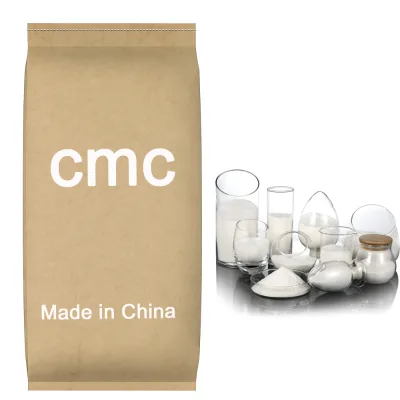
Packaging materials also play a role in compliance. Observed packaging includes paper bags and drums, often weighing 25kg per unit. The material of the packaging, whether paper or plastic, must be food-safe to prevent contamination during storage and transport. Buyers should request documentation confirming that the packaging materials meet relevant food contact regulations. Additionally, the "Standard" attribute observed in the data, sometimes listed as "cellulose ether" or specific percentage standards, serves as a reference point for quality assurance. However, buyers should not rely solely on these labels; they must demand third-party test reports that validate the product against specific regulatory limits for heavy metals, microbial counts, and residual solvents.
Cost Drivers and Procurement Economics
Understanding the cost structure of carboxymethyl cellulose is vital for budgeting and negotiation. The observed price range in the market spans from 1 to 3000 USD, a wide variance that reflects differences in purity, viscosity, packaging, and order volume. This range suggests that cost is heavily influenced by the specific product model and the quantity ordered. The Minimum Order Quantity (MOQ) observed ranges from 1 to 5000 units, indicating that small buyers can access the market, but larger volumes likely secure better pricing tiers.
Payment terms are another significant cost driver. Standard industry practices observed include a 50% TT (Telegraphic Transfer) in advance and 50% TT against the copy of the Bill of Lading (BL). This structure balances the risk between the buyer and the supplier. Buyers should be aware that suppliers with higher certifications or those offering customization services may command a premium. The "Customization: Available" attribute suggests that tailored specifications can be requested, which typically incurs additional costs and potentially longer lead times.
Lead times also impact the total cost of ownership. The observed delivery window is within 7 days after receiving the order, which is relatively fast for international trade. However, this speed may depend on the loading port, with Xingang Port being a common point of origin. Buyers should factor in potential logistics delays, customs clearance times, and the cost of freight when calculating the landed cost. The shelf life of the product, observed to be greater than 12 months, allows for strategic stockpiling, which can help mitigate price volatility. However, storage conditions must be strictly maintained as "Normal" to preserve the product's integrity over this period.
Typical Applications and Performance Requirements
Carboxymethyl cellulose is a multi-functional ingredient with a broad spectrum of applications in the food industry. The observed usage data lists specific categories including meat, drinks, flour products, condiments, jelly, ice cream, and baked goods. In each of these applications, the CMC serves a distinct functional role, primarily as a stabilizer or thickener. For example, in ice cream and jelly, the "Effect" of stabilization is critical to prevent ice crystal formation and maintain texture. In meat products, it helps retain moisture and improve yield.
The "Nutritional Value" attribute suggests that the product is considered nutritional, which is a key selling point for health-conscious formulations. Its "Resource" classification as "Natural" further enhances its appeal in clean-label products. However, the specific performance requirements vary by application. In oil drilling or textile auxiliary agents, the CMC functions differently, often as a viscosity modifier or suspending agent. Buyers sourcing for food applications must ensure they are not purchasing industrial-grade CMC intended for these other sectors, even if the chemical composition is similar. The "Classification" as "Primary Standards" or "Analytical Reagents" indicates a high level of purity that is essential for food safety, whereas industrial grades may contain impurities unsuitable for human consumption.
Supplier Evaluation and Quality Control Protocols
Evaluating suppliers requires a multi-faceted approach that goes beyond price comparisons. Buyers should prioritize suppliers who provide transparent technical data sheets and have a track record of compliance with food safety standards. The presence of ISO and HACCP certifications is a strong positive indicator, but buyers should verify the validity of these certificates and ensure they cover the specific manufacturing site. The "Main Active Ingredient" being Carboxymethylcellulose Sodium is a standard chemical definition, but the source of the raw cellulose and the manufacturing process can vary, affecting the final product quality.
Quality control protocols should be a central part of the supplier evaluation. Buyers must request sample testing results for key parameters such as viscosity, pH, purity, and loss on drying. The observed data shows that some products have a "Standard" content, but this is a vague term; specific numerical ranges should be requested. Additionally, the "Solution Viscosity" range of 200%-7000% highlights the need for precise testing. Buyers should consider implementing a quality control plan that includes incoming inspection of raw materials and periodic testing of finished goods. The "Storage Method" being "Normal" implies that the product is stable under standard conditions, but buyers should still verify that the supplier's storage facilities meet these requirements to prevent degradation during transit.
Long-Term Procurement and Supply Chain Resilience
Sourcing food-grade CMC is not a one-time transaction but a long-term relationship that requires careful management. The "Delivery" time of within 7 days is a significant advantage, but buyers should assess the supplier's capacity to scale up if demand increases. The "Customization: Available" attribute suggests flexibility, which is valuable for adapting to changing market trends or specific product formulations. However, customization can introduce complexity into the supply chain, requiring more rigorous quality control and potentially longer lead times for new batches.
The "Shelf Life" of greater than 12 months allows for strategic inventory management, but buyers must ensure that their own storage conditions align with the "Normal" storage method specified. This includes maintaining appropriate temperature and humidity levels to prevent clumping or microbial growth. The "Loading Port" of Xingang Port is a key logistical node, and buyers should monitor the stability of this route for potential disruptions. Furthermore, the "Packaging Material" of paper or plastic must be durable enough to withstand long-distance shipping without compromising the product's integrity.
In conclusion, sourcing food-grade carboxymethyl cellulose demands a balance of technical precision, regulatory compliance, and strategic supply chain management. By focusing on verified specifications such as purity, viscosity, and degree of substitution, and by rigorously evaluating supplier certifications and quality control protocols, buyers can secure a reliable supply of high-quality CMC. The wide range of applications, from meat products to ice cream, underscores the versatility of this ingredient, but also the need for careful selection to ensure it meets the specific needs of each food category. Ultimately, a disciplined approach to procurement, grounded in verified data and transparent supplier relationships, will yield the best results for food manufacturers seeking to enhance their product quality and safety.
FAQs
What certifications are required for Food Grade Carboxymethyl Cellulose?
Suppliers typically hold ISO and HACCP certifications for food safety compliance. These credentials verify that the manufacturing facility maintains strict quality management systems to prevent contamination and ensure consistent product quality for human consumption.
How is the product packed and what is the shelf life?
The product is available in 25kg bags or drums made of paper or plastic materials. It has a shelf life exceeding 12 months when stored under normal conditions, allowing for strategic inventory management without immediate degradation.
What are the typical delivery times and payment terms?
Delivery occurs within 7 days after receiving the order from the Xingang Port. Standard payment terms require 50% TT in advance and the remaining 50% TT against the copy of the Bill of Lading to balance risk.
Which applications does this additive serve in the food industry?
It is used in meat, drinks, flour products, condiments, jelly, ice cream, and baked goods. The primary function acts as a stabilizer and thickener to improve texture and prevent ice crystal formation in various formulations.
What is the minimum order quantity for this product?
The minimum order quantity ranges from 1 to 5000 units depending on the supplier and product model. This flexibility allows small buyers to access the market while larger volumes may secure better pricing tiers.
Can the product specifications be customized for specific needs?
Customization is available for tailored specifications such as viscosity or purity levels. Buyers should note that requesting custom features may incur additional costs and potentially extend the lead time beyond standard delivery windows.