Source Food Grade Magnesium Sulfate for Fertilizer, Industry, and Bath
Find 30 verified listings for Food Grade Magnesium Sulfate suitable for fertilizer, industrial, and bath applications. Buyers can compare specifications like purity, particle size, and packaging options from multiple Chinese suppliers; compare the available evidence and request quotations based on your requirements.
Key considerations
Products List




Comprehensive Sourcing Guide
Food Grade Magnesium Sulfate Sourcing Guide
Sourcing Food Grade Magnesium Sulfate requires careful attention to purity levels and specific grade classifications that distinguish industrial or fertilizer-grade materials from those suitable for human consumption. Buyers must verify that the product meets stringent food safety standards, as the supply chain often includes multiple variants with different applications. The core keyword highlights a chemical compound that serves as a vital ingredient in various food processing sectors, where consistency and safety are paramount. Procurement teams need to distinguish between anhydrous and heptahydrate forms, as their solubility and usage differ significantly in final formulations.
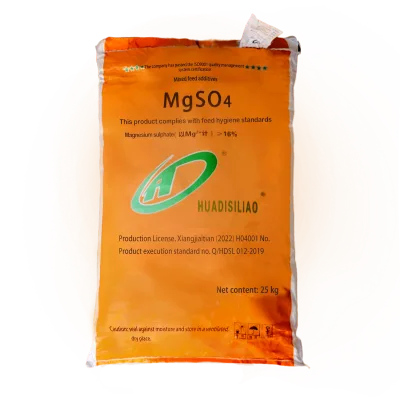
The market offers a wide range of packaging options, from small paper bags to bulk drums, which impacts handling and storage logistics. Observations indicate that suppliers provide products in 25kg, 50kg, and even 1000kg packages, allowing for flexibility based on production volume. It is crucial to confirm that the packaging material is food-safe and prevents contamination during transit. Buyers should also consider the physical appearance, such as powder or crystal forms, to ensure compatibility with their specific manufacturing processes and equipment capabilities.
Product Scope and Observed Listing Signals
The observed product listings reveal a diverse range of magnesium sulfate variants, with prices spanning from $0.15 to $600 USD, reflecting differences in purity, packaging, and order quantity. Minimum order quantities typically range from 1 to 1000 units, catering to both small-scale specialty buyers and large industrial purchasers. These signals suggest a competitive market where buyers can negotiate terms based on volume, but they must remain vigilant about the specific grade claims associated with each price point. The wide price variance underscores the importance of verifying the exact specifications before committing to a purchase.
Listings frequently highlight attributes such as high purity levels, often stated as 99% or higher, and specific particle sizes like 20-80 mesh or 80-120 mesh. These technical details are critical for determining suitability for food applications, where uniformity and solubility are key performance indicators. Buyers should note that some listings mention certifications like ISO, RoHS, and CIQ, which may indicate quality management systems but do not automatically guarantee food-grade status. It is essential to cross-reference these claims with official documentation to ensure compliance with local food safety regulations.
Technical Specifications to Verify
Technical verification begins with confirming the chemical identity and physical form of the magnesium sulfate, ensuring it matches the required anhydrous or heptahydrate state for your application. Buyers should request detailed assay reports that specify the magnesium sulfate content, often ranging from 99.0% to 100.5%, to ensure high purity. Additionally, verifying the loss on ignition, which should be no more than 2.0%, helps confirm the absence of excessive moisture or impurities that could affect product stability. These parameters are fundamental to maintaining consistent quality in food production processes.
Particle size distribution is another critical specification, with common ranges including 0.1-1mm, 1-3mm, and 2-4mm, depending on whether the product is used as a powder or granular additive. Buyers must ensure that the selected particle size aligns with their mixing and dissolution requirements to avoid processing issues. Furthermore, confirming the solubility characteristics, such as being easily soluble in water, is vital for applications requiring rapid integration into liquid formulations. These technical details should be explicitly stated in the product data sheet to avoid ambiguity.
Compliance and Safety Documentation
Compliance with food safety standards is non-negotiable when sourcing magnesium sulfate for human consumption. Buyers must verify that the product meets the specific grade standards required by their target market, such as Food Grade, Medicine Grade, or Industrial Grade, with the former being essential for food applications. Documentation should include certificates of analysis that confirm the absence of heavy metals and other contaminants, ensuring the product is safe for ingestion. This step is crucial to mitigate regulatory risks and protect brand reputation.
Certifications such as ISO, CIQ, and CCIC may be present, indicating adherence to international quality and inspection standards, but they do not replace specific food safety approvals. Buyers should request evidence of compliance with relevant food additive regulations, such as FCC or USP standards, which are often cited in listings for pharmaceutical and food-grade materials. These standards provide a benchmark for purity and safety, offering assurance that the product has been tested and approved for its intended use. Always validate these certifications with the issuing bodies.
Cost Drivers and Commercial Terms
Cost variations in magnesium sulfate sourcing are driven by factors such as purity level, packaging type, and order volume. Higher purity grades, such as those meeting Medicine Grade or Food Grade standards, typically command higher prices due to the rigorous testing and quality control processes involved. Buyers should also consider the cost implications of different packaging options, from standard 25kg bags to bulk 1000kg drums, as these affect handling and storage expenses. Understanding these drivers helps in budgeting and negotiating favorable terms.
Commercial terms, including minimum order quantities and lead times, significantly impact the total cost of ownership. Listings indicate MOQs ranging from 1 to 1000 units, allowing for flexibility but potentially increasing per-unit costs for smaller orders. Buyers should negotiate for volume discounts and clarify payment terms to manage cash flow effectively. Additionally, considering the origin of the product, such as shipments from China, may influence logistics costs and import duties, which should be factored into the overall procurement strategy.
Supplier Qualification and Quality Control
Supplier qualification is a critical step in ensuring the reliability and consistency of magnesium sulfate supplies. Buyers should assess suppliers based on their production capabilities, quality management systems, and track record in the food industry. Verifying that the supplier has the necessary certifications and adheres to good manufacturing practices is essential to minimize the risk of contamination or specification deviations. This due diligence helps build a robust supply chain that can meet ongoing quality requirements.
Quality control measures should include regular sampling and testing of incoming shipments to verify compliance with agreed-upon specifications. Buyers should establish clear acceptance criteria for parameters such as purity, particle size, and moisture content, and implement a process for handling non-conforming products. Collaborating with suppliers to conduct periodic audits and review quality reports can further enhance supply chain transparency and reliability. These practices ensure that the magnesium sulfate meets the highest standards of quality and safety.
Long-Term Procurement Checks
Long-term procurement success depends on continuous monitoring of supplier performance and market dynamics. Buyers should regularly review supplier quality metrics, including defect rates and delivery reliability, to identify potential issues early. Establishing a structured review process allows for timely interventions and fosters a collaborative relationship with suppliers focused on continuous improvement. This proactive approach helps maintain supply chain resilience and ensures consistent product quality over time.
Market trends and regulatory changes can also impact the availability and cost of magnesium sulfate. Buyers should stay informed about developments in food safety regulations and industry standards to ensure ongoing compliance. Additionally, exploring alternative suppliers and materials can provide flexibility and mitigate risks associated with single-source dependencies. By maintaining a strategic outlook and adapting to changes, buyers can secure a stable and cost-effective supply of Food Grade Magnesium Sulfate for their operations.
FAQs
What certifications are available for Food Grade Magnesium Sulfate?
Available certifications include ISO, RoHS, CIQ, and CCIC for verified products. These standards ensure the material meets international safety and quality requirements for food applications. Buyers can request specific certification documents from suppliers to confirm compliance before placing orders.
How is the product typically packaged for shipment?
The product comes in bags or drums with weights of 25kg, 50kg, or up to 1000kg. Some options include paper bags on pallets for easier handling. Packaging choices depend on the specific order size and the supplier's standard logistics capabilities for bulk transport.
Which purity levels are offered for this chemical?
Purity levels are generally 99% or higher, with some assays ranging from 99.0% to 100.5%. Specific grades like Food Grade, Industrial Grade, and Medicine Grade are available. Buyers should verify the exact assay percentage required for their specific application needs.
Can suppliers provide customization for this product?
Yes, customization is available for specific buyer requirements regarding particle size or packaging. Suppliers may offer different mesh sizes like 20-80mesh or 80-120mesh. This flexibility allows buyers to tailor the product to their manufacturing processes or end-use specifications.
What are the main applications for this material?
Main applications include fertilizer production, industrial processes, food and beverage, and bath salts. The material is also used in pharmaceutical applications due to its high solubility in water. Buyers should select the appropriate grade based on their specific industry usage requirements.
Where are the suppliers located for this product?
Suppliers are primarily located in China, with specific origins in Shandong and Jiangsu provinces. These regions are known for chemical manufacturing capabilities. Buyers can filter search results by these locations to find nearby logistics options or specific regional suppliers.
What is the minimum order quantity for this product?
Minimum order quantities range from 1 unit up to 1000 units depending on the supplier. Smaller orders may be available for samples or trial runs. Larger bulk orders typically utilize standard packaging like 25kg bags or drums to optimize shipping efficiency.