Source Forged Equal Sight Glass for Tanks, Silos, and Pressure Vessels
Find and compare 30 Forged Equal Sight Glass options for industrial observation and protection. Evaluate materials like borosilicate glass, pressure ratings up to 16 bar, and customization support for tanks, silos, and pressure vessels.
Key considerations
Products List





High-Quality American Standard Straight Through Sight Glass for Clarity
$100.00 - $2000.00
MOQ: 1 piece




Comprehensive Sourcing Guide
Forged Equal Sight Glass Sourcing Guide
Procuring forged equal sight glasses requires a disciplined approach that balances mechanical integrity with optical clarity, particularly for high-pressure industrial environments. These components serve as critical observation points in pressure vessels, tanks, and silos, allowing operators to monitor internal conditions without compromising system containment. The "equal" designation typically refers to the symmetry of the flange connections, ensuring uniform load distribution across the sealing interface. When sourcing these parts, buyers must prioritize suppliers who demonstrate rigorous control over both the forging process and the glass material selection, as failures in either domain can lead to catastrophic system leaks or structural breaches.
The market for these specialized industrial components is characterized by a wide variance in technical specifications, ranging from standard borosilicate glass assemblies to high-performance sapphire variants. Buyers often encounter listings that specify a broad range of connection sizes, such as DN25 to DN200, and pressure ratings that can extend up to 16 bar or higher depending on the glass treatment. Understanding the distinction between untempered and tempered glass options is essential, as the latter offers significantly higher bending strength, which is crucial for applications involving thermal shock or mechanical vibration. This guide outlines the key verification steps necessary to ensure that the sourced sight glasses meet the specific operational demands of your facility.
Product Scope and Observed Listing Signals
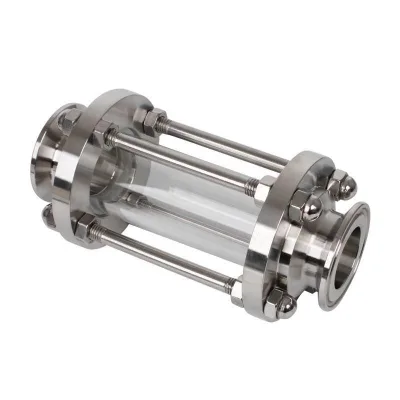
The observed product landscape for forged equal sight glasses reveals a diverse array of configurations tailored to different industrial needs. Listings frequently highlight materials such as stainless steel for the housing and frame, paired with various glass types including borosilicate, ultra-white, and low-iron glass. The shape is consistently described as "equal," indicating symmetrical flange designs that facilitate straightforward installation in piping systems. Additionally, the surface treatment often involves polishing to ensure a smooth finish that resists corrosion and facilitates cleaning, which is vital for sanitary or high-purity applications. Buyers should note that while many suppliers offer standard models, customization is widely available, allowing for specific dimensional requirements or material upgrades.
Price and minimum order quantity (MOQ) signals in the current market suggest a flexible commercial environment, with observed price ranges spanning from low-cost standard units to premium engineered solutions. MOQs typically start as low as one piece, catering to maintenance and replacement needs, while scaling up for bulk procurement projects. The observed production origins are primarily concentrated in regions like Wenzhou and Jiangsu in China, which are known for their robust manufacturing capabilities in industrial fittings. However, buyers must look beyond these geographic indicators and focus on the specific technical attributes listed, such as the presence of CE certification or adherence to DIN/GB/ISO standards, to gauge the true quality and reliability of the supplier’s offerings.
Technical Specifications to Verify
Verifying the technical specifications of forged equal sight glasses is paramount to ensuring compatibility and safety within your process systems. The connection type is predominantly flanged, with common standards including DN25 to DN200, and specific models like DN40 being frequently available. Buyers must confirm the pressure rating, which can vary significantly; some listings indicate a resistance of 16 bar, while others may specify higher limits for specialized glass types. It is also critical to verify the temperature resistance, as borosilicate glass typically withstands temperatures up to 200°C, whereas tempered options may offer enhanced performance. The sealing materials, such as EPDM, NBR, or PTFE, must be selected based on the chemical compatibility with the process fluid to prevent degradation and leakage.
The mechanical properties of the glass itself require careful scrutiny, particularly the bending strength and thermal expansion coefficients. Untempered glass typically exhibits a bending strength of around 40 N/mm², while tempered glass can exceed 100 N/mm², providing a substantial safety margin against impact or pressure spikes. The coefficient of thermal expansion should be verified to ensure it aligns with the thermal cycling expectations of your application, with values often cited around ≤5.0*10⁻⁶ K⁻¹ for high-quality borosilicate. Additionally, the surface quality of the glass must be free from bubbles, stripes, stones, and impurities, as these defects can act as stress concentrators and lead to premature failure under pressure.
Compliance and Safety Documentation
Compliance with international standards is a non-negotiable aspect of sourcing forged equal sight glasses, particularly for applications in regulated industries. Buyers should insist on documentation that confirms adherence to recognized standards such as DIN 7080 for glass sight glasses, as well as broader manufacturing standards like DIN, GB, ANSI, and JIS. The presence of a CE mark indicates conformity with health, safety, and environmental protection standards for products sold within the European Economic Area, which is a common requirement for many industrial buyers. Furthermore, suppliers should be able to provide material test certificates, such as EN 10204-3.1, which verify the chemical composition and mechanical properties of the stainless steel components used in the assembly.
Safety documentation should also include detailed information on the glass’s resistance to various environmental factors, including water and acid exposure. Standards such as DIN ISO 719 Hbg 1 for water resistance and DIN ISO 695:A2 for acid resistance provide objective measures of the glass’s durability in corrosive environments. Buyers must ensure that the supplier can provide evidence of these resistances, either through third-party testing reports or internal quality control records. This documentation is essential for risk assessment and for ensuring that the sight glasses will maintain their integrity over the lifespan of the equipment, thereby preventing unplanned downtime and potential safety hazards.
Cost Drivers and Commercial Terms
The cost of forged equal sight glasses is influenced by several key factors, including the type of glass, the complexity of the forging process, and the level of customization required. Standard borosilicate glass units with common flange sizes tend to be more cost-effective, while sapphire sight glasses or those with specialized coatings command a premium due to their superior optical and mechanical properties. The forging process itself, which enhances the strength of the metal housing, adds to the manufacturing cost but is justified by the improved durability and safety of the final product. Buyers should also consider the impact of surface treatments, such as polishing, which can add to the cost but are necessary for specific sanitary or aesthetic requirements.
Commercial terms, including packaging and shipping, also play a significant role in the total cost of ownership. Listings often indicate packaging options such as cartons, wooden cases, or wooden boxes, with the choice depending on the fragility of the glass and the distance of shipment. Customized packaging may be available for bulk orders or for protecting high-value items during transit. Buyers should negotiate clear terms regarding lead times and delivery schedules, as these can vary based on the supplier’s production capacity and the complexity of the order. Additionally, the availability of OEM and ODM services may impact pricing, as custom designs require additional engineering and tooling investments.
Supplier Qualification and Quality Control
Qualifying suppliers of forged equal sight glasses requires a thorough assessment of their manufacturing capabilities and quality control systems. Buyers should verify that the supplier employs a forging process for the metal components, as this method ensures a dense grain structure and superior mechanical strength compared to casting. The supplier’s ability to support OEM and ODM requests is also an indicator of their flexibility and technical expertise. It is advisable to request samples for initial testing to evaluate the fit, finish, and optical clarity of the sight glasses before committing to larger orders. This hands-on verification helps to identify any potential issues with manufacturing tolerances or material quality early in the procurement process.
Quality control measures should be rigorously evaluated, with a focus on the supplier’s inspection protocols for both the glass and the metal components. Buyers should inquire about the supplier’s process for ensuring surface quality, specifically looking for checks that eliminate bubbles, stripes, stones, and impurities from the glass. The supplier should also have a robust system for verifying the dimensions and pressure ratings of the finished products. Certifications such as CE and adherence to producing standards like DIN/GB/ISO are strong indicators of a supplier’s commitment to quality. Additionally, buyers should consider the supplier’s track record in providing accurate and timely documentation, as this is crucial for maintaining compliance and traceability in industrial operations.
Long-Term Procurement Checks
Establishing long-term procurement relationships for forged equal sight glasses involves ongoing monitoring of supplier performance and product reliability. Buyers should implement a system for tracking the performance of installed sight glasses, noting any instances of leakage, cracking, or degradation over time. This data can be used to evaluate the suitability of specific suppliers and product models for your application. Regular audits of the supplier’s quality control processes can help ensure that they maintain consistent standards, especially when scaling up production or introducing new product variants. Building a strong relationship with a reliable supplier can lead to better pricing, priority service, and access to the latest technological advancements in sight glass design.
It is also important to stay informed about changes in industry standards and regulations that may affect the procurement of sight glasses. As standards evolve, suppliers must adapt their manufacturing processes and documentation to remain compliant. Buyers should maintain open communication with their suppliers to stay updated on any changes that may impact their operations. Additionally, considering the total cost of ownership, including maintenance and replacement costs, can help in making more informed procurement decisions. By focusing on long-term reliability and supplier partnership, buyers can ensure a steady supply of high-quality forged equal sight glasses that support the safe and efficient operation of their industrial systems.
FAQs
What certifications do forged equal sight glasses have?
These products carry CE certification and comply with DIN, GB, ISO, ANSI, and JIS standards. They also meet specific execution standards like DIN7080-16 with EN10204-3.1 certificates available for verification of material quality and manufacturing processes.
Which materials are used for the glass components?
The glass is made from borosilicate, ultra-white, or low-iron glass types. These materials offer high temperature resistance up to 280 degrees Celsius and provide excellent clarity for observation and protection applications in industrial settings.
Can I customize the size and packing of the sight glass?
Yes, customization is available for both product size and packing methods. Sizes range from DN25 to DN200 or specific diameters, while packing options include cartons, wooden cases, or custom wooden boxes based on your specific shipping requirements.
What is the pressure and temperature resistance of the product?
The sight glass can withstand pressures up to 16 bar and temperatures ranging from -100 to 280 degrees Celsius. Specific models may support ultra-high vacuum conditions or operate at 10 bar depending on the glass type and design.
How are these forged equal sight glasses manufactured?
They are produced using forging techniques with surface polishing to ensure high quality. The manufacturing process results in a flanged structure with EPDM, NBR, or PTFE sealings to guarantee leak-proof performance in various industrial applications.
Where are these products manufactured and what is the origin?
Products originate from Wenzhou and Jiangsu, China. The manufacturing facilities support OEM and ODM services, ensuring that clients receive high-quality forged equal sight glasses tailored to their specific industrial needs and standards.