Source Forklift Gear Hydraulic Pump for Excavators and Forklifts
Explore 30 verified options for the Forklift Gear Hydraulic Pump suitable for excavators, forklifts, and industrial equipment. Buyers can compare models like CBW-F306-ALBB and Cbka-G425-at with CE certification and custom packing; compare the available evidence and request quotations based on your requirements.
Key considerations
Products List


Durable Low Noise Hydraulic Gear Pump for Efficient Forklift Operation
$290.00 - $320.00
MOQ: 1 Pieces






Comprehensive Sourcing Guide
Forklift Gear Hydraulic Pump Sourcing Guide
Sourcing a Forklift Gear Hydraulic Pump requires distinguishing between general industrial units and those specifically engineered for material handling loads. The observed market data indicates a diverse range of models, including specific variants like the CBKa-G425-AT, which are explicitly listed for forklift applications. Buyers must verify that the pump's internal gear geometry and pressure ratings align with the specific hydraulic circuit of their equipment, as generic excavator pumps may not deliver the precise flow stability required for lifting forks.
Procurement decisions should also account for the physical mounting interface and rotation direction, which vary significantly across the supply base. Listings show options for clockwise, counterclockwise, or dual-direction rotation, alongside specialized flange types such as diamond flanges. A buyer must confirm that the selected unit matches the existing port configuration and shaft orientation of the forklift to avoid costly retrofits or incompatible installation attempts during the initial procurement phase.
Product Scope and Observed Listing Signals
The current market for forklift hydraulic pumps presents a wide spectrum of product conditions, ranging from brand-new units to specialized custom solutions. While many listings emphasize new conditions, the availability of customization options suggests that buyers can request specific modifications to fit legacy machinery. However, the presence of non-customized standard models indicates that off-the-shelf inventory is also abundant, allowing for faster deployment when standard specifications meet the operational requirements of the warehouse fleet.
Packaging and origin data provide critical logistical signals for international buyers, with products frequently originating from Zhejiang, China, and shipped in carton boxes or wooden cases. The variation in packaging, from standard cartons to heavy-duty wooden cases, often correlates with the weight and fragility of the pump, particularly for heavy-duty cast iron models. Buyers should explicitly confirm the packing method in the purchase order to ensure the unit arrives without damage during transit, especially when ordering high-value components like the K3V112DTP series.
Technical Specifications to Verify
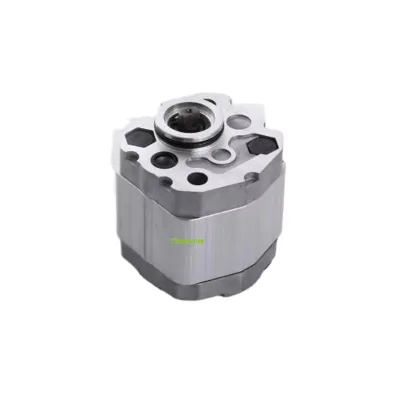
Technical verification begins with the pump type and material composition, as the market offers both aluminum alloy and cast iron constructions. Aluminum units, such as the CBW-F306-ALBB, offer weight savings suitable for smaller forklifts, while cast iron heavy-duty pumps are preferred for high-load industrial applications. The surface treatment, often polishing, is a key indicator of durability and resistance to corrosion, which is essential for equipment operating in varied warehouse environments or outdoor loading docks.
Flow capacity and gear geometry are equally critical, with specific models like the Cbhcb-F20-Al featuring involute tooth curves and external engagement. Buyers must cross-reference the model number, such as CBHCF-F25-AF, against the forklift's hydraulic system requirements to ensure the correct displacement and pressure handling. The standard A10VSO18-140 or similar designations found in listings serve as a baseline, but the specific application code, like C.C.01.01.1003, often dictates the exact performance envelope required for safe operation.
Compliance and Safety Documentation
Certification status is a primary filter for procurement, with CE marking being a ubiquitous requirement for products listed in the current dataset. Many suppliers also provide ISO and RoHS certifications, which are essential for ensuring the pump meets international environmental and safety standards. Buyers should request valid certification documents for every batch, as these documents verify that the manufacturing process adheres to strict regulatory frameworks, reducing liability risks associated with equipment failure or non-compliance in regulated markets.
Safety documentation must also cover the operational limits and installation guidelines provided by the manufacturer. The listed specifications indicate that special installation requirements can be ordered, implying that standard safety protocols may need customization for specific forklift models. It is vital to ensure that the supplier provides clear instructions on rotation direction and mounting flange compatibility to prevent mechanical stress or hydraulic failure, which could lead to dangerous operational conditions in a busy logistics facility.
Cost Drivers and Commercial Terms
Pricing in this sector is highly variable, with observed ranges spanning from $1 to $2000 depending on the model complexity and material composition. The cost is driven by factors such as the pump's duty cycle, the inclusion of custom surface treatments, and the specific application code assigned to the unit. Buyers should anticipate that heavy-duty cast iron pumps with specialized flanges will command a premium over standard aluminum alloy units, reflecting the higher material costs and manufacturing precision required for industrial-grade performance.
Commercial terms, including Minimum Order Quantity (MOQ), typically range from 1 to 100 units, offering flexibility for both single-unit replacements and fleet-wide upgrades. The availability of customization services often introduces additional lead times and cost variables that must be negotiated upfront. Procurement teams should clarify whether the quoted price includes the specific packing requirements, such as wooden cases for heavy units, to avoid unexpected logistics expenses that can erode the initial savings from a lower unit price.
Supplier Qualification and Quality Control
Supplier qualification should focus on the consistency of product standards and the ability to meet specific application codes. The presence of detailed model numbers like CBHZG-F34-AL13L suggests a structured manufacturing process, but buyers must verify that the supplier can consistently reproduce these specifications across different production batches. Quality control checks should include a review of the surface treatment process and material integrity, ensuring that the aluminum alloy or cast iron meets the durability expectations for heavy-duty forklift operations.
Verification of the supplier's origin and production location is also a key quality control step, with Zhejiang, China, being a noted hub for these components. Buyers should confirm that the supplier maintains strict control over the production environment to ensure that the final product matches the listed certifications and standards. Regular audits of the manufacturing process can help identify potential deviations in the gear tooth curve or mesh form, which are critical for maintaining the efficiency and longevity of the hydraulic system.
Long-Term Procurement Checks
Long-term procurement success relies on establishing a reliable supply chain for replacement parts and ongoing maintenance support. The availability of specific part numbers, such as Cbw-F306-Albb, ensures that buyers can source exact replacements without needing to redesign the hydraulic system. Buyers should negotiate long-term agreements that guarantee the continued availability of these specific models, preventing downtime caused by obsolete components or discontinued product lines.
Performance monitoring and feedback loops are essential for validating the pump's suitability over time. Buyers should track the operational life of the pumps in their fleet, noting any deviations in pressure or flow that might indicate a quality issue with a specific batch. By maintaining a record of usage cases, such as agricultural products processing or machinery manufacturing, buyers can refine their selection criteria for future orders, ensuring that the pumps continue to meet the rigorous demands of their specific industrial applications.
FAQs
What is the condition of the Forklift Gear Hydraulic Pump?
The Forklift Gear Hydraulic Pump is available in new condition. This ensures optimal performance and reliability for your machinery operations. You can find various models like the CBW-F306-ALBB and Cbka-G425-at that meet standard industrial requirements for heavy-duty applications.
Which certifications do these hydraulic pumps hold?
These hydraulic pumps hold CE certification, and some models also include ISO and RoHS certifications. These standards ensure the products meet international safety and environmental requirements. Buyers can verify these credentials when sourcing from manufacturers in China or Zhejiang.
Can the pump be customized for specific needs?
Customization is available for certain models, allowing buyers to specify unique requirements. However, some listed items are marked as non-customized. You should check the specific product code, such as C.C.01.03.1201, to confirm if the gear pump supports your customization requests.
How is the Forklift Gear Hydraulic Pump packed?
The pump is typically packed in a carton box as per your requirement. Some heavy-duty models may come in a wooden case for extra protection during shipping. This packaging ensures the product arrives safely regardless of the specific model like the K3V112DTP-9C79.
What is the standard material used for these pumps?
The standard material used for these pumps is aluminum alloy. This material offers a balance of durability and weight efficiency for hydraulic systems. Some heavy-duty variants may also utilize cast iron, depending on the specific application and model specifications provided.
Which applications are suitable for this gear pump?
This gear pump is suitable for forklifts, excavators, and agricultural machinery. It supports applications in machinery manufacturing and farmland infrastructure. The pump handles heavy-duty tasks in trucks, loaders, and drilling rigs with its robust design and external gear mechanism.
What is the origin of these hydraulic pumps?
The origin of these hydraulic pumps is China, with specific manufacturing locations in Zhejiang. This region is known for producing high-quality industrial components. Buyers can expect consistent quality standards when sourcing these products from verified suppliers in this area.