Source Heated Air Pressure Foot Massager with Remote Control for Residential, Spa, and Recovery Use
Compare 30 listings for a Heated Air Pressure Foot Massager with Remote Control featuring mechanical and air pressure functions. Buyers can evaluate models with electric heating, varying working times, and OEM customization options from suppliers in China.
Key considerations
Products List
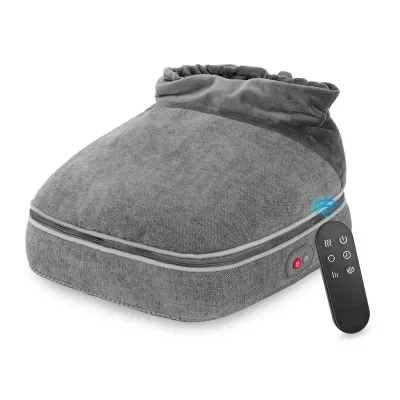

Air Pressure Vibration Heating Leg Foot Massager with Remote Controller
$60.00 - $70.00
MOQ: 100 Pieces


EMS Pulse Foot Massager with Remote Control for Muscle Stimulator Massage
$16.46 - $19.36
MOQ: 2 Pieces


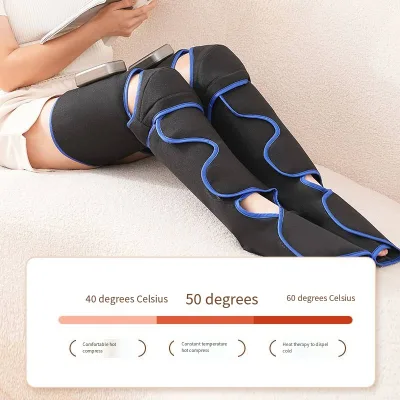

Leg Massager with Heat and Compression, Foot Massager for Circulation and Pain Relief
$37.00 - $47.00
MOQ: 10 Pieces
Comprehensive Sourcing Guide
Strategic Sourcing Guide for Heated Air Pressure Foot Massagers with Remote Control
Understanding the Core Product Architecture and Functional Mechanisms
When sourcing a Heated Air Pressure Foot Massager with Remote Control, buyers must first distinguish between the various mechanical and pneumatic technologies available in the current market. The core functionality of these devices relies on a combination of thermal regulation and pneumatic compression to simulate manual massage techniques. Based on observed product attributes, the working principle often centers on mechanical massaging combined with air pressure systems. The "Air Pressure" type utilizes inflatable chambers that inflate and deflate in a sequential pattern, targeting specific zones of the foot and lower leg to improve circulation and relieve fatigue. This is distinct from "Rolling" or "Vibrating" types, which rely on physical rollers or oscillating motors rather than pneumatic compression.
The heating component is a critical differentiator in this category. The observed data indicates that effective units employ "Electric Heating" modes, often integrated with a "Mechanical Massager" base. This dual-action approach allows the device to warm the tissues before or during the compression cycle, enhancing the therapeutic effect. The working time for these cycles typically ranges from 15 minutes to 30 minutes, with specific models offering adjustable durations between 5 and 30 minutes. This variability is essential for users who require shorter sessions for quick relief or longer sessions for deep tissue work. The inclusion of a remote control is a standard expectation for modern units, allowing users to adjust pressure intensity, heat levels, and timing without interrupting the massage session.
Material composition plays a significant role in the durability and comfort of the device. High-quality units often utilize a blend of materials including "ABS" plastic for the structural housing, "Silicone" for contact points, and "Cloth" or "high-class polyester fibre" for the interior lining. The structural integrity is further supported by "Steel Bearings" in mechanical variants. Buyers should verify that the internal components are rated for the specific power consumption observed in the market, which can range from 55W to higher wattages depending on the heating element's capacity. The physical dimensions of the massager also vary, with standard specifications observed around 51x37.5x25cm or 60x50x28.5cm, ensuring the device fits within typical residential spaces.
Compliance Verification and Certification Standards
In the B2B procurement of health and wellness devices, verifying compliance with international safety and quality standards is non-negotiable. The market data highlights specific certifications that buyers should demand from suppliers to ensure product safety and market eligibility. Key certifications observed include "CE" and "RoHS," which are essential for selling in European markets. The CE mark indicates conformity with health, safety, and environmental protection standards for products sold within the European Economic Area, while RoHS restricts the use of specific hazardous materials in electrical and electronic equipment. Additionally, "UL" certification is frequently cited, which is a critical safety standard for the North American market, ensuring that the electrical components meet rigorous fire and shock hazard requirements.
Beyond electrical safety, buyers must also consider quality control certifications such as "QC" (Quality Control). These certifications suggest that the manufacturer has implemented a systematic approach to maintaining product consistency and reliability. When evaluating a supplier, procurement teams should request copies of these certificates and verify their validity with the issuing bodies. It is important to note that certification status is not universal across all listed products; some models may be listed as "OEM Acceptable" or "Customized," which implies that the certification might be tied to a specific production batch or model number rather than the entire product line.
The "prod_standard" and "prod_packing" details also offer insight into the manufacturer's adherence to industry norms. Standard packaging often involves a "Color Box with Carton Box" or "1PC/Carton" configuration, designed to protect the unit during transit. However, the physical standards, such as dimensions, must be verified against the specific model number, as variations exist between models like "Zq-8015," "ZQ-8023," and "Zq-8006s." Buyers should ensure that the packaging standards align with the logistics requirements of their target market, particularly regarding dimensional weight and stacking strength.
Cost Drivers and Pricing Structure Analysis
The pricing of heated air pressure foot massagers is influenced by a complex interplay of factors, including material quality, certification costs, and manufacturing complexity. The observed price range in the market spans from $16.46 to $145 USD, a significant variance that reflects differences in feature sets and build quality. Lower-priced units typically fall into the entry-level category, often featuring basic mechanical functions and limited heating capabilities. These units may use standard plastics and simpler air pressure mechanisms. In contrast, higher-priced units often incorporate advanced features such as multi-zone air pressure, precise temperature control, and premium materials like high-class polyester fibre for enhanced comfort.
The Minimum Order Quantity (MOQ) is another critical cost driver. The observed MOQ range is broad, spanning from 1 unit to 1000 units. Suppliers with an MOQ of 1 are typically suited for small retailers or dropshipping models, but they often carry a higher per-unit cost due to the lack of economies of scale. Conversely, suppliers requiring an MOQ of 100 pieces or more usually offer more competitive pricing, making them ideal for established distributors or private label brands. Buyers must balance their inventory needs with their cash flow constraints when selecting a supplier based on MOQ.
Customization is a significant factor that can impact the final cost. While some suppliers offer "Customized" options, others list "Non-Customized" or "OEM Acceptable" statuses. Customization, such as adding a specific brand logo, altering the color scheme (e.g., Grey, Blue, Black, Purple, Red, White), or modifying the remote control interface, will invariably increase the unit cost and potentially the lead time. The "Brand Name" on the product, whether it is a recognized name like "Comfier" or an "OEM" designation, also affects pricing. Branded products often command a premium due to established market trust, whereas OEM products allow buyers to build their own brand equity but may require more investment in marketing.
Typical Applications and Target User Demographics
The application of heated air pressure foot massagers is primarily focused on residential use, though the technology is versatile enough for commercial settings. The "Application Place" is explicitly noted as "Residential Use," indicating that these devices are designed for home environments where users seek relaxation and health care. The primary function is to "Relieve Fatigue and Health Care," targeting the "foot" and "leg arm foot" areas. This makes the product particularly suitable for individuals who spend long hours standing or sitting, such as office workers, healthcare professionals, and athletes.
The "Feature" of "Foot Treatment" suggests that these devices are marketed towards individuals seeking therapeutic benefits rather than just cosmetic improvements. The combination of heating and air pressure is particularly effective for users suffering from edema, poor circulation, or muscle stiffness. The "Working Principle" of mechanical massaging combined with air pressure provides a comprehensive treatment that mimics the sensation of a professional massage. This makes the product appealing to a wide demographic, including the elderly who may benefit from improved circulation and younger users who use the device for recovery after physical activity.
The versatility of the device is further enhanced by its ability to treat multiple body parts. While the primary focus is the foot, some models are designed to accommodate the "Leg Arm Foot," offering a broader range of therapeutic applications. This multi-part functionality increases the value proposition of the product, allowing buyers to market it as a comprehensive wellness solution. The "Selling Units" are typically "Single item," meaning the product is sold as a complete unit rather than a component of a larger system, which simplifies the purchasing decision for end-users.
Supplier Evaluation and Sourcing Strategy
Selecting the right supplier is a critical step in the procurement process. Buyers should prioritize suppliers who demonstrate transparency in their product attributes and offer clear documentation regarding certifications and standards. The "Place of Origin" is a key indicator of manufacturing capability, with "Fujian, China" and "Yongkang, Jinhua, Zhejiang" being prominent regions known for their manufacturing expertise in this sector. These regions have established supply chains for electronics and plastic molding, which can contribute to cost efficiency and quality consistency.
When evaluating potential suppliers, buyers should look for those who offer "Online Technical Support" as an "After-sale Service." This indicates a commitment to customer satisfaction and the ability to resolve issues quickly, which is crucial for maintaining brand reputation. The "Warranty" period is another important metric, with "12months" being a standard offering. A longer warranty period often reflects the supplier's confidence in the durability and reliability of their product.
The "OEM/ODM" capability is essential for buyers looking to create a private label. Suppliers who explicitly state "OEM/ODM: Yes!" or "Brand Name: OEM Acceptable" are better positioned to meet the specific branding and customization needs of the buyer. However, buyers must verify that the customization process does not compromise the product's safety certifications. The "Customization" attribute should be clearly defined, distinguishing between cosmetic changes and functional modifications.
Quality Control and Long-Term Procurement Considerations
Ensuring consistent quality is paramount in the long-term success of a procurement strategy. Buyers should implement a rigorous quality control process that includes pre-shipment inspections and random sampling. The "Certificate: CE UL" and "Certificate: CE RoHS QC" should be verified for each batch to ensure that the products meet the required safety standards. Additionally, buyers should check the "prod_packing" to ensure that the packaging is robust enough to prevent damage during transit, as the "Color Box with Carton Box" or "1PC/Carton" configurations must be inspected for integrity.
Long-term procurement considerations also include the availability of spare parts and the scalability of the supply chain. Suppliers with a "Model Number" like "CF-5402" or "Zq-8015" should have a track record of consistent production and availability. Buyers should assess the supplier's ability to scale production to meet increasing demand without compromising quality. The "Working Time" and "Power" specifications should remain consistent across batches to ensure a uniform user experience.
Finally, buyers should consider the environmental impact of their procurement decisions. The use of materials like "ABS," "Silicone," and "high-class polyester fibre" should be evaluated for their recyclability and environmental footprint. Suppliers who adhere to "RoHS" standards are already taking steps to minimize the use of hazardous materials, but buyers can further enhance their sustainability profile by selecting suppliers who prioritize eco-friendly manufacturing practices. By focusing on these long-term considerations, buyers can build a resilient and sustainable supply chain for heated air pressure foot massagers.
Comparative Analysis of Key Product Attributes
To facilitate informed decision-making, the following table summarizes the key attributes observed in the market for heated air pressure foot massagers. This comparison highlights the variations in specifications, certifications, and customization options that buyers should consider.
| Attribute Category | Specific Observations | Procurement Implication |
|---|---|---|
| Working Principle | Mechanical Massager, Air Pressure, Rolling, Vibrating | Select based on desired massage sensation; Air Pressure is preferred for circulation. |
| Heating Mode | Electric Heating | Essential for therapeutic value; verify temperature control mechanisms. |
| Certifications | CE, RoHS, QC, UL | Mandatory for market entry; verify validity for specific regions (EU, US). |
| Material Composition | ABS, Silicone, Cloth, Steel Bearing, Polyester Fibre | Higher material quality correlates with durability and comfort; check for wear resistance. |
| Power Consumption | 55W (observed) | Ensure compatibility with local voltage standards; check energy efficiency. |
| Working Time | 15 Minutes, 5-30 Minutes | Adjustable timing offers flexibility; verify timer accuracy and safety cut-offs. |
| Customization | Available, OEM Acceptable, Non-Customized | OEM/ODM options allow branding; verify impact on lead time and MOQ. |
| Origin Locations | Fujian, China; Yongkang, Jinhua, Zhejiang | Regional clusters offer specialized manufacturing; verify logistics and lead times. |
| Warranty | 12 Months | Standard warranty period; negotiate terms for bulk orders. |
| Packaging | Color Box with Carton Box, 1PC/Carton | Ensure packaging meets shipping standards; check for eco-friendly options. |
This comparative analysis underscores the importance of aligning product specifications with specific market needs and regulatory requirements. By carefully evaluating these attributes, buyers can make strategic sourcing decisions that balance cost, quality, and compliance.
FAQs
How does the heating mode work in these massagers?
These units utilize electric heating modes to warm tissues during the massage cycle. The heating is often integrated with mechanical massagers or air pressure systems to enhance therapeutic effects for users seeking relief.
What certifications are required for selling these devices?
Key certifications include CE, RoHS, and UL to ensure safety compliance for international markets. Some models also carry QC certification, indicating a systematic approach to maintaining product consistency and reliability for buyers.
Which materials are used for the product construction?
Manufacturers use a blend of ABS plastic for housing, silicone for contact points, and high-class polyester fibre for interior lining. Steel bearings support mechanical variants, ensuring structural integrity and durability during operation.
Can buyers customize the product color and branding?
Yes, customization is available for colors like grey, blue, black, and purple, as well as branding. Some suppliers offer OEM options, allowing buyers to add specific logos or modify the remote control interface for their brand.
What is the typical warranty period for these units?
The standard warranty period offered by suppliers is 12 months. This coverage reflects the manufacturer's confidence in the product's durability and provides buyers with assurance regarding the reliability of the heating and pressure mechanisms.
How long does a single massage session typically last?
Working times range from 15 minutes to 30 minutes depending on the specific model selected. Some units offer adjustable durations between 5 and 30 minutes, allowing users to choose between quick relief or deep tissue treatment.