Source Free Standing LED Pixel Bar for Stage, Film, and Dance
Explore 30 listings of Free Standing LED Pixel Bar units with DMX512 control and IP65 waterproof ratings. Buyers can compare models featuring SMD5050 LEDs, varying pixel counts, and customizable lengths for stage, film, and dance applications.
Key considerations
Products List


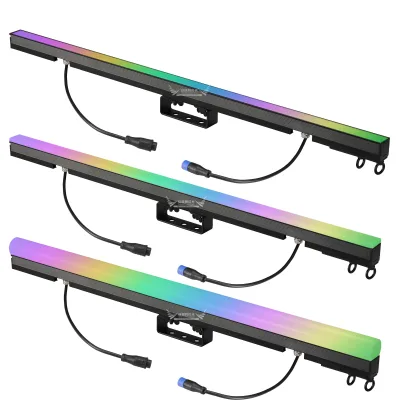
DMX LED Pixel Bar SMD5050 Digital Light Bar for Club Stage Parties DJ Use
$18.00 - $22.00
MOQ: 1 Pieces


Comprehensive Sourcing Guide
Strategic Sourcing Guide for Free Standing LED Pixel Bars
The global demand for dynamic architectural lighting and stage effects has elevated the importance of free-standing LED pixel bars in professional procurement. These modular lighting units serve as critical components for creating immersive environments in entertainment venues, architectural facades, and event spaces. Unlike fixed installations, free-standing variants offer the flexibility of temporary deployment and reconfiguration. However, sourcing these units requires a disciplined approach to technical verification, compliance validation, and supply chain reliability. This guide outlines the essential factors buyers must evaluate to ensure the acquisition of high-performance lighting solutions that meet rigorous operational standards.
Technical Specifications and Optical Performance
When evaluating free-standing LED pixel bars, the primary focus must be on the optical output and the underlying hardware architecture. The core of these units typically relies on Surface Mount Device (SMD) technology, specifically the SMD5050 package, which offers a balance of brightness and color fidelity. Buyers should verify the LED quantity per unit, as this directly correlates with the resolution and smoothness of the visual effect. Observed configurations in the market often include densities such as 24 or 48 LEDs per meter, with specific models supporting 32 LEDs for shorter 0.5-meter segments. The pixel count is another critical metric; systems may offer 8 or 16 pixels per segment, determining the granularity of the animation capabilities.
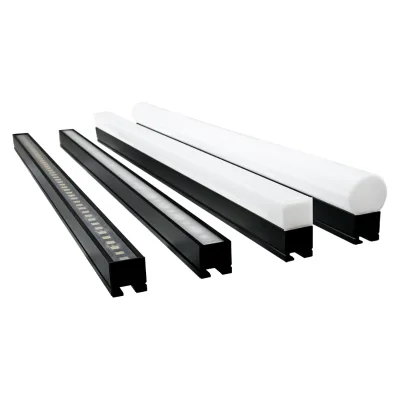
The physical dimensions of the housing dictate the installation method and the visual impact. Standard profiles often come in diameters ranging from 20mm to 50mm, with square cross-sections available in dimensions like 40mm, 50mm, 80mm, or 100mm. Lengths are typically standardized at 0.5m, 1m, 1.5m, or 2m, though customization is frequently available to suit specific architectural constraints. The beam angle is a crucial specification for free-standing applications; a 120-degree beam angle is common for general wash effects, while 360-degree emitting angles are essential for omnidirectional displays where the light source is visible from all sides. The shell material, often plastic or aluminum alloy, influences heat dissipation and durability. Plastic shells may be milky, semitransparent, or transparent, affecting the diffusion of light, whereas aluminum alloy housings provide superior structural rigidity for high-wind outdoor environments.
Control Protocols and Addressing Logic
The intelligence of an LED pixel bar is defined by its control protocol and addressing logic. Most professional-grade units operate on the DMX512 protocol, which allows for precise, channel-based control of individual pixels. Advanced systems may also support DVI or Artnet protocols, offering greater bandwidth for large-scale installations. The addressing setting is a vital configuration parameter; buyers must determine if the supplier supports both manual and automatic addressing modes. Automatic addressing simplifies the setup process for large arrays, while manual addressing provides granular control for complex, non-linear installations.
The capacity of the control system is another technical consideration. A single DMX universe can typically support a specific number of pixels or tubes. For instance, certain configurations allow for up to 170 panels per DMX universe, while others may support 20 tubes per universe. Understanding these limits is essential for calculating the number of controllers required for a project. The input voltage is another technical variable, with common options being DC12V or DC24V. Higher voltage systems often reduce current draw and voltage drop over long cable runs, making them preferable for extensive installations. Power consumption varies by model, ranging from 6W to 12W per segment, or up to 10W for specific square profiles. Buyers should verify the power requirements against their available electrical infrastructure to ensure stable operation without overloading circuits.
Compliance, Certification, and Safety Standards
In the B2B procurement of electronic lighting equipment, compliance with international safety and environmental standards is non-negotiable. The supply chain must provide verifiable documentation for certifications such as CE and RoHS. These certifications indicate that the product meets European safety, health, and environmental protection requirements. Additionally, the China Compulsory Certification (CCC) is a relevant standard for products manufactured in or sold within China, indicating adherence to local safety regulations. Buyers should not rely on generic claims but must request specific test reports and certificates of conformity for each batch of products.
Waterproofing is a critical safety and durability factor, particularly for free-standing units that may be deployed outdoors or in high-humidity environments like dance floors or stage areas. The Ingress Protection (IP) rating is the standard metric for this. An IP65 rating signifies that the unit is dust-tight and protected against water jets from any direction. This rating is essential for ensuring the longevity of the electronics and preventing short circuits. Buyers must verify that the IP rating applies to the entire assembly, including the power connectors and the shell seams. The material composition, such as the use of aluminum alloy or specific plastic grades, also plays a role in meeting fire safety and environmental standards. Procurement teams should ensure that the materials used do not contain hazardous substances prohibited by RoHS directives.
Cost Drivers and Economic Considerations
The total cost of ownership for LED pixel bars is influenced by several variables beyond the unit price. The primary cost drivers include the LED chip quality, the complexity of the control electronics, and the housing material. Chips from reputable manufacturers, such as Epistar, often command a premium but offer better color consistency and longevity. The housing material is another significant factor; aluminum alloy units are generally more expensive than plastic alternatives due to material costs and the complexity of the extrusion process. Customization also impacts pricing; requests for non-standard lengths, specific shell colors, or unique pixel densities will increase the unit cost.
Minimum Order Quantity (MOQ) is a critical economic constraint for buyers. Market observations indicate that MOQs can range from 1 unit for small trials to 1000 units for bulk industrial orders. Some suppliers may offer a lower entry point, such as 10 units, to accommodate smaller projects. However, buyers should be aware that unit prices often decrease as the order volume increases. The packaging method, whether standard cartons or custom requests, can also affect shipping costs and the overall budget. Lead times are another economic consideration; while some suppliers may offer immediate stock, custom orders often require longer production windows. Buyers should factor in these lead times when planning project timelines to avoid delays that could impact event schedules or construction deadlines.
Typical Applications and Installation Requirements
Free-standing LED pixel bars are versatile tools used across various industries. In the stage and entertainment sector, they are frequently employed for dance effect lights, creating dynamic visual backdrops for concerts and theatrical productions. The ability to program complex color changes and animations makes them ideal for film and television sets where lighting needs to be adaptable. In architectural applications, these bars can be used to outline building facades or create interactive art installations. The specific application dictates the required specifications; for instance, a stage application might prioritize high brightness and fast refresh rates, while an architectural application might emphasize weather resistance and long-term reliability.
Installation methods vary based on the product design. Many free-standing units are designed for hanging, utilizing specific mounting hardware that allows them to be suspended from trusses or rigging systems. The shape of the unit, whether square or tubular, influences the mounting strategy. For square profiles, the mounting points are often integrated into the corners, while tubular units may require clamps or brackets. The address setting capability is crucial during installation; automatic addressing can significantly reduce the time required to configure large arrays. Buyers should ensure that the installation hardware provided is compatible with the specific model and that the power distribution plan accounts for the voltage drop over the length of the installation.
Supplier Evaluation and Quality Assurance
Selecting a reliable supplier is paramount to the success of any lighting project. Buyers should evaluate suppliers based on their manufacturing capabilities, quality control processes, and after-sales support. The origin of the product, often Shenzhen or other manufacturing hubs in China, can provide insights into the supply chain maturity and the availability of skilled labor. However, the location alone is not a guarantee of quality. Buyers must verify the supplier's adherence to production standards and their ability to maintain consistent quality across batches.
Quality control should be a continuous process, not just a final inspection. Suppliers should implement rigorous testing protocols for LED color consistency, waterproof integrity, and electrical safety. Buyers should request sample units for testing before committing to large orders. This allows for the verification of claimed specifications, such as the IP rating, power consumption, and control protocol compatibility. The packaging quality is also an indicator of the supplier's attention to detail; robust packaging ensures that the units arrive in perfect condition, minimizing the risk of damage during transit. Furthermore, the availability of technical support and spare parts is essential for long-term maintenance. A supplier that offers comprehensive documentation, including wiring diagrams and control software, adds significant value to the procurement process.
Long-Term Procurement and Maintenance Strategy
Sourcing LED pixel bars is not a one-time transaction but part of a long-term relationship that requires strategic planning. Buyers should consider the lifecycle of the product, including the expected lifespan of the LEDs and the availability of replacement parts. The choice of LED chips and the quality of the driver electronics will determine the operational life of the units. Regular maintenance, such as cleaning the lenses and checking for water ingress, is necessary to extend the lifespan of the equipment.
Procurement strategies should also account for future scalability. As lighting needs evolve, the ability to expand the system or integrate new control protocols is valuable. Buyers should look for suppliers who offer modular designs that allow for easy upgrades. The standardization of components, such as power supplies and controllers, can simplify maintenance and reduce inventory costs. Additionally, buyers should stay informed about industry trends and technological advancements to ensure their investments remain relevant. By maintaining a proactive approach to procurement and supplier management, organizations can ensure a reliable and cost-effective lighting infrastructure that supports their creative and operational goals.
FAQs
What certifications do free standing led pixel bars typically have?
These units commonly hold CCC, CE, and RoHS certifications to ensure safety and environmental compliance. Buyers should verify specific test reports for each batch to confirm adherence to these standards before finalizing procurement.
How is the control protocol configured for these LED bars?
Most models support DMX512, DVI, or Artnet protocols for precise pixel control. Addressing can be set manually or automatically depending on the installation complexity and the specific requirements of the project.
Which waterproof rating applies to outdoor free standing led pixel bars?
The standard waterproof grade for these units is IP65, ensuring protection against dust and water jets. This rating is essential for durability in outdoor environments or high-humidity stage areas.
Can the length of the LED bars be customized for specific projects?
Yes, customization is available for lengths such as 0.5m, 1m, 1.5m, or 2m. Buyers can request non-standard dimensions to fit unique architectural constraints or specific design needs.
What is the minimum order quantity for sourcing these lighting units?
The observed minimum order quantity ranges from 1 to 1000 units depending on the supplier. Some specific models may have a lower entry point like 10 units for smaller trial orders.
Which LED source and quantity are used in these pixel bars?
The units typically utilize SMD5050 LED sources with quantities of 24, 48, or 32 pieces per segment. The specific count depends on the model length and desired pixel density for the visual effect.
What input voltage options are available for these LED lighting systems?
Common input voltage options include DC12V and DC24V to suit different power infrastructure needs. Higher voltage systems are often preferred for longer cable runs to minimize voltage drop.