Source Frequency Doubling Bismuth Borate Crystals for lasers, imaging, and spectroscopy
Compare 30 listings of Frequency Doubling Bismuth Borate Crystals from verified Chinese manufacturers. Buyers can evaluate specifications like damage threshold, flatness, and coating options to select the right optical component for their system.
Key considerations
Products List


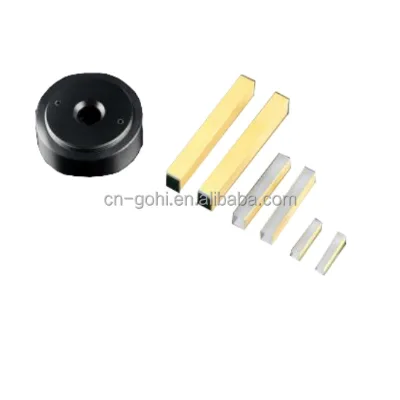
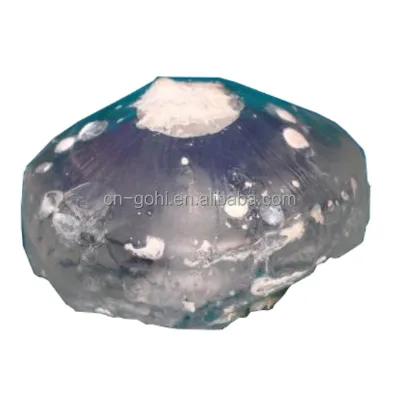


Custom Bbo Crystal for Ultrafast Frequency Doubling of Femtosecond Lasers
$100.00 - $500.00
MOQ: 1 Pieces

Custom Ultra Thin Bbo Crystal for Fourth Harmonic Generation at 266nm Duv
$100.00 - $500.00
MOQ: 1 Pieces

Custom Bbo Crystal for 800nm Ti: Sapphire Laser Second Harmonic Generation
$100.00 - $500.00
MOQ: 1 Pieces

Custom Thin Bbo Crystal for 400nm to 200nm Direct Second Harmonic Generation
$100.00 - $500.00
MOQ: 1 Pieces




Comprehensive Sourcing Guide
Strategic Sourcing Guide for Frequency Doubling Bismuth Borate Crystals
Understanding the Core Material and Technical Specifications
Frequency doubling, or Second Harmonic Generation (SHG), relies heavily on the non-linear optical properties of specific crystals. In the context of bismuth borate, the industry standard material is often identified as Beta-Barium Borate (BBO), chemically represented as $\beta$-BaB$_2$O$_4$. This trigonal crystal, belonging to the space group R3c, is a primary choice for laser applications requiring high damage thresholds and broad transparency. When sourcing these components, buyers must distinguish between general "Bismuth Borate" terminology and the specific $\beta$-BBO formulation, as the latter is the dominant material for high-power SHG applications.
The physical and optical characteristics of these crystals are critical for system integration. The transparency range for high-quality BBO crystals typically spans from 190 nm to 3500 nm, allowing for versatility across ultraviolet to near-infrared spectra. For frequency doubling specifically, the SHG phase-matchable range is a key parameter. Type I phase matching is achievable between 409.6 nm and 3500 nm, while Type II phase matching covers 525 nm to 3500 nm. These ranges dictate the pump wavelengths the crystal can effectively convert.
Surface quality and flatness are equally vital for maintaining beam integrity. Observed specifications for premium units often cite a surface quality of 20/10 S/D (Scratch/Dig) or even 10-5 Scratch-Dig for higher grades. Surface flatness is typically maintained below $\lambda/6$ or $\lambda/8$ at 632.8 nm, ensuring minimal wavefront distortion. Parallelism error is another geometric constraint, with high-performance units exhibiting errors less than 20 to 30 arcseconds. Perpendicularity errors are generally kept below 5 arcminutes to ensure proper alignment within optical cavities.
Optical Performance and Laser Damage Thresholds
The operational reliability of frequency doubling crystals is largely defined by their Laser Induced Damage Threshold (LIDT). For BBO crystals, the LIDT is a critical metric that determines the maximum power density the material can withstand without degradation. High-performance units demonstrate thresholds exceeding 500 MW/cm² at 1064 nm with a 10 ns pulse duration. Other specifications may list thresholds greater than 100 MW/cm² under similar conditions (10 ns, 1064 nm, 10 Hz). For anti-reflection (AR) coated variants, the damage threshold can reach over 0.3 GW/cm² at 1064 nm, 10 ns, and 10 Hz.
Absorption coefficients are another performance indicator. Buyers should verify that the absorption is minimal, with values typically observed below 0.1%/cm at 1064 nm. This low absorption is essential to prevent thermal lensing and potential crystal fracture under high-repetition-rate operation. The angular acceptance, which defines the tolerance for beam alignment, is approximately 2.32 Mrad·cm for these materials.
Efficiency is the ultimate measure of the crystal's utility in a frequency doubling setup. High-quality BBO crystals can achieve conversion efficiencies greater than 60% at 1064 nm. The extinction ratio, particularly relevant if the crystal is used in conjunction with polarizers, should exceed 20 dB. These performance metrics are not universal; they depend heavily on the specific manufacturing process, coating quality, and the purity of the raw material. Buyers must treat these figures as observed benchmarks for high-grade products rather than guaranteed specifications for all listed inventory.
Compliance, Certification, and Material Standards
When evaluating suppliers for optical crystals, compliance and certification status provide a baseline for quality assurance. In the current market, many suppliers offer customized certification options, indicating that standard certifications may not be pre-packaged but can be arranged based on buyer requirements. The standard component classification for these crystals is often listed as "Non-Standard Component," reflecting the custom nature of dimensions and coatings required for specific laser systems.
Material composition must be rigorously verified. The primary material for frequency doubling in this category is $\beta$-BaB$_2$O$_4$ (BBO). However, the supply chain may also include related crystals such as Lithium Triborate (LBO) or Lithium Niobate (LiNbO$_3$), which have different properties. For instance, LiNbO$_3$ has a melting point of about 1095°C and a density of 3.85 g/cm³, whereas BBO has a Mohs hardness of 4. Buyers must ensure the product description explicitly matches the intended material, as confusion between BBO, LBO, and KTiOPO$_4$ (KTP) can lead to system failure.
Origin and traceability are also part of the compliance picture. A significant portion of these crystals originates from China, with specific manufacturing hubs noted in regions like Hubei. While this does not imply a quality deficit, it necessitates a clear understanding of the supply chain logistics. The standard component size may vary, with some listings specifying dimensions like 50×50×60 mm or 5×5×5 mm, while others offer fully customized sizes. The single package size for shipping is often standardized around 30×25×20 cm with a gross weight of approximately 1.000 kg, though this varies by order volume.
Cost Drivers and Procurement Variables
The pricing structure for frequency doubling crystals is highly variable, influenced by a complex matrix of factors. Observed price ranges in the market can span from as low as $0.05 to nearly $9,999. This vast disparity is not indicative of quality variance alone but reflects differences in crystal size, coating complexity, material purity, and order volume. Small, uncoated samples may fall at the lower end of the spectrum, while large, high-damage-threshold, multi-wavelength coated units command premium prices.
Minimum Order Quantity (MOQ) is a significant cost driver. The observed MOQ range extends from 1 unit to 3,000 units. For prototyping or low-volume research, suppliers offering an MOQ of 1 are essential, though the unit cost will be higher. Conversely, high-volume procurement can leverage economies of scale, potentially reducing the per-unit cost significantly. Buyers should be aware that "Customized" attributes, such as specific dimensions or unique AR coatings, often carry a premium and may have higher MOQs compared to standard off-the-shelf items.
Lead times and shipping logistics also impact the total cost of ownership. While specific lead times are not universally standardized in the provided data, the custom nature of these components suggests that production times may vary. The "Single package size" and "Single gross weight" indicate that shipping costs will be a factor, particularly for international procurement from China. Buyers should calculate the total landed cost, including duties and freight, rather than focusing solely on the unit price.
Typical Applications and System Integration
Frequency Doubling Bismuth Borate Crystals are indispensable in modern laser systems where wavelength conversion is required. The primary application is converting infrared light to visible or ultraviolet light. For example, doubling a 1064 nm Nd:YAG laser beam to 532 nm (green) is a standard use case, supported by the crystal's transparency and phase-matching ranges. The ability to handle wavelengths from 409.6 nm up to 3500 nm makes these crystals suitable for a wide array of scientific and industrial applications.
In scientific research, these crystals are used in spectroscopy, microscopy, and nonlinear optical experiments. The high damage threshold allows for their use in high-power pulsed laser systems, where thermal management is critical. The broad transparency range also supports applications in the ultraviolet, such as pumping dye lasers or generating harmonics for lithography.
Industrial applications often involve laser marking, cutting, and medical devices. The efficiency of greater than 60% at 1064 nm ensures that a significant portion of the pump power is converted, reducing heat load on the system and improving overall energy efficiency. The specific phase-matching types (Type I and Type II) allow for flexibility in polarization management, which is crucial for optimizing the output beam quality in complex optical setups.
Supplier Evaluation and Quality Control Protocols
Evaluating a supplier for optical crystals requires a multi-faceted approach. Since the market includes "Non-Standard Components," buyers must verify the supplier's capability to meet specific geometric and optical tolerances. Key evaluation criteria include the supplier's ability to provide test data for surface flatness, parallelism, and perpendicularity. The observed specifications of < 30 arcseconds for parallelism and < 5 arcminutes for perpendicularity should be used as a benchmark for acceptance.
Quality control should extend to the coating process. The presence of AR coatings with reflectivity R < 0.2% at 1064 nm, 532 nm, and 355 nm is a strong indicator of advanced manufacturing capabilities. Buyers should request evidence of coating uniformity and adhesion testing, as poor coatings can lead to catastrophic failure under high-intensity laser exposure.
The "Customized" nature of the product implies a need for clear communication of requirements. Buyers should ensure that the supplier understands the specific application, including the expected power density, pulse duration, and repetition rate. The ability to provide a "Single package size" that protects the crystal during transit is also a sign of a mature supplier. Verification of the material composition, ensuring it is indeed $\beta$-BaB$_2$O$_4$ and not a substitute, is the first step in the quality assurance process.
Long-Term Procurement and Strategic Considerations
Sourcing frequency doubling crystals is not a one-time transaction but a strategic relationship. The "Customized" attribute suggests that long-term partnerships are beneficial for maintaining consistent quality and reducing lead times for re-orders. Buyers should consider the scalability of the supplier's production line. An MOQ of 3,000 units indicates a capacity for large-scale industrial deployment, while an MOQ of 1 suggests flexibility for R&D.
Future-proofing the supply chain involves understanding the technological trajectory of the laser industry. As laser systems evolve towards higher powers and shorter wavelengths, the demand for crystals with higher LIDT and broader phase-matching ranges will increase. Buyers should select suppliers who demonstrate a commitment to R&D and can adapt their manufacturing processes to meet emerging standards.
Finally, the total cost of ownership includes the risk of failure. A crystal with a lower damage threshold may fail prematurely, causing downtime and replacement costs. Therefore, prioritizing suppliers who can consistently deliver high LIDT values (> 500 MW/cm²) and low absorption coefficients (< 0.1%/cm) is a prudent long-term strategy. By focusing on these technical metrics and maintaining a rigorous evaluation process, buyers can secure a reliable supply of high-performance frequency doubling crystals for their critical applications.
Comparative Overview of Key Specifications
| Parameter | Typical High-Performance Value | Observation/Note |
|---|---|---|
| Material | $\beta$-BaB$_2$O$_4$ (BBO) | Distinct from LiNbO$_3$ or KTP |
| Transparency Range | 190 - 3500 nm | Covers UV to NIR |
| Surface Flatness | < $\lambda$/6 or < $\lambda$/8 @ 632.8nm | Critical for beam quality |
| Parallelism Error | < 20 to 30 Arcsec | Geometric tolerance |
| LIDT (Uncoated) | > 500 MW/cm² @ 1064nm, 10ns | High-power capability |
| LIDT (AR Coated) | > 0.3 GW/cm² @ 1064nm | Enhanced for specific wavelengths |
| Absorption Coeff. | < 0.1%/cm @ 1064nm | Low thermal load |
| Conversion Efficiency | > 60% @ 1064nm | System performance metric |
| Origin | China (e.g., Hubei) | Supply chain location |
| Customization | Available | Dimensions and coatings |
FAQs
What is the transparency range for these crystals?
The transparency range spans from 190 to 3500 nm, covering ultraviolet to near-infrared spectra. This broad range supports diverse laser applications including frequency doubling and harmonic generation across multiple wavelengths.
How is the surface quality defined for these units?
Surface quality is typically specified as 20/10 S/D or 10-5 Scratch-Dig for higher grades. These metrics ensure minimal wavefront distortion and maintain beam integrity during high-power laser operations.
Can the crystals handle high laser power densities?
Yes, high-performance units exhibit a Laser Induced Damage Threshold exceeding 500 MW/cm² at 1064 nm. Coated variants can withstand over 0.3 GW/cm² under specific pulse conditions, ensuring reliability in demanding systems.
Which material composition is standard for frequency doubling?
The standard material is Beta-Barium Borate, chemically represented as β-BaB2O4. This trigonal crystal is distinct from Lithium Triborate or Lithium Niobate and is optimized for high damage thresholds and broad phase matching.
What is the conversion efficiency at 1064 nm?
High-quality crystals achieve conversion efficiencies greater than 60% at 1064 nm. This high efficiency reduces thermal load on the system and improves overall energy performance in frequency doubling setups.
How can I verify the crystal parallelism error?
High-performance units exhibit parallelism errors less than 20 to 30 arcseconds. This tight tolerance is critical for maintaining proper alignment within optical cavities and ensuring precise beam output.
Are customized dimensions and coatings available?
Yes, customization is available for dimensions and specific anti-reflection coatings. These non-standard components allow buyers to tailor the crystal to exact system requirements, though they may affect minimum order quantities.