Source Front Fog Light Trims for Cars, Motorcycles, and Boats
Compare 30 listings for Front Fog Light Trims designed for cars, motorcycles, and boats. Buyers can review specifications like OE numbers, materials, and certifications to find suitable replacements or repairs for various vehicle models.
Key considerations
Products List

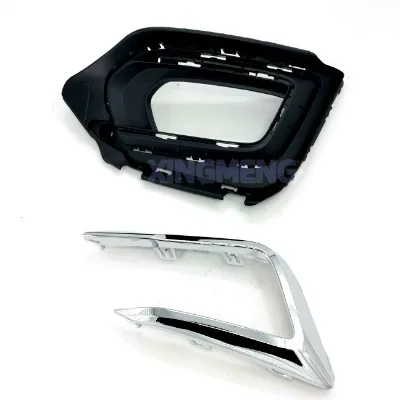


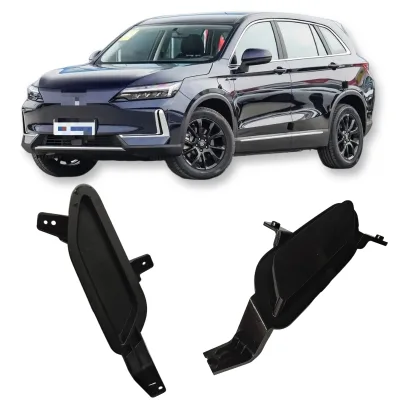

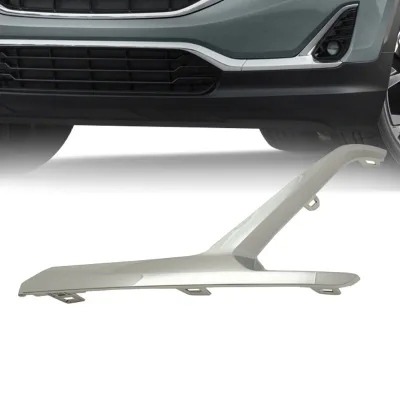


Auto Parts Front Bumper Lights Universal Fog Lights for off-Road Vehicles
$56.50 - $95.80
MOQ: 1 Pairs
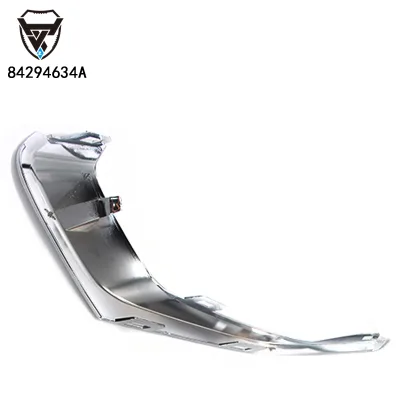


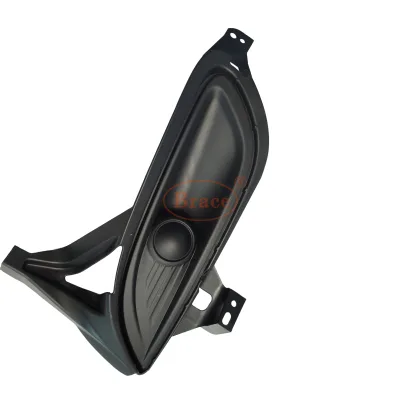
Original Rh Front Fog Lamp Trim for Maxus Car Accessories Wholesale C00165304
$14.12 - $15.29
MOQ: 5 Pieces





Comprehensive Sourcing Guide
Strategic Sourcing Guide for Front Fog Light Trims
Understanding Product Specifications and Functional Attributes
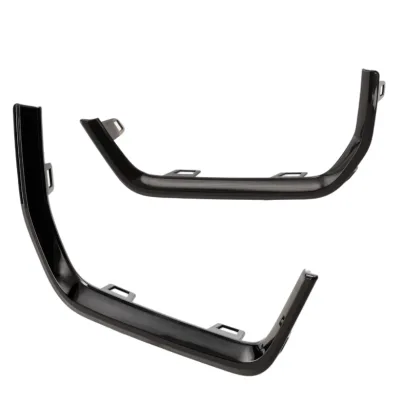
When sourcing Front Fog Light Trims, buyers must first distinguish between the cosmetic trim components and the functional electrical switches often associated with fog light systems. The market presents a diverse array of products where the core keyword "Front Fog Light Trims" refers to aesthetic and protective housing elements, while related electrical components include capacitive switches and control units. Based on observed product data, Front Fog Light Trims are frequently designed for specific vehicle models, such as the MG5 and MG I5, with precise OE numbers like 10359708 and 10359709 indicating left and right-hand configurations. These components are typically constructed from high-quality PBT (Polybutylene Terephthalate) material, ensuring durability against environmental stressors.
The physical specifications for these trims often include a single package size of approximately 33x21x12 cm, with a gross weight of 1.000 kg per unit. The color is predominantly black, matching standard automotive aesthetics. In contrast, the electrical systems that operate these lights, such as the 12V car switches used for fog lights and daytime running lights, operate on a capacitive principle. These switches feature a "Power Built-in Type" structure and are available as double control switches with a normal open type. They are designed for retro-reflective mode detection and are suitable for a wide range of vehicles including cars, motorcycles, boats, and yachts. The wiring configuration for these electrical components typically involves null lines and live lines, with a rating current of DC 12V or 5V and an amperage of 2.1A or 1A.
Buyers must carefully parse the distinction between the trim itself and the switch mechanism. The trim serves as the housing and aesthetic finish, often labeled as "Fog light trim" with a purpose of replacement or repair. The switch, conversely, is the active control element. While the trim is a static component, the switch is a dynamic electrical part with specific certifications like CCC, CE, and ISO. Understanding this separation is critical for procurement accuracy, as the supply chain for a PBT plastic housing differs significantly from that of an electronic switch assembly.
Compliance and Certification Verification
Navigating the compliance landscape for automotive accessories requires rigorous verification of certifications and standards. The supplied data indicates that products in this category often carry certifications such as CCC, CE, and ISO. For electrical components like the fog light switches, specific standards like CE and ROHS are explicitly mentioned, alongside Ts16949 for automotive quality management and SGS for general product safety. It is important to note that while some listings mention "Standard" as a product standard, buyers should verify if this refers to a specific industry norm or a generic descriptor.
The certification landscape varies by component type. Electrical switches may require CE and ROHS compliance to ensure they meet European safety and environmental directives. The Ts16949 certification is particularly relevant for automotive parts, indicating that the manufacturer adheres to specific quality management systems for the automotive industry. However, not every listed product will possess every certification mentioned in the aggregate data. Buyers should treat certifications as observations of specific listings rather than universal attributes of all Front Fog Light Trims.
When evaluating suppliers, the origin of the product plays a significant role in compliance. The majority of the observed products originate from China (Mainland), specifically from the Guangdong region. This location is a major hub for automotive parts manufacturing, but it necessitates strict due diligence regarding export compliance and adherence to the destination market's regulations. Buyers should request valid, up-to-date certificates for each batch of goods, ensuring that the CE marking, for instance, is backed by a valid test report and not merely a claim on the product page. The presence of a "Low-confidence" certification flag for "ce" in the background data suggests that buyers must be cautious and verify the authenticity of such claims independently rather than relying on marketing text.
Cost Drivers and Pricing Dynamics
The pricing structure for Front Fog Light Trims and associated electrical components is influenced by several key variables, including material quality, customization options, and order volume. The observed price range in the market spans from $0.45 to $699 USD, a wide disparity that reflects the difference between simple plastic trim pieces and complex electrical switch assemblies. A trim piece made of PBT material, such as the one with OE number 10359708, will likely fall on the lower end of this spectrum, whereas a complete switch assembly with capacitive technology and multiple certifications may command a higher price point.
Material costs are a primary driver. PBT is a robust engineering plastic, and the quality of the resin used directly impacts the price. High-quality materials that offer superior resistance to UV light, heat, and chemicals will cost more than standard grades. Additionally, the level of customization available is a significant factor. The data indicates that customization is available for these products, which can increase costs due to tooling fees, design changes, and smaller production runs.
Order volume, defined by the Minimum Order Quantity (MOQ), also heavily influences the unit price. The observed MOQ range is extensive, from 1 PC to 10,000 sets. Products with an MOQ of 1 PC are typically intended for sample orders or small-scale repairs, resulting in a higher per-unit cost. Conversely, bulk orders of 100 sets or more, as seen in some listings, allow for economies of scale that reduce the unit price. Buyers should analyze their total volume requirements to negotiate effectively. For instance, a buyer needing 500 sets might find a different price tier than one ordering 10,000 sets. The packaging method, such as "Box" or "500PCS/Box," also affects logistics costs, which are often factored into the final price.
Typical Applications and Vehicle Compatibility
The application of Front Fog Light Trims is highly specific, often tied to particular vehicle makes and models. The data highlights compatibility with the MG5 and MG I5 models, with specific OE numbers distinguishing between left and right positions. The position is explicitly noted as the "Front Bumper," indicating that these trims are designed to fit precisely into the designated housing for fog lights. The purpose is clearly stated as "for replace/repair," suggesting that these are aftermarket parts intended to restore the original appearance and function of the vehicle.
Beyond specific car models, the broader application extends to various vehicle types. The associated electrical components, such as the capacitive switches, are suitable for cars, motorcycles, boats, yachts, and vessels. This versatility suggests that while the trim itself may be model-specific, the lighting technology and control systems are adaptable. The usage of these components includes start buttons, control buttons, and change-over switches, indicating their role in the vehicle's electrical management system.
The "Kind" of switch observed is a single-pole on-off switch, which is a standard configuration for fog light control. The "Fitted Vehicle" attribute confirms that these parts are designed for cars, motorcycles, and all modified cars. This implies that the trims and switches must meet the rigorous standards of both stock and modified vehicles. Buyers sourcing for a fleet of vehicles or a specific repair shop should verify the exact model year and trim level of the vehicles they serve, as even within the same model line, there can be variations in bumper design and fog light housing dimensions.
Supplier Evaluation and Sourcing Strategy
Evaluating suppliers for Front Fog Light Trims requires a multi-faceted approach that considers origin, production capacity, and quality assurance. The majority of suppliers in this space are located in Guangdong, China, a region known for its extensive manufacturing ecosystem. When selecting a supplier, buyers should verify the "Place of Origin" and ensure it matches the claimed location, as this can impact shipping times and logistics costs. The "Delivery time" observed ranges from 6 to 10 days, which is a critical factor for supply chain planning.
Suppliers should be evaluated based on their ability to provide customization. The data confirms that customization is available, which is a valuable feature for buyers with specific branding or design requirements. However, buyers must clarify the scope of customization, including tooling costs and lead time implications. The "Condition" of the product is listed as "New," which is standard for aftermarket parts, but buyers should confirm that the products are not refurbished or remanufactured unless explicitly stated.
Quality is another paramount consideration. The "Quality" attribute is described as "High-Quality," but this is a subjective claim. Buyers should request evidence of quality control processes, such as ISO certification or specific test reports. The "Warranty" period of 1 year is a common offering and should be clearly defined in the contract, including the terms for claims and returns. Additionally, the "Selling Units" are listed as "Single item," which indicates flexibility for small orders, but buyers should negotiate better terms for larger volumes.
Quality Control and Inspection Protocols
Implementing a robust quality control (QC) protocol is essential when sourcing Front Fog Light Trims and associated electrical components. Given the wide range of observed specifications, from simple PBT trims to complex capacitive switches, QC must be tailored to the specific product type. For the trims, inspection should focus on dimensional accuracy, color consistency, and material integrity. The "Single package size" and "Single gross weight" should be verified against the shipping documents to ensure no damage occurred during transit.
For electrical components like the switches, QC must include functional testing. The "Principle" of operation is capacitive, and the "Detection Method" is retro-reflective mode. Buyers should verify that the switches function correctly at the rated current of DC 12V or 5V and the specified amperage of 2.1A or 1A. The "Protection" features, such as being dust-proof, waterproof, and explosion-proof, must be validated through appropriate testing standards. The "Protection Level" is noted as "a," but buyers should seek clarification on the specific IP rating or equivalent standard to ensure the product meets the required environmental protection levels.
Inspection should also cover the packaging. The "prod_packing" is listed as "Box" or "500PCS/Box," and the packaging must be sufficient to protect the products during shipping. The "Single gross weight" of 1.000 kg per unit should be consistent across the batch. For automotive parts, the "Condition" must be strictly "New," and any signs of wear or damage should result in rejection. Buyers should consider third-party inspection services to verify the "Quality" claims and ensure that the products meet the specified "Standard" or "Ts16949" requirements before shipment.
Long-Term Procurement and Supply Chain Resilience
Sourcing Front Fog Light Trims is not just a one-time transaction but a long-term relationship that requires strategic planning. The "Warranty" of 1 year provides a baseline for product reliability, but buyers should consider the long-term availability of parts. The "OE Number" system, such as 10359708/10359709, suggests a standardized approach to parts identification, which aids in long-term inventory management. However, buyers must ensure that the supplier can maintain production of these specific OE numbers over time, especially if the vehicle model is discontinued or updated.
The "MOQ" of 1 PC to 10,000 sets offers flexibility, but buyers should aim to stabilize their order volumes to secure better pricing and priority production slots. The "Delivery time" of 6-10 days is relatively short, but buyers should account for potential delays due to supply chain disruptions, especially given the reliance on suppliers in China. Diversifying the supplier base can mitigate risks, although the data suggests a concentration of suppliers in the Guangdong region.
Finally, buyers should monitor the "Certification" landscape. As regulations evolve, products may need to meet new standards. Maintaining a relationship with suppliers who are proactive about compliance, such as those holding Ts16949 and CE certifications, ensures that the supply chain remains resilient to regulatory changes. The "Customization" feature allows for future product evolution, enabling buyers to adapt to changing market demands or vehicle specifications. By focusing on these long-term factors, buyers can build a sustainable and efficient procurement strategy for Front Fog Light Trims and related automotive components.
FAQs
What certifications do Front Fog Light Trims typically hold?
Front Fog Light Trims and associated switches often carry CCC, CE, ISO, and RoHS certifications. Some electrical components also hold Ts16949 for automotive quality management. Buyers must verify specific certificates per listing as not every product includes all listed standards.
Which vehicle models are compatible with these fog light trims?
These trims are specifically designed for MG5 and MG I5 models with OE numbers like 10359708. They fit the front bumper position and serve as replacement or repair parts. Always confirm the exact model year and trim level before purchasing.
How long is the delivery time for these automotive parts?
The standard delivery time for these products ranges from 6 to 10 days. This lead time applies to orders placed with suppliers located in Guangdong, China. Buyers should confirm current timelines as they may vary based on order volume and stock availability.
Can I order a single unit of front fog light trim?
Yes, some suppliers allow a minimum order quantity of just 1 PC for sample or repair needs. Other listings may require 100 sets or more to qualify for bulk pricing. Check the specific MOQ for each supplier before placing an order.
What material is used to manufacture these fog light trims?
The trims are primarily constructed from high-quality PBT plastic to ensure durability. This material offers resistance against environmental stressors and matches standard automotive aesthetics. The color is typically black to fit the front bumper design.
What is the warranty period for these automotive accessories?
Most suppliers offer a 1-year warranty for these fog light trims and switches. This coverage typically applies to manufacturing defects and material failures under normal use. Review the specific warranty terms and claim procedures with the vendor before purchase.
Which suppliers offer customization for these fog light components?
Customization is available for many Front Fog Light Trims and related electrical switches. Buyers can request specific branding or design changes, though this may affect lead time and cost. Verify the scope of customization and any associated tooling fees with the manufacturer.