Source Front Engine Timing Cover with Oil Pump for Generators, Ships, Industry
Find 30 verified options for the Front Engine Timing Cover with Oil Pump suitable for generators, ships, and industrial machinery. Buyers can compare specifications, certifications, and delivery times to select the right component for their equipment needs.
Key considerations
Products List


$1.00 - $10.00
MOQ: 1000 Pieces


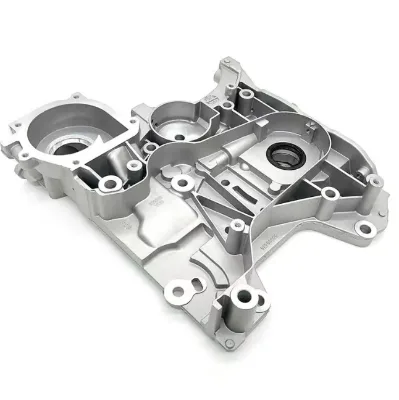
Automotive Oil Pump Timing Cover OEM 55556428 25190867 25195117 55566893
$26.00 - $32.00
MOQ: 10 pieces



Comprehensive Sourcing Guide
Strategic Sourcing Guide for Front Engine Timing Covers with Oil Pumps
Procuring a front engine timing cover with an integrated oil pump requires a rigorous approach that balances mechanical precision with supply chain reliability. This component is critical for maintaining engine timing integrity and lubrication pressure, making the selection of the correct supplier and specification paramount. Buyers must navigate a complex landscape of manufacturing processes, material standards, and certification requirements to ensure the final assembly meets operational demands. The following guide outlines the essential factors for evaluating potential sources, focusing on verified attributes and industry standards without relying on unverified claims.
Technical Specifications and Manufacturing Processes
The core functionality of a front engine timing cover with an oil pump depends heavily on the manufacturing process and the resulting surface finish. Based on available industry data, the production of these components frequently involves CNC Machining, CNC Turning, and CNC Milling. These processes are essential for achieving the tight tolerances required for timing chain alignment and oil pump sealing. A critical specification to verify is the surface roughness, which is often observed in the range of Ra1.6 for high-precision applications. This level of finish ensures proper mating surfaces for gaskets and reduces friction within the oil pump mechanism.
Material selection is another decisive technical factor. Aluminum is a commonly cited material for these components due to its favorable strength-to-weight ratio and thermal conductivity. However, buyers must confirm the specific alloy grade suitable for the intended engine environment. The design may also vary between micro-machining requirements and standard machining, depending on the complexity of the oil pump integration. Furthermore, the component model often dictates the specific engine compatibility, with references to various engine models such as 4BT, 6B, 6CT, NT855, M11, K19, KT38, and K50. It is imperative to match the product model to the specific engine architecture to prevent fitment issues.
Compliance, Certification, and Standards Verification
Ensuring that a supplier adheres to recognized quality management systems is a non-negotiable aspect of B2B procurement. The industry frequently references ISO 9001 as a baseline certification for machining and manufacturing facilities. Specific product listings indicate compliance with ISO 9001 standards, sometimes noted as ISO 9001:2008 or ISO 9001 Quality Certificate. Buyers should request current certification documents to verify that the supplier's quality management system is active and covers the specific production lines used for timing covers.
In addition to general quality certifications, material and product standards must be scrutinized. While some sources reference BS (British Standards) or ASTM standards, the applicability of these standards depends on the target market and the specific engineering requirements of the engine. For non-standard or customized components, the distinction between standard and non-standard manufacturing is crucial. Buyers must verify whether the component is manufactured to a specific standard or if it is a custom design that requires unique validation. The presence of certifications such as SGS and IAF in supplier documentation can further validate the integrity of the quality control processes, though these should be confirmed against the specific batch of goods.
Cost Drivers and Pricing Dynamics
The pricing structure for front engine timing covers with oil pumps is influenced by several variable factors, including customization, material costs, and order volume. The observed market price range for such components can vary significantly, spanning from $0.10 to $5,000 USD, depending on the complexity of the design and the scale of the order. This wide range reflects the difference between simple, off-the-shelf units and highly customized, precision-engineered assemblies.
A primary cost driver is the level of customization. Suppliers offering OEM and ODM services typically charge a premium for the engineering time and tooling required to produce non-standard parts. The "Customized" attribute is frequently listed, indicating that buyers can request specific modifications to the model, material, or dimensions. Additionally, the packaging method impacts the final cost. While some units come in standard polybags and cartons, others require more robust protection, such as wooden cases or carton boxes with wooden cases, particularly for larger or more delicate assemblies. Buyers should evaluate whether the cost of specialized packaging is necessary for their logistics chain or if standard export packaging suffices.
Typical Applications and Operational Conditions
Understanding the intended application environment is vital for selecting the correct timing cover and oil pump assembly. These components are primarily designed for use in machinery parts, metal processing machinery, and metal coating machinery. The operational conditions often include land use scenarios where the equipment is subjected to continuous mechanical stress. The cooling method for the associated engine systems is typically air-cooled, which influences the thermal expansion properties required of the timing cover material.
The application scope extends to various industries, including generators, turbines, ships, and general industrial sectors. For diesel generator applications, the component must withstand high vibration and thermal cycling. The "Usage" classification often falls under "Common Units," suggesting broad applicability across standard industrial equipment. However, buyers must ensure that the specific model is rated for the intended engine type, whether it is a single-cylinder or multi-cylinder configuration. The performance attributes, often described as "High" or "Good," should be validated against the specific load and speed requirements of the end application.
Supplier Evaluation and Origin Considerations
When evaluating potential suppliers, the geographic origin of the manufacturing facility provides insight into the supply chain logistics and potential lead times. A significant number of suppliers for these components are located in China, with specific hubs in Shandong and Guangdong provinces. Cities such as Laiyang in Shandong are noted as production centers. The location influences the shipping method, with options including UPS, DHL, and air freight.
Buyers should assess the supplier's capacity to handle different order sizes. The Minimum Order Quantity (MOQ) can range from 1 set to 1000 units, offering flexibility for both prototyping and mass production. The installation method is typically fixed, which simplifies the integration process but requires precise alignment during the manufacturing phase. Additionally, the condition of the product is usually listed as "New," ensuring that buyers receive fresh inventory rather than refurbished units. It is essential to verify the supplier's ability to provide consistent quality across batches, as the "High Quality" attribute is a common claim that must be backed by tangible evidence.
Quality Control and Delivery Logistics
Effective quality control is the backbone of a successful procurement strategy for precision engine components. The production process often includes specific inspection protocols to ensure the surface roughness and dimensional accuracy meet the Ra1.6 specification. Buyers should inquire about the specific testing procedures used to validate the oil pump integration and the timing cover's sealing capabilities. The "Quality" attribute is frequently highlighted, but it is the supplier's internal quality control system that guarantees this standard.
Logistics and delivery timelines are critical for production planning. Lead times can vary based on the order type, with sample delivery often taking 10-25 days and batch goods requiring 20-35 days. However, for standard items or specific configurations, delivery times may be as short as 1-7 days. The packaging plays a significant role in protecting the component during transit, with options ranging from PP bubble bags within standard export cartons to heavy-duty wooden cases. Buyers must align their inventory planning with these lead times to avoid production delays. The shipping method, whether air or sea freight, should be selected based on the urgency of the order and the cost constraints of the project.
Long-Term Procurement Considerations
Sourcing front engine timing covers with oil pumps is not merely a transactional event but a strategic partnership that impacts long-term operational efficiency. Buyers should prioritize suppliers who offer comprehensive after-sales support and warranty coverage. The ability to source replacement parts and the consistency of the product model over time are essential for maintaining fleet or machinery uptime. Customization capabilities should be evaluated for their scalability, ensuring that the supplier can adapt to future design changes without compromising quality.
Furthermore, the sustainability of the supply chain is an increasingly important factor. Buyers should consider the environmental impact of the manufacturing processes and the materials used. The "Conditions of Use" and "Installation Method" should be reviewed to ensure they align with the buyer's operational protocols and maintenance schedules. By focusing on suppliers with robust quality certifications, transparent pricing models, and reliable delivery schedules, buyers can mitigate risks and ensure a steady supply of high-performance engine components. The ultimate goal is to secure a supply chain that supports the reliability and longevity of the machinery in which these critical parts are installed.
FAQs
What certifications do front engine timing cover manufacturers hold?
Most manufacturers hold ISO 9001 certification for their machining and production facilities. Some listings also reference ISO 9001:2008 or quality certificates from SGS and IAF to validate their quality management systems.
Which materials are commonly used for these timing covers?
Aluminum is a frequently cited material due to its strength-to-weight ratio and thermal conductivity. Buyers should verify the specific alloy grade suitable for the intended engine environment and application.
Can these components be customized for specific engine models?
Yes, customization is available for various engine models including 4BT, 6B, 6CT, and NT855. Suppliers offer OEM and ODM services to meet specific design or dimension requirements for non-standard parts.
What is the typical surface roughness for these machined parts?
The surface roughness is often observed at Ra1.6 for high-precision applications. This finish ensures proper mating surfaces for gaskets and reduces friction within the integrated oil pump mechanism.
How long does delivery take for sample and batch orders?
Sample delivery typically takes 10 to 25 days, while batch goods require 20 to 35 days. Some standard configurations may have shorter lead times ranging from 1 to 7 days depending on availability.
What packaging methods are used for shipping these units?
Packaging varies from standard polybags and cartons to wooden cases for larger assemblies. Some units are shipped in carton boxes with wooden cases to ensure protection during transit.
Which locations are common for sourcing these engine components?
Many suppliers are located in China, specifically in Shandong and Guangdong provinces. Cities like Laiyang in Shandong are noted as production centers for these engine parts.