Source Frosted Perfume Reed Diffuser Bottle for Home, Hotel, and Office
Compare 30 listings for Frosted Perfume Reed Diffuser Bottle options with capacities ranging from 10ml to 500ml. Buyers can evaluate glass and aluminum materials, dropper and screw cap closures, and custom printing services from verified Chinese suppliers.
Key considerations
Products List


Personalized 100 Ml Perfume Bottle Aroma Diffuser Reed Diffuser Glass Bottle
$0.11 - $0.35
MOQ: 5000 Pieces


120ml Square Perfume Fragrance Diffuser Glass Bottle Reed Diffuser Bottle
$0.30 - $0.41
MOQ: 1000 Pieces


Glass Aromatherapy Fragrance Bottle Custom Empty Aroma Reed Diffuser Bottles
$0.43 - $0.67
MOQ: 5000 Pieces

Wholesale 4oz 120ml Perfume Diffuser Glass Bottle Stripe Reed Diffuser Bottle
$0.30 - $0.40
MOQ: 1000 Pieces

Luxury 100ml Frosted Glass Reed Diffuser Empty Fragrance Bottle with Lid
$0.35 - $0.58
MOQ: 1000 Pieces


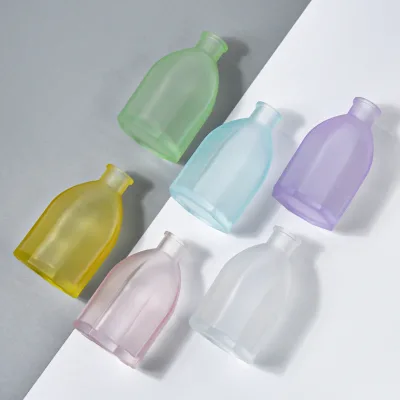


160ml Ridged Glass Aroma Bottles Diffusers/Perfume Bottle for Home Decor
$0.30 - $0.50
MOQ: 3000 Pieces


150ml Empty Perfume Oil Aroma Glass Bottle Reed Diffuser Oil Glass Bottle
$1.90 - $3.30
MOQ: 3000 Pieces


Comprehensive Sourcing Guide
Strategic Sourcing Guide for Frosted Perfume Reed Diffuser Bottles
Procuring frosted perfume reed diffuser bottles requires a nuanced understanding of material properties, regulatory compliance, and supply chain logistics. The global market for home fragrance packaging has expanded significantly, driven by consumer demand for aesthetically pleasing and functional diffusers. Buyers must navigate a complex landscape where visual appeal, such as the frosted finish, must be balanced with chemical compatibility and shipping durability. This guide provides a structured approach to sourcing these specific containers, focusing on verified attributes, technical constraints, and risk mitigation strategies derived from current market data.
Technical Specifications and Material Composition
The foundation of a successful procurement strategy lies in defining precise technical specifications. For frosted perfume reed diffuser bottles, the primary material is often glass, though plastic alternatives exist. Market observations indicate that glass remains the preferred choice for premium fragrance applications due to its inert nature and ability to preserve scent integrity. The standard capacity for these units varies widely, with observed ranges spanning from 10ml to 500ml. Specific models in the current supply chain demonstrate capacities such as 60ml, 100ml, 120ml, and 150ml, while other listings suggest broader ranges like 5-50ml or 51-100ml. Buyers must verify the exact volume capacity against their formulation requirements, as the thickness of the glass and the neck diameter directly impact the reed insertion and wicking efficiency.
The closure mechanism is equally critical. The data highlights a prevalence of screw cap sealing types, often paired with dropper mechanisms or internal threaded connections. The lid material can vary, with options including plastic or metal. For reed diffusers, the closure must be secure enough to prevent leakage during transit but allow for the insertion of reeds without compromising the seal. The installation type is typically an internal threaded connection, which ensures a tight fit. Furthermore, the production technique for the bottle itself may involve bottle blowing for plastic variants or traditional molding for glass. The "frosted" appearance is achieved through specific finishing techniques, which may include sandblasting or chemical etching, though the specific process should be confirmed with the manufacturer to ensure consistency across batches.
Compliance and Certification Verification
In the fragrance and personal care industry, regulatory compliance is non-negotiable. Suppliers must provide evidence of adherence to international safety and quality standards. The available data confirms that reputable manufacturers often hold certifications such as SGS, FDA, and LFGB. These certifications are essential for verifying that the packaging materials do not leach harmful substances into the perfume or essential oil formulations. Additionally, standards like CCIC are mentioned in the context of quality control inspections.
Buyers should not assume that all listed products automatically possess these certifications. Instead, the procurement process must include a request for valid, up-to-date certification documents for the specific batch or model being ordered. While background knowledge suggests standards like ROHS, REACH, or CE might be relevant for certain markets, these should not be asserted as facts without explicit confirmation from the supplier. The verification process should involve cross-referencing the certification numbers provided with the issuing bodies to ensure authenticity. This step is crucial for mitigating the risk of product recalls or regulatory penalties in destination markets, particularly in the European Union and North America.
Cost Drivers and Pricing Dynamics
Understanding the cost structure of frosted perfume reed diffuser bottles is vital for budgeting and margin analysis. The observed price range in the market spans from $0.11 to $7.95 USD, a significant variance that reflects differences in material quality, volume, customization level, and order quantity. Several factors drive these costs. First, the material itself plays a major role; glass bottles generally command a higher price point than plastic or aluminum alternatives due to the raw material cost and the energy-intensive manufacturing process. Second, the customization level is a primary cost driver. Products offering customized logos, specific frosted finishes, or unique shapes incur higher tooling and setup costs.
The Minimum Order Quantity (MOQ) is another critical determinant of unit cost. The data indicates an MOQ range of 100 to 10,000 units, with a specific high-confidence observation of 5,000 units for certain models. Buyers ordering near the lower end of the MOQ spectrum will typically face higher per-unit costs compared to those placing large-volume orders. Additionally, the packaging method affects the final landed cost. Options such as carton-only packing versus carton-plus-pallet configurations influence shipping efficiency and handling fees. Buyers should request detailed breakdowns of costs, including tooling fees, unit price, and packaging charges, to accurately forecast their total expenditure.
Typical Applications and Market Usage
Frosted perfume reed diffuser bottles serve a diverse range of applications beyond simple home fragrance. The data explicitly lists usage categories including chemical, perfume, cosmetics, and personal care industries. The specific design attributes, such as the "Green" color option and "Printed" design styles, suggest these bottles are often marketed for occasions like home decoration, hotel amenities, parties, and office environments. The frosted finish is particularly popular in the luxury and boutique sectors, as it provides a sophisticated, matte aesthetic that diffuses light and hides minor imperfections in the liquid inside.
The compatibility of the bottle with different liquid types is a key consideration. While the primary application is for perfumes, the specifications also mention "Liquid Contained: Perfume" and "Industrial Use: Personal Care." This indicates that the bottles must be chemically resistant to various alcohol-based and oil-based formulations. The "Aligning Sprayer" and "Liquid Column" spraying shapes mentioned in the data suggest that some variants may be designed for spray applications, though for reed diffusers, the focus remains on the bottle's ability to hold the liquid and support the reed system. Buyers should ensure that the selected bottle model aligns with the viscosity and chemical composition of their specific fragrance blend to prevent degradation of the packaging material.
Supplier Evaluation and Production Capabilities
Selecting the right supplier requires a rigorous evaluation of their production capabilities and business practices. The origin of the products is predominantly China, with specific mentions of Jiangsu as a production hub. This region is known for its concentration of glass and plastic manufacturing facilities. When evaluating potential partners, buyers should verify the supplier's capacity for customization. The data confirms that customization is available, with options for customized logos and OEM/ODM services. The "Samples: Free" and "Sample: Provided Freely" attributes indicate that many suppliers are willing to provide prototypes for quality assessment before committing to a large order.
However, buyers must distinguish between general availability and specific model capabilities. Not every supplier may offer the full range of frosted finishes or specific capacity sizes. The presence of multiple product models, such as "12," "005," "11," and "KAESHING DIFFUSER 006," suggests a diverse inventory. Buyers should request a detailed product catalog and verify that the specific model they intend to source matches their technical requirements. Additionally, the supplier's ability to handle large-scale production is crucial. With MOQs reaching up to 10,000 units, the supplier must have the infrastructure to maintain consistent quality and meet delivery deadlines.
Quality Control and Packaging Standards
Quality control is the final safeguard against defects in the supply chain. The data highlights specific packaging standards, including "Pallet/Carton," "Carton +Pallet," and "Carton" configurations. These packaging methods are designed to protect the fragile glass bottles during international shipping. The use of pallets is particularly important for large orders, as it facilitates easier handling and reduces the risk of breakage during transit. Buyers should specify their preferred packaging method in the purchase order to ensure that the supplier adheres to these standards.
Inspection protocols should be established prior to shipment. Given the certifications mentioned, such as SGS and CCIC, buyers can leverage third-party inspection services to verify product quality. These inspections should focus on critical attributes like the integrity of the frosted finish, the tightness of the screw cap, and the accuracy of the volume capacity. The "Design: Printed" attribute also necessitates a check on print quality, ensuring that logos and text are clear, aligned, and free from smudging. Establishing a clear acceptance criteria document based on these quality parameters will help minimize disputes and ensure that the received goods meet the buyer's expectations.
Long-Term Procurement Considerations
Sourcing frosted perfume reed diffuser bottles is not merely a transactional event but a strategic partnership that requires long-term planning. As market trends shift towards sustainability and unique branding, the ability of the supplier to adapt is crucial. Buyers should consider the scalability of the supplier's operations. If a brand experiences rapid growth, the supplier must be able to increase production volumes without compromising quality or lead times. The observed lead times and production capacities should be discussed in detail to ensure alignment with the buyer's inventory management strategy.
Furthermore, the relationship with the supplier should be built on transparency and clear communication regarding any changes in raw material costs or regulatory requirements. The availability of free samples is a positive indicator of a supplier's confidence in their product, but buyers should use these samples to test long-term stability, such as how the frosted finish holds up over time or how the bottle interacts with different fragrance formulations. By maintaining a proactive approach to supplier evaluation and quality control, buyers can secure a reliable supply chain that supports their brand's growth and reputation in the competitive home fragrance market.
FAQs
What certifications do frosted perfume reed diffuser bottles have?
These bottles typically hold SGS, FDA, LFGB, and CCIC certifications. Buyers must verify specific batch documents as not all listed products automatically possess these certifications without explicit confirmation from the supplier.
Can I get free samples for frosted perfume reed diffuser bottles?
Yes, suppliers often provide free samples for quality assessment before large orders. Buyers should request prototypes to test the frosted finish and compatibility with their specific fragrance formulations.
What is the minimum order quantity for these glass bottles?
The minimum order quantity ranges from 100 to 10,000 units, with a specific high-confidence observation of 5,000 units for certain models. Lower order volumes typically result in higher per-unit costs.
Which materials are used for frosted perfume reed diffuser bottles?
Glass is the primary material used for premium applications, though plastic and aluminum alternatives exist. Glass is preferred for its inert nature and ability to preserve scent integrity during storage.
How are frosted perfume reed diffuser bottles packaged for shipping?
Packaging options include carton-only, carton plus pallet, or pallet configurations. Pallets are essential for large orders to facilitate handling and reduce the risk of breakage during international transit.
What capacity sizes are available for these diffuser bottles?
Available capacities range from 5ml to 500ml, with specific models offering 60ml, 100ml, 120ml, and 150ml. Buyers must verify exact volume against formulation requirements to ensure proper wicking efficiency.
Where are frosted perfume reed diffuser bottles manufactured?
Products originate primarily from China, with specific production hubs mentioned in Jiangsu. This region hosts a concentration of glass and plastic manufacturing facilities capable of handling large-scale production.