Source Frosted HDPE Vitamin Powder Jar for supplements, vitamins, and pharmaceuticals
Compare 22 Frosted HDPE Vitamin Powder Jar options from verified suppliers. These HDPE containers feature screw caps, various weights, and customization services for health supplements, nutraceuticals, and vitamins.
Key considerations
Products List


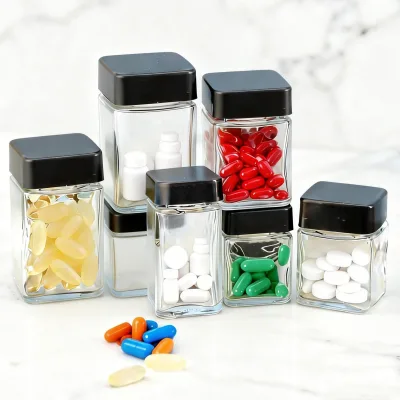
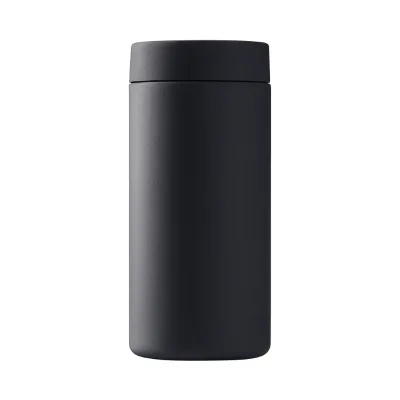
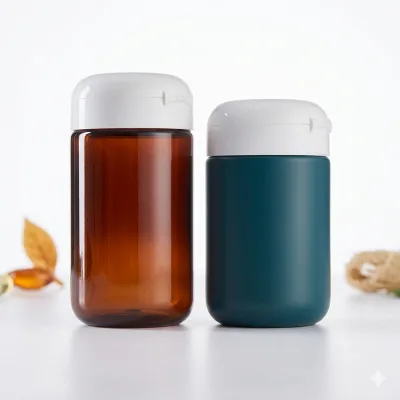
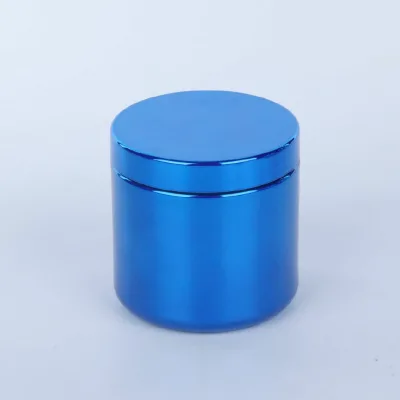


High-Quality 16oz HDPE Pearl White Plastic Jars for Dietary Supplement
$0.45 - $1.00
MOQ: 10000 Pieces


10oz HDPE Black Plastic Chromed Jars with White Bottleneck for Nutrition Powder
$0.50 - $1.00
MOQ: 10000 Pieces

16oz HDPE Colourful Plating Storage Tanks Vitamin Plastic Jars with Lids
$0.50 - $1.00
MOQ: 10000 Pieces


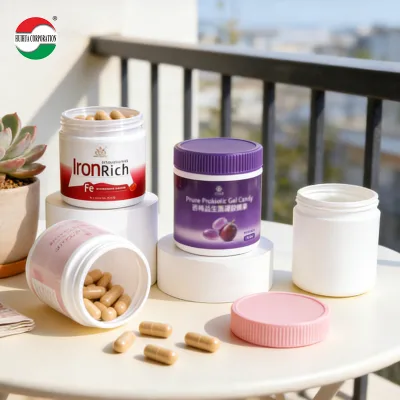

Comprehensive Sourcing Guide
Strategic Sourcing Guide for Frosted HDPE Vitamin Powder Jars
The global demand for packaging solutions that preserve the integrity of nutraceuticals and vitamins has driven the adoption of high-density polyethylene (HDPE) containers. Specifically, the Frosted HDPE Vitamin Powder Jar has emerged as a preferred choice for brands seeking a balance between durability, aesthetic appeal, and cost-effectiveness. This guide provides a comprehensive, evidence-based framework for procurement professionals evaluating suppliers for these specific containers. The analysis relies on observed market data, technical specifications, and standard industry practices to ensure decisions are grounded in verifiable facts rather than speculation.
Technical Specifications and Material Integrity
When sourcing frosted HDPE jars, the primary focus must be on the material composition and physical dimensions that ensure product stability. HDPE is the dominant material for this category due to its excellent chemical resistance and moisture barrier properties, which are critical for preventing the degradation of sensitive vitamin powders. The observed market data indicates that suppliers typically offer jars with a specific "Round wide mouth" geometry, which facilitates easy filling and dispensing of powdered contents.
The structural integrity of these jars is often defined by their weight and thickness. Procurement records show a significant variance in unit weight, ranging from lightweight options at 22 grams to heavier, more robust containers weighing up to 240 grams. This variance suggests that buyers must explicitly define their required wall thickness, with observed standard thicknesses around 0.5 cm for specific heavy-duty models. The "frosted" appearance is a surface treatment applied to the clear HDPE base, often achieved through additives or surface texturing, though some listings note "clear" options alongside white and customizable color variants.
Dimensional consistency is paramount for automated filling lines. Key specifications include neck sizes, with 89mm identified as a standard metric for certain models, and overall standard dimensions such as 93mm by 99mm for specific jar profiles. Volume capacities are equally critical, with common offerings spanning 30ml, 60ml, 90ml, and 110ml. Buyers should verify that the selected model number, such as the PE500-White or various MD-series codes (e.g., MD-848, MD-711), aligns precisely with their production line's mechanical tolerances. The closure type is almost universally a screw cap, ensuring a tight seal that prevents moisture ingress, a common failure point for powdered supplements.
Customization and Branding Capabilities
In the competitive nutraceutical market, branding is as important as functionality. The frosted HDPE jar offers a unique canvas for brand differentiation. Market observations confirm that customization is widely available, allowing buyers to tailor the jar's color, including the option to customize the lid color to match specific brand palettes. While white and clear are standard, the ability to request custom colors is a critical differentiator for premium product lines.
Printing capabilities are extensive and vary by supplier. The most common methods observed include silk screen printing and label application. However, advanced suppliers offer a broader suite of techniques such as screen printing, hot stamping, water transfer printing, gold stamping, UV printing, and digital printing. These options allow for high-fidelity logos and detailed instructional text directly on the container. For buyers requiring complex graphics, the availability of "Logo printing" acceptance is a standard feature, though the specific technique (e.g., UV vs. Silk Screen) should be confirmed based on the desired durability and aesthetic finish.
Packaging for the finished goods is another area requiring attention. Standard packing methods involve placing individual jars in poly bags followed by carton consolidation. Some suppliers offer bulk carton-only packing, while others specify single package sizes, such as 40x40x50 cm, which impacts logistics planning. Buyers must ensure that the chosen packing method protects the frosted finish from scratching during transit, as surface abrasions can significantly diminish the perceived quality of the final product.
Cost Drivers and Procurement Economics
Understanding the cost structure of frosted HDPE jars is essential for budgeting and margin analysis. The observed price range in the market spans from $0.10 to $2.90 USD per unit. This wide variance is driven by several factors, including the weight of the container, the complexity of the molding, the volume ordered, and the level of customization required. Heavier jars with higher gram weights, such as the 240g models, naturally command higher prices than lighter 22g variants.
Minimum Order Quantity (MOQ) is a significant economic constraint. Data indicates that while some suppliers may accept orders as low as 1 unit for sampling, the standard production MOQ is typically 5,000 pieces. This high threshold is common in the plastic injection molding industry to justify tooling and setup costs. Buyers planning to launch a new product must account for this initial inventory commitment. The lead time for production is generally cited as 30 days, a standard duration that allows for mold preparation, material procurement, and quality assurance checks.
Payment terms are another critical component of the procurement agreement. The standard payment method observed is T/T (Telegraphic Transfer), which requires buyers to have established banking relationships and understand the cash flow implications of upfront payments. Additionally, the availability of samples is a crucial cost-saving measure; many suppliers provide samples freely or at a nominal cost, allowing buyers to validate the frosted finish and screw cap fit before committing to a full production run.
Compliance, Certification, and Regulatory Checks
While specific certification status for individual suppliers cannot be universally asserted without direct verification, the industry standard for food and pharmaceutical packaging requires adherence to strict regulatory frameworks. Buyers must verify that the HDPE resin used is food-grade and compliant with relevant local and international regulations for contact with dietary supplements. Although ISO 9001 is a recognized standard for quality management systems, it should not be assumed that every supplier holds this certification unless explicitly documented.
The primary compliance focus should be on the material's safety for intended use. Since these jars are used for vitamins, pharmaceuticals, and herbal supplements, the plastic must not leach harmful substances into the product. Buyers should request material safety data sheets (MSDS) and certificates of analysis (CoA) from the resin manufacturer. Furthermore, the printing inks and adhesives used for labels must be non-toxic and safe for food contact. The "Special Feature" of the jar often includes a measuring cup, which adds a functional layer of compliance; this accessory must also be made from food-safe materials and designed to prevent cross-contamination.
Supplier Evaluation and Quality Control
Selecting the right supplier requires a rigorous evaluation process that goes beyond price comparison. The origin of the products is predominantly China, with specific regions like Hubei noted as production hubs. While this indicates a mature supply chain, buyers should verify the specific factory's capacity and history. The "Place of Origin" should be clearly stated in the contract to ensure traceability.
Quality control protocols are essential to maintain consistency. Buyers should implement a multi-stage QC process:
- Pre-production: Verify the mold design and sample approval, ensuring the frosted texture and color match the brand standards.
- In-process: Monitor the injection molding parameters to prevent defects like warping or uneven wall thickness.
- Final Inspection: Conduct random sampling based on AQL (Acceptable Quality Level) standards to check for visual defects, leakage, and closure tightness.
The "Service" offered by suppliers, often listed as OEM/ODM, indicates their ability to customize the product. However, buyers must distinguish between a supplier who merely applies a logo and one that offers full design support. The ability to provide "Freely" samples is a positive indicator of supplier confidence, but the quality of these samples must be representative of the mass-produced units.
Typical Applications and Market Fit
The Frosted HDPE Vitamin Powder Jar is versatile, serving a wide range of applications within the health and wellness sector. The primary usage cases identified include vitamins, pharmaceuticals, herbal supplements, health supplements, and nutraceuticals. The "Round wide mouth" design is particularly suited for powdered formulations that require scooping or pouring, while the screw cap ensures a secure seal against humidity.
The specific weight and volume combinations allow for targeted applications. Lighter jars (22g-35g) are ideal for travel-sized supplements or single-dose servings, while heavier jars (80g-240g) are better suited for bulk family packs or premium product lines. The ability to customize the lid color and apply complex printing techniques makes these jars suitable for high-end branding, where the packaging itself is a key marketing tool. The inclusion of a measuring cup as a special feature adds value for consumers, enhancing the user experience and ensuring accurate dosage.
Long-Term Procurement Considerations
Sourcing frosted HDPE jars is not a one-time transaction but a long-term partnership that requires strategic planning. Buyers should consider the scalability of the supplier's production capacity to meet future demand spikes. The 30-day lead time is a baseline; any changes in design or material must be factored into the supply chain timeline.
Sustainability is an increasingly important factor. While HDPE is recyclable, buyers should inquire about the use of post-consumer recycled (PCR) content in the resin. Additionally, the packaging method (poly bag and carton) should be evaluated for its environmental impact, with a preference for suppliers who offer eco-friendly packaging alternatives.
Finally, maintaining a relationship with a supplier that offers robust OEM/ODM services ensures flexibility for future product iterations. As market trends shift, the ability to quickly adapt the jar's design, color, or printing method will be crucial for maintaining competitiveness. Buyers should establish clear communication channels and regular review cycles to ensure that the supplier continues to meet evolving quality and compliance standards. By adhering to these guidelines, procurement professionals can secure a reliable supply of high-quality frosted HDPE vitamin powder jars that support their brand's growth and reputation.
FAQs
What material is used for frosted HDPE vitamin powder jars?
These jars are made from HDPE plastic, offering excellent chemical resistance and moisture barrier properties. The material is suitable for vitamins, pharmaceuticals, and herbal supplements, ensuring product stability during storage and transport.
Can I customize the color and lid of these jars?
Yes, customization is available for both the jar body and the lid color to match your brand palette. While white and clear are standard options, suppliers can produce custom colors upon request for specific orders.
What printing methods are supported for branding on these jars?
Multiple printing techniques are supported, including silk screen printing, hot stamping, UV printing, and digital printing. Buyers can also choose label application or water transfer printing depending on the desired aesthetic finish and durability.
What is the minimum order quantity for production runs?
The standard minimum order quantity is 5000 pieces for production runs. While samples may be provided freely or at a nominal cost, full manufacturing orders typically require this threshold to justify tooling and setup costs.
How long does delivery take after placing an order?
The standard lead time for delivery is 30 days from order confirmation. This duration allows for mold preparation, material procurement, and quality assurance checks before the goods are shipped from the factory.
Which payment terms are commonly accepted by suppliers?
The most common payment method observed is T/T, or Telegraphic Transfer. Buyers should ensure they have established banking relationships to handle these upfront payment requirements before production begins.
What are the standard dimensions and volume options available?
Standard dimensions include a neck size of 89mm and overall profiles like 93mm by 99mm. Volume capacities typically range from 30ml to 110ml, with specific models like PE500-White offering various weight options from 22g to 240g.