Source Frosting Reed Diffuser Perfume Bottle for Home, Hotel, Office
Find and compare 30 glass Frosting Reed Diffuser Perfume Bottle options from China. Evaluate capacities from 5-100ml, dropper and screw cap closures, and SGS/FDA certified materials for your branding needs.
Key considerations
Products List


Personalized 100 Ml Perfume Bottle Aroma Diffuser Reed Diffuser Glass Bottle
$0.11 - $0.35
MOQ: 5000 Pieces


120ml Square Perfume Fragrance Diffuser Glass Bottle Reed Diffuser Bottle
$0.30 - $0.41
MOQ: 1000 Pieces


Glass Aromatherapy Fragrance Bottle Custom Empty Aroma Reed Diffuser Bottles
$0.43 - $0.67
MOQ: 5000 Pieces

Wholesale 4oz 120ml Perfume Diffuser Glass Bottle Stripe Reed Diffuser Bottle
$0.30 - $0.40
MOQ: 1000 Pieces

Luxury 100ml Frosted Glass Reed Diffuser Empty Fragrance Bottle with Lid
$0.35 - $0.58
MOQ: 1000 Pieces


160ml Ridged Glass Aroma Bottles Diffusers/Perfume Bottle for Home Decor
$0.30 - $0.50
MOQ: 3000 Pieces

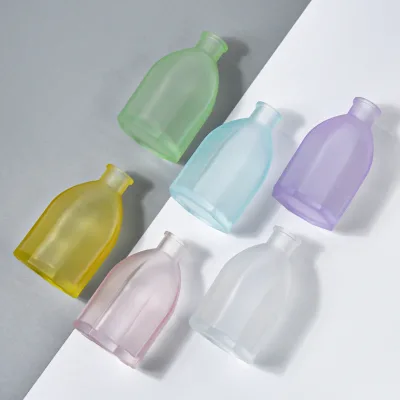


150ml Empty Perfume Oil Aroma Glass Bottle Reed Diffuser Oil Glass Bottle
$1.90 - $3.30
MOQ: 3000 Pieces


Reed Diffuser Bottle Perfume Glass Clear Green Blue Black Glass Bottle
$0.20 - $0.80
MOQ: 30000 Pieces

250ml White Luxury Reed Diffuser Decorative Bottle Perfume Glass Bottle
$0.20 - $0.80
MOQ: 30000 Pieces
Comprehensive Sourcing Guide
Frosting Reed Diffuser Perfume Bottle Sourcing Guide
Sourcing high-quality glass vessels for reed diffusers and perfume applications requires a nuanced understanding of material properties, manufacturing capabilities, and regulatory landscapes. The market for these containers is diverse, ranging from small-volume essential oil bottles to larger decorative home fragrance vessels. Buyers must navigate a landscape where aesthetic finishes, such as frosting or gradient colors, are paired with functional closures like droppers or screw caps. This guide provides a structured approach to evaluating suppliers, verifying technical specifications, and ensuring compliance with international safety standards. By focusing on evidence-based verification steps, procurement teams can mitigate risks associated with inconsistent quality, non-compliant materials, and unreliable supply chains.
The following sections detail the critical aspects of sourcing glass bottles for fragrance and aroma applications. We examine observed listing signals to understand market norms, define the technical parameters that must be verified, and outline the compliance documentation required for global distribution. Additionally, we analyze the commercial factors that influence total landed cost, establish criteria for supplier qualification, and provide long-term checks to ensure sustained product integrity. This approach ensures that buyers make informed decisions based on verifiable data rather than marketing claims, leading to more reliable sourcing outcomes and higher customer satisfaction.
Product Scope and Observed Listing Signals
The observed product landscape for glass fragrance bottles reveals a wide range of capacities, typically spanning from 5-50 ml to 51-100 ml, with some listings indicating standards up to 200 ml. This variability suggests that suppliers offer modular solutions catering to different market segments, from concentrated essential oil dropper bottles to larger home decoration vessels. The material is consistently identified as glass, which is preferred for its chemical inertness and premium aesthetic. Buyers should note that while the core material is uniform, the specific capacity ranges often correlate with distinct product models, such as model 12, 005, or YJCA2506-48, indicating that inventory management and ordering must be precise to avoid mixing incompatible components.
Aesthetic customization is a dominant feature in this category, with many suppliers offering screen printing, gradient colors, and customized logos. The presence of "frosted" or "printed" designs, along with options for green or other specific colors, highlights the importance of visual appeal in the home fragrance and perfume sectors. Suppliers frequently welcome OEM and ODM requests, allowing brands to tailor the product to their identity. However, buyers must distinguish between standard stock items and fully customized runs, as the latter may involve higher minimum order quantities (MOQs) and longer lead times. The observed MOQs range from 1,000 to 30,000 pieces, reflecting the scale required for cost-effective production and customization.
Technical Specifications to Verify
When evaluating glass bottles for reed diffusers and perfumes, the closure type is a critical technical specification that determines functionality. Listings indicate the availability of dropper closures and screw caps, with lids made from either plastic or metal. Buyers must verify the compatibility between the bottle neck finish and the chosen closure to prevent leakage, which is a common failure point in fragrance packaging. The sealing type, often described as a screw cap, must be tested for tightness and durability. Additionally, the shape of the bottle, typically round, should be assessed for stability and ease of handling. The design elements, such as printed patterns or gradient finishes, must be evaluated for adhesion and resistance to wear, especially if the bottles are intended for retail display where visual integrity is paramount.
Capacity and volume standards are another area requiring strict verification. While listings mention standards such as 120ml, 150ml, or 60ml, the actual filled volume may vary due to manufacturing tolerances. Buyers should request sample units to measure the actual capacity and check for consistency across batches. The packaging method, often described as carton with pallet or wooden pallet with eggcrate protection, is vital for preventing breakage during transit. Glass is fragile, and the integrity of the packaging must be robust enough to withstand international shipping conditions. Buyers should also confirm the origin of the products, with many suppliers located in Jiangsu, China, a major hub for glass manufacturing, which can influence logistics and lead times.
Compliance and Safety Documentation
Regulatory compliance is non-negotiable for products that come into contact with consumer goods like perfumes and essential oils. Suppliers often cite certifications such as SGS, FDA, and LFGB, which indicate that the glass material and any coatings are safe for contact with food or cosmetic products. Buyers must request valid, up-to-date certification documents for each product model, as these certificates have expiration dates and specific scope limitations. The presence of ISO9001 certification suggests a supplier has a quality management system in place, but it does not guarantee the safety of the final product. Therefore, buyers should verify that the certifications cover the specific materials and finishes used in the bottles, including any printed inks or frosted coatings.
Environmental and safety standards such as ROHS and REACH are also relevant, particularly for markets in Europe and North America. These standards regulate the use of hazardous substances in manufacturing processes and final products. While some listings mention these certifications, buyers should treat them as claims that require independent verification. It is essential to ensure that the glass itself is free from lead and other heavy metals, and that any decorative elements do not leach harmful chemicals. Buyers should also consider the eco-friendly aspects of the packaging and production process, as sustainability is increasingly important to consumers and regulators. Requesting material safety data sheets (MSDS) for any coatings or inks can provide additional assurance of compliance.
Cost Drivers and Commercial Terms
The cost of glass fragrance bottles is influenced by several factors, including material quality, customization complexity, and order volume. The observed price range of $0.11 to $7.95 USD reflects the diversity of products available, from simple, unbranded bottles to highly customized, premium designs. Buyers should understand that lower prices may correspond to standard, non-customized items with higher MOQs, while higher prices may reflect lower MOQs or complex design features like gradient colors or specific printing techniques. The MOQ, which can range from 500 to 30,000 pieces, plays a significant role in pricing; larger orders typically benefit from economies of scale, reducing the unit cost.
Commercial terms such as sample availability and payment conditions are also critical components of the procurement strategy. Many suppliers offer free samples, which is a valuable opportunity for buyers to assess quality before committing to a large order. However, buyers should clarify whether shipping costs for samples are covered or if they are the responsibility of the buyer. Payment terms, such as deposits and balance payments, should be negotiated to align with the production timeline and risk tolerance. Additionally, buyers should consider the total landed cost, including shipping, insurance, and tariffs, which can significantly impact the final price. Understanding these cost drivers allows buyers to make informed decisions that balance quality, cost, and supply chain reliability.
Supplier Qualification and Quality Control
Supplier qualification is a multi-step process that begins with verifying the company's legitimacy and manufacturing capabilities. Buyers should conduct due diligence on suppliers located in key manufacturing regions like Jiangsu, China, to ensure they have the necessary infrastructure and experience. Requesting references from other clients and reviewing past performance can provide insights into the supplier's reliability and consistency. It is also important to assess the supplier's ability to handle OEM and ODM requests, as this indicates their flexibility and commitment to customer-specific needs. Buyers should look for suppliers who demonstrate a proactive approach to quality control, including in-process inspections and final product testing.
Quality control measures should be clearly defined and agreed upon before production begins. This includes establishing acceptable tolerances for dimensions, capacity, and aesthetic features. Buyers should request a quality assurance plan that outlines the inspection criteria, sampling methods, and acceptance standards. Third-party inspection services can be employed to verify product quality before shipment, providing an additional layer of protection against defects. Buyers should also establish a clear process for handling non-conforming products, including return policies and compensation mechanisms. By implementing robust quality control protocols, buyers can minimize the risk of receiving defective goods and ensure that the final product meets their standards.
Long-Term Procurement Checks
Sustaining a successful sourcing relationship requires ongoing monitoring and evaluation of supplier performance. Buyers should establish key performance indicators (KPIs) to track metrics such as on-time delivery, product quality, and responsiveness to issues. Regular audits of the supplier's production facilities and quality management systems can help identify potential risks and areas for improvement. Buyers should also maintain open communication channels with suppliers to address any concerns promptly and collaboratively. By fostering a partnership based on transparency and mutual benefit, buyers can ensure a stable and reliable supply chain.
Market trends and regulatory changes can impact the sourcing strategy over time. Buyers should stay informed about developments in packaging technology, material safety standards, and consumer preferences. This includes monitoring shifts towards more sustainable materials and eco-friendly production processes. Buyers should also be prepared to adapt their sourcing strategy in response to changes in the global supply chain, such as disruptions in logistics or fluctuations in raw material costs. By maintaining a proactive and flexible approach, buyers can mitigate risks and capitalize on new opportunities, ensuring the long-term success of their procurement efforts.
FAQs
Can I get a customized logo on the glass milk bottle?
Yes, customized logos are acceptable for these glass bottles. The product page confirms that logo customization is available, allowing buyers to add their branding to the glass milk bottle or similar containers for perfumes and essential oils.
What certifications do these glass bottles hold?
These glass bottles hold SGS, FDA, LFGB, and ISO9001 certifications. The high-confidence facts list multiple standards including SGS, CCIC, and FDA, ensuring the products meet safety requirements for chemical, perfume, and cosmetic usage.
Which capacity sizes are available for the glass bottles?
Available capacities range from 5ml to 200ml, including specific sizes like 60ml, 120ml, and 150ml. The product specifications indicate various capacity ranges such as 5-50ml and 51-100ml, suitable for different usage needs like tea, food, or aromatherapy.
How is the glass bottle packed for shipping?
The glass bottles are packed in cartons with pallets or wooden pallets with egg crates. The product attributes specify packing methods like Carton + Pallet or Wooden Pallet with 5-Ply Paper Carton to ensure safe transport of the fragile glass items.
What is the minimum order quantity for these bottles?
The minimum order quantity varies, with observed values ranging from 100 to 30,000 units. Specific product listings mention MOQs of 5000 or 1000 pieces, depending on the specific model and customization requirements requested by the buyer.
Can I get free samples before placing a large order?
Yes, free samples can be provided for these glass bottles. The product attributes explicitly state that samples are available and can be provided, allowing buyers to verify quality before committing to a larger purchase order.
Which printing types are used on the glass bottles?
Screen printing is the primary printing type used on these glass bottles. The product facts confirm screen printing as the method, often combined with gradient colors or custom designs for applications in home decoration, hotels, and offices.