Source Frp Flower Pot Chairs for Outdoor Landscape and Indoor Use
Find 30 Frp Flower Pot Chairs designed for outdoor landscape, commercial premises, and home gardening. Buyers can compare models like FPP-2 and FPP-16, noting their epoxy coating, lightweight FRP material, and European style for various applications.
Key considerations
Products List


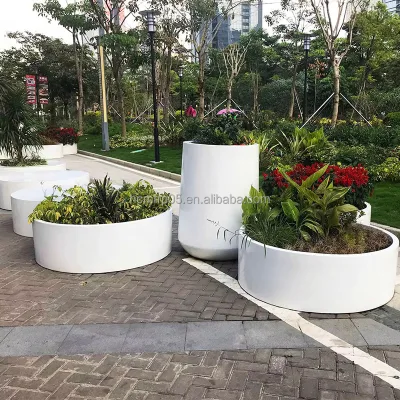


FRP Creative Flower Bed Seats for Shopping Malls Waiting Chair Manufacturers
$3000.00 - $50000.00
MOQ: 10 Pieces

Customized Simple Steel and Wood Square Leisure Seats and Flower Pots
$280.00 - $2680.00
MOQ: 10 Pieces


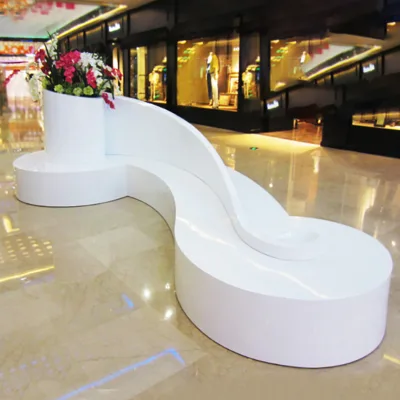
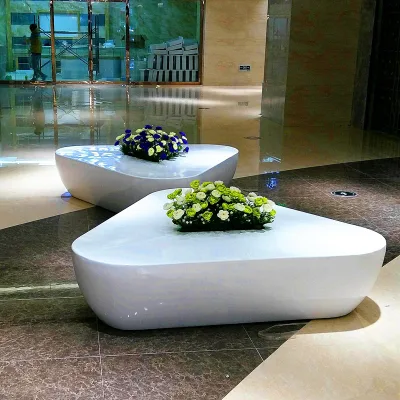
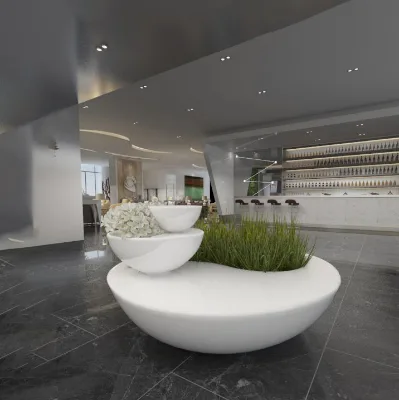


Comprehensive Sourcing Guide
Strategic Sourcing Guide for Frp Flower Pot Chairs and Landscape Furniture
Procuring FRP (Fiber Reinforced Polymer) flower pot chairs and associated landscape furniture requires a nuanced understanding of material science, manufacturing processes, and supply chain logistics. The market for these items is driven by the demand for durable, aesthetically versatile, and lightweight solutions suitable for both indoor and outdoor environments. This guide synthesizes available product data and industry knowledge to assist buyers in navigating the procurement landscape effectively, ensuring that selections align with specific project requirements without relying on unverified claims.
Understanding Material Composition and Technical Specifications
The foundation of any FRP product lies in its material composition. The supplied data explicitly identifies the core material as FRP, specifically noting the fiber type as GFRP (Glass Fiber Reinforced Polymer). This distinction is critical for buyers evaluating structural integrity and chemical resistance. GFRP offers a balance of strength and weight that traditional materials like cast iron or solid wood cannot match. The product attributes highlight a "Lightweight" advantage, noting that these items are easy to carry and install compared to heavier alternatives. This characteristic is particularly valuable for landscape engineering projects where furniture must be moved frequently or installed in locations with limited access.
Technical specifications vary by model, with observed designations including FPP-1, FPP-2, FPP-5, and FPP-13. While specific dimensions are not universally fixed, one observed specification lists a model size of 1000500400, indicating that customization is a standard capability. Buyers should verify that the supplier can meet exact length, width, and height requirements, as the data confirms that dimensions are customizable. The molding method is identified as "Molding," which allows for the creation of diverse shapes and rich styling, a key feature for European Style designs often requested in commercial and residential settings.
Manufacturing Processes and Surface Treatments
The production method for these items is described as a blend of "Semi-Manual Semi-Mechanical" processes, with a specific emphasis on "Handmade" techniques in certain contexts. This hybrid approach suggests that while machinery ensures consistency in the molding phase, human craftsmanship is applied to finishing details, potentially enhancing the quality of the final product. The finishing process is a critical differentiator; the data specifies an "Epoxy Coated" surface treatment. This coating is essential for the product's longevity, providing a smooth, non-stain surface that requires only water wiping for maintenance.
The surface treatment directly contributes to the product's weather adaptability. The observed facts state that these items can withstand high temperatures, frost, and rain without degradation. Furthermore, the coating provides resistance to acid and salt spray, making the furniture suitable for coastal environments. This is a vital consideration for buyers sourcing for seaside resorts or coastal municipalities. The "Smooth" surface treatment not only aids in cleaning but also enhances the aesthetic appeal, ensuring the furniture remains visually pristine over time.
Compliance, Customization, and Certification Verification
When evaluating compliance, buyers must look beyond general marketing claims and verify specific standards. The data indicates that the product standard is "Customized length, width, height; customizable color," which implies that the supplier operates on a made-to-order basis rather than a rigid catalog system. This flexibility is a significant advantage for large-scale landscape engineering projects where uniformity and specific design requirements are paramount. However, the lack of a specific universal standard code in the provided text means buyers must explicitly request and verify the standards applicable to their region, such as ASTM or ISO standards for outdoor furniture durability.
Certification status is not explicitly detailed in the provided facts, which necessitates a rigorous verification process. Buyers should request documentation regarding the "Epoxy Coated" finish and the "GFRP" material composition to ensure they meet local environmental and safety regulations. The "After-Sales Guarantee" mentioned in the data, which compensates for damaged goods caused by poor packaging, serves as a form of commercial assurance. However, this should be complemented by third-party testing reports for fire resistance, UV stability, and structural load-bearing capacity, especially for commercial premises and public spaces.
Cost Drivers and Pricing Dynamics
The observed price range for these products spans from $0.52 to $50,000 USD, reflecting a vast disparity in scale, complexity, and order volume. The Minimum Order Quantity (MOQ) ranges from 1 to 1000 units, indicating that suppliers cater to both individual buyers and large-scale contractors. Several factors drive the cost of Frp Flower Pot Chairs. The primary driver is the customization level; custom dimensions, colors, and shapes will inherently cost more than standard off-the-shelf models. The "Handmade" aspect of the production process also adds labor costs, which can influence the final price point.
Additionally, the packaging method significantly impacts shipping costs and, by extension, the total landed cost. The data lists multiple packaging options, including "Bubble Wrap with Wood Frame," "Bubble Wrap + Plywood Crate," and "Standard Packing for Container Loading." For international shipments, the choice of packaging is critical to prevent damage during transit, especially given the "Lightweight" nature of the product which can sometimes lead to improper handling if not secured correctly. Buyers should factor in the cost of the most robust packaging option if shipping to remote or difficult-to-access locations.
Typical Applications and Usage Scenarios
The versatility of Frp Flower Pot Chairs allows them to be deployed across a wide spectrum of applications. The data categorizes the general use as "Outdoor Furniture," with specific applications including "Landscape Engineering," "Commercial Premises," "Home Gardening," and "Interior Decoration." The "European Style" design mentioned in the attributes suggests a suitability for high-end residential and hospitality projects where aesthetics are as important as functionality.
The product is also noted as "Applicable" to "Flowers/Plants," functioning primarily as a planter but often integrated into seating arrangements. The "Usage" field lists "Household," "Industrial," and "Environmental Protection," highlighting the broad utility of these items. In industrial settings, the "Corrosion Resistance" and "Durable and Sturdy" attributes make them ideal for harsh environments where metal furniture might rust. For environmental protection projects, the "Environmental Friendliness" and "Recyclable" functions of the FRP material align with sustainability goals, making these products a viable choice for eco-conscious developments.
Supplier Evaluation and Quality Control Protocols
Selecting a reliable supplier is paramount when sourcing FRP products. Buyers should evaluate suppliers based on their ability to provide the "High Quality with Best Price" advantage claimed in the data. This evaluation should include a review of their production capabilities, specifically their ability to execute the "Semi-Manual Semi-Mechanical" process with precision. The "After-Sales Guarantee" regarding damaged goods is a strong indicator of a supplier's confidence in their packaging and logistics, but it should be verified through contract terms.
Quality control should focus on the consistency of the "Epoxy Coated" finish and the integrity of the "Molding" process. Buyers should request samples to test the "Smooth" surface and verify the "Acid and Salt Spray Resistant" claims through independent testing if the project is in a coastal zone. The "Weight Advantage" should be confirmed physically, ensuring the product is indeed lightweight enough for the intended installation method. Furthermore, the "Post-Maintenance Cost" claim of requiring only water wiping should be validated by testing the surface against common stains to ensure the non-stain properties hold up in real-world conditions.
Long-Term Procurement Considerations and Sustainability
Long-term procurement strategies for Frp Flower Pot Chairs must account for the lifecycle of the product. The data highlights "Function5: Recyclable" and "Function6: Plant Friendly," which are significant for buyers prioritizing sustainability. However, the recyclability of FRP can be complex depending on the resin system used; buyers should inquire about the specific resin type and the supplier's recycling protocols. The "Weather Adaptability" of withstanding frost and rain ensures a long service life, reducing the frequency of replacement and the associated environmental impact.
The "Customization" aspect also plays a role in long-term planning. As projects evolve, the ability to order custom dimensions and colors allows for design continuity without the need to source entirely new product lines. Buyers should establish a long-term relationship with suppliers who can maintain consistent quality over time, especially given the "Handmade" nature of the production which can introduce variability. Clear communication regarding the "Standard Packing for Container Loading" is essential to minimize logistics costs and ensure that the products arrive in perfect condition, ready for immediate installation in landscape engineering or commercial settings.
| Feature Category | Key Attributes from Data | Procurement Verification Point |
|---|---|---|
| Material | FRP, GFRP | Request material safety data sheets (MSDS) |
| Finish | Epoxy Coated, Smooth | Test for salt spray resistance and stain removal |
| Dimensions | Customizable (e.g., 1000500400) | Confirm tolerance levels for custom orders |
| Packaging | Bubble Wrap, Wood Frame, Plywood Crate | Verify packaging for container loading efficiency |
| Applications | Outdoor, Indoor, Coastal, Industrial | Match material specs to specific environmental conditions |
| Maintenance | Water Wiping Only | Test surface against common outdoor stains |
In conclusion, sourcing Frp Flower Pot Chairs involves a careful balance of technical requirements, customization needs, and logistical planning. By focusing on the verified attributes of GFRP material, epoxy coating, and customizable dimensions, buyers can secure high-quality products that meet the demands of diverse applications. The emphasis on lightweight design, corrosion resistance, and ease of maintenance makes these items a robust choice for modern landscape and interior design projects.
FAQs
What material is used for Frp Flower Pot Chairs?
The chairs are made from FRP with a GFRP fiber type. This composition provides high strength while remaining lightweight for easy installation and transport across various landscape engineering projects.
How are Frp Flower Pot Chairs finished for durability?
They feature an epoxy coated surface treatment that ensures a smooth, non-stain finish. This coating allows for simple maintenance requiring only water wiping while resisting acid and salt spray in coastal environments.
Can Frp Flower Pot Chairs be customized for specific sizes?
Yes, the product standard allows for customized length, width, height, and color. Buyers can request specific dimensions like 1000*500*400 to match exact landscape engineering requirements without compromising structural integrity.
Which packaging methods protect Frp Flower Pot Chairs during shipping?
Options include bubble wrap with a wood frame, bubble wrap plus a plywood crate, or standard packing for container loading. These methods ensure the lightweight items arrive safely without damage during transit.
How do Frp Flower Pot Chairs perform in harsh weather?
They are designed to withstand high temperatures, frost, and rain without degradation. The material is suitable for outdoor furniture use in diverse climates, including coastal areas requiring acid and salt spray resistance.
What is the production method for these Frp Flower Pot Chairs?
The production method combines semi-manual and semi-mechanical processes with handmade finishing techniques. This hybrid approach ensures high quality while allowing for diverse shapes and rich styling in European Style designs.