Source FRP Laminating Paddle Roller for Glass, Industrial, and Maintenance
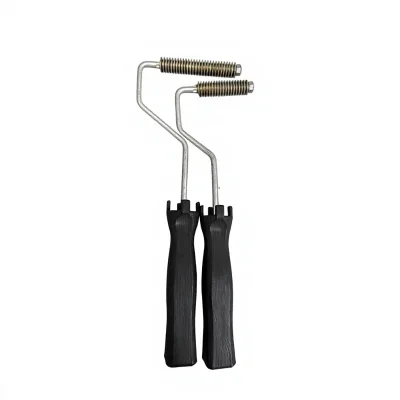
Find 17 verified listings for the FRP Laminating Paddle Roller suitable for glass processing, industrial brushes, and maintenance tasks. Buyers can compare specifications like refill dimensions, handle materials, and customization options across multiple suppliers in China.
Key considerations
Products List




Comprehensive Sourcing Guide
Strategic Sourcing Guide for FRP Laminating Paddle Rollers
Understanding Product Specifications and Technical Variability
When sourcing a FRP (Fiber Reinforced Polymer) laminating paddle roller, buyers must navigate a landscape of diverse technical configurations rather than a single standardized product. The core function of these rollers involves applying resin and smoothing composite layers, which demands specific dimensional tolerances and material properties. Based on observed market data, the physical specifications for these components vary significantly depending on the intended application, ranging from general industrial maintenance to high-precision professional tasks.
A critical observation in the current supply market is the variability in refill dimensions. Buyers will encounter rollers with refill diameters specified as 21mm, 12mm, 15mm, 19mm, 20mm, or even 45mm. Similarly, refill lengths are not uniform; available options include 50mm, 75mm, 100mm, 140mm, 150mm, and 200mm. Specific product models, such as those designated by the model number P37 or the specific dimension code 21*140mm, indicate a standardized configuration where the diameter is 21mm and the length is 140mm. However, other entries suggest a broader range of compatibility, with frame diameters potentially ranging from 6mm to 7.8mm.
The material composition of the roller handle is another primary specification variable. Market listings indicate that handles are constructed from either plastic or wood. Some product attributes explicitly list "Plastic" as the handle material, while others offer a choice between "Wooden" and "Plastic." This distinction is vital for procurement decisions, as the handle material influences the weight, grip comfort, and chemical resistance of the tool during prolonged use. The core roller itself is often associated with "E-Glass" types, suggesting the use of glass fiber reinforcement, which is standard for composite applications. The surface treatment for these components may include vinyl coating, which enhances durability and chemical resistance against resins and solvents.
Compliance, Certification, and Quality Grading
In the B2B procurement of industrial tools, verifying compliance and quality grading is essential to ensure safety and performance consistency. While specific international standards like ISO 9001 are often referenced in general industry knowledge, buyers must rely on the explicit certifications provided by the supplier for the specific batch of goods. In the observed product data, the presence of CCC (China Compulsory Certification) is a documented attribute for certain items, indicating that the product meets specific Chinese safety and quality mandates.
Quality grading serves as a proxy for the intended usage environment. The supply chain exhibits a split between "Maintenance Level" and "Professional Level" quality grades. A "Maintenance Level" product is typically suited for occasional repairs or light-duty tasks, whereas a "Professional Level" designation suggests the tool is engineered for continuous, high-intensity industrial use. Buyers should verify which grade corresponds to their operational needs before placing an order.
Furthermore, the origin of the product plays a role in compliance verification. Production locations are noted as Anhui and Zhejiang, China. These regions are known manufacturing hubs, but the specific origin should be cross-referenced with the supplier's documentation to ensure traceability. The condition of the product is consistently listed as "New," which is a baseline requirement for new procurement, but buyers should confirm that "New" implies factory-fresh inventory rather than refurbished goods. The "Customized" attribute is also present, indicating that suppliers may offer tailored solutions, but this requires clear communication regarding the specific customization parameters to ensure the final product meets the buyer's technical requirements.
Cost Drivers and Minimum Order Quantity Analysis
The financial structure of sourcing FRP laminating paddle rollers is influenced by several key drivers, primarily material costs, customization levels, and order volume. The observed price range in the market spans from 0.5 USD to 4.8 USD per unit. This wide variance suggests that the final price is heavily dependent on the specific configuration, such as the length of the refill, the handle material, and the packaging requirements.
Minimum Order Quantity (MOQ) is a significant factor in the total cost of ownership. The market data reveals an MOQ range from 1 unit to 200 units. Some listings specify a strict MOQ of 100 pieces, which is typical for standard, non-customized items to ensure production efficiency. Conversely, other entries allow for single-item purchases, which may be beneficial for prototyping or small-scale maintenance teams. Buyers must balance the unit price against the MOQ; ordering at the lower end of the price spectrum (0.5 USD) often requires meeting the higher MOQ thresholds (e.g., 100 units), while single-unit purchases may carry a higher per-unit cost.
Packaging standards also impact logistics costs. Products are frequently packed in cartons, with some options including pallets for bulk shipping. The single package size is observed to be 40x30x30 cm, and the single gross weight is recorded as 2.0 kg. These dimensions and weights are critical for calculating freight charges and warehouse storage requirements. Additionally, the "Selling Units" are often listed as "Single item," which simplifies the ordering process but may not reflect the most economical shipping method for large volumes. Buyers should verify if the supplier offers consolidated shipping options to reduce the cost per unit when ordering near the MOQ limit.
Typical Applications and Usage Scenarios
The application of FRP laminating paddle rollers is diverse, spanning from general industrial maintenance to specialized composite manufacturing. The primary usage category identified is "Industrial Brushes," indicating that these tools are integral to processes involving surface preparation, resin application, and fiber alignment. The specific application of "Glass" suggests a strong correlation with the manufacturing of fiberglass-reinforced plastics, where the rollers are used to impregnate glass fibers with resin and remove air bubbles.
The "Roller Brush" type designation highlights the dual function of these tools: they act as both a roller for spreading material and a brush for smoothing. The "Long" shape attribute implies that these rollers are designed for extended surfaces or specific ergonomic handling requirements. The "Winding Filament Roving" technique mentioned in the product attributes points to a manufacturing process where the roller surface is wound with filament roving, a common method for creating the textured surface necessary for effective resin distribution in FRP lamination.
For buyers in the glass or composite industry, the "Professional Level" grade is likely the preferred choice due to the demanding nature of continuous production lines. In contrast, "Maintenance Level" products may suffice for repair shops or smaller fabrication facilities. The "Customization" availability allows for tailoring the tool to specific resin viscosities or fiber types, making it a versatile asset for manufacturers dealing with varying material specifications.
Supplier Evaluation and Selection Criteria
Selecting the right supplier requires a rigorous evaluation of their capabilities, transparency, and alignment with buyer requirements. Since the supply chain includes multiple product models (P37, P07, P39, P42, P09, P38) and brands (AMP), buyers should not assume that all listed products come from a single source. The presence of a specific brand name, such as AMP, suggests that some suppliers may be authorized distributors or manufacturers of branded goods, which can be an indicator of quality control.
Buyers should prioritize suppliers who provide clear documentation regarding the "Processing Service" offered. The data indicates "Cutting" as a available service, which may be relevant for customizing the length of the roller or the refill. The ability to provide "Customized" solutions is a strong differentiator; suppliers who can accommodate specific diameter or length requests beyond the standard 21*140mm or 12mm-45mm ranges offer greater flexibility.
Transparency regarding the "Place of Origin" is another evaluation metric. With origins listed as Anhui and Zhejiang, buyers should verify if the supplier can provide detailed shipping documents that match these locations. The "Single package size" and "Single gross weight" data should be used to validate the supplier's logistical claims. A reputable supplier will provide accurate packaging dimensions and weights to facilitate precise freight calculations. Additionally, the "Condition" of the product being "New" should be explicitly confirmed in the purchase agreement to avoid receiving refurbished or used goods.
Quality Control and Long-Term Procurement Considerations
Ensuring consistent quality in FRP laminating paddle rollers requires a proactive approach to quality control (QC). Buyers should establish clear acceptance criteria based on the observed specifications, such as the exact diameter and length of the refill, the material of the handle, and the surface treatment. The "Vinyl Coated" surface treatment should be inspected for uniformity and adhesion, as defects in this layer can lead to premature wear or resin adhesion issues.
For long-term procurement, the availability of replacement parts is crucial. The data highlights specific refill dimensions (e.g., 21mm diameter, 140mm length) and frame diameters (6/7.8mm). Buyers should ensure that the supplier can consistently supply these specific refill sizes to maintain operational continuity. The "Tex Count" of 1 and "Yarn Structure" of "Single Yarn" are technical details that may affect the roller's performance; buyers should verify if these specifications remain consistent across different production batches.
The "Standard" of 12.7100 mm observed in some listings suggests that there may be industry-specific standards for certain applications. Buyers should verify if their specific use case requires adherence to this standard or if the more common 21140mm configuration is sufficient. The "Customized" attribute offers a pathway to long-term optimization; as the buyer's processes evolve, they may require rollers with different dimensions or materials. Establishing a relationship with a supplier capable of custom manufacturing can provide a competitive advantage by allowing for tool optimization over time.
Finally, buyers should monitor the "Quality Grade" consistency. If a supplier claims to provide "Professional Level" goods, they must demonstrate this through consistent performance in real-world testing. The "Maintenance Level" products should be clearly distinguished to prevent misuse in high-intensity environments. By maintaining a detailed record of product attributes, including model numbers, dimensions, and material specifications, buyers can ensure that their procurement strategy remains aligned with their operational needs and quality standards.
Summary of Key Technical Parameters
| Parameter | Observed Range / Specific Values | Notes for Verification |
|---|---|---|
| Refill Diameter | 12mm, 15mm, 19mm, 20mm, 21mm, 45mm | Verify specific model (e.g., P37 vs. AMP-02) |
| Refill Length | 50mm, 75mm, 100mm, 140mm, 150mm, 200mm | Check against application needs |
| Handle Material | Plastic, Wooden | Confirm based on chemical resistance needs |
| Quality Grade | Maintenance Level, Professional Level | Align with usage intensity |
| Surface Treatment | Vinyl Coated | Inspect for uniformity and adhesion |
| Packaging | Carton, Carton & Pallet | Calculate freight based on 40x30x30 cm |
| Origin | Anhui, Zhejiang, China | Verify shipping documentation |
| Certification | CCC | Confirm for specific batches |
This guide provides a framework for evaluating FRP laminating paddle rollers based on the available market data. By focusing on these specific parameters and maintaining a disciplined approach to verification, buyers can secure high-quality tools that meet their industrial requirements without relying on unverified claims or external assumptions.
FAQs
What certifications are available for FRP laminating paddle rollers?
Some products carry CCC certification, indicating compliance with Chinese safety mandates. Buyers should verify specific batch documentation as not all listings explicitly state this certification, and international standards like ISO 9001 are not guaranteed in the provided data.
Which handle materials are used for these rollers?
Handles are constructed from either plastic or wood, offering different grip and chemical resistance properties. Some listings specify plastic only, while others provide a choice between wooden and plastic options to suit varying industrial maintenance or professional level needs.
How do refill dimensions vary across different models?
Refill diameters range from 12mm to 45mm, with lengths available from 50mm up to 200mm. Specific models like P37 or 21*140mm configurations exist, but buyers must confirm exact dimensions as specifications vary significantly between maintenance and professional grade tools.
Can I find customized FRP laminating paddle rollers?
Yes, customization is available for tailored solutions regarding dimensions and materials. Buyers must communicate specific parameters clearly to ensure the final product meets technical requirements, as standard models may not satisfy unique industrial brush or glass application needs.
What is the typical minimum order quantity for these items?
Minimum order quantities range from 1 unit to 200 units depending on the supplier and product configuration. Some listings require a strict MOQ of 100 pieces for standard items, while others allow single-item purchases for prototyping or small-scale maintenance tasks.
Where are these rollers manufactured?
Products originate from manufacturing hubs in Anhui and Zhejiang, China. Buyers should cross-reference the specific place of origin with supplier documentation to ensure traceability and verify that the listed location matches the actual production site.