Source Fully Automatic Thin Blade Scoring and Cutting Machine for Paper, Corrugated, and Cardboard
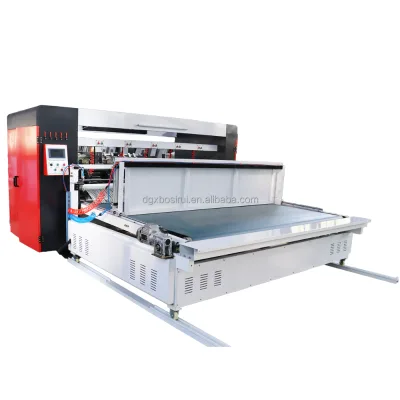
Compare 30 listings for the Fully Automatic Thin Blade Scoring and Cutting Machine designed for paper, corrugated board, and commodity packaging. Buyers can evaluate specifications like speed, width, and automation levels to find suitable machinery for final inspection and slitting processes.
Key considerations
Products List


Automatic Thin Blade Slitter Scorer Corrugated Board Cutting Machine
$2300.00 - $2400.00
MOQ: 1 Pieces


Computer Control Automatic Thin Blade Slitter Scorer Easy to Operate Machine
$25000.00 - $30000.00
MOQ: 1 Pieces

Electrical Blade Adjustment Thin Blade Slitter Scorer Machine for Corrugated Paperboard
$11000.00 - $13000.00
MOQ: 1 Pieces

2000mm Automatic Paper Slitting Machine Thin Blade Slitter Scorer for Cutting Cardboard
$11000.00 - $13000.00
MOQ: 1 Pieces


Thin Blade Slitter Cutter Scorer for Slitting Corrugated Cardboard Sheets
$10000.00 - $20000.00
MOQ: 1 Pieces


Comprehensive Sourcing Guide
Strategic Sourcing Guide for Fully Automatic Thin Blade Scoring and Cutting Machines
The global demand for precision packaging solutions has elevated the importance of fully automatic thin blade scoring and cutting machines in industrial procurement. These systems are critical for converting raw paperboard and corrugated materials into finished cartons with high dimensional accuracy and operational efficiency. For procurement professionals, navigating the market requires a disciplined approach that distinguishes between verified technical capabilities and generic marketing claims. This guide synthesizes available product data and industry standards to provide a robust framework for evaluating, selecting, and managing the acquisition of these specialized machines.
Technical Specifications and Operational Capabilities
When evaluating a Fully Automatic Thin Blade Scoring and Cutting Machine, the primary focus must be on the intersection of mechanical design and process control. The core functionality often revolves around specific work methods, such as flat knife slitting or round knife cutting, which dictate the quality of the cut and the types of substrates the machine can handle. In the current market, high-speed slitting machines are prevalent, often featuring automation levels that range from semi-automatic to fully automatic operation.
A critical specification to verify is the maximum width of feeding paper and the effective working width. Data from available units indicates a maximum feeding width of up to 2400mm, with effective widths often ranging between 1600mm and 2200mm. This capacity determines the scale of production and the size of the final carton that can be produced in a single pass. Furthermore, the minimum length of feeding paper is a vital constraint for short-run production; observed specifications suggest a minimum length of 300mm, which is essential for producing smaller packaging components without excessive waste.
The cutting mechanism itself varies significantly. Some units utilize a flat knife slitting method, while others employ round knife cutting. The choice between these methods impacts the edge quality and the thickness of materials the machine can process. For instance, certain models are designed to handle cardboard thicknesses ranging from 2.5mm to 10mm, making them suitable for heavy-duty corrugated applications. The motor power is another decisive factor, with observed units featuring motors rated at 7kw or higher to sustain continuous high-speed operations.
Speed and accuracy are inextricably linked in high-performance machinery. The working speed for these machines can vary, with some units capable of reaching velocities up to 200 meters per minute, while others operate at a maximum speed of 150 meters per minute. The cross-cut accuracy is a crucial metric for quality assurance; verified data points to an accuracy of 1mm under constant velocity conditions. Additionally, the cutting time, often observed in the range of 1 to 3 seconds, influences the overall throughput of the production line. Buyers must ensure that the machine's cross-cut length capabilities, which can range from 300mm to 9999mm, align with their specific product requirements.
Compliance, Certification, and Safety Standards
In the realm of industrial machinery, compliance with safety and operational standards is non-negotiable. While specific certification names may vary by region, the underlying requirement for electrical and mechanical safety is universal. Buyers should verify that the machine's core components, which typically include PLCs, engines, motors, and pumps, meet international safety standards. The presence of a PLC (Programmable Logic Controller) is a strong indicator of modern automation capabilities, allowing for precise control over the cutting and scoring processes.
The origin of the machine also plays a role in compliance. Many units are manufactured in regions such as Hebei, China, or Dongguang, Cangzhou, where industrial clusters have developed specialized expertise in packaging machinery. However, the country of origin does not automatically guarantee compliance; it is the specific adherence to standards that matters. Buyers must request documentation proving that the electrical systems and safety guards comply with the regulations of the destination country.
Furthermore, the condition of the machine is a critical compliance factor. Most new units on the market are sold as "New" with specific after-sales service provisions. It is essential to confirm that the machine includes all necessary safety interlocks and emergency stop mechanisms. The "computer control" standard mentioned in some product listings suggests a level of digital integration that should be verified against the buyer's IT infrastructure to ensure seamless data exchange and process monitoring.
Cost Drivers and Total Cost of Ownership
The pricing of fully automatic thin blade scoring and cutting machines is influenced by a complex array of factors, including automation level, material handling capacity, and the complexity of the control system. The observed price range in the market is extensive, spanning from $30 to $1,000,000. This wide variance reflects differences in machine size, power, and the sophistication of the automation features. A machine with a 7kw motor and a 2400mm feeding width will naturally command a higher price than a smaller, less automated unit.
Beyond the initial purchase price, the total cost of ownership (TCO) must be considered. This includes the cost of installation, which can be significant given the dimensions of these machines. For example, a machine with dimensions of 3.3m x 1.4m x 1.5m or larger requires specialized logistics and potentially facility modifications. The weight of the machine, which can range from 1200kg to 75,000kg depending on the model, impacts shipping costs and foundation requirements.
Maintenance and spare parts availability are also major cost drivers. Machines with complex core components like PLCs and high-power motors require specialized maintenance. Buyers should evaluate the availability of after-sales service, particularly the option for engineers to service machinery overseas. This capability can significantly reduce downtime costs and extend the operational life of the equipment. Additionally, the packaging method, whether standard aboard package containers or plastic film, affects the cost of shipping and the risk of damage during transit.
Typical Applications and Substrate Compatibility
Fully automatic thin blade scoring and cutting machines are versatile tools used across various industries, including machinery and hardware, food, and general commodity sectors. The primary application is the production of corrugated cardboard packaging, but the specific capabilities of the machine determine its suitability for different materials. The observed suitability for paper substrates indicates that these machines are optimized for paper-based packaging solutions.
The ability to handle different cardboard thicknesses is a key differentiator. Machines capable of processing thicknesses from 2.5mm to 10mm are ideal for heavy-duty shipping containers, while those with narrower ranges may be better suited for lighter retail packaging. The function of making corrugated cardboard or slitting and creasing paperboard defines the machine's role in the production line. For applications requiring high precision, such as custom packaging for electronics or pharmaceuticals, the cross-cut accuracy of 1mm becomes a critical requirement.
The automation level also influences the application scope. Fully automatic machines are best suited for high-volume production environments where consistency and speed are paramount. In contrast, machines with customization options may be preferred for specialized, low-volume runs where flexibility is more important than throughput. The video outgoing-inspection feature provided by some suppliers allows buyers to verify the machine's performance before shipment, ensuring it meets the specific application requirements.
Supplier Evaluation and Verification Protocols
Selecting the right supplier is as important as selecting the right machine. Buyers should prioritize suppliers who offer comprehensive after-sales support, including the availability of engineers for overseas service. This support is crucial for minimizing downtime and ensuring the machine operates at peak efficiency. The condition of the machine, whether new or refurbished, should be clearly stated, with "New" being the preferred option for long-term reliability.
Verification of the supplier's claims is essential. Buyers should request detailed specifications, including the exact model number, such as CZXY-2750 or DE PACK-, and verify these against the physical capabilities of the machine. The standard of the machine, whether computer-controlled or customized, should be confirmed through technical documentation. Additionally, the origin of the machine, whether from Hebei, China, or Dongguang, Cangzhou, should be verified to ensure it aligns with the buyer's sourcing strategy.
The packaging of the machine is another indicator of the supplier's professionalism. Standard aboard package containers or plastic film packaging should be used to protect the machine during transit. The weight of the machine, which can be as high as 75,000kg, requires careful planning for logistics and installation. Buyers should also check for the presence of core components like PLCs, engines, motors, and pumps, as these are critical to the machine's operation.
Quality Control and Performance Verification
Quality control is a continuous process that begins before the machine is purchased and extends through its operational life. Buyers should verify the machine's performance through video outgoing-inspection, which allows for a remote assessment of the cutting and scoring mechanisms. This step is crucial for ensuring that the machine meets the required specifications for cross-cut accuracy and speed.
The working speed of the machine, which can range from 0 to 60 pieces per minute or up to 200 meters per minute, should be tested under actual operating conditions. The cross-cut length, ranging from 300mm to 9999mm, must be adjustable to meet the buyer's specific product requirements. The cutting time, typically between 1 and 3 seconds, should be consistent to ensure high throughput without compromising quality.
Maintenance and calibration are also part of the quality control process. Buyers should establish a schedule for regular inspections of the core components, including the PLC, engine, motor, and pump. The condition of the machine, whether new or refurbished, should be monitored to detect any signs of wear or degradation. The availability of spare parts and the expertise of the supplier's technical team are critical for maintaining the machine's performance over time.
Long-Term Procurement and Strategic Planning
Procuring a Fully Automatic Thin Blade Scoring and Cutting Machine is a long-term investment that requires strategic planning. Buyers should consider the scalability of the machine, ensuring it can handle future increases in production volume. The customization options available, such as specific work methods or substrate compatibility, should be evaluated to ensure the machine can adapt to changing market demands.
The lead time and delivery schedule are also important factors. While specific lead times may vary, buyers should plan for the time required for installation, commissioning, and training. The dimensions of the machine, such as 3.3m x 1.4m x 1.5m or larger, must be accommodated within the facility layout. The weight of the machine, which can be substantial, requires a robust foundation and careful handling during installation.
Finally, the total cost of ownership should be calculated over the expected lifespan of the machine. This includes the initial purchase price, installation costs, maintenance expenses, and the cost of downtime. By carefully evaluating these factors, buyers can make informed decisions that maximize the return on investment and ensure the long-term success of their packaging operations. The availability of after-sales service, including engineers for overseas support, is a key component of this strategy, providing peace of mind and operational continuity.
FAQs
What is the maximum feeding width for this machine?
The maximum feeding width is 2400mm. This capacity allows for processing wide paperboard sheets in a single pass, making it suitable for large-scale corrugated cardboard production lines.
Can the machine handle thick corrugated cardboard?
Yes, the machine can process cardboard thicknesses ranging from 2.5mm to 10mm. This capability makes it ideal for heavy-duty packaging applications requiring robust structural integrity.
How fast does the machine operate during cutting?
The working speed ranges from 0 to 60 pieces per minute, with velocities up to 200 meters per minute. This ensures high throughput while maintaining precise cross-cut accuracy of 1mm.
Is customization available for this scoring machine?
Customization is available for this machine. Buyers can request specific configurations to match unique production requirements, ensuring the equipment fits their specific operational needs perfectly.
What is the motor power of the unit?
The motor power is 7kw. This power rating supports continuous high-speed operations and ensures the machine can handle demanding industrial tasks without performance degradation.
Where is the machine manufactured and shipped from?
The machine originates from Hebei, China, with specific models also listed from Dongguang, Cangzhou. Buyers should verify the specific origin to align with their sourcing strategy and logistics planning.
Does the machine include overseas after-sales support?
Yes, engineers are available to service the machinery overseas. This support is crucial for minimizing downtime and ensuring the equipment operates at peak efficiency in any global location.