Source Fully-Insulated Multi-Position Fiberglass Ladder with Platform for Construction, Electrical Work, and Maintenance
Explore 30 listings for a fully-insulated multi-position fiberglass ladder with platform designed for diverse industrial needs. Buyers can compare specifications including load-bearing capacity, insulation ratings, and customization options to find the right equipment for their projects.
Key considerations
Products List
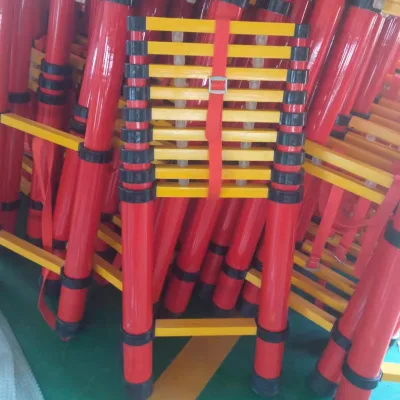


One-Section Fiberglass Insulation Adjustable Folding Step Platform Ladder
$45.00 - $70.00
MOQ: 50 Pieces

Multi-Function Four-Fold Adjustable Electric-Insulated Fiberglass Ladder
$58.00 - $100.00
MOQ: 100 Pieces


Multi-Purpose Double Extension Platform Fiberglass Insulated Folding Ladder
$20.00 - $40.00
MOQ: 500 Pieces

Factory Wholesale Price FRP Fully Insulated Fiberglass Extension Ladder with Hook
$140.00 - $160.00
MOQ: 50 Pieces

Extension Insulated Step Ladder Multi-Purpose Ladder Fiberglass Ladder
$110.00 - $130.00
MOQ: 50 Pieces


Comprehensive Sourcing Guide
Sourcing Strategy for Fully-Insulated Multi-Position Fiberglass Ladders with Platform
The procurement of a fully-insulated multi-position fiberglass ladder with a platform represents a specialized segment of industrial safety equipment. This category of product is critical for professionals working in environments where electrical hazards are a primary concern, such as utility maintenance, telecommunications, and high-voltage facility management. The combination of multi-position versatility, a dedicated work platform, and electrical insulation requires a rigorous sourcing approach that prioritizes technical verification over generic specifications. Buyers must navigate a market where product attributes vary significantly between models, necessitating a detailed examination of material composition, structural integrity, and compliance documentation. The following guide outlines the essential factors for sourcing these high-performance assets effectively.
Technical Specifications and Material Composition
The foundation of a reliable fully-insulated ladder lies in its material composition and structural design. In the observed market data, fiberglass reinforced plastic (FRP) is the predominant material for the rails, specifically noted with thicknesses ranging from 3.0mm to 4.0mm. This variation in rail thickness is a critical differentiator; a 3.0mm rail is often considered a common standard, while 4.0mm offers enhanced rigidity and load-bearing capacity. The steps, which are frequently made of aluminum in these hybrid designs, also exhibit significant variance in thickness, with observed values of 1.2mm and 2.0mm. The thicker 2.0mm aluminum steps generally provide superior stability and resistance to deformation under heavy loads, which is essential for a platform ladder where the user may stand on the top step or a platform.
The platform itself is a defining feature of this product category. Sourcing guides must verify that the top step design incorporates a "Big Platform" to ensure adequate standing space for the operator. This design element, combined with a "Safety Locking Mechanism," ensures that the ladder remains stable when converted into a multi-position configuration or used as a single extension ladder. The locking mechanism is not merely a convenience feature but a safety imperative that prevents accidental collapse during operation. Furthermore, the inclusion of "Molded Metal Braces" as a reinforcement option can be selected to further enhance the structural integrity of the frame, particularly when the ladder is subjected to dynamic loads or uneven terrain.
Load-bearing capacity is another non-negotiable specification. While general ladders may support standard weights, fully-insulated models intended for industrial use must demonstrate a load-bearing capacity of greater than 150kg. This figure accounts for the combined weight of the user, tools, and materials carried to the work height. The net weight of the ladder itself is also a logistical consideration; observed models range from 13kg to 16.8kg. Heavier models often correlate with thicker materials and more robust reinforcement, which may impact the ease of transport but significantly improves durability and safety margins.
Compliance and Certification Verification
When sourcing fully-insulated ladders, the verification of compliance with international safety standards is paramount. The market data indicates that some models adhere to the EN131 standard, which is a widely recognized benchmark for ladders in Europe and many other regions. However, the term "Fully-Insulated" implies a specific electrical safety rating that must be explicitly confirmed. In the provided data, one model is noted to have a "Withstand Voltage" of 35kV. This is a specific performance claim that buyers must verify through third-party testing reports rather than relying solely on marketing descriptions.
Buyers should not assume that all fiberglass ladders in the "multi-position" category are fully insulated. The data shows a clear distinction between "Semi-Insulating" and "Fully-Insulated" products. A semi-insulating ladder may offer some protection against static electricity but is not suitable for direct contact with live electrical circuits. For applications involving high-voltage environments, only a ladder explicitly rated as fully-insulated with a verified withstand voltage rating should be considered. The standard EN131 covers general safety requirements, but it does not automatically guarantee the electrical insulation properties required for high-voltage work. Therefore, procurement teams must request specific test certificates that validate the dielectric strength of the fiberglass material and the integrity of the insulation under the conditions of use.
Additionally, the product origin and manufacturing location play a role in compliance. The data lists "Zhejiang China" and "China" as origins for various models. While these regions have a robust manufacturing base for ladders, the specific factory's quality management system and adherence to international standards must be audited. Buyers should verify that the supplier can provide documentation proving that the specific model ordered meets the claimed standards, such as EN131, and that the insulation properties are consistent across the production batch.
Cost Drivers and Pricing Analysis
The pricing of fully-insulated multi-position ladders is influenced by several key factors, including material thickness, insulation rating, and the complexity of the locking mechanism. The observed price range in the market spans from 9 to 160 USD, a wide variance that reflects the difference between basic aluminum ladders and specialized high-voltage insulated units. The lower end of this spectrum likely corresponds to non-insulated or semi-insulating models with thinner rails and steps. In contrast, the higher price points are associated with fully-insulated models featuring 4.0mm fiberglass rails, 2.0mm aluminum steps, and advanced safety features like tool trays and handrails.
Material costs are a primary driver. The use of high-grade FRP for the rails and the specific engineering required to maintain electrical insulation while adding structural reinforcement increases production costs. The inclusion of "Molded Metal Braces" and "Big Rubber Shoes" or "Aluminium Shoes" also adds to the bill of materials. Furthermore, the complexity of the multi-position design, which requires precise engineering of the hinges and locking mechanisms, contributes to the final price.
Buyers must also consider the Minimum Order Quantity (MOQ) as a cost factor. The observed MOQ range is 1 to 500 units. For small procurement needs, an MOQ of 1 allows for the purchase of a single unit for testing or immediate deployment, though the unit price may be higher. For large-scale deployments, negotiating an MOQ closer to 500 units can significantly reduce the per-unit cost. However, buyers should be cautious of suppliers who offer extremely low prices with high MOQs, as this may indicate a compromise on material quality or insulation integrity.
Typical Applications and Operational Requirements
The primary application for fully-insulated multi-position ladders with platforms is in environments where electrical hazards are present. The data explicitly lists "Office Building" and "House Decoration" as applications, but these are likely secondary uses where the ladder's versatility is valued. The core use case remains in industrial settings such as electrical utility maintenance, telecommunications tower work, and facility management in power plants. The "Withstand Voltage" of 35kV suggests suitability for medium-voltage applications, making these ladders ideal for linemen and technicians working on live circuits or near energized equipment.
The multi-position capability allows the ladder to be configured as a single ladder, an extension ladder, a trestle ladder, or a scaffold, providing flexibility in various work scenarios. The platform design is particularly beneficial for tasks that require the user to stand for extended periods or handle tools with both hands, such as installing fixtures, repairing wiring, or performing inspections. The "Tool Tray" feature, observed in some models, further enhances operational efficiency by providing a secure location for small tools and fasteners, reducing the risk of dropping objects from height.
Safety features such as "Anti-Slip Feet" and "Safety Locking Mechanisms" are critical for these applications. The "Big Rubber Shoes" or "Aluminium Shoes" provide stability on various surfaces, from smooth indoor floors to rough outdoor terrain. The "Wide Steps" design ensures that the user's footing is secure, reducing the risk of slips and falls. When sourcing for these applications, buyers must ensure that the ladder's configuration options match the specific needs of the work environment, including the required working height and the nature of the tasks performed.
Supplier Evaluation and Quality Control
Evaluating suppliers for fully-insulated ladders requires a focus on technical capability and quality assurance processes. Buyers should verify that the supplier has a proven track record of manufacturing fiberglass products with consistent insulation properties. The presence of specific model numbers, such as "WF-404," "WF-403," "FP-05," and "FRP-502," indicates a structured product line, which is a positive sign of a mature manufacturing operation. However, the existence of multiple models with varying specifications, such as different rail thicknesses and step thicknesses, means that buyers must be precise in their ordering requirements to avoid receiving a product that does not meet their safety standards.
Quality control should include a review of the supplier's testing protocols. Buyers should request evidence of dielectric testing, load-bearing tests, and structural integrity checks. The "PE Film Shrinking with Carton Caps" or "Carton" packing methods observed in the data suggest that the supplier has established packaging standards, but buyers should also verify that the packaging protects the ladder from moisture and physical damage during transit, as moisture can degrade the insulation properties of fiberglass over time.
Supplier location, such as "Zhejiang China," provides insight into the supply chain logistics. While proximity to manufacturing hubs can reduce lead times, buyers must ensure that the supplier's location does not compromise the quality of the product. The "Customization" feature, noted as "Available" or "Can Be Customized," offers an opportunity for buyers to tailor the ladder to specific needs, such as adding specific colors like "Red" or "Yellow" for visibility, or modifying the packing requirements. However, customization should be approached with caution to ensure that it does not interfere with the ladder's safety ratings or structural integrity.
Long-Term Procurement Considerations
Long-term procurement of fully-insulated ladders involves more than just the initial purchase price. Buyers must consider the lifecycle costs, including maintenance, inspection, and replacement. The "Net Weight" and "Folded Height" of the ladder, ranging from 4 to 5 feet when folded, impact storage and transport logistics. A ladder that is too heavy or too bulky may increase operational costs over time, particularly if it needs to be moved frequently between job sites.
The "Standard" dimensions, such as "12527.537cm" or "9827.537cm," provide a basis for storage planning. Buyers should ensure that their storage facilities can accommodate the folded dimensions of the ladders they purchase. Additionally, the "Product Standard" volume, such as "0.072m³," is useful for calculating shipping costs and optimizing container loading.
Finally, buyers should establish a regular inspection schedule for their ladders. Even fully-insulated ladders can suffer from wear and tear, and the insulation properties can degrade if the ladder is damaged or exposed to harsh chemicals. Procurement strategies should include provisions for regular safety audits and the replacement of ladders that no longer meet safety standards. By focusing on these long-term considerations, buyers can ensure that their investment in fully-insulated multi-position ladders continues to provide the necessary safety and performance over the product's lifespan.
Comparative Analysis of Key Product Attributes
To facilitate decision-making, the following table summarizes the key attributes observed in the market data for fully-insulated and related ladder models. This comparison highlights the variations in specifications that buyers must consider when selecting the right product for their needs.
| Attribute | Model A (e.g., WF-404) | Model B (e.g., FP-05) | Model C (e.g., FRP-502) |
|---|---|---|---|
| Insulativity | Semi-Insulating | Fully-Insulated | Fully-Insulated |
| Rail Thickness | 3.0mm | 3.0mm (Common) or 4.0mm | 3.0mm |
| Step Thickness | 1.2mm | 2.0mm | N/A |
| Load-Bearing | >150KG | N/A | N/A |
| Features | Wide Steps, Anti-Slip Feet | Wide Steps, Tool Tray, Handrail | Wide Steps, Safety Locking |
| Top Step Design | N/A | Big Platform | N/A |
| Withstand Voltage | N/A | 35kV | N/A |
| Net Weight | 16.8kg | 13kg | N/A |
| Folded Height | 5 feet | 4 feet | N/A |
| Packing | PE Film Shrinking with Carton Caps | PE Film | Carton |
This table illustrates that while some models share common features like "Wide Steps" and "Anti-Slip Feet," the critical differentiators lie in insulation ratings, material thickness, and specific safety features. Buyers must carefully match these attributes to their operational requirements to ensure compliance and safety.
FAQs
What is the load-bearing capacity of these ladders?
These ladders support a load greater than 150kg. This capacity accounts for the user, tools, and materials, ensuring safety during industrial tasks involving heavy equipment or multiple workers.
Which insulation rating do fully-insulated models have?
Fully-insulated models feature a withstand voltage of 35kV. This specific rating distinguishes them from semi-insulating versions and is essential for working near high-voltage electrical circuits safely.
How thick are the fiberglass rails on these units?
The fiberglass rail thickness is commonly 3.0mm but can be selected as 4.0mm. The thicker 4.0mm option provides enhanced rigidity and structural integrity for demanding multi-position applications.
Can these ladders be customized for specific needs?
Yes, customization is available for these products. Buyers can request specific colors like red or yellow, modify packing requirements, or select reinforced metal braces to suit unique operational environments.
What standards do these ladders comply with?
Some models comply with the EN131 standard for general ladder safety. However, buyers must verify specific electrical insulation test certificates separately, as EN131 does not automatically guarantee high-voltage protection.
What is the typical MOQ for purchasing these ladders?
The minimum order quantity ranges from 1 to 500 units depending on the supplier. Small orders allow for single-unit testing, while larger volumes near 500 units often secure better pricing.
Where are these ladders typically manufactured?
These ladders originate from manufacturing hubs in Zhejiang, China. Buyers should verify that specific factories adhere to international quality standards to ensure consistent insulation and structural performance.