Source Fully Refined Candle Wax for candles, PVC, and food packaging
Find 30 listings for Fully Refined Candle Wax with varying melting points and oil content. Buyers can compare specifications for candle making, PVC processing, and food packaging applications from verified Chinese suppliers.
Key considerations
Products List


China Paraffin Wax 60 - 62 Fully Refined for The Manufacture of Candles
$850.00 - $1205.00
MOQ: 1 Tons


White Candle Wax Paraffin Wax for Candle Use Fully Refined and Semi Refined
$800.00 - $1200.00
MOQ: 2 Tons



Comprehensive Sourcing Guide
Strategic Sourcing Guide for Fully Refined Candle Wax
Understanding Product Classification and Core Attributes
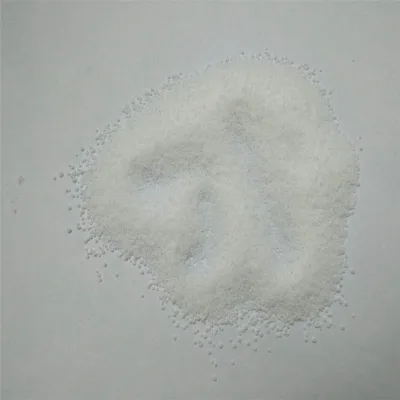
When sourcing Fully Refined Candle Wax, buyers must first establish a precise understanding of the product's fundamental classification and physical attributes. The core product under consideration is identified as Paraffin Wax, a hydrocarbon mixture derived from petroleum refining processes. In the context of candle manufacturing, the material is consistently observed as a solid substance, typically presenting a white color profile. This visual characteristic is a primary indicator of the refining level, where "fully refined" implies a high degree of purification to remove impurities that could affect burning performance or odor.
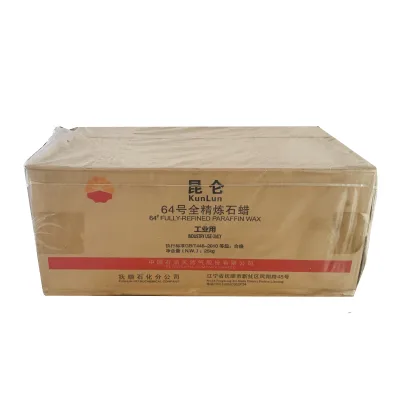
The physical form of the wax is a critical observation point for logistics and handling. Market listings indicate the product appears in various shapes, including granular forms, slabs, and white lumps. This variability often depends on the specific production batch or the intended downstream application. The raw material source is frequently cited as Kunlun Oil, processed through methods such as solvent precipitation or distillation. These production techniques are essential for achieving the desired purity levels. Buyers should verify that the "Chief Constituents" are indeed wax, with a specific focus on the oil content, which is a key determinant of the wax's melting point and hardness. An observed oil content of 0.5% suggests a high level of refinement, which is generally preferred for high-quality candle applications to ensure a clean burn and minimal soot.
Technical Specifications and Performance Metrics
Evaluating the technical specifications of paraffin wax is the most rigorous step in the procurement process. The primary differentiator among paraffin grades is the melting point, which is often categorized by numerical ranges such as 54/56, 56/58, 58/60, 60/62, 62/64, and 64/66 degrees Celsius. These models represent the temperature range at which the solid wax transitions to a liquid state. For candle making, the selection of the correct melting point is vital; a wax that melts too quickly will result in poor structural integrity, while one that is too hard may lead to poor fragrance throw or uneven burning.
Beyond melting points, buyers must scrutinize other technical data points provided by suppliers. Needle penetration is a standard measure of hardness, with observed data indicating a range of 17-23 (1/10mm) at 25°C. This metric helps determine the wax's resistance to deformation under its own weight or during the candle-making process. Additionally, light stability is a crucial performance factor, with specific observations noting a value of 4max, indicating the wax's resistance to discoloration when exposed to light. Another significant parameter is the Saybolt color, observed at +27min, which serves as a benchmark for the clarity and brightness of the refined wax.
The following table summarizes the observed technical specifications and their relevance to procurement decisions:
| Technical Parameter | Observed Value/Range | Relevance to Candle Manufacturing |
|---|---|---|
| Melting Point Models | 54/56, 56/58, 58/60, 60/62, 62/64, 64/66 | Determines burn rate, structural stability, and fragrance release. |
| Oil Content | 0.5% | Lower oil content generally correlates with cleaner burning and higher purity. |
| Needle Penetration | 17-23 (1/10mm at 25°C) | Indicates hardness; affects mold release and candle shape retention. |
| Light Stability | 4max | Measures resistance to yellowing or fading over time. |
| Saybolt Color | +27min | Assesses the visual clarity and whiteness of the final product. |
| Density | Listed as Technique Data | Important for calculating volume-to-weight ratios in packaging and shipping. |
Compliance, Certification, and Standard Verification
In the B2B procurement landscape, compliance and certification are non-negotiable, particularly for products intended for consumer use like candles. While specific certification documents such as REACH or ISO 9001:2015 may appear in general background information, buyers must not assume these are present without explicit verification from the supplier. The procurement strategy must focus on demanding current, valid documentation rather than relying on historical or generic claims.
The primary standard to verify is the industrial grade classification. The product is frequently listed as "Industrial Grade," which is a broad category. For candle manufacturing, it is essential to confirm that the specific batch meets food safety or cosmetic safety standards if the candles are intended for use in environments where fragrance or direct contact is a concern. Buyers should request test reports that align with international standards such as ASTM D87, which is often referenced for paraffin wax testing. However, the absence of a specific certification in the provided data means the buyer must treat the "Industrial Grade" label as a starting point for inquiry, not a guarantee of end-use suitability.
Furthermore, the origin of the product plays a role in compliance. The observed place of origin is Petrochina Fushun, China. Sourcing from this region requires a heightened focus on supply chain transparency. Buyers should verify that the supplier can provide a Certificate of Analysis (CoA) that explicitly confirms the absence of prohibited substances and adherence to the destination country's import regulations. The "Scale of Deoiling" is listed as 100%, which is a significant technical claim that should be backed by laboratory data to ensure the oil content remains within the safe 0.5% threshold observed in the product listings.
Cost Drivers and Pricing Dynamics
The pricing of Fully Refined Candle Wax is influenced by a complex interplay of raw material costs, refining intensity, and logistics. The observed price range in the market spans from 0.8 to 1400 USD, a variance that reflects differences in quantity, packaging, and specific grade specifications. The lower end of this spectrum likely corresponds to bulk industrial orders with minimal customization, while the higher end may reflect smaller quantities, specialized grades, or premium packaging.
A primary cost driver is the raw material source. The use of Kunlun Oil as the base material suggests a specific supply chain that may offer competitive pricing but requires verification of consistency. The production method, whether solvent precipitation or distillation, also impacts cost. Solvent precipitation is often associated with higher purity levels, which can command a price premium over standard distillation methods. Additionally, the "Key Features" such as high-temperature resistance can influence the price, as these properties require more rigorous processing controls.
Packaging is another significant factor. The product is available in various configurations, including 25kg boxes, 28kg cartons, and 50kg bags. The choice of packaging affects the unit price; bulkier packaging like 50kg bags may reduce the per-unit cost compared to smaller 25kg cartons, but it also impacts handling and storage requirements. Buyers should also consider the Minimum Order Quantity (MOQ), which ranges from 1 to 5000 units. Higher MOQs typically result in lower per-unit costs, but they also tie up more capital and require robust storage infrastructure. The "Customization" availability allows for tailored specifications, which often incurs additional costs but can optimize the final product for specific candle formulations.
Typical Applications and Usage Scenarios
Fully refined paraffin wax is a versatile material with a wide array of applications beyond just candle manufacturing. While the primary use case is candle making, the product is also utilized in PVC processing, food packaging, casting wax, impression wax, and modeling wax. The versatility stems from the wax's ability to be molded, its thermal stability, and its compatibility with various additives.
In the candle industry, the wax serves as the primary fuel source and structural component. The specific melting point models (e.g., 58/60 or 60/62) are selected based on the type of candle being produced. For instance, pillar candles often require higher melting points to maintain their shape, while container candles might utilize lower melting points for better fragrance diffusion. The "Usage" data also highlights applications in the building materials, fuel, and rubber tire industries, indicating that the same raw material can be adapted for diverse industrial needs.
The "Chief Constituents" being wax and the "Scale of Deoiling" being 100% make this product particularly suitable for high-precision applications like impression and modeling wax, where purity and lack of impurities are critical. In food packaging, the wax's inert nature and safety profile are essential, requiring strict adherence to food-grade standards. Buyers should align their procurement with the specific end-use requirements, ensuring that the selected grade meets the functional demands of the application, whether it is for aesthetic modeling or functional fuel delivery.
Supplier Evaluation and Quality Control Protocols
Selecting the right supplier is as critical as selecting the right product grade. Buyers should evaluate suppliers based on their ability to provide consistent technical data, transparent sourcing information, and reliable logistics. The "Place of Origin" being Petrochina Fushun suggests a connection to a major state-owned enterprise, which can be a positive indicator of scale and stability. However, buyers must verify the specific entity supplying the product to ensure they are dealing with an authorized distributor or the manufacturer directly.
Quality control protocols should be a central part of the supplier evaluation. Buyers must insist on a rigorous testing regime that includes verification of the melting point, oil content, needle penetration, and light stability. The observed data points, such as the 0.5% oil content and 17-23 needle penetration, should be used as benchmarks against which supplier samples are tested. It is advisable to request third-party laboratory reports to validate the supplier's internal quality control measures.
Furthermore, the "Packaging" consistency is a key quality indicator. The product is listed with various packaging options, including 25kg boxes and 50kg bags. Buyers should assess the supplier's ability to maintain packaging integrity during transit to prevent contamination or moisture absorption. The "Customization" feature should be leveraged to ensure that the packaging meets specific logistical requirements, such as palletization or moisture-proofing. Finally, the "Production Methods" should be clearly documented, with a preference for suppliers who can demonstrate a controlled solvent precipitation or distillation process that ensures the high purity required for candle manufacturing.
Long-Term Procurement Considerations and Supply Chain Resilience
Sourcing Fully Refined Candle Wax is not a one-time transaction but a long-term strategic partnership. Buyers must consider the scalability of the supply chain, the reliability of the lead times, and the potential for price volatility. The observed MOQ range of 1 to 5000 units offers flexibility, but buyers should plan for volume increases as their production scales. Establishing a relationship with a supplier who can accommodate fluctuating demand without compromising quality is essential.
The "Key Features" such as high-temperature resistance suggest that the product may be suitable for use in varying climatic conditions. However, buyers should verify the stability of the wax under extreme storage conditions to prevent degradation over time. The "Usage" in multiple industries indicates that the product is a commodity with a broad market, which can be advantageous for supply security but also exposes the buyer to market fluctuations driven by global oil prices.
To mitigate risks, buyers should diversify their supplier base and maintain a buffer stock of critical grades. The "Standard" of 25KG or 50KG packaging should be standardized across orders to simplify inventory management. Additionally, buyers should monitor the "Technique Data" trends, such as density and penetration, to ensure that the supplier maintains consistency over time. By focusing on these long-term factors, buyers can build a resilient supply chain that supports their candle manufacturing operations and ensures the delivery of high-quality products to the end consumer.
FAQs
What is the melting point range for Fully Refined Candle Wax?
The melting point ranges from 54 to 66 degrees Celsius across various models like 54/56 and 64/66. Buyers should select specific grades based on the desired candle hardness and burn rate for their manufacturing needs.
How is the oil content determined for this paraffin wax?
The oil content is observed at 0.5 percent, indicating a high level of refinement. This low oil content ensures cleaner burning and minimal soot production for high-quality candle applications.
Which packaging options are available for industrial grade paraffin wax?
Packaging is available in 25kg boxes, 28kg cartons, and 50kg bags. The standard industrial grade often comes in 25 bags per 50kg carton configuration for bulk shipping.
Can buyers customize the specifications of the paraffin wax?
Yes, customization is available for buyers requiring specific product attributes. This allows for tailored melting points or forms like granular and slab shapes to suit unique manufacturing processes.
What is the needle penetration value for this wax?
The needle penetration value is between 17 and 23 at 25 degrees Celsius. This metric indicates the hardness of the wax, which affects mold release and shape retention during candle making.
Where is the place of origin for this paraffin wax?
The place of origin is Petrochina Fushun in China. This location suggests a connection to a major refining entity, though buyers should verify specific supplier authorization for their orders.
What are the primary applications for Fully Refined Candle Wax?
Primary applications include candle manufacturing, PVC processing, and food packaging. It is also used for casting wax, impression wax, and modeling wax due to its high purity and stability.