Source Furniture Plywood for Cabinets, Furniture, and Decoration
Compare 30 listings of Furniture Plywood from Shandong, China. Buyers can evaluate grades, thicknesses, and certifications like CE and FSC for indoor and outdoor applications.
Key considerations
Products List


Furniture Grade Plywood/Okoume Plywood /Bingtangor Plywood/Popalr Plywood
$19.80 - $20.20
MOQ: 1000 Pieces


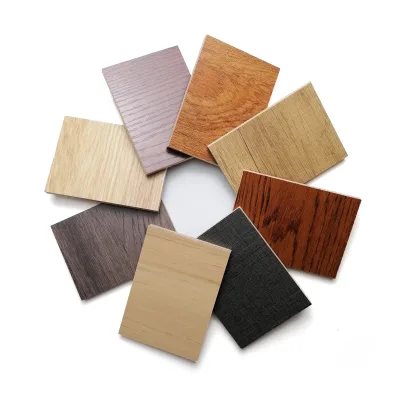


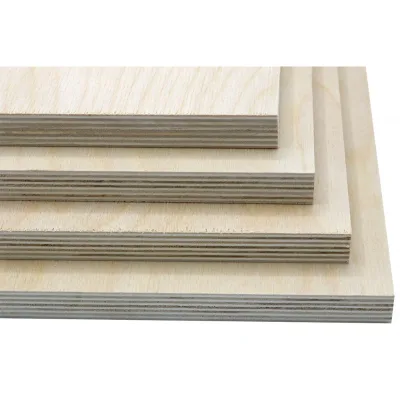
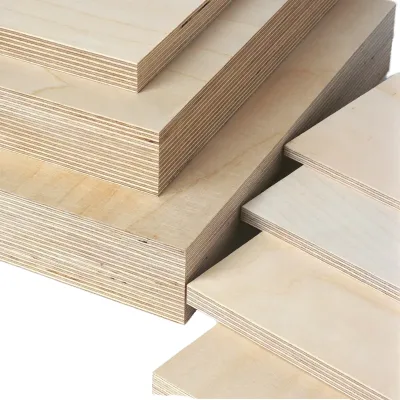

Modern Style Easy to Clean High Strength Plywood Furniture Melamine Plywood
$9.00 - $25.00
MOQ: 500 Pieces

Comprehensive Sourcing Guide
Strategic Sourcing Guide for Furniture Plywood Procurement
Navigating the global market for Furniture Plywood requires a disciplined approach that balances technical specifications with supply chain reliability. For procurement professionals, the distinction between structural bracing, decorative veneer, and core materials is critical. The available data indicates a diverse product landscape ranging from poplar-based bracing boards to chipboard-core decorative panels. This guide synthesizes observed market attributes to provide a framework for evaluating suppliers, ensuring compliance, and securing long-term value without relying on unverified claims.
Technical Specifications and Material Composition
The foundation of any successful plywood procurement lies in understanding the specific material composition and dimensional tolerances required for the intended application. The market data reveals a clear segmentation based on core materials and veneer types. One distinct category features Poplar as the primary material, often classified as Grade One, with a specific density range of 520-580kgs/Cbm. These products are frequently identified as Bracing Plywood or Commercial Plywood, utilizing Angle Grain construction and available in Veneer Boards formats. The standard dimensions observed in this segment are 1220244018mm, with a thickness tolerance of +-0.2-0.5mm.
Conversely, another significant segment focuses on furniture decoration, where the core material shifts to Particle Board or Chipboard. These panels are often finished with UV Coated surfaces and come in Multi-Color or Single Color options to suit Modern design styles. The thickness specifications for these decorative variants are broader, ranging from 5mm to 18mm (specifically noting 5/8/12/15/18mm increments), with a standard sheet size of 1220mm*2440mm.
When evaluating technical data, buyers must verify the bonding strength classification. The observed data distinguishes between Ⅱ(Ns) and Ⅲ(Nc) bonding strengths. This distinction is vital for determining whether the plywood is suitable for interior-only use or if it requires resistance to moisture and weathering for outdoor applications. While some products are explicitly marked for Indoor use, others list Indoor,Outdoor capabilities, suggesting a need to verify the specific glue formulation, which is listed as E0, E1, or E2 in the supply data.
| Product Attribute | Bracing/Commercial Segment | Decorative/Furniture Segment |
|---|---|---|
| Base Material | Poplar | Particle Board / Chipboard |
| Grade | Grade One | Excellent / Excellent Grade |
| Core Composition | Poplar, Combi, Hardwood | Chipboard |
| Veneer Types | Pencil Cedar, Bintangor, Okoume, Pine, Poplar, Birch | N/A (UV Coated Surface) |
| Standard Size | 1220244018mm | 1220*2440mm (5/8/12/15/18mm) |
| Bonding Strength | Ⅱ(Ns) or Ⅲ(Nc) | Not explicitly defined in data |
| Surface Finish | Honed | UV Coated |
| Usage | Indoor | Furniture Decoration |
Compliance and Certification Verification
In the international furniture supply chain, compliance is not merely a formality but a prerequisite for market access. The observed product listings frequently cite CE and FSC certifications, alongside ISO standards. These marks indicate adherence to European safety regulations and sustainable forestry practices, respectively. However, buyers must treat these as observations of specific listings rather than universal guarantees for all suppliers in the category.
The environmental standard is another critical compliance vector. The data references an ESurface Treatment and various glue grades (E0, E1, E2). The E-rating system refers to formaldehyde emission levels, where E0 represents the lowest emission and E2 the highest among the listed options. Procurement teams must verify that the specific batch of plywood meets the regulatory requirements of the destination market, as emission standards vary significantly between the European Union, North America, and Asia.
Furthermore, the condition of the product is noted as New in the data, which is a standard expectation but requires visual confirmation upon delivery. The Grade classifications, such as F/B Grade (Bb/Bb, BB/CC, Packing Grade), provide a framework for assessing surface quality and internal voids. Buyers should request specific grade certificates that align with the FSC or ISO claims to ensure the wood was sourced and processed according to the stated environmental and quality protocols.
Cost Drivers and Pricing Dynamics
The pricing structure for Furniture Plywood is influenced by a complex interplay of material costs, processing complexity, and logistical factors. The observed price range in the market spans from 2 to 600 USD, a variance that reflects the difference between raw bracing boards and finished, UV-coated decorative panels. The lower end of the spectrum likely corresponds to basic Poplar bracing plywood with standard export packaging, while the higher end encompasses custom-sized, multi-colored, or high-grade decorative panels with specialized surface treatments.
Material grade is a primary cost driver. Grade One poplar and Excellent Grade particle boards command a premium over lower-grade alternatives. Additionally, the choice of veneer significantly impacts cost; premium veneers like Bintangor or Okoume are more expensive than standard Pine or Poplar veneers. The customization factor also plays a substantial role. The data confirms that Customization is available, and products can be Custom Made in size. Custom dimensions and specific color requirements introduce additional manufacturing steps, which inevitably increase the unit cost.
Packaging and origin also affect the final landed cost. Most products originate from Shandong, China, or generally China, and are shipped using Standard Exporting Pallets, Crate, or Plywood Pellet packaging. The choice between a Standard Export Package and a Crate for high-value decorative panels will influence freight insurance and handling costs. Buyers should analyze the total cost of ownership, including potential tariffs, rather than focusing solely on the unit price observed in the listing.
Typical Applications and Usage Scenarios
Understanding the intended application is essential for selecting the correct plywood variant. The market data clearly delineates between structural and decorative uses. Bracing Plywood and Commercial Plywood with Poplar cores and Angle Grain are typically utilized in construction and structural applications where high Bonding Strength is required. These products are suitable for Indoor environments and are often used in the framing of furniture or as sub-structures.
In contrast, the Particle Board and Chipboard core products with UV Coated surfaces are explicitly designed for Furniture Decoration. These panels are ideal for modern furniture pieces where aesthetics are paramount. The availability of Multi-Color and Single Color options, along with Modern design styles, suggests their use in residential and commercial cabinetry, office furniture, and interior fit-outs. The F/B Grade classifications (Bb/Bb, BB/CC) further indicate suitability for visible surfaces versus hidden structural components.
Some products are listed for Packing purposes, suggesting their use in protective packaging for other goods. The versatility of the Poplar core, which can be combined with Hardwood or Combi cores, allows for a wide range of applications from heavy-duty Construction to delicate Furniture assembly. Buyers must ensure that the Usage field (Indoor vs. Indoor/Outdoor) matches the environmental conditions of the final product's location to prevent premature failure due to moisture or temperature fluctuations.
Supplier Evaluation and Operational Reliability
Evaluating a supplier for Furniture Plywood requires a rigorous assessment of their operational capabilities and consistency. The data indicates that suppliers offer Customized solutions and can produce Fixed or Canbe Custom Made appearances. This flexibility is a positive indicator of a supplier's ability to adapt to specific client needs. However, the MOQ (Minimum Order Quantity) ranges from 1 to 2000, a wide spectrum that suggests suppliers cater to both small-scale buyers and large industrial manufacturers.
Lead times and production capacity are not explicitly detailed in the provided facts, but the existence of Standard Export Pallets Packing and Crate options implies a mature logistics infrastructure. Buyers should verify the supplier's ability to maintain consistent Tolerance levels of +-0.2-0.5mm across large orders, as dimensional accuracy is crucial for furniture manufacturing. The Condition: New status is a baseline expectation, but buyers should request recent production samples to verify that the Surface Treatment (e.g., Honed or UV Coated) remains consistent and free from defects.
Geographic origin is a key factor in supplier evaluation. The majority of the observed products originate from Shandong, China, a known hub for wood processing. While this concentration of supply can offer competitive pricing, it also necessitates careful due diligence regarding the specific factory's quality control processes. Buyers should not assume that all products from this region meet the same standards; instead, they should verify the Certificate validity and the specific prod_standard compliance for each batch.
Quality Control and Long-Term Procurement Strategy
Establishing a robust quality control (QC) protocol is essential for mitigating risks in plywood procurement. The observed Tolerance of +-0.2-0.5mm and Density of 520-580kgs/Cbm serve as measurable benchmarks for incoming inspection. Buyers should implement a sampling plan that verifies the Bonding Strength (Ⅱ or Ⅲ) and checks for delamination, which can be a sign of poor glue application or moisture exposure.
For long-term procurement, consistency in Grade and Color is paramount. The Multi-Color and Single Color options require strict color matching protocols, especially for Modern furniture lines where aesthetic uniformity is expected. The Customized nature of many products means that buyers must maintain clear communication with suppliers regarding design specifications to avoid deviations in the final output.
Sustainability and traceability are increasingly important in long-term strategy. The presence of FSC and CE certifications suggests that suppliers are aware of global sustainability trends. Buyers should prioritize suppliers who can provide chain-of-custody documentation for their Poplar, Birch, or Hardwood veneers. This not only ensures compliance with environmental regulations but also enhances the brand value of the finished furniture.
Finally, the Standard Export Package and Crate options indicate that packaging is a critical part of the quality assurance process. Damaged goods during transit can render even the highest quality plywood unusable. Buyers should negotiate packaging standards that protect the UV Coated surfaces and Angle Grain integrity during shipping. By focusing on these technical and operational details, procurement teams can build a resilient supply chain that delivers high-quality Furniture Plywood consistently, minimizing waste and maximizing production efficiency.
FAQs
What are the standard dimensions for Furniture Plywood sheets?
Standard dimensions are 1220mm by 2440mm with thicknesses ranging from 3mm to 18mm. Specific models like 18mm boards are common, while custom sizes are also available for specialized projects.
Which certifications should I verify for sustainable sourcing?
Look for CE and FSC certifications on the product listings. These marks indicate compliance with European safety regulations and sustainable forestry practices, though buyers must verify batch-specific validity.
How does bonding strength affect indoor versus outdoor use?
Bonding strength is classified as II for indoor use or III for outdoor applications requiring moisture resistance. Verify the specific glue grade, such as E0, E1, or E2, to ensure suitability for the environment.
Can I find poplar core plywood with specific density requirements?
Yes, poplar core plywood is available with a density range of 520 to 580kg per cubic meter. This material is often used for bracing and commercial applications requiring Grade One quality.
What customization options exist for furniture decoration panels?
Suppliers offer custom-made sizes and colors, including multi-color and single-color options with UV coating. These panels are designed for modern furniture decoration and can be tailored to specific design styles.
Which packaging methods are standard for export shipments?
Standard export packaging includes pallets, crates, and plywood pellets depending on the product type. Buyers should confirm the specific packing method, such as standard export pallets, to ensure safe transport.
What is the typical minimum order quantity for these products?
The minimum order quantity ranges from 1 unit up to 2000 units depending on the supplier and product type. This flexibility allows buyers to source small batches or large industrial volumes.