Source Galvanized Cow Safety Lock Panels for Farms
Find and compare 30 Galvanized Cow Safety Lock Panels designed for secure cattle handling. Options include adjustable widths, square hole shapes, and rodent-proof features. Evaluate specifications like wire diameter and zinc coating to select the right equipment for your agricultural facility.
Key considerations
Products List


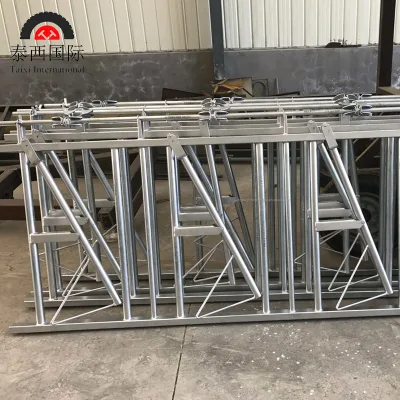

Adjustable Calf Husbandry Cattle Safety Lock Panels Self-Lock Cow Headlock
$38.00 - $38.50
MOQ: 50 Pieces


Calf Husbandry Cow Safety Lock Panels Cattle Panels Dairy Cow Comfort Loops Stall
$16.99 - $22.00
MOQ: 10000 Pieces


Calf Husbandry Cow Safety Lock Panels Cattle Gate Dairy Cow Comfort Loops Stall
$16.99 - $22.00
MOQ: 10000 Pieces


Comprehensive Sourcing Guide
Galvanized Cow Safety Lock Panels Sourcing Guide
Procuring Galvanized Cow Safety Lock Panels requires a nuanced understanding of both the mechanical security features and the material durability necessary for livestock management. These panels serve as critical infrastructure in cattle handling facilities, designed to restrain animals safely during veterinary examinations, vaccinations, or sorting processes. The primary objective for buyers is to identify suppliers who can deliver robust, corrosion-resistant units that withstand the physical stress of large animals while ensuring the safety of both the livestock and the handlers. The market offers a variety of configurations, ranging from simple head locks to more complex panel systems, each with distinct operational characteristics.
Buyers must navigate a landscape where product specifications vary significantly between manufacturers. While the core function remains consistent, the execution differs in terms of frame construction, locking mechanisms, and surface treatments. The observed market signals indicate a wide range of product models, including specific cattle head locks and broader farm fencing solutions that may incorporate similar locking technologies. Understanding these distinctions is vital for aligning procurement with specific operational needs, whether the requirement is for a standalone restraint unit or an integrated fencing system that includes secure locking points.
Product Scope and Observed Listing Signals
The current market landscape for Galvanized Cow Safety Lock Panels reveals a diverse array of product offerings, with observed price points ranging from $0.75 to $621 USD. This broad spectrum suggests that buyers will encounter everything from basic, single-component parts to fully assembled, heavy-duty units. The minimum order quantities (MOQ) also vary widely, from as low as one unit to as high as 10,000 pieces, indicating that suppliers cater to both small-scale farm operators and large industrial agricultural contractors. This variability allows for flexible procurement strategies, though it necessitates careful evaluation of unit economics and logistical feasibility.
Product attributes observed in listings highlight key differentiators such as customization availability, assembly ease, and specific material compositions. Many suppliers offer products that are easily assembled and feature rodent-proof and rot-proof characteristics, which are essential for long-term outdoor use. The materials cited include metal, iron, and various steel alloys, often treated with hot-dip galvanization or PVC coating to enhance durability. Buyers should note that while some products are labeled as "Cattle Head Locks," others may be described as "Farm Fence" components with adjustable widths and square hole shapes, suggesting a convergence of fencing and restraint technologies in modern agricultural supply chains.
Technical Specifications to Verify
When evaluating technical specifications, the surface treatment of the metal components is a primary concern. Hot-dip galvanization is a commonly cited process, providing a thick zinc coating that offers superior corrosion resistance compared to electro-galvanizing. Buyers should verify the specific zinc coating weight, which can range from 20g to 330g per square meter, as this directly impacts the lifespan of the panel in harsh environmental conditions. Additionally, some products may feature PVC coating over the galvanized frame, offering an extra layer of protection and aesthetic flexibility. It is crucial to confirm that the galvanization process is applied uniformly to all weld points and cut edges to prevent rust initiation.
The structural integrity and dimensional accuracy of the panels are equally important. Specifications often include adjustable widths and specific hole sizes, such as 10, 15, 20, 25, or 30 cm, which must align with the breed and size of the cattle being managed. The weave technique, whether plain weave or fixed knot, and the wire diameter, typically ranging from 1.8mm to 3mm, determine the panel's strength and flexibility. Buyers should also inquire about the frame finishing and the type of welding used, such as laser cutting, bending, stamping, and welding, to ensure that the joints are secure and capable of withstanding significant force without deformation.
Compliance and Safety Documentation
Compliance with international standards is a critical factor in sourcing agricultural equipment. Many suppliers claim adherence to CE standards, which indicates conformity with health, safety, and environmental protection standards for products sold within the European Economic Area. Buyers should request valid CE certificates and verify their authenticity, as this is often a prerequisite for importing equipment into regulated markets. Additionally, ISO certifications, such as ISO9001 for quality management systems, may be present, signaling that the manufacturer follows consistent processes for production and quality control. However, buyers should treat these certifications as indicators of process maturity rather than guarantees of product performance.
Safety documentation should also include detailed technical drawings and assembly instructions. Suppliers often provide drawing files in formats such as DXF, DWG, STEP, IGS, and PDF, which are essential for integration into existing facility designs. These documents allow engineers to verify dimensions, load-bearing capacities, and compatibility with other farm infrastructure. Buyers should ensure that the provided drawings match the physical product specifications and that any customizations are clearly documented. Furthermore, understanding the energy source, if applicable, and the condition of the product (new vs. refurbished) is necessary for accurate operational planning and maintenance scheduling.
Cost Drivers and Commercial Terms
Several factors influence the final cost of Galvanized Cow Safety Lock Panels, with material costs and surface treatments being the most significant. The choice between carbon steel, alloy steel, and stainless steel will drastically affect the price, as will the thickness of the zinc coating and the presence of additional PVC coatings. Customization options, such as specific dimensions, hole patterns, or branding, often incur additional charges. Buyers should also consider the packaging method, with steel pallets or customizable packaging options available, as this impacts shipping costs and handling requirements.
Commercial terms, including payment methods, lead times, and shipping arrangements, vary by supplier. The observed production capacity of some suppliers is around 15,000 pieces per year, which may affect lead times for large orders. Buyers should clarify whether the quoted price includes transportation, insurance, and customs duties, especially when sourcing from international locations like Qingdao, China. Understanding the supplier's service offerings, such as OEM and ODM capabilities, can also provide value for buyers looking for branded or uniquely specified products. Clear communication regarding these terms helps avoid unexpected costs and ensures timely delivery.
Supplier Qualification and Quality Control
Supplier qualification involves assessing the manufacturer's production capabilities and quality assurance processes. Buyers should verify the supplier's ability to perform 100% quality control tests, as indicated in some product listings. This rigorous inspection process helps ensure that every unit meets the specified standards before shipment. Additionally, understanding the supplier's service model, whether they offer OEM or ODM services, can provide insights into their flexibility and commitment to customer-specific requirements. Suppliers with a strong track record in laser cutting, bending, and welding are likely to produce higher-quality joints and finishes.
Geographic location and logistical infrastructure also play a role in supplier selection. Many suppliers are located in Shandong, China, particularly in Qingdao, a major port city that facilitates efficient export logistics. Buyers should evaluate the supplier's experience in international shipping and their ability to handle complex export documentation. Establishing a direct line of communication with the supplier's technical team can help resolve any questions regarding product specifications or customization needs. Building a relationship with a reliable supplier ensures consistent quality and support throughout the procurement lifecycle.
Long-Term Procurement Checks
Long-term procurement success depends on establishing a framework for ongoing performance evaluation and relationship management. Buyers should implement a system for tracking the durability and performance of the installed panels, noting any issues with corrosion, mechanical failure, or wear. Regular audits of the supplier's quality control processes and adherence to agreed-upon standards can help maintain product consistency. Feedback loops between the end-users and the supplier can drive continuous improvement and address any emerging issues promptly.
As agricultural technology evolves, buyers should remain open to updates and innovations in panel design and materials. Engaging with suppliers who offer customization and adaptability ensures that the procurement strategy remains aligned with changing operational needs. Periodic reviews of market trends and supplier capabilities can help identify new opportunities for cost savings or performance enhancements. By maintaining a proactive approach to supplier management, buyers can secure a reliable supply of high-quality Galvanized Cow Safety Lock Panels that support efficient and safe livestock management.
FAQs
What materials are used for Galvanized Cow Safety Lock Panels
These panels are typically constructed from metal or iron to ensure durability. The surface is treated with hot-dipped galvanization or standard galvanization to provide corrosion resistance. This combination protects the structure from environmental wear and extends its operational lifespan in outdoor farm settings.
Can Galvanized Cow Safety Lock Panels be customized for specific farm needs
Yes, customization is available for these products. Buyers can request specific dimensions, hole shapes, or assembly features to fit their infrastructure. Suppliers often support OEM and ODM services, allowing for tailored designs that meet particular livestock management requirements and safety standards.
What is the typical packaging for Galvanized Cow Safety Lock Panels
Standard packaging usually involves steel pallets or standard pallets to secure the items during transit. Some suppliers offer customizable packaging options based on customer requirements. This ensures the panels arrive in good condition and are ready for immediate installation or further processing.
Which certifications are associated with Galvanized Cow Safety Lock Panels
Common certifications include CE and ISO standards, which indicate compliance with international safety and quality requirements. These certifications help buyers verify that the products meet necessary regulatory benchmarks for agricultural equipment. Always verify specific certification documents with the supplier before purchase.
How are Galvanized Cow Safety Lock Panels assembled on site
These panels are designed for easy assembly, often featuring hinge joints or fixed knot weaving techniques. The modular nature allows for quick installation without complex tools. This ease of assembly reduces labor costs and time required for setting up livestock containment areas.
What are the key features of Galvanized Cow Safety Lock Panels
Key features include being rodent-proof and rot-proof, ensuring long-term structural integrity. The adjustable width and square hole shapes provide flexibility in design. These attributes make the panels suitable for various livestock types, including cattle, sheep, and deer, in diverse farming environments.