Source Galvanized Fireproof Light Steel Keel for Home, Office, Factory
Find 30 listings for Galvanized Fireproof Light Steel Keel suitable for home, office, and factory applications. Buyers can compare specifications, certifications, and pricing to select the right steel studs and tracks for ceiling and partition systems.
Key considerations
Products List


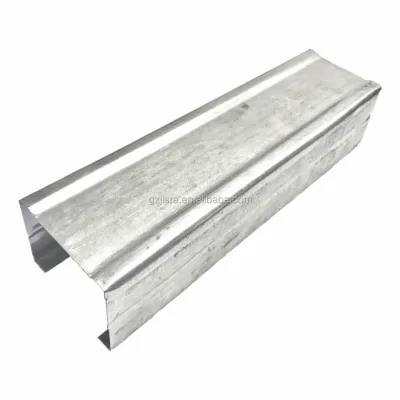


Anti Earthquake Fire Proof Light Steel Structure Building Light Steel Building
$10.00 - $60.00
MOQ: 100 Square Meters


Comprehensive Sourcing Guide
Strategic Sourcing Guide for Galvanized Fireproof Light Steel Keel
Understanding Product Specifications and Technical Attributes
The Galvanized Fireproof Light Steel Keel serves as a critical structural component in modern construction, specifically designed for ceiling and partition systems. When evaluating this product, buyers must distinguish between the various profile types and dimensional standards available in the market. The core product is identified as a "Galvanized Light Steel Keel," often categorized by its specific shape, which includes U-type and L-type configurations. These shapes are engineered to provide structural integrity for drywall tracks and studs, ensuring the stability of interior wall and ceiling assemblies.
The material composition is a primary technical differentiator. The supplied data confirms that the base material is steel, treated with a zinc coating to ensure durability and resistance to environmental degradation. The surface treatment process is critical; products are described as "Zinc Coated" or "Galvanized," with specific coating weights ranging from 60 to 180g per square meter. This range indicates a robust protective layer intended to prevent corrosion, a vital feature for products labeled as "Damp-Proof" and "Anti-Corrosion." The functional attributes extend beyond mere structural support; these keels are designed to be "Fireproofing" and "Sound Proof," making them suitable for environments where safety and acoustic control are paramount.
Dimensional specifications vary significantly based on the intended application. The product models listed include specific codes such as "DU50151.2DC50190.5" and "JF-QLLG," alongside generic descriptions like "Noya Metal 04." The physical dimensions are not uniform; buyers will encounter stud channels with widths such as 5035mm, 7035mm, and 7336mm. Similarly, track channels are available in sizes like 5229mm, 7029mm, and 7530mm. Additional components, such as the UD and CD channels, have specific dimensions like 2728mm and 6027mm respectively. The thickness of the steel is often customizable, allowing for adaptation to load-bearing requirements, while the length is also available in customized specifications to minimize waste on the construction site.
Compliance, Certification, and Regulatory Standards
Verifying compliance is a non-negotiable step in the procurement of construction materials. The supply chain for galvanized light steel keels is characterized by a mix of certifications and standards that validate the product's quality and safety. The provided facts highlight specific certifications such as "ISOACS" and "CE." These marks indicate that the manufacturer adheres to certain international quality management systems and European conformity standards, respectively. Additionally, the product is noted to meet "ISO" standards, though the specific ISO number is not explicitly detailed in the high-confidence facts beyond the general reference.
Buyers must be cautious when referencing external standards like ASTM A653 or JIS G3302, as these appear in the low-confidence background data. While these are recognized industry standards for galvanized steel, they should not be asserted as guaranteed attributes of every listed product without direct verification from the supplier. Instead, procurement teams should request current test reports and certificates of conformity that explicitly reference the specific standards applicable to the batch being purchased. The product origin is primarily identified as China, with specific mentions of Weifang City in Shandong Province, as well as general references to the country. This geographical context is relevant for understanding the regulatory environment under which the goods are produced and the logistics involved in their export.
The certification landscape also includes "ISO" as a general attribute, suggesting a focus on quality assurance processes. However, the presence of "ISOACS" alongside "CE" suggests a diverse certification portfolio. Buyers should verify that the specific certification listed on the product datasheet matches the regulatory requirements of the destination market. For instance, projects in Europe will strictly require CE marking, while other regions may prioritize ISO certification. The "Customization" attribute is also a key compliance factor; many products offer OEM/ODM services, meaning the buyer can specify unique requirements that must be validated against local building codes.
Cost Drivers and Pricing Dynamics
The pricing structure for galvanized fireproof light steel keels is influenced by several variable factors, resulting in a wide observed price range of 0.06 to 900 USD. This significant variance is not indicative of product quality alone but rather reflects differences in order volume, customization levels, and specific dimensional requirements. The Minimum Order Quantity (MOQ) is another critical cost driver, with observed ranges spanning from 1 to 50,000 units. Buyers purchasing small quantities may face higher per-unit costs, whereas bulk orders can leverage economies of scale to reduce the price significantly.
The material cost is a fundamental component of the final price. Since the product is made of steel with a zinc coating, fluctuations in global steel and zinc prices will directly impact the cost of the keel. The coating weight, which varies between 60 and 180g/sq.m, is a direct determinant of material usage and cost. A higher coating weight implies more zinc usage, which increases the material cost but offers superior corrosion resistance. Furthermore, the customization of thickness and length adds to the production complexity and cost. Standard sizes are generally more cost-effective, while custom-made specifications, such as those listed under "prod_standard: Custom-made," require dedicated production runs that may incur additional charges.
Packaging and logistics also play a substantial role in the total landed cost. The product is available in various packaging formats, including "Bundle/Pallet," "Carton," "Wooden Cases," and "Plywood." The choice of packaging affects the shipping efficiency and protection during transit. For example, wooden cases offer superior protection for heavy or long shipments but add weight and cost compared to standard cartons. The shipping port, typically Qingdao, Ningbo, or Shanghai, influences freight costs based on the buyer's location. Additionally, the transport method, whether by sea or air, will drastically alter the final price, with air freight being significantly more expensive but faster.
Typical Applications and Functional Performance
The galvanized light steel keel is designed for a broad spectrum of applications, making it a versatile choice for various construction projects. The primary usage scenarios include home construction, office buildings, markets, factories, hotels, playgrounds, stations, and terminal buildings. This wide applicability is supported by the product's functional attributes, which include damp-proofing, anti-corrosion, fireproofing, and soundproofing capabilities. These features make the keel particularly suitable for environments where moisture control, fire safety, and acoustic isolation are critical.
In residential and commercial settings, the keel serves as the backbone for drywall partition systems and ceiling grids. The specific application as "Wall Partition Material" and for "Ceiling and Partition System" highlights its role in creating interior spaces that are both structurally sound and aesthetically flexible. The "Sound Proof" attribute is particularly valuable in office buildings and hotels, where noise reduction is essential for occupant comfort. Similarly, the "Fireproofing" function is crucial for public buildings like stations and terminal buildings, where safety regulations mandate the use of fire-resistant materials.
The product's durability is a key performance metric, with "Durable" listed as a primary feature. This durability is achieved through the galvanized surface treatment, which protects the steel core from rust and corrosion over time. The "Replace" after-sales service attribute suggests that the product is designed for long-term use but also implies a commitment to maintaining the integrity of the installation. The customization options allow the keel to be adapted for specific architectural designs, ensuring that it can meet the unique requirements of different building types, from simple residential partitions to complex industrial factory layouts.
Supplier Evaluation and Selection Criteria
Selecting the right supplier for galvanized light steel keels requires a rigorous evaluation process that goes beyond price comparison. Buyers should prioritize suppliers who demonstrate a clear understanding of the product's technical specifications and compliance requirements. The availability of OEM/ODM services is a strong indicator of a supplier's flexibility and capability to meet custom needs. Suppliers offering "Customization" in terms of thickness, length, and shape (U-type or L-type) are better positioned to support diverse project requirements.
Geographical location and export capabilities are also vital factors. The primary production origin is China, with specific hubs in Weifang City, Shandong Province. Suppliers based in these regions often have established supply chains and logistics networks. The availability of multiple shipping ports, including Qingdao, Ningbo, and Shanghai, indicates a robust export infrastructure. Buyers should verify the supplier's experience in exporting to their specific target market, as this ensures familiarity with local regulations and standards.
The supplier's quality control processes should be transparent and documented. While specific test results are not provided in the general facts, buyers should request evidence of the zinc coating weight and material thickness. The "Replace" after-sales service is a positive signal, suggesting that the supplier stands behind their product quality. Additionally, the variety of packaging options, from cartons to wooden cases, indicates a supplier capable of handling different shipping requirements. Buyers should also assess the supplier's ability to meet the MOQ requirements, which can range from 10-100 pieces to 50,000 units, depending on the specific product model and order size.
Quality Control and Long-Term Procurement Considerations
Ensuring consistent quality in the procurement of galvanized light steel keels requires a proactive approach to quality control. Buyers should implement a verification process that includes checking the zinc coating weight, which is specified as ranging from 60 to 180g/sq.m. This parameter is critical for determining the product's resistance to corrosion and its overall lifespan. Regular sampling and testing of the coating thickness can help ensure that the delivered products meet the agreed-upon specifications.
Long-term procurement considerations involve building a sustainable relationship with suppliers who can provide consistent quality and reliable delivery. The "Custom-made" standard and the availability of various product models, such as "Noya Metal 04" and "JF-QLLG," suggest that buyers should establish clear communication channels with suppliers to define their specific needs. The "Weight: Customized" attribute further emphasizes the need for precise specifications to avoid discrepancies in the final product.
Buyers should also consider the logistical aspects of long-term procurement. The transport options, including sea and air, offer flexibility but require careful planning to balance cost and speed. The "Export Markets: Global" attribute indicates that the product is suitable for international trade, but buyers must ensure that the supplier can handle the complexities of cross-border logistics. Finally, the "After-Sales Service: Replace" feature provides a safety net for any potential quality issues, ensuring that the buyer can maintain the integrity of their construction projects without significant disruption. By focusing on these quality control and logistical factors, buyers can secure a reliable supply of galvanized fireproof light steel keels that meet their project requirements.
FAQs
What certifications do galvanized fireproof light steel keels have?
Products carry ISOACS, CE, and ISO certifications. These marks indicate adherence to international quality management and European conformity standards, ensuring safety and reliability for construction projects.
How is the zinc coating applied to the steel keels?
The steel undergoes a zinc coating process with weights ranging from 60 to 180g per square meter. This surface treatment provides essential damp-proof and anti-corrosion protection for long-term durability.
Which shapes are available for drywall tracks and studs?
Available shapes include U-type and L-type configurations. These profiles are engineered to provide structural integrity for ceiling and partition systems in various building environments.
Can I customize the thickness and length of the keels?
Yes, customization is available for both thickness and length. Buyers can specify unique dimensions to minimize waste and meet specific load-bearing requirements for their projects.
What are the standard dimensions for stud and track channels?
Stud channels come in sizes like 50*35mm and 70*35mm. Track channels are available in dimensions such as 52*29mm and 70*29mm to fit different partition system needs.
How does the MOQ affect the pricing of these keels?
The price varies significantly based on order volume, with MOQs ranging from 1 to 50,000 units. Larger orders typically leverage economies of scale to reduce the per-unit cost.
Where are these galvanized steel keels manufactured and shipped from?
Products originate from China, specifically Weifang City in Shandong Province. They are shipped via ports like Qingdao, Ningbo, and Shanghai using sea or air transport methods.