Source Garden Plant Support with Water Drip for Home, Farm, and Nursery
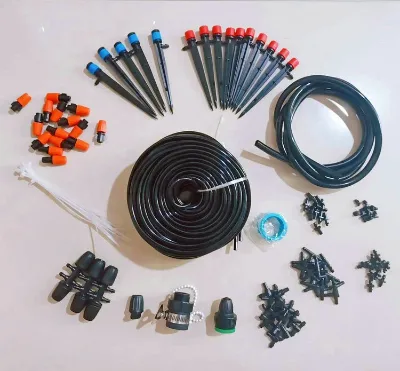
Compare 30 listings for Garden Plant Support with Water Drip systems designed for efficient irrigation. Buyers can evaluate models like ASM-WD17 and ZX2505196 based on flow rates, materials, and customization options to find suitable solutions for home gardens, farms, and nurseries.
Key considerations
Products List

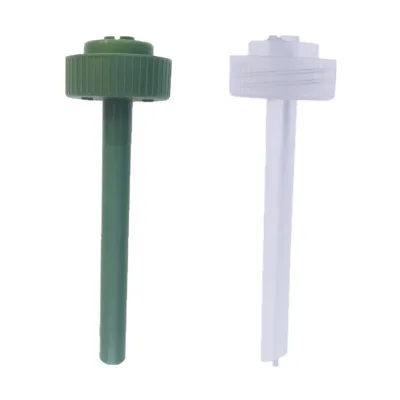


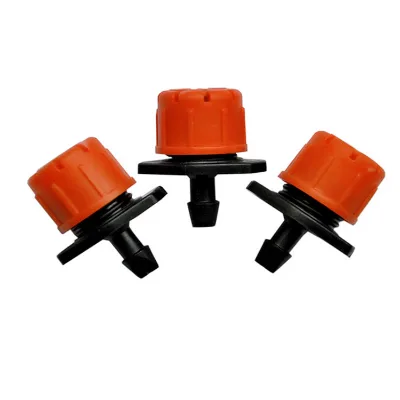
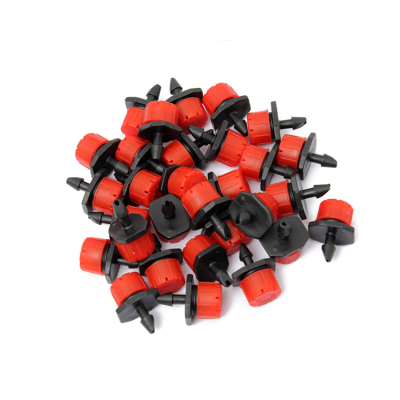
Greenhouse Garden Flowers Irrigation System Dripper Dripper for Irrigation
$0.03 - $0.04
MOQ: 50000 Pieces




Comprehensive Sourcing Guide
Strategic Sourcing Guide for Garden Plant Support with Water Drip Systems
The intersection of structural plant support and automated irrigation represents a specialized niche within the agricultural and horticultural supply chain. Buyers searching for "Garden Plant Support with Water Drip" are often looking for integrated solutions that minimize labor while maximizing resource efficiency. The market for these systems is diverse, ranging from simple self-watering spikes to complex drip irrigation kits designed for large-scale agricultural use. This guide synthesizes available product attributes and industry standards to provide a disciplined framework for procurement, ensuring that buyers can navigate the complexities of specifications, compliance, and supplier evaluation without relying on unverified claims.
Technical Specifications and Functional Attributes
When evaluating products under the core keyword, the primary distinction lies in the mechanism of water delivery and the material composition of the support structure. The supply chain offers distinct product categories, including "Plant Self Watering Spikes" and broader "Garden Irrigation Kits." A critical observation from current market data indicates that these devices often utilize plastic as the primary material, with specific models noting a weight as low as 8 grams for individual units, while larger kits may weigh significantly more, such as 16 kilograms for complete systems.
The functional design varies significantly based on the intended application. For instance, specific models feature "Single/Double Drip Holes" with customizable hole distances ranging from 10cm to 40cm. This variability is crucial for buyers targeting different crop densities. Furthermore, the flow rate is a defining technical parameter; observed data suggests a range from 2.0L/H to 16L/H, with some specific units rated at 8L/H. The power source for these systems is typically passive, relying on "Pressure" or gravity, rather than electrical pumps, which simplifies installation in remote garden locations.
Material thickness is another vital specification that dictates durability. Available data points to wall thicknesses of 0.3mm, 0.4mm, or 0.5mm, with options for customization. While some products are packaged in cartons, others utilize plastic bags, indicating a need for buyers to verify packaging standards based on their logistics requirements. The physical dimensions of the products also vary; for example, specific drip lines may have a standard size of 13.5*3.5cm, while the single package size for larger kits can reach 60X48X47 cm. Buyers must cross-reference these dimensions with their storage and shipping constraints.
Compliance, Standards, and Certification Verification
In the realm of irrigation and plant support systems, compliance is not merely a formality but a prerequisite for market access and product safety. The provided data indicates that some manufacturers adhere to international standards such as GB, DIN, ANSI, and JIS. These standards cover dimensions, thread types, and material safety, which are essential for ensuring that the irrigation components do not leach harmful substances into the soil or water supply.
However, the term "customized" appears frequently in the context of product standards, suggesting that many suppliers operate on a make-to-order basis rather than adhering to a single rigid standard. For example, one attribute lists a standard of "54 *35 * 28 Centimeters," which likely refers to packaging dimensions rather than a technical product standard. Buyers must be vigilant in distinguishing between packaging specifications and actual product compliance. When a supplier claims adherence to standards like GB or DIN, procurement teams should request specific test reports or certification documents to verify that the claim applies to the specific model being purchased, such as the "ZX2505196" or "ASM-WD17" models.
Additionally, the origin of the product plays a role in regulatory compliance. The majority of observed products originate from Zhejiang, China, with some specific items noted as coming from Fuzhou. While these regions are known for manufacturing, buyers importing into regions with strict environmental or safety regulations must ensure that the supplier can provide documentation proving compliance with local laws, such as REACH in Europe or EPA regulations in the United States. The absence of explicit certification data in the general product listings means that verification is a mandatory step in the sourcing process, rather than an assumption.
Cost Drivers and Economic Factors
The pricing landscape for Garden Plant Support with Water Drip systems is highly variable, with observed ranges spanning from $0.01 to $198.15 USD. This wide disparity is driven by several key factors, including the scale of the order, the complexity of the system, and the customization level. Simple self-watering spikes, which are often sold as single items, sit at the lower end of the price spectrum, whereas complete irrigation kits with complex tubing and emitters command higher prices.
Minimum Order Quantity (MOQ) is a significant economic driver. Data shows MOQs ranging from as low as 50 pieces to as high as 50,000 units. Some suppliers offer a tiered approach, such as a requirement of "10 Rolls of Stock" for specific line products, while others may set a flat MOQ of 500 pieces. Buyers must calculate the total cost of ownership, which includes not just the unit price but also the capital tied up in inventory due to high MOQs. For small-scale gardeners or startups, finding suppliers with lower MOQs is critical to managing cash flow.
Customization is another major cost variable. While "Customization: Available" is a common attribute, the process of altering hole distances, material thickness, or packaging dimensions typically incurs additional tooling or setup costs. The lead time for these customized orders is observed to be between 5 and 10 days, which is relatively short compared to heavy industrial manufacturing, but buyers must still factor this into their production schedules. The "Selling Units" attribute, which often lists "Single item," suggests that some suppliers are willing to break bulk for testing purposes, though this may come at a premium per unit.
Typical Applications and Use Cases
The versatility of these products allows them to serve a wide array of applications, from residential gardening to commercial agriculture. The primary use case is "Garden Water Irrigation," where the goal is to deliver water directly to the root zone of plants, reducing evaporation and runoff. The "Features" listed for these products often include "Save Water, Fertilizer and Labor," highlighting the efficiency benefits that appeal to both hobbyists and professional growers.
Specific product types, such as "Plant Self Watering Spikes," are ideal for potted plants or container gardening where consistent moisture is required without frequent manual intervention. These are often used in greenhouses or indoor settings. Conversely, "Garden Irrigation Kits" and "Drip Irrigation" systems are better suited for larger plots, vineyards, or field crops. The ability to customize hole distances (10cm to 40cm) allows these systems to be adapted for different plant spacing requirements, making them suitable for row crops or dense planting arrangements.
The "Head Type" being "Round" suggests a design focused on uniform water distribution, which is essential for preventing soil erosion and ensuring even plant growth. The "Flow Rate" variability (2.0L/H to 16L/H) further expands the application scope, allowing buyers to select systems based on the water needs of specific plant species. For example, succulents may require lower flow rates, while leafy vegetables might benefit from higher flow rates.
Supplier Evaluation and Selection Criteria
Selecting the right supplier requires a rigorous evaluation process that goes beyond the basic product listing. Given the "OEM: Accept" attribute, many suppliers are capable of private labeling and custom manufacturing. Buyers should prioritize suppliers who demonstrate transparency in their origin and production capabilities. The concentration of suppliers in Zhejiang and Fuzhou indicates a robust manufacturing hub, but buyers should verify the specific factory capabilities rather than relying solely on the region.
Key evaluation metrics include the supplier's ability to meet the specific "prod_standard" requirements, whether that is a fixed standard like "3/5mm" or a customized dimension. Buyers should also assess the supplier's responsiveness to customization requests, as the "Customization: Available" attribute implies a need for clear communication regarding design changes. The "Lead Time" of 5-10 days is a positive indicator of agility, but buyers must confirm if this applies to stock items or customized orders, as lead times can extend significantly for bespoke production runs.
Furthermore, the "Packing" specifications, such as "Carton" or "Plastic Bag," should be evaluated against the buyer's logistics needs. For international shipping, robust carton packaging is often necessary to prevent damage, whereas plastic bags may suffice for domestic distribution. The "Single gross weight" of 8.0 kg for certain packages provides a baseline for freight cost calculations, which can vary significantly based on the density and volume of the shipment.
Quality Control and Long-Term Procurement Considerations
Quality control in the irrigation sector is paramount to prevent system failures that could lead to crop loss. Buyers should implement a rigorous inspection protocol that checks for material consistency, specifically verifying the "Plastic" or "Rubber" composition against the specified thickness of 0.3mm to 0.5mm. The "Hole Type" and "Hole Distance" must be measured to ensure they match the ordered specifications, as deviations can lead to uneven water distribution.
Long-term procurement considerations involve establishing a relationship with a supplier who can provide consistent quality over time. The "Customized" nature of many products means that the initial sample must be approved before mass production begins. Buyers should also consider the durability of the materials, especially if the products are exposed to UV radiation or harsh weather conditions. While the "Material" is listed as Plastic or Rubber, the specific grade of these materials is not always detailed in general listings, necessitating requests for material safety data sheets (MSDS) or UV resistance test results.
Finally, the scalability of the supply chain is a critical factor. With MOQs ranging up to 50,000 units, buyers planning for large-scale expansion must ensure that the supplier has the capacity to ramp up production without compromising quality. The "Flow Rate" consistency across batches is another area where quality control is essential, as fluctuations can affect the performance of the entire irrigation system. By focusing on these technical and operational details, buyers can mitigate risks and ensure a reliable supply of high-quality garden plant support and water drip systems.
FAQs
What materials are used for Garden Plant Support with Water Drip systems?
These systems primarily use plastic or rubber materials. Specific models may feature wall thicknesses of 0.3mm, 0.4mm, or 0.5mm to ensure durability during garden water irrigation applications.
How can I customize hole distances for drip irrigation kits?
You can customize hole distances to 10cm, 20cm, 30cm, or 40cm based on crop density. Many suppliers offer customized hole types including single or double drip holes to meet specific planting requirements.
Which flow rates are available for plant self watering spikes?
Flow rates typically range from 2.0L/H to 16L/H depending on the model. Some specific units are rated at 8L/H, allowing selection based on the water needs of different plant species.
Can I find suppliers with a lead time of 5 to 10 days?
Yes, many manufacturers offer a lead time of 5 to 10 days for stock or customized orders. This timeframe applies to standard production runs for garden irrigation kits and self-watering spikes.
What is the minimum order quantity for garden irrigation kits?
Minimum order quantities vary significantly, ranging from 50 pieces to 50,000 units. Some specific line products may require a minimum of 10 rolls of stock or 500 pieces per order.
Where are the manufacturers of these irrigation systems located?
Most manufacturers are located in Zhejiang, China, with some specific items originating from Fuzhou. These regions serve as major manufacturing hubs for plastic and rubber irrigation components.
How do I verify product standards for drip irrigation components?
Products may adhere to standards like GB, DIN, ANSI, or JIS, though many are customized. Buyers should request specific test reports to verify compliance for models like ZX2505196 or ASM-WD17.