Source Garden Secateurs for pruning, gardening, and plant cutting
Find 30 Garden Secateurs with varying blade materials, handle types, and certifications. Compare specs for carbon steel, stainless steel, and anvil or bypass styles to select the right tool for pruning and plant cutting tasks.
Key considerations
Products List


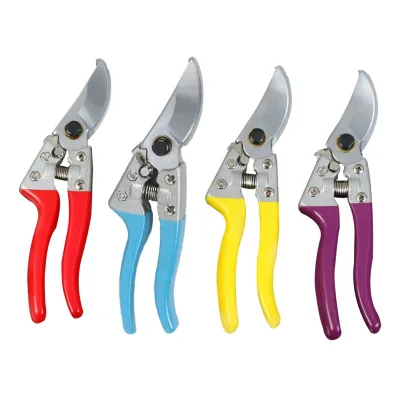
Tree Trimming Shears Scissors with Green Handle Gardening Pruning Secateurs
$2.55 - $2.75
MOQ: 5000 Pieces


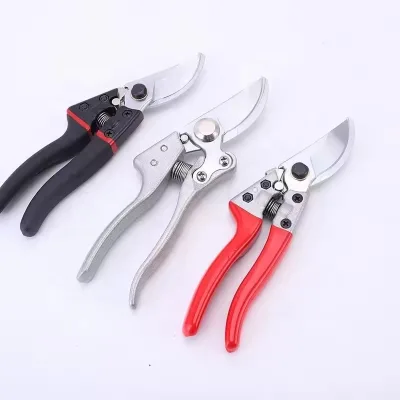
Multifunctional Tree Trimmers Secateurs Pruning Shears Pruning Shears Garden Scissors
$9.00 - $20.00
MOQ: 500 Pieces


$314.00 - $346.00
MOQ: 200 Pieces

Comprehensive Sourcing Guide
Strategic Sourcing Guide for Garden Secateurs
Understanding Product Variants and Technical Specifications
When initiating a procurement strategy for Garden Secateurs, the first critical step is distinguishing between the specific technical configurations available in the market. The core keyword "Garden Secateurs" encompasses a diverse range of tools designed for different pruning tasks, from delicate plant cutting to heavy-duty branch removal. Based on observed product data, the market offers distinct models identified by specific model numbers such as MF105, MF113, MF115, MF317, and MF-1C1013A. These identifiers often correlate with specific blade geometries and handle designs that dictate the tool's utility.
A primary technical differentiator is the blade material. Sourcing teams must verify whether the product utilizes Carbon Steel or Stainless Steel. Carbon Steel variants, such as those noted in the MF105 and MF115 specifications, are often selected for their ability to hold a sharp edge under high stress, though they may require more maintenance to prevent rust. Conversely, Stainless Steel options, like those found in the MF102 model, offer superior corrosion resistance, making them ideal for environments with high humidity or frequent exposure to sap and water. The material composition directly influences the longevity and maintenance schedule of the tool.
The cutting mechanism is another vital specification. The data indicates a split between Anvil and Bypass types. Anvil pruners, such as the MF317 model, feature a V-Type shape and are designed to crush the stem against a flat surface, making them suitable for dead wood or thick, dry branches. In contrast, Bypass pruners, identified in the MF-1C1013A listing, operate like scissors with two curved blades that slide past each other, providing a cleaner cut for live, green stems. The choice between these mechanisms depends entirely on the intended application, whether it is general garden pruning, grass shearing, or specific plant cutting tasks.
Furthermore, handle ergonomics and finishing processes play a significant role in user comfort and tool durability. Some models feature a Non-Slip Grip, which is essential for safety during prolonged use. Finishing treatments, such as PTFE coating, are observed in specific listings to reduce friction and prevent sap from adhering to the blade. The handle material is predominantly plastic, though customization options are available for buyers seeking specific color schemes or material upgrades. Understanding these granular specifications allows buyers to align their procurement with the specific operational needs of their end-users.
Compliance, Certification, and Regulatory Standards
Navigating the regulatory landscape is a fundamental aspect of B2B procurement, particularly for tools that interact directly with agricultural and horticultural environments. Buyers must rigorously verify that suppliers adhere to recognized international and regional standards. The available product data highlights several key certifications and standards that serve as indicators of quality and safety compliance.
Prominent standards observed in the market include Gs, CE, CCC, and ISO9000. The CE marking indicates conformity with health, safety, and environmental protection standards for products sold within the European Economic Area. The CCC (China Compulsory Certification) is a mandatory requirement for products sold in the Chinese market, ensuring they meet specific safety and quality benchmarks. ISO9000 represents adherence to international quality management systems, suggesting that the manufacturer has established processes for consistent product delivery. Additionally, the FSC (Forest Stewardship Council) feature is mentioned in the context of product attributes, which may relate to the sourcing of wood components or the environmental impact of the product lifecycle, though this requires specific verification from the supplier.
When evaluating suppliers, procurement teams should request documentation proving these certifications are current and valid for the specific model being purchased. It is crucial to understand that certification status is not universal across all SKUs; a supplier may hold ISO9000 for one product line but not for another. Therefore, buyers must ensure that the specific model number, such as MF113 or CTGS002, is covered under the provided certificates.
Beyond physical certifications, buyers should also consider the "Feature" attributes listed in product data, such as "Anti-Slip Grip" and "Folding." While these are often marketing terms, they imply specific design requirements that may need to be validated against safety standards. For instance, a folding mechanism must be robust enough to prevent accidental closure during use, which is a safety concern. The "Standard" attribute also sometimes refers to physical dimensions, such as "8 Inch" or "19.5," which buyers must cross-reference with their technical requirements to ensure the tool fits the intended use case.
Cost Drivers and Pricing Dynamics
The pricing structure for Garden Secateurs is influenced by a complex interplay of material costs, manufacturing complexity, and order volume. The observed price range in the market spans from $0.10 to $346 USD, a vast disparity that reflects the difference between basic, mass-produced units and specialized, high-end professional tools. This wide range underscores the importance of defining clear budget parameters before engaging with suppliers.
Material composition is a primary cost driver. Stainless Steel blades generally command a higher price point than Carbon Steel due to the raw material cost and the additional processing required to ensure corrosion resistance. Similarly, products with advanced finishing, such as PTFE coating, or specialized handle materials like Non-Slip Grip polymers, will incur higher manufacturing costs compared to standard plastic handles. The complexity of the cutting mechanism also affects pricing; Bypass pruners with precision-ground blades are typically more expensive to manufacture than Anvil pruners.
Order volume is another critical factor in determining the final unit cost. The Minimum Order Quantity (MOQ) ranges from 2 to 5000 pieces, indicating that suppliers are willing to accommodate both small-scale trials and large-scale distribution contracts. However, the cost per unit will likely decrease significantly as the order volume approaches the higher end of the MOQ spectrum. Buyers should analyze their projected demand to negotiate effectively, understanding that an MOQ of 5000 pieces may yield a much lower unit price than an order of 100 pieces.
Packaging and logistics also contribute to the overall cost. The data shows varied packing configurations, such as 1PC/Blister Card, 12PCS/Inner Box, and 72PCS/CTN. More elaborate packaging, like PVC Head Gloves or Blister Sliding Cards, adds to the unit cost but may be necessary for retail presentation. Buyers must factor in the cost of these packaging materials and the associated shipping weight, as the Gross Weight (G.W.) and Net Weight (N.W.) of the cartons (e.g., 19kgs and 17kgs respectively) impact freight charges.
Typical Applications and Usage Scenarios
Selecting the correct garden secateur requires a deep understanding of the intended application. The product data reveals a spectrum of use cases, ranging from general garden maintenance to specialized agricultural tasks. The "Application" field frequently cites "Pruning," "Garden Pruning," and "Plant Cutting," indicating that these tools are primarily designed for horticultural maintenance.
For general garden pruning, Bypass pruners are often the preferred choice due to their ability to make clean cuts on live stems without damaging the plant tissue. This is particularly important for fruit trees, roses, and ornamental shrubs where healing is a priority. The "Usage" attribute explicitly mentions "Plant Cutting," reinforcing the tool's suitability for delicate tasks. In contrast, Anvil pruners, with their V-Type shape, are better suited for removing dead wood, thick branches, or pruning tasks where the crushing action is less detrimental, such as in orchards or forestry settings.
The "Common Type" of "Garden Scissors" suggests a versatility that allows these tools to be used for a variety of light-duty tasks, including trimming grass or shaping hedges. The "Scissors Type" attribute further refines this, distinguishing between "Grass Shears" and "Pruning Shears." Buyers targeting the landscaping industry may require a mix of these types to handle different vegetation densities. Additionally, the "Function" of "Make Pruning" highlights the primary utility, but the "Feature" of "Folding" adds a layer of portability, making these tools ideal for professional landscapers who need to carry multiple tools in a compact kit.
The "Color" attribute, listed as "Option" or "Accept Customize," allows for branding opportunities. Buyers can leverage this to create a cohesive product line for their retail customers, matching the tool color to their brand identity or specific product lines. This customization capability is particularly valuable for private label strategies where the end-user expects a branded tool.
Supplier Evaluation and Operational Capabilities
Evaluating suppliers for Garden Secateurs requires a holistic approach that goes beyond price and specifications. The supply chain stability and production capacity are critical factors that determine the reliability of the procurement process. The data indicates that the "Place of Origin" is primarily China, with specific mentions of Zhejiang and Fujian provinces. These regions are known for their manufacturing clusters in the garden tool industry, offering a robust ecosystem of suppliers and component manufacturers.
Suppliers should be assessed based on their "Supply Ability," which is noted as 100,000 pieces per month for certain models. This capacity figure is a strong indicator of a supplier's ability to handle large orders and maintain consistent inventory levels. Buyers should verify this capacity against their own demand forecasts to ensure the supplier can scale production during peak seasons. The "Port" of origin, listed as Ningbo, Shanghai, or others, is also relevant for logistics planning, as these are major shipping hubs that facilitate efficient export.
The "Customization" attribute, marked as "Available," suggests that suppliers are open to tailoring products to specific buyer requirements. This could include custom branding, color variations, or modifications to the handle or blade design. Buyers should engage suppliers early in the process to discuss these customization options and understand the associated lead times and costs. The "Product Packing" details, such as 1PC/PVC Head Glove or 12PCS/Carton, indicate that suppliers have established packaging lines, but buyers should confirm if these can be adapted to meet specific retail or distribution requirements.
Furthermore, the "Standard" and "Certificate" attributes serve as proxies for the supplier's commitment to quality. A supplier offering Gs, CE, and ISO9000 certifications demonstrates a structured approach to quality management. Buyers should request audit reports or third-party verification of these claims to ensure the supplier maintains these standards consistently. The "Feature" of "Anti-Slip Grip" and "Folding" also suggests a focus on user experience, which is a positive indicator of a supplier's attention to detail.
Quality Control and Long-Term Procurement Considerations
Implementing a robust quality control (QC) protocol is essential for mitigating risks associated with garden secateur procurement. Given the wide range of materials and finishes, from Carbon Steel to Stainless Steel and PTFE coatings, buyers must establish clear acceptance criteria. Visual inspections should verify the integrity of the blade edges, the smoothness of the cutting action, and the durability of the handle grip. For products with folding mechanisms, functional testing is necessary to ensure the locking mechanism engages securely and does not fail under pressure.
Long-term procurement considerations extend beyond the initial purchase to include after-sales support and product lifecycle management. Buyers should inquire about the availability of replacement parts, such as blades or springs, to extend the usable life of the tools. The "Weight" specifications, such as 231g for certain models, are important for ergonomic assessments; tools that are too heavy can cause user fatigue, leading to returns or negative feedback.
Sustainability is also becoming a key consideration in the garden tool industry. The mention of "Fsc" in the product features suggests that some suppliers are addressing environmental concerns. Buyers should explore the sustainability credentials of their suppliers, including the sourcing of raw materials and the environmental impact of manufacturing processes. This aligns with the growing demand for eco-friendly products in the B2B and B2C markets.
Finally, buyers should maintain a strategic relationship with their suppliers to navigate market fluctuations. The "Lead Time" and "MOQ" values can vary based on raw material availability and production schedules. By maintaining open communication and understanding the supplier's production capacity, buyers can better plan their inventory and avoid stockouts. The "PCS/CTN" ratios, such as 72 or 12, are also critical for warehouse planning and logistics optimization, ensuring that the supply chain remains efficient from the factory floor to the end-user.
FAQs
What blade materials are available for Garden Secateurs?
Garden Secateurs are available with Carbon Steel or Stainless Steel blades. Carbon Steel models like MF105 offer high edge retention, while Stainless Steel options like MF102 provide superior corrosion resistance for humid environments.
Which cutting mechanism is best for live plant stems?
Bypass pruners are best for live plant stems as they provide a clean cut. Models like MF-1C1013A feature this mechanism, whereas Anvil types like MF317 are designed for dead wood and thick branches.
Can buyers request customization for color and handle design?
Yes, customization is available for color and handle design. Buyers can select options for plastic handles and specific colors, allowing for private labeling or matching brand identities across the product line.
What certifications do these garden tools typically hold?
Products typically hold Gs, CE, CCC, and ISO9000 certifications. These standards ensure safety and quality compliance, with CE marking required for the European Economic Area and CCC for the Chinese market.
How does the minimum order quantity affect pricing?
The minimum order quantity ranges from 2 to 5000 pieces, influencing unit cost. Higher volumes often yield lower prices, allowing buyers to negotiate better rates based on their projected demand and supply ability.
Where are these Garden Secateurs manufactured and shipped from?
These tools are manufactured in China, specifically in Zhejiang and Fujian provinces. Shipping ports include Ningbo and Shanghai, facilitating efficient export logistics for international buyers seeking reliable supply chain partners.