Source Garment Shop Media Pleating Machine for Fashion
Find a Garment Shop Media Pleating Machine from 30 verified listings. Compare automatic and semi-automatic models with varying power, speed, and paper width capabilities to suit your specific production needs; compare the available evidence and request quotations based on your requirements.
Key considerations
Products List


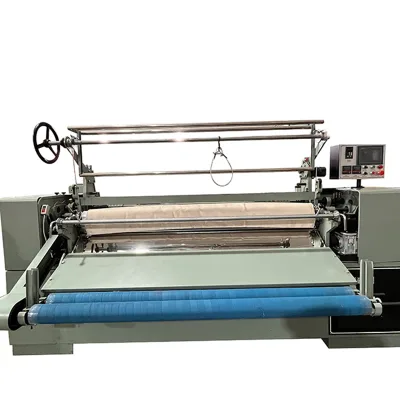
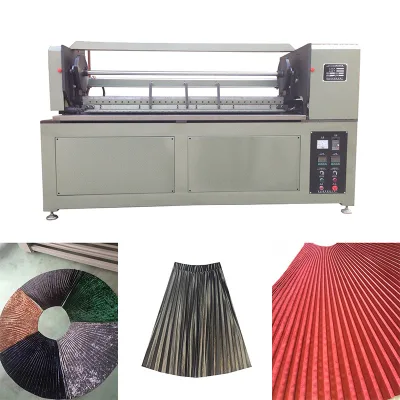
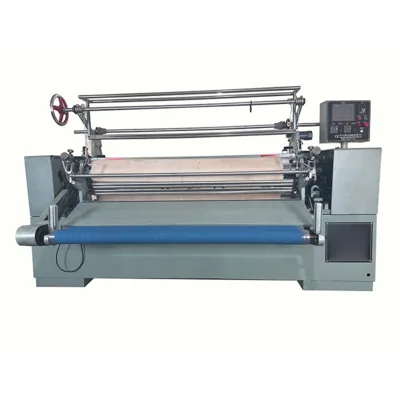
Industrial Fabric Pleating Machine For Skirt And Dress / Pleating Machine
$3579.00 - $4299.00
MOQ: 1 Set


Cloth Pleating Machine Skirt Pleating Sewing Machine Fabric Pinch Pleat Machine
$4300.00 - $4500.00
MOQ: 1 set


Comprehensive Sourcing Guide
Garment Shop Media Pleating Machine Sourcing Guide
The Garment Shop Media Pleating Machine represents a specialized class of industrial equipment designed to automate the folding and pleating processes essential for high-volume textile production. These machines integrate advanced mechanical systems to handle various fabric types, ensuring consistent pleat depth and alignment across large batches. Buyers must distinguish between semi-automatic and fully automatic grades, as the level of automation directly impacts labor requirements and throughput efficiency in a commercial setting.
Procurement decisions should prioritize machines that offer adjustable pleating heights and speeds to accommodate diverse product lines. The observed market data indicates a range of configurations, from models supporting widths up to 1100 mm to those optimized for narrower paper or fabric inputs. Understanding the specific operational constraints of your facility is crucial, as the machine's physical footprint and power requirements vary significantly between different automatic grades and model series.
Product Scope and Observed Listing Signals
Current market listings reveal a diverse array of pleating machines with varying specifications, including models like the HT-DZ100 and PL-AUTO55-1050F, which cater to different production scales. The observed price range of 999 to 9000 USD suggests significant variation in feature sets, with higher-priced units typically offering full automation and advanced control systems. Buyers should carefully analyze the listed attributes, such as the maximum paper width and heating power, to ensure the equipment matches their specific material handling needs.
Listing signals also highlight critical physical dimensions and packaging standards that influence logistics and installation planning. Products are frequently described with precise standard dimensions, such as 75009501750 mm or 472017201240 mm, and are shipped in fumigation-free wooden boxes to meet international shipping requirements. These details are not merely descriptive but serve as essential data points for verifying that the machine will fit within your designated production floor space and comply with import regulations.
Technical Specifications to Verify
Technical verification must begin with the automatic grade, as the market presents distinct options ranging from semi-automatic to fully automatic configurations. The distinction is vital because fully automatic models, such as the PLM-350, often feature higher speeds up to 200 meters per minute and adjustable pleating heights between 20 and 100 mm, whereas other models may offer different speed ranges or manual intervention requirements. Confirming the specific grade ensures the machine aligns with your desired production velocity and labor strategy.
Power consumption and transmission capabilities are equally critical parameters that define the machine's operational capacity and energy efficiency. Buyers should scrutinize specifications like the 15.5 kW power rating or the 8.5 kW heating power found in specific listings, alongside transmission details such as the 0.75 kW pleater drive. Additionally, verifying the voltage compatibility, typically 220/380V, and the maximum stitch or pleat counts, which can reach 8000 stitches or 220 pleats per minute, is necessary to prevent electrical mismatches and ensure consistent performance under load.
Compliance and Safety Documentation
Safety compliance is a non-negotiable aspect of sourcing industrial machinery, with CE certification appearing as a standard requirement for many listed units. This certification indicates that the equipment meets essential health, safety, and environmental protection standards required for operation within the European market and is often a prerequisite for international trade. Procurement teams must request and validate the specific CE documentation for each model to ensure that the machine has undergone the necessary risk assessments and testing protocols before deployment.
Beyond general certification, specific safety features related to the machine's operation must be verified against local regulatory frameworks. While the provided data confirms the presence of CE marks, buyers should also investigate the inclusion of emergency stop mechanisms, safety guards, and electrical safety standards relevant to their jurisdiction. The absence of explicit safety test results in general listings means that detailed safety audits and on-site verification of protective devices are essential steps before finalizing any purchase agreement.
Cost Drivers and Commercial Terms
The cost of a Garment Shop Media Pleating Machine is driven primarily by the level of automation, power specifications, and the complexity of the mechanical design. Fully automatic models with higher power ratings, such as those with 16 kW heating power or advanced transmission systems, command a premium over semi-automatic alternatives. Buyers should expect the price to reflect these technical differentials, with the observed range of 999 to 9000 USD serving as a baseline for budgeting based on the desired feature set.
Commercial terms, including the minimum order quantity and packaging requirements, also play a significant role in the total cost of ownership. Most listings indicate a minimum order quantity of one unit, offering flexibility for small to medium enterprises, while the use of wooden box packaging adds to the shipping weight and cost. It is essential to clarify whether the quoted price includes the fumigation-free wooden packaging or if this is an additional charge, as this can impact the final landed cost and delivery timeline.
Supplier Qualification and Quality Control
Supplier qualification requires a thorough assessment of the manufacturer's origin and their track record in producing industrial machinery. The observed data points to suppliers located in regions like Henan and Hebei in China, which are known manufacturing hubs for textile equipment. Buyers should verify the specific factory capabilities and quality control processes of these suppliers to ensure that the machines meet the advertised specifications and maintain consistent build quality over time.
Quality control protocols must extend beyond the initial factory inspection to include pre-shipment testing and post-delivery support. Given the complex mechanical nature of pleating machines, it is advisable to request detailed test reports or video demonstrations of the machine in operation before shipment. Establishing a clear agreement on warranty terms and the availability of technical support is crucial, as the machine's performance relies heavily on precise calibration and maintenance of its moving parts and control systems.
Long-Term Procurement Checks
Long-term procurement success depends on the availability of spare parts and the ease of maintenance for the selected pleating machine. Models with specific components like adjustable marking distances or multiple folded plates may require specialized parts that are not universally compatible. Buyers should confirm the supplier's inventory of critical spare parts and the lead times for replacement components to minimize downtime during the machine's operational lifecycle.
Future scalability and adaptability are also key considerations when selecting a pleating machine for a growing business. The ability to adjust parameters such as pleating speed, height, and paper width allows the machine to evolve with changing product demands. Procurement strategies should include a review of the machine's software and control interfaces to ensure they can be updated or reconfigured as new production requirements emerge, ensuring the equipment remains a viable asset for years to come.
FAQs
What is the maximum paper width for the PL-AUTO55-1050F pleater?
The maximum paper width for the PL-AUTO55-1050F pleater is 1050 mm. This model features a heating power of 8.5 Kw and a transmission power of 0.75 Kw for the pleater. It also includes a conveyor belt transmission power of 0.25 Kw. The machine operates with a pneumatic pressure of 0.6 MPa. These specifications ensure efficient processing for medium-width paper materials in industrial settings.
Can the HT-DZ100 machine be customized for specific needs?
Yes, the HT-DZ100 machine supports customization for specific operational needs. It features a hot stamping area of 100*120cm and operates on 220/380v voltage. The power consumption is 15.5kw, with a time frame adjustable from 0-999s. The unit is new and comes with CE certification. It is packaged in a fumigation-free wooden box for safe transport from Henan, China.
What is the stitching speed range for the HT-DZJ200 model?
The HT-DZJ200 model offers a maximum speed range of 200-2800rpm, divided into 10 sections. It uses a single needle lockstitch type and allows a stitching pitch from 0.1-12.7mm. The work holder lift is 38mm, and it can handle up to 8000 stitches. This semi-automatic machine is designed for precise and versatile stitching applications in garment production.
How wide is the paper input for the PLM-350 pleating machine?
The PLM-350 pleating machine accepts a maximum paper width of 320 mm. It features a minimum pleat height of 16 mm and a maximum pleat height of 72 mm. The machine has four folded plates and operates at speeds up to 200 M/Min. It weighs 650 Kg and is powered by a 380V/50Hz supply, ensuring stable performance for various paper widths.
What are the dimensions of the PLCZ55-1050-II pleating machine?
The PLCZ55-1050-II pleating machine has standard dimensions of 4720*1720*1240 mm. It supports a maximum paper width of 1050mm and achieves a pleating speed of 0-220 Pleats/Min. The heating power is 16 Kw, providing robust performance for high-volume operations. This full-automatic model is sourced from Hebei, China, and is suitable for large-scale industrial pleating tasks.
What is the minimum pleat height for the PL-AUTO55-1050F?
The minimum pleat height for the PL-AUTO55-1050F is 8 mm, with a maximum of 65 mm. This full-automatic machine processes paper widths up to 1050 mm. It includes a heating power of 8.5 Kw and a pleater transmission power of 0.75 Kw. The conveyor belt transmission power is 0.25 Kw. The unit is packed in a wooden box for secure shipping from Hebei, China.