Source Geocell for Road Basements, Slopes, and Earthwork
Find 30 Geocell products from suppliers in Shandong, China, featuring HDPE and PP materials with thicknesses ranging from 1.1 mm to 1.5 mm. Buyers can compare specifications for road basements, ecological slope protection, and general earthwork applications.
Key considerations
Products List
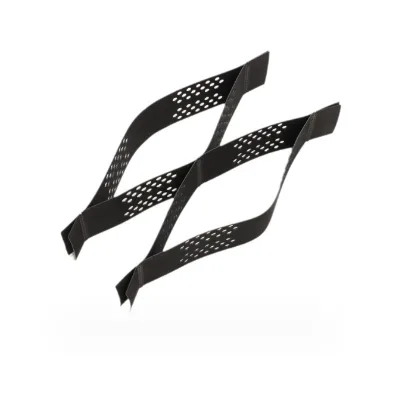
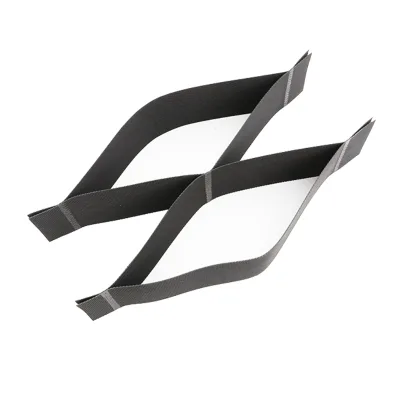
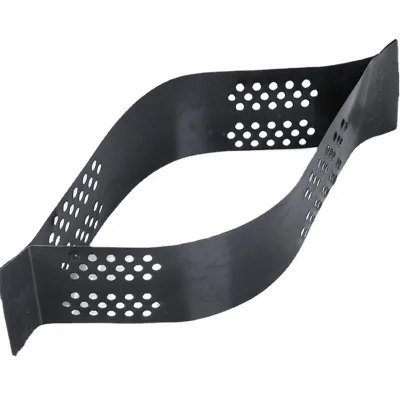
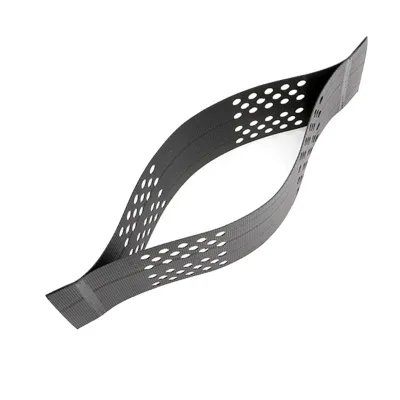
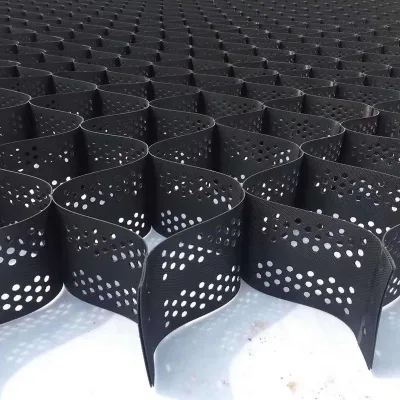
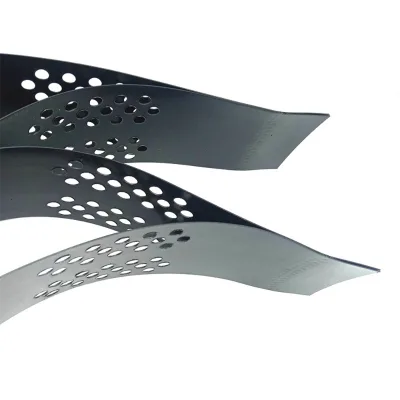


Cellular Confinement System Geocell for Erosion Control and Road
$0.32 - $1.09
MOQ: 2000 Square Meters


Geocell Cellular Confinement System Erosion Control for Construction and Slope Protection
$0.68 - $1.23
MOQ: 500 Square Meters
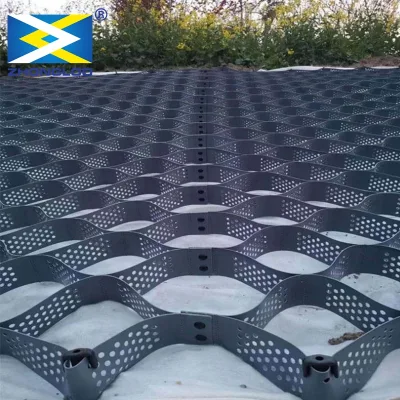


Premium Quality Plastic Geocell for Soil Stabilization and Ground Reinforcement
$0.50 - $5.00
MOQ: 100 Square Meters


Slope Protection Geocell Erosion Control Cellular Grid for Hillside Greening
$1.20 - $5.00
MOQ: 1000 Square Meters

Geocell/Membrane/Geogrid Geofabric UV Resistance Filament Textile Geotextile
$0.19 - $1.99
MOQ: 1000 Square Meters

Flexible High Quality Geocell for Durable Gravel Stabilization Needs
$2.78 - $3.18
MOQ: 1000 Square Feet

Eco-Friendly Geocell Flexible High for Gravel Stabilization Solutions
$2.78 - $3.18
MOQ: 1000 Square Feet

Durable Geocell Flexible High for Gravel Stabilization and Support
$2.78 - $3.18
MOQ: 1000 Square Feet

100% Virgin HDPE Geocell for Reliable Gravel Stabilizer Grid Solutions
$2.78 - $3.18
MOQ: 1000 Square Feet


100% Virgin Geocell for Effective Gravel Stabilization in Driveways
$2.78 - $3.18
MOQ: 1000 Square Feet


Comprehensive Sourcing Guide
Strategic Sourcing Guide for Geocell Procurement
Understanding Geocell Product Variants and Core Specifications
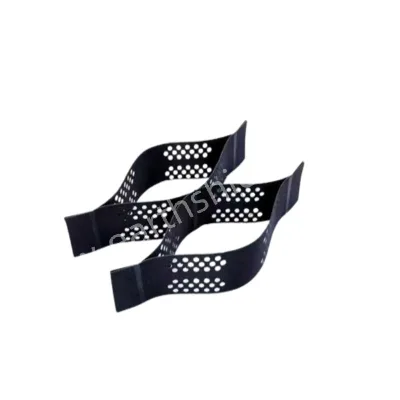
Geocells, often referred to as gravel grids or soil stabilization geocells, are three-dimensional honeycomb-like structures designed to confine and stabilize granular materials. When sourcing these products, buyers must first navigate the significant variance in technical specifications available in the current market. The product landscape is not monolithic; rather, it consists of distinct variants tailored for specific engineering challenges. Based on observed market data, the primary material composition for these units is High-Density Polyethylene (HDPE), though some listings also indicate Polypropylene (PP) or Polyethylene Terephthalate (PET) blends. The choice of material directly influences the product's chemical resistance, UV stability, and long-term durability in harsh environments.
A critical differentiator among suppliers is the thickness of the sheet material used to construct the cells. Market observations reveal a range of thicknesses, with specific listings noting 1.1 mm, 1.2 mm, and even 1.5 mm options. It is important to note that a 1.5 mm specification was observed alongside a description of "Steel Sheet," which suggests a potential confusion in product categorization or a specialized hybrid product. For standard Geocell applications, the polymer thickness is the primary indicator of load-bearing capacity. Buyers should verify that the thickness claim aligns with the intended application load. Furthermore, the model numbers provided by suppliers often correspond to the cell height or expansion dimensions, with observed ranges spanning from 100 mm to 400 mm, and specific models like 150-330 mm or 100-200 mm heights. The surface finish is another variable, with options ranging from smooth to textured smooth, the latter often preferred for increased friction with the infill material.
| Specification Attribute | Observed Range / Common Value | Procurement Consideration |
|---|---|---|
| Material | HDPE, HDPE PP, PP PET | Verify chemical compatibility with local soil and environmental conditions. |
| Thickness | 1.1 mm, 1.2 mm, 1.5 mm | Higher thickness generally correlates with higher tensile strength but increased cost. |
| Cell Height | 100 mm - 400 mm | Select based on the depth of the infill layer required for the specific project. |
| Surface Finish | Smooth, Textured Smooth | Textured surfaces offer better interlock with aggregate materials. |
| Weld Distance | 330 mm - 800 mm | Critical for determining the structural integrity of the honeycomb grid. |
Compliance Verification and Certification Standards
In the realm of civil engineering and infrastructure, compliance is not merely a formality but a prerequisite for project safety and longevity. When evaluating potential suppliers, buyers must rigorously verify certification status rather than relying on marketing claims alone. The supply chain data indicates that some manufacturers possess ISO certifications, with specific references to ISO 9001 and general ISO standards. Additionally, CE marking has been observed in product attributes, which is a mandatory conformity mark for products sold within the European Economic Area. However, the presence of a certification claim in a product listing does not guarantee that the specific batch of goods being ordered is certified.
Buyers should treat certification claims as observations to be validated through documentation. The procurement process must include a request for valid, up-to-date certificates from an accredited third-party body. It is essential to confirm that the certification covers the specific manufacturing facility and the exact product specifications being purchased. For instance, a general ISO 9001 certification for a company does not automatically validate the quality control of a specific Geocell model unless explicitly stated. Similarly, while some listings mention "Condition: New," this is a standard descriptor and does not replace the need for material test reports. Buyers should also be aware that while some suppliers list "CE" and "ISO" as attributes, the absence of these in a listing does not necessarily indicate non-compliance, but rather a lack of explicit listing. The onus is on the buyer to request proof of compliance with relevant local and international standards before finalizing any contract.
Cost Drivers and Economic Factors in Procurement
The economic landscape for Geocell procurement is influenced by a complex interplay of material costs, manufacturing complexity, and logistical factors. The observed price range in the market is exceptionally broad, spanning from $0.19 to $5,000 USD. This vast disparity is not indicative of a single product type but rather reflects the difference between small-scale samples, single-item units, and large-volume project orders. The Minimum Order Quantity (MOQ) is a significant driver of unit cost, with observed ranges from 1 unit up to 5,000 units. Buyers purchasing small quantities will inevitably face a higher per-unit cost compared to those securing bulk contracts.
Logistics and packaging also play a pivotal role in the total cost of ownership. The single package size varies significantly, with observations of 100x70x10 cm and smaller 10x10x3 cm configurations. These dimensions directly impact shipping volume and freight costs. Furthermore, the single gross weight of the packages ranges from 5.000 kg to 50.000 kg, suggesting that heavier, denser products or larger bundles will incur higher transportation expenses. Buyers must calculate the landed cost, which includes the product price, freight, insurance, and any applicable duties. The "Selling Units" attribute often lists "Single item," which can be misleading for large projects; buyers must clarify if the price quoted is per square meter, per roll, or per pallet. Understanding these variables is crucial for accurate budgeting and avoiding unexpected cost overruns during the project execution phase.
Typical Applications and Engineering Use Cases
Geocells are versatile engineering solutions deployed across a wide spectrum of applications, primarily focused on soil stabilization and structural support. The observed market data highlights several key use cases. One of the most prominent applications is in road construction, specifically for road basements and road surfaces where the Geocell layer distributes loads and prevents rutting. The product attributes explicitly mention "Road Basement" and "Road" as primary applications. In these scenarios, the Geocell confines the aggregate base, allowing for the use of lower-quality fill materials while maintaining structural integrity.
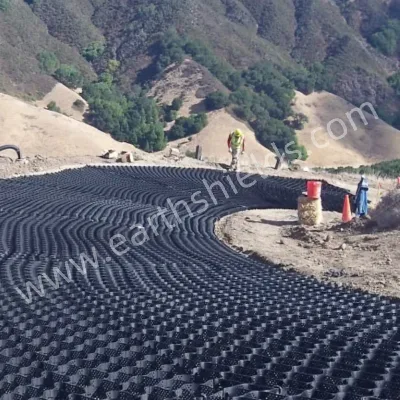
Beyond transportation infrastructure, geocells are extensively used in ecological and environmental engineering. The "Ecological Slope Protection System" is a noted application, where the grid structure prevents soil erosion on steep embankments while allowing vegetation to grow through the cells. This dual function of stabilization and ecological restoration makes geocells ideal for highway embankments, riverbanks, and coastal protection projects. Other observed applications include "earthwork application" and "Excavator" related tasks, suggesting their use in temporary construction access roads and heavy machinery support areas. The "Project Solution Capability" listed by suppliers often includes "3D model design" and "total solution for projects," indicating that many vendors offer engineering support to optimize the Geocell layout for specific site conditions. Buyers should match the product's feature set, such as "Flexible," "Eco-Friendly," and "Anti-Corrosion," to the specific environmental demands of their project site.
Supplier Evaluation and Service Capabilities
Selecting the right supplier involves more than just comparing product specifications; it requires a thorough assessment of their service capabilities and after-sales support. The market data reveals a tiered approach to customer service, with some suppliers offering basic "Online Technical Support" while others provide comprehensive on-site services. High-value suppliers differentiate themselves by offering "Onsite Installation," "Onsite Training," and "Onsite Inspection" services. These services are critical for complex projects where proper installation is as important as the product quality itself. The availability of "Free Spare Parts" and "Return and Replacement" policies further indicates a supplier's confidence in their product and commitment to long-term client satisfaction.
Geographic origin is another factor in supplier evaluation. A significant portion of the observed supply originates from Shandong, China, a region known for its manufacturing capabilities in plastic and construction materials. While this provides access to competitive pricing, buyers must consider the logistical implications of international shipping. The "Brand Name" HUABO is observed in the listings, but buyers should not limit their search to a single brand. Instead, they should evaluate the supplier's "Project Solution Capability," which ranges from "graphic design" to "Cross Categories Consolidation." A supplier capable of providing 3D model designs and total project solutions can add significant value by optimizing the Geocell layout for the specific terrain, potentially reducing material waste and installation time. Buyers should prioritize suppliers who demonstrate a proactive approach to problem-solving and offer clear communication channels, such as "24 hours online" service.
Quality Control and Long-Term Procurement Strategy
Ensuring the long-term performance of Geocell installations requires a robust quality control strategy that extends beyond the initial purchase. The warranty periods observed in the market vary, with some products offering a 1-year warranty and others providing up to 3 years. This variation should serve as a signal to buyers to investigate the underlying quality assurance processes of the manufacturer. A longer warranty period often correlates with higher confidence in the material's durability and resistance to degradation. However, buyers must read the fine print to understand what the warranty covers, as it may exclude certain types of damage or environmental factors.
For long-term procurement, buyers should establish a relationship with suppliers who offer consistent quality and reliable lead times. The "Sample: Freely" attribute suggests that many suppliers are willing to provide product samples for testing, which is a vital step in the quality verification process. Buyers should conduct independent testing on samples to verify the thickness, tensile strength, and chemical resistance before placing large orders. Additionally, the "Customization: Available" attribute indicates that suppliers can tailor products to specific project needs, such as custom colors (Black, Green/Custom) or specific dimensions. This flexibility is valuable for projects with unique aesthetic or functional requirements. By combining rigorous sample testing, clear warranty terms, and a focus on suppliers with strong after-sales support, buyers can mitigate risks and ensure the successful implementation of Geocell systems in their infrastructure projects.
FAQs
What material is used for Geocell grids?
Geocell grids are primarily constructed from High-Density Polyethylene (HDPE), though some variants use PP PET blends. This material choice ensures chemical resistance and durability for applications like road basements and ecological slope protection systems.
Which thickness options are available for geocells?
Available thickness options include 1.1 mm, 1.2 mm, and 1.5 mm for standard polymer sheets. Buyers should verify that the selected thickness aligns with the specific load-bearing requirements of their earthwork or road construction projects.
Can suppliers provide 3D model design services?
Yes, many suppliers offer 3D model design and total solution capabilities for Geocell projects. This service helps optimize the grid layout for specific site conditions, ensuring efficient installation and structural integrity for road basements or slope protection.
What warranty periods are typically offered?
Warranty periods vary, with some products offering 1 year and others providing up to 3 years of coverage. Buyers should review the specific terms to understand what aspects of the product are covered against defects or premature failure.
How flexible are Geocell structures for installation?
Geocell structures are designed to be flexible, allowing them to conform to uneven terrain during installation. This flexibility, combined with features like being lightweight and anti-corrosion, makes them suitable for various ecological and civil engineering applications.
What is the typical weld distance for geocells?
The weld distance for geocells typically ranges from 330 mm to 800 mm depending on the model. This dimension is critical for determining the structural integrity of the honeycomb grid and its ability to confine granular materials effectively.