Source Glazed Handmade Ceramic Bowls for Home Hotel Restaurant
Find 30 options for Glazed Handmade Ceramic Bowls suitable for home, hotel, and restaurant use. Buyers can compare features like eco-friendly design, custom logo printing, and certifications including FDA and LFGB to select the right porcelain or ceramic bowls for their needs.
Key considerations
Products List
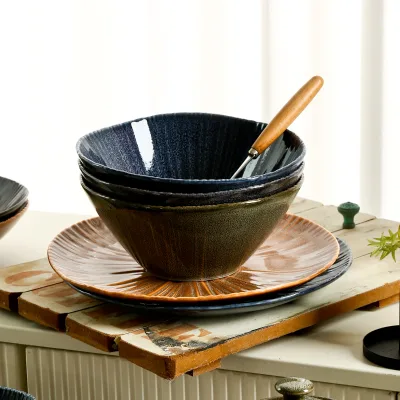


White Ceramic Food Storage Bowl Hand Painted Soup Bowl Custom Ceramic Fruit Bowl
$0.55 - $1.00
MOQ: 5000 Pieces


Simple Glazed Salad Porcelain Bowl Round Custom Ceramic Soup Bowl for Dinner
$0.50 - $1.00
MOQ: 5000 Pieces


Handmade Ceramic Bowls Breakfast Fruit Salad Pasta Noodle Yogurt Bowl with Handle
$2.73 - $3.43
MOQ: 500 Pieces


Comprehensive Sourcing Guide
Strategic Sourcing Guide for Glazed Handmade Ceramic Bowls
Understanding Product Specifications and Material Composition
When sourcing Glazed Handmade Ceramic Bowls, the primary distinction lies in the material composition and the specific firing techniques employed. The market for these items is characterized by a blend of traditional craftsmanship and modern manufacturing standards. Buyers must first distinguish between products labeled as "Porcelain" and those categorized broadly as "Ceramic," as these terms often appear interchangeably but imply different material densities and firing requirements. The supplied data indicates that high-quality options are frequently described as a composite of Ceramic and Porcelain, suggesting a material that offers the durability of stoneware with the refined finish of porcelain.
A critical technical specification to verify is the firing temperature. Evidence from the product data points to a firing temperature of 1280 degrees, a threshold that is essential for achieving the desired vitrification and structural integrity in glazed ceramics. Products that meet this thermal standard typically exhibit lower water absorption rates and higher mechanical strength. The glazing technique itself is another vital variable; the data highlights "Under Glazed" as a specific technique, which involves applying color pigments beneath the clear glaze layer. This method ensures that the design is protected from wear, scratching, and chemical leaching, making it superior for food contact applications compared to surface-printed alternatives.
The physical dimensions of the bowls are rarely standardized in the handmade sector. While some listings mention specific diameters, the prevailing trend for these items is "Custom" sizing. This flexibility allows buyers to tailor the bowl capacity to specific culinary needs, whether for a single-serving salad or a large communal noodle dish. The "Vintage" style mentioned in the product attributes suggests a design aesthetic that prioritizes artisanal irregularities and classic forms over the uniformity of mass-produced industrial ware. Buyers should expect variations in the "Single package size" and overall dimensions, as these are often dictated by the specific mold or hand-forming process used by the manufacturer.
Compliance and Certification Verification
In the global B2B market, compliance with international safety standards is non-negotiable for food-contact ceramics. The sourcing of Glazed Handmade Ceramic Bowls requires rigorous verification of certifications to ensure the product is safe for human consumption and meets the regulatory requirements of the destination market. The supplied context lists several critical certifications that serve as benchmarks for quality and safety. These include FDA (Food and Drug Administration) approval, LFGB (German Food and Feed Code), CE/EU (European Conformity), CIQ (China Inspection and Quarantine), and SGS (Société Générale de Surveillance).
Buyers must understand that the presence of these certifications is not merely a marketing claim but a verification of the product's compliance with specific chemical migration limits. For instance, FDA and LFGB standards strictly regulate the leaching of lead and cadmium from the glaze, which is a particular concern with glazed ceramics. The "Under Glazed" technique mentioned earlier often aids in meeting these standards by encapsulating the colorants, but independent testing remains necessary. The data also references "SGS, FDA, PROP65, LFGB" as part of the product standard, indicating that suppliers may adhere to California's Proposition 65 regulations, which mandate warnings for chemicals known to cause cancer or reproductive toxicity.
When evaluating a supplier, the buyer should request current, valid certificates of analysis (CoA) or test reports from accredited laboratories. The data indicates that some products are certified as "Ab Grade," a term that requires clarification as it is not a universally recognized international standard. Buyers should verify what specific quality tier "Ab Grade" represents in the context of the supplier's internal quality control system. Furthermore, the "CE/EU" certification implies that the product meets the European Union's framework for food contact materials, which is essential for any supplier targeting the European market. It is imperative to confirm that the certification covers the specific batch or model number being ordered, as certifications can be product-specific rather than company-wide.
Cost Drivers and Pricing Structures
The pricing of Glazed Handmade Ceramic Bowls is influenced by a complex interplay of material costs, labor intensity, and order volume. The observed price range in the market spans from $0.20 to $13.00 USD, a wide disparity that reflects differences in production methods, material quality, and customization levels. The lower end of this spectrum typically corresponds to mass-produced items with minimal customization, while the higher end reflects true handmade craftsmanship, complex under-glazed designs, and premium packaging.
One of the most significant cost drivers is the Minimum Order Quantity (MOQ). The data reveals an MOQ range of 50 to 10,000 pieces, with specific listings citing 1,200 pieces or 1,000 pieces as standard thresholds. High MOQs are common in the ceramic industry to amortize the costs of mold creation, kiln firing, and labor. Buyers ordering below the standard MOQ may face significantly higher per-unit costs or may be required to pay a setup fee. Conversely, larger orders often unlock volume discounts, bringing the unit price closer to the lower end of the observed range.
Customization is another major factor affecting the final price. The product data explicitly states that "Customized Designs," "OEM & ODM," and "Custom Logo Printing" are available. Implementing custom designs requires additional engineering time, the creation of new molds or decals, and potentially a separate production run. The "Pad printing" and "Decal" technologies mentioned in the data are methods used for applying these customizations, and the choice of technique can influence the cost. For example, decal application is often more versatile for complex, multi-color designs but may require higher setup costs than simple pad printing. Additionally, the "Firing Temperature" of 1280 degrees implies a higher energy cost compared to lower-temperature ceramics, which is factored into the base price.
Typical Applications and Usage Scenarios
Glazed Handmade Ceramic Bowls are versatile products designed for a wide array of applications, ranging from domestic use to commercial hospitality settings. The product attributes list "Home, Hotel, Restaurant, Wedding, Party" as primary usage scenarios, indicating that these bowls are suitable for both everyday dining and special events. The "Vintage" style and "Eco-Friendly" features make them particularly appealing for boutique hotels and restaurants that prioritize an authentic, sustainable dining experience.
In a commercial setting, the durability of the ceramic material is paramount. The "Non-Disposable" nature of these bowls means they are designed for repeated use and washing, making them a cost-effective choice for high-volume food service operations over time. The "All" occasion tag suggests that these bowls are adaptable to various menu types, from serving noodles and salads to presenting desserts or appetizers. The "White" and "Multicolor" color options allow buyers to match the bowls to specific branding or interior design themes. For instance, a white bowl with an under-glazed design might be used for a high-end restaurant to emphasize the food's presentation, while a multicolor bowl could be ideal for a casual family-style eatery or a wedding reception.
The "Single item" selling unit and "Normal Safe Packing" indicate that these products are often sold individually or in small sets, which is convenient for retailers and event planners who need to mix and match quantities. However, for large-scale catering or hotel procurement, the ability to customize packaging is a significant advantage. The data mentions "Customized Boxes" as an option, which allows brands to enhance their unboxing experience or protect the bowls during long-distance shipping. The "Eco-Friendly" attribute further aligns with the growing consumer demand for sustainable dining solutions, making these bowls a strategic choice for establishments looking to reduce their environmental footprint.
Supplier Evaluation and Production Capabilities
Selecting the right supplier for Glazed Handmade Ceramic Bowls requires a thorough evaluation of their production capabilities, lead times, and quality assurance processes. The data indicates that suppliers are located in key manufacturing hubs such as Guangdong and Fujian, China, regions known for their extensive ceramic industries. When evaluating a potential supplier, buyers should verify the "Sample time," which is listed as ranging from 7 to 15 days. This timeframe is crucial for validating the product's quality, design, and finish before committing to a large order.
The production lead time is another critical factor. The data shows a "Delivery time" of 45 to 60 days, with some suppliers offering a faster turnaround of 35 to 45 days after sample confirmation. These timelines reflect the complexity of the firing process and the potential need for custom mold preparation. Buyers must account for these lead times in their inventory planning to avoid stockouts. Additionally, the "Production Time" of 30 days, which is noted as "Negotiable," suggests that suppliers may be flexible with their schedules based on order volume and complexity.
Quality control is a vital aspect of supplier evaluation. The data mentions "Ab Grade" quality, which, as noted earlier, requires clarification. Buyers should ask for specific quality control protocols, such as visual inspection criteria, drop tests, and thermal shock resistance tests. The "Under Glazed" technique and the "Firing Temperature" of 1280 degrees are indicators of a robust production process, but the supplier's ability to maintain consistency across large batches is equally important. Suppliers that offer "OEM & ODM" services should also demonstrate a strong track record in managing custom design projects, ensuring that the final product matches the approved samples.
Long-Term Procurement Considerations
Sourcing Glazed Handmade Ceramic Bowls is not just a one-time transaction but a long-term partnership that requires ongoing management of quality, supply chain stability, and market trends. The "Eco-Friendly" nature of these products positions them well for future market demands, as sustainability becomes increasingly central to consumer preferences. Buyers should consider the lifecycle of the product, from manufacturing to disposal, and ensure that the supplier adheres to environmental standards that align with their own corporate sustainability goals.
The "Customized" aspect of the product line offers significant long-term value. As market trends shift, buyers can leverage the supplier's ability to adapt designs, colors, and packaging to meet changing consumer tastes. The availability of "Custom Logo Printing" and "OEM & ODM" services allows brands to differentiate themselves in a crowded market. However, maintaining this flexibility requires a strong relationship with the supplier and clear communication regarding design changes and quality expectations.
Finally, buyers should monitor the certification landscape. Regulations regarding food contact materials are subject to change, and suppliers must remain compliant with evolving standards such as FDA, LFGB, and CE/EU. A reliable supplier will proactively update their certifications and test reports to ensure continued market access. By focusing on suppliers with robust quality control, flexible production capabilities, and a commitment to sustainability, buyers can secure a steady supply of high-quality Glazed Handmade Ceramic Bowls that meet both current and future business needs.
FAQs
What certifications do Glazed Handmade Ceramic Bowls have?
These bowls hold FDA, LFGB, CE/EU, CIQ, and SGS certifications. They also meet PROP65 standards to ensure safety for food contact and compliance with international regulations for lead and cadmium leaching.
How long is the delivery time for custom orders?
Delivery typically takes 45 to 60 days after sample confirmation. Some suppliers offer a faster turnaround of 35 to 45 days once the sample is approved and production begins.
What is the minimum order quantity for these bowls?
The minimum order quantity ranges from 50 to 10,000 pieces. Specific listings often set the threshold at 1,000 or 1,200 pieces depending on the manufacturer and customization requirements.
Can buyers request custom designs and logos?
Yes, OEM and ODM services are available for custom designs and logos. Suppliers accept customized packaging and use techniques like pad printing or decal application to apply specific branding.
What material is used to make these ceramic bowls?
The bowls are made from a combination of ceramic and porcelain materials. They are fired at high temperatures of 1280 degrees to ensure structural integrity and durability for repeated use.
Where are these glazed ceramic bowls manufactured?
Manufacturing locations include Guangdong and Fujian provinces in China. These regions are known for their extensive ceramic industries and ability to produce high-quality handmade and glazed items.
What is the sample time for new product requests?
Sample preparation takes between 7 and 15 days. This timeframe allows buyers to verify the product quality, design, and finish before committing to a large-scale production order.