Source Gr5 Titanium Plate for Aerospace Medical Industrial
Find 30 listings for Gr5 Titanium Plate with varying grades, thicknesses, and shapes. Buyers can compare specifications from multiple suppliers to match industrial and medical requirements.
Key considerations
Products List


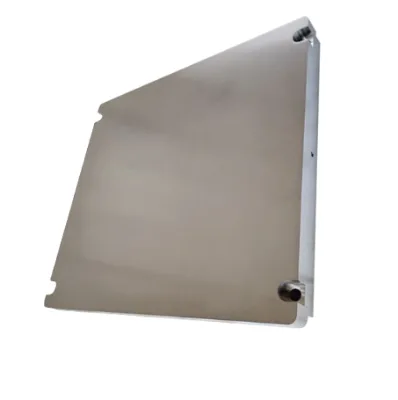


Comprehensive Sourcing Guide
Strategic Sourcing Guide for Gr5 Titanium Plate Procurement
Understanding Gr5 Titanium Plate Specifications and Variants
When sourcing Gr5 Titanium Plate, buyers must first distinguish between the specific material grades and the physical forms available in the global market. The core keyword "GR5" refers to a specific alloy composition, often synonymous with Ti-6Al-4V, which is the most widely used titanium alloy globally due to its exceptional strength-to-weight ratio. Based on observed market data, the product attributes for these plates include a defined shape classification of "Plate" and "Sheet," with the specific model designation often listed as "Gr5" or "6AL4V."
The physical dimensions of GR5 titanium plates vary significantly depending on the manufacturer and the intended application. Observed specifications indicate a thickness range extending from 0.2mm up to 80mm, with some industrial listings suggesting thicknesses up to 500mm for specific heavy-duty variants. The width of these plates is typically available up to 3000mm, while lengths are commonly offered in standard increments of 1m, 2m, 3m, 6m, or customized to specific project requirements. It is critical for buyers to note that while "GR5" is the primary focus, the supply chain often lists a broader range of grades including Gr1, Gr2, Gr3, Gr4, Gr7, and Gr12, which may be sold alongside or as alternatives depending on the specific mechanical properties required.
The manufacturing technique also plays a pivotal role in the final product characteristics. The market data indicates the availability of both "Cold Rolled" and "Hot Rolled" techniques. Cold rolled plates generally offer tighter tolerances and smoother surface finishes, which are often preferred for precision machining and aerospace applications. In contrast, hot rolled plates may be more suitable for structural applications where surface finish is less critical than bulk material properties. The surface finish options observed include pickled, bright polished, and satin finishes, which directly impact the material's corrosion resistance and aesthetic appeal for medical or architectural uses.
Compliance, Certification, and International Standards
Verifying compliance with international standards is a non-negotiable step in the procurement of Gr5 Titanium Plate. The supply chain for these materials is governed by a robust set of standards that ensure material consistency and safety. Observed product listings explicitly reference a wide array of standards, including ASTM, JIS, EN, DIN, GB, ISO, and AS/NZS. Specifically, the ASTM specifications are frequently cited as the primary benchmark, with buyers advised to verify that the supplier adheres to ASTM B265 or equivalent standards for titanium and titanium alloy plates and sheets.
Certification plays a crucial role in validating the quality of the material. High-confidence facts indicate that suppliers often provide certifications from recognized third-party inspection bodies such as SGS, BV, and TUV, alongside ISO certification. These certifications are not merely administrative; they serve as evidence that the material has undergone rigorous testing for chemical composition, mechanical properties, and dimensional accuracy. For industries such as medical and aerospace, where GR5 is a dominant material, the presence of these certifications is often a prerequisite for contract approval.
Buyers should also be aware of the variation in standard naming conventions. While "ASTM" is the most common reference, some listings may cite "AISI," "BS," or "KS" (Korean Standards). It is essential to cross-reference these with the specific project requirements. For instance, if a project is located in Europe, EN standards may be mandatory, whereas a project in China might require compliance with GB standards. The supplier's ability to provide documentation that maps their internal quality control processes to these external standards is a key indicator of their reliability. Furthermore, the "Customization" attribute observed in the market suggests that while standard grades exist, suppliers can often tailor the material to meet specific, non-standard requirements, provided the underlying chemical and mechanical properties remain within the acceptable tolerance limits defined by the relevant standard.
Cost Drivers and Pricing Dynamics in the Titanium Market
The pricing of Gr5 Titanium Plate is influenced by a complex interplay of factors, including raw material costs, manufacturing techniques, and order volume. The observed price range in the market spans from $1 to $1,099 USD, a variance that reflects the diversity of product specifications rather than a simple linear pricing model. This wide range suggests that the cost is heavily dependent on the thickness, width, length, and surface finish of the plate. Thicker plates and those with custom dimensions or specialized surface treatments will naturally command a higher price per unit.
The Minimum Order Quantity (MOQ) is another significant cost driver. The observed MOQ range varies from 1 unit to 500 units. For small-scale prototyping or emergency repairs, buyers may find suppliers willing to accommodate low MOQs, though this often comes with a premium unit cost. Conversely, large-scale industrial projects can leverage economies of scale by ordering in bulk, potentially reducing the per-unit cost. However, buyers must balance the savings from bulk ordering against the costs of inventory storage and capital tie-up.
Packaging and logistics also contribute to the overall cost structure. The market data indicates that products are typically shipped in "Export Standard Package," "Bundled," or "Standard Export Seaworthy Package" configurations. For heavy or high-value titanium plates, specialized packaging such as "Wooden Case" may be required to prevent damage during transit. These packaging requirements add to the final landed cost. Additionally, the origin of the product, primarily identified as Tianjin, China, influences shipping costs and lead times. Buyers should factor in freight charges, insurance, and potential import duties when calculating the total cost of ownership.
Typical Applications and Industry Use Cases
Gr5 Titanium Plate finds extensive application across multiple high-performance industries due to its unique combination of strength, corrosion resistance, and biocompatibility. The observed product attributes explicitly categorize the applications as "Industrial" and "Medical," highlighting the versatility of this material. In the medical sector, GR5 is frequently used for surgical implants, prosthetics, and dental components. The "Medical Used Bar" and "Eco-Friendly Disposable" attributes observed in the broader titanium product listings suggest a strong alignment with healthcare requirements, where biocompatibility and sterilization resistance are paramount.
In the industrial sector, the material is utilized in aerospace components, chemical processing equipment, and marine engineering. The "High-strength Steel Plate" and "Wear Resistant Steel" attributes, while technically referring to steel, often appear in the same product catalogs as titanium, indicating a shared customer base in heavy industry. The "Silicon Steel" and "Mold Steel" references further suggest that GR5 plates are often sourced for tooling and mold applications where durability and precision are critical. The "Free Cutting Steel" attribute also points to applications requiring high machinability, a trait that GR5 shares with other titanium grades.
The specific use cases for GR5 plates often depend on the surface finish and thickness. For example, "Pickled Bright Polished" surfaces are ideal for applications requiring high aesthetic value or where surface contamination must be minimized, such as in food processing or pharmaceutical equipment. Thicker plates with "Hot Rolled" finishes are more suitable for structural components in construction or heavy machinery. The "Square" and "Round" shape attributes observed in the broader product list indicate that while plates are the primary form, the material is also processed into bars and other shapes for specialized applications.
Supplier Evaluation and Quality Control Protocols
Evaluating a supplier for Gr5 Titanium Plate requires a multi-faceted approach that goes beyond price comparisons. Buyers should prioritize suppliers who demonstrate transparency in their sourcing and manufacturing processes. The presence of "Customization" capabilities is a strong indicator of a supplier's flexibility and technical expertise. A capable supplier should be able to discuss the nuances of different grades, such as the differences between Gr1, Gr2, and Gr5, and explain how these variations impact the final product performance.
Quality control is another critical factor. Buyers should verify that the supplier has established protocols for inspecting incoming raw materials and finished products. The observation of "SGS BV TUV ISO" certifications suggests that reputable suppliers engage third-party inspections to validate their claims. However, buyers should not rely solely on these certifications; they should request specific test reports for each batch of material, including chemical composition analysis and mechanical property testing. The "Surface" attributes like "Pickled," "Bright Polished," and "Satin" should be verified against the actual product samples to ensure consistency.
The packaging and shipping methods also serve as indicators of a supplier's attention to detail. The use of "Standard Export Seaworthy Package" or "Wooden Case" demonstrates a commitment to protecting the material during transit. Buyers should inquire about the supplier's packaging standards and whether they offer custom packaging solutions for fragile or high-value shipments. Additionally, the "Location" of the supplier, primarily in Tianjin, China, should be considered in the context of the buyer's logistics strategy. Proximity to major shipping ports can reduce lead times and freight costs, but buyers must also consider the potential for supply chain disruptions.
Long-Term Procurement Considerations and Risk Management
Sourcing Gr5 Titanium Plate is not a one-time transaction but a long-term strategic relationship that requires careful risk management. Buyers should consider the stability of the supply chain and the supplier's ability to scale production in response to demand fluctuations. The "Customization" attribute suggests that suppliers can adapt to changing requirements, but buyers should ensure that the supplier has the capacity to maintain quality and consistency over time.
Lead times and delivery reliability are also critical long-term considerations. While the observed data does not provide specific lead time figures, buyers should establish clear expectations regarding production and shipping schedules. Delays in the delivery of titanium plates can have cascading effects on downstream manufacturing processes, making it essential to have contingency plans in place.
Finally, buyers should monitor market trends and regulatory changes that could impact the availability and cost of GR5 titanium. The global demand for titanium is influenced by factors such as aerospace industry growth, medical technology advancements, and geopolitical tensions. By staying informed and maintaining a diverse supplier base, buyers can mitigate risks and ensure a steady supply of high-quality Gr5 Titanium Plate for their operations.
Comparative Analysis of Product Attributes
To facilitate informed decision-making, the following table summarizes the key product attributes observed in the Gr5 Titanium Plate market:
| Attribute Category | Observed Values | Relevance to Procurement |
|---|---|---|
| Grade | GR5, Gr1, Gr2, Gr3, Gr4, Gr7, Gr12, Ti-6Al-4V | Determines mechanical properties and application suitability. |
| Shape | Plate, Sheet, Square, Round | Defines the physical form and machining requirements. |
| Technique | Cold Rolled, Hot Rolled | Affects surface finish, tolerances, and cost. |
| Thickness | 0.2mm ~ 80mm (up to 500mm in some listings) | Critical for structural integrity and weight constraints. |
| Width | Up to 3000mm | Influences cutting patterns and material utilization. |
| Length | 1m, 2m, 3m, 6m, or Custom | Impacts logistics and on-site handling. |
| Surface Finish | Pickled, Bright Polished, Satin | Affects corrosion resistance and aesthetic requirements. |
| Certification | SGS, BV, TUV, ISO, ASTM, JIS, EN, DIN | Ensures compliance with industry standards and safety. |
| Origin | Tianjin, China | Influences shipping costs and lead times. |
| Packaging | Export Standard, Seaworthy, Wooden Case | Protects material integrity during transit. |
This comparative analysis highlights the diversity of options available in the market and underscores the importance of precise specification matching. By carefully evaluating these attributes, buyers can select the most suitable Gr5 Titanium Plate for their specific needs while minimizing the risk of procurement errors.
FAQs
What grades of titanium plate are available besides GR5?
Suppliers offer GR1, GR2, GR3, GR4, GR7, GR9, and GR12 alongside GR5. These grades vary in chemical composition and mechanical properties to suit specific industrial or medical applications requiring different strength or corrosion resistance levels.
Which international standards govern Gr5 Titanium Plate production?
Products comply with ASTM, JIS, EN, DIN, GB, ISO, and AS/NZS standards. Buyers should verify that the specific ASTM specification matches project requirements, as these standards ensure consistent material quality and safety across global supply chains.
Can I customize the dimensions of the titanium plate?
Customization is available for length, width, and thickness to meet specific project needs. Standard lengths include 1m, 2m, 3m, and 6m, while thickness ranges from 0.2mm to 80mm, with custom orders often requiring specific packaging arrangements.
What certifications do Gr5 Titanium Plate suppliers provide?
Reputable suppliers provide certifications from SGS, BV, TUV, and ISO bodies. These third-party validations confirm that the material meets rigorous testing standards for chemical composition and mechanical properties, which is essential for medical and aerospace sectors.
How is Gr5 Titanium Plate typically packaged for export?
Standard export seaworthy packages, bundled configurations, or wooden cases are commonly used. The packaging method depends on the order size and shipping requirements, ensuring the material remains undamaged during transit from the origin in Tianjin, China.
What surface finishes are available for titanium plates?
Available finishes include pickled, bright polished, and satin surfaces. The choice of finish impacts corrosion resistance and aesthetic appeal, with pickled and polished options often preferred for medical implants and high-precision industrial components.