Source Gravity Salt Box for kitchen storage, spice organization, and condiment dispensing
Find 30 verified listings for the Gravity Salt Box designed for efficient kitchen storage, spice organization, and condiment dispensing. Compare specifications including material, capacity, and customization options from multiple suppliers to identify the best fit for your sourcing needs.
Key considerations
Products List
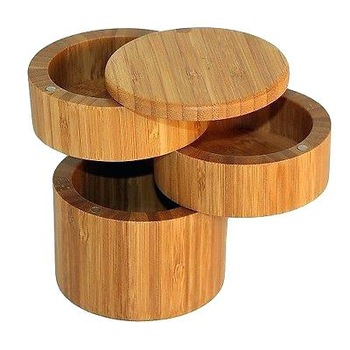


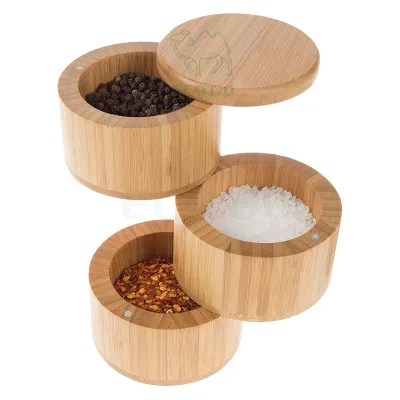


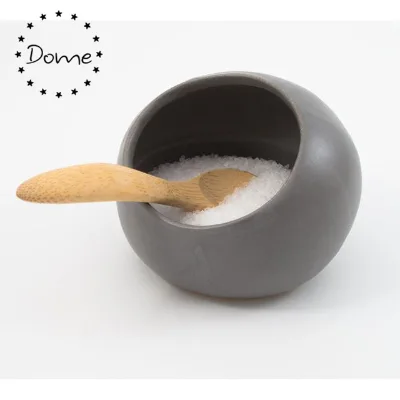


Heavy Duty Outdoor Road Salt Storage Box with Lockable Weatherproof Lid
$100.00 - $500.00
MOQ: 10 Pieces


Comprehensive Sourcing Guide
Strategic Sourcing Guide for Gravity Salt Boxes
Understanding Product Definitions and Core Attributes
When sourcing a Gravity Salt Box, buyers must first distinguish between the functional mechanism and the material composition, as the market often presents mixed terminology. The core keyword "Gravity Salt Box" implies a storage vessel designed to dispense salt using gravitational force, typically through a rotating or tilting mechanism. Based on observed product data, the specific item is frequently categorized as a "Bamboo Swivel Box" or "Swivel Salt Box," indicating a rotational design that utilizes gravity to control flow. The product type is explicitly listed under "Storage Bottles & Jars" and "Herb & Spice Tools," confirming its primary utility in culinary environments.
A critical observation in the current supply landscape is the divergence in material specifications. While the primary search intent often targets natural materials, the data reveals a significant presence of products made from "PP" (Polypropylene) alongside "Bamboo." The bamboo variants are marketed with attributes such as "Eco-Friendly" and "Natural" color, whereas the plastic variants are often associated with "Injection Molding" processes and "Twin Sheet Blow Moulding Series." Buyers must verify the material composition of the specific unit they intend to purchase, as the mechanical properties and aesthetic appeal differ vastly between organic bamboo and synthetic polypropylene. The "Orange" and "Blue (Customizable)" color options further indicate that these units are available in various finishes, which may be influenced by the underlying material choice.
Technical Specifications and Dimensional Standards
Precision in technical specifications is paramount for procurement, particularly when integrating these containers into existing kitchen workflows or retail displays. The observed data provides specific dimensional tolerances that serve as a benchmark for quality assessment. For bamboo-based units, the dimensional tolerance is listed as less than ±1mm, ensuring a tight fit for the swivel mechanism and preventing leakage or spillage. Similarly, the weight tolerance is strictly controlled at less than ±1%, which is essential for automated filling lines or precise inventory management.
The physical dimensions of the single package are recorded as 20x20x20 cm, suggesting a compact footprint suitable for standard shelving. However, capacity data presents a notable discrepancy in the source material. One entry specifies a capacity of 201-300ml, which is typical for individual kitchen use, while another entry lists a capacity of greater than 2000L, which likely refers to a different product category such as a "Plastic Pallet Box" or industrial storage solution rather than a consumer salt box. Procurement teams must explicitly verify the capacity range to ensure it aligns with the intended application, whether it is for household spice racks or bulk industrial storage.
Furthermore, the manufacturing process plays a vital role in the final product's integrity. The "Injection Molding" process is noted for the plastic variants, allowing for complex geometries and consistent wall thickness. In contrast, bamboo units rely on traditional joinery and assembly. The "Folding Ratio" attribute, noting a volume reduction of 75% when folded, suggests that some designs in this category may be collapsible, a feature that significantly impacts logistics and storage efficiency during shipping. Buyers should confirm if the gravity mechanism is compatible with the folding design, as structural integrity is often compromised in collapsible units.
Compliance, Certification, and Material Safety
In the realm of food contact products, compliance and certification are non-negotiable. The supply data indicates that certain plastic variants carry "ISO" certification, which is a strong indicator of adherence to international management system standards. For bamboo products, while specific food-grade certifications are not explicitly listed in the provided text, the "Eco-Friendly" attribute implies a focus on sustainable sourcing. However, buyers must independently verify that the bamboo has been treated with food-safe finishes and that the glue or binding agents used in the swivel mechanism do not leach harmful substances.
The "IP Rating" attribute is mentioned in the context of "Aluminum" material, which is unusual for a salt box but suggests that some products in the broader category may have water or dust resistance features. For a standard Gravity Salt Box, the primary concern is not IP ratings but rather the material's resistance to moisture and salt corrosion. Salt is hygroscopic and can degrade certain materials over time. Buyers should request material safety data sheets (MSDS) to ensure the bamboo or plastic used is resistant to salt corrosion and does not impart an off-flavor to the condiments.
Additionally, the "Customized" standard and "Custom Dimension" options allow for tailored solutions, but customization can introduce variability in compliance. When a supplier offers custom dimensions or logos via "Laser Engraving," the buyer must ensure that the engraving process does not compromise the structural integrity or the food-safe coating of the container. The "Logo: Acceptable" and "Logo: Laser Engraving" attributes confirm that branding is a standard service, but the ink or engraving depth must be verified to meet local food safety regulations.
Cost Drivers and Pricing Dynamics
The pricing for gravity salt boxes is influenced by a complex interplay of material costs, manufacturing complexity, and order volume. The observed price range spans from $0.01 to $2000, a vast spread that reflects the diversity of the product category, from simple single-item units to large-scale industrial pallet boxes. For a standard bamboo swivel salt box, the cost is driven primarily by the raw material price of bamboo, which fluctuates based on harvest seasons and regional availability in Fujian, China. The "OEM" brand status suggests that many units are produced for private labelers, which can affect the final price depending on the level of customization required.
Order volume is a significant cost driver, with the observed MOQ (Minimum Order Quantity) ranging from 1 to 500,000 units. A low MOQ of 500 units is typical for custom bamboo products, allowing smaller buyers to enter the market without excessive inventory risk. However, for plastic units manufactured via "Injection Molding," the high initial tooling costs are amortized over larger volumes, making the per-unit cost significantly lower at higher quantities. The "Supply Ability" of 20,000 units per month indicates that suppliers have the capacity to handle moderate to large orders, but buyers should verify if this capacity is consistent during peak seasons.
Other cost factors include the "Packaging Details," which are listed as "OEM PACKAGE." Custom packaging adds to the unit cost but is often necessary for retail presentation. The "Single gross weight" of 1.000 kg per unit also impacts shipping costs, particularly for air freight. Buyers should calculate the total landed cost, including freight, duties, and packaging, rather than focusing solely on the unit price. The "Port of dispatch" being Ningbo is a standard logistics hub, but buyers should confirm if the supplier offers Ex-Works (EXW) or Free on Board (FOB) terms to better manage their supply chain costs.
Typical Applications and Usage Scenarios
The primary application of the Gravity Salt Box is clearly defined as "Spice" and "Condiments Container." The "Use" attribute is explicitly listed as "Storage," and the specific "herb & spice tools type" is identified as a "salt box." This confirms its role in both professional kitchens and home pantries. The "Cover" style mentioned in the attributes suggests a design that protects the salt from humidity and contaminants, which is crucial for maintaining the quality of the condiment.
In commercial settings, the "Gravity" mechanism offers a distinct advantage by allowing for one-handed operation, improving efficiency during high-volume food preparation. The "Swivel" design ensures that the salt flows only when the box is tilted, preventing accidental spills. For retail environments, the "Eco-Friendly" and "Natural" attributes of bamboo boxes appeal to consumers seeking sustainable kitchenware, while the "Customized" colors and "Laser Engraving" options allow retailers to create branded products that stand out on shelves.
The data also hints at broader applications through the mention of "Plastic Pallet Box" and "Storage" with a capacity of >2000L. While this is likely a separate product line, it suggests that the supplier may offer a range of storage solutions. Buyers interested in bulk storage for restaurants or warehouses should verify if the Gravity Salt Box design can be scaled up or if they need to source a different product for large-volume storage. The "Operating Temperature" range of -20°C to 60°C for some units indicates suitability for various storage environments, including cold storage areas, provided the material is compatible with the temperature extremes.
Supplier Evaluation and Quality Control Protocols
Evaluating suppliers requires a rigorous approach to verifying the claims made in product listings. The "Place of Origin" is consistently listed as Fujian, China, for bamboo products and Jiangsu for plastic variants. Buyers should prioritize suppliers with a physical presence in these regions, as they are established hubs for bamboo processing and plastic molding. The "Sample Time" of 7-10 days is a standard benchmark; buyers should request samples to physically test the swivel mechanism, check for smooth rotation, and verify the weight tolerance.
Quality control should focus on the dimensional tolerance of ±1mm and the weight tolerance of ±1%. These tight tolerances are indicative of high-precision manufacturing. Buyers should inspect the "Single package size" of 20x20x20 cm to ensure it matches the supplier's description, as discrepancies here can lead to shipping inefficiencies. The "Stacking Layers" attribute, noting 4-5 layers, suggests that some units are designed for vertical storage, which buyers should test for stability.
When evaluating the "Manufacturing Process," buyers should distinguish between "Injection Molding" for plastic and traditional assembly for bamboo. For bamboo units, check for signs of warping or loose joints, which can compromise the gravity mechanism. For plastic units, inspect for flash or uneven walls that might result from the molding process. The "Certification: ISO" is a positive signal, but buyers should ask for the specific certificate number and validity date to ensure it is current and relevant to food contact materials.
Long-Term Procurement and Supply Chain Resilience
Long-term procurement strategies for gravity salt boxes must account for supply chain resilience and scalability. The "Supply Ability" of 20,000 units per month provides a baseline for planning, but buyers should assess the supplier's ability to scale up during peak demand periods. The "Customization: Available" attribute is a double-edged sword; while it offers flexibility, it can also lead to longer lead times and higher costs if not managed correctly. Buyers should establish clear communication channels regarding customization requests to avoid delays.
The "Brand Name" being "OEM" suggests that many suppliers are focused on private label production. This can be advantageous for buyers looking to build their own brand, but it requires careful management of intellectual property and branding assets. The "Logo: Acceptable" and "Laser Engraving" options should be standardized early in the procurement process to ensure consistency across batches.
Finally, buyers should consider the environmental impact of their procurement decisions. The "Eco-Friendly" attribute of bamboo products aligns with growing consumer demand for sustainable goods. However, buyers must verify the sourcing of the bamboo to ensure it is harvested responsibly. For plastic units, the "PP" material is recyclable, but buyers should inquire about the supplier's recycling programs or the use of post-consumer recycled content. By focusing on these long-term considerations, buyers can build a sustainable and resilient supply chain for gravity salt boxes that meets both current market demands and future regulatory requirements.
FAQs
What material options exist for gravity salt boxes?
Gravity salt boxes are available in bamboo and polypropylene materials. Bamboo units offer an eco-friendly natural finish, while plastic variants are produced via injection molding and twin sheet blow molding processes for durability.
How can I verify the dimensional tolerance of the product?
The dimensional tolerance for these containers is strictly controlled at less than ±1mm. This precision ensures a tight fit for the swivel mechanism and prevents leakage during the dispensing of salt or spices.
Which certifications are available for plastic salt storage units?
Certain plastic variants carry ISO certification to indicate adherence to international management system standards. Buyers should verify the specific certificate number to ensure it is current and relevant to food contact materials.
Can the product be customized with a specific logo?
Yes, customization is available with options for laser engraving to apply logos. The product accepts custom colors and dimensions, allowing for tailored branding solutions while maintaining the structural integrity of the container.
What is the typical minimum order quantity for these boxes?
The minimum order quantity ranges from 1 to 500,000 units depending on the supplier and customization level. A low MOQ of 500 units is typical for custom bamboo products to reduce inventory risk for smaller buyers.
How does the swivel mechanism function for salt dispensing?
The swivel mechanism utilizes gravity to control flow, allowing salt to dispense only when the box is tilted. This design prevents accidental spills and enables one-handed operation, making it efficient for kitchen use.
What is the supply capacity for monthly orders?
Suppliers have a supply ability of 20,000 units per month for standard orders. Buyers should verify if this capacity remains consistent during peak seasons to ensure timely delivery for large-scale procurement needs.