Source Gravity Concentration Spiral Separator for Mining
Find and compare 30 Gravity Concentration Spiral Separator models from verified Chinese manufacturers. Evaluate specifications like capacity, feeding density, and dimensions to select the right equipment for mineral separating and mining concentration applications; compare the available evidence and request quotations based on your requirements.
Key considerations
Products List


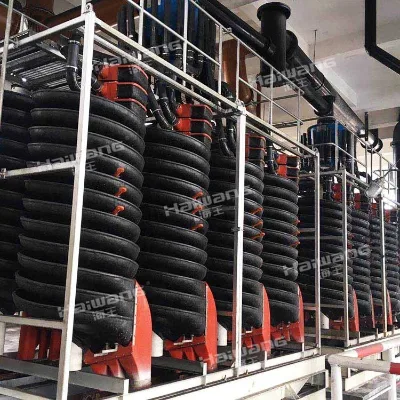


Grit Water Filtering Spiral Separator
$2500.00 - $3000.00
MOQ: 1 Pieces
Yangzhou Pujiang Environmental Protection Technology Co., Ltd.

Wastewater Treatment Spiral Sand Water Separator
$2500.00 - $2800.00
MOQ: 1 Pieces
Yangzhou Pujiang Environmental Protection Technology Co., Ltd.

Sewage Treatment Spiral Sand Water Separator
$2500.00 - $3000.00
MOQ: 1 Pieces
Yangzhou Pujiang Environmental Protection Technology Co., Ltd.


Efficient Gravity Mineral Separation for Cost Effective Mining Spiral Concentrator
$10999.00 - $29999.00
MOQ: 16 Sets
Comprehensive Sourcing Guide
Gravity Concentration Spiral Separator Sourcing Guide
Buyers evaluating gravity concentration spiral separators must first distinguish between general mineral separating units and specialized mining concentration equipment. The observed market listings indicate a primary focus on metallic and non-metallic ore processing, with specific models designed for feeding densities ranging from 25% to 50%. This variation in operational parameters suggests that procurement decisions should be driven by the specific gravity and particle size distribution of the target ore body rather than a generic equipment selection.
The functional classification of these units as gravity concentrators implies a reliance on natural density differences rather than chemical reagents for separation. Prospective purchasers should verify that the selected unit aligns with their required throughput, as observed capacities typically range between 6 and 8 tons per hour. Understanding this capacity constraint is essential for sizing the equipment correctly within the broader mineral processing circuit to ensure efficient material flow and optimal recovery rates.
Product Scope and Observed Listing Signals
The product scope for gravity concentration spiral separators encompasses a variety of model configurations, including specific designations like the 5LL series and general spiral chute units. Listings frequently highlight customization availability, allowing buyers to tailor the spiral distance and outer diameter to fit unique site constraints. The observed outer diameter of 1500mm and specific spiral distances of 810, 720, or 540mm provide concrete benchmarks for evaluating physical fitment against existing plant infrastructure.
Market signals also reveal a strong emphasis on condition and packaging standards, with most units listed as new and available for immediate delivery. Buyers should note the variance in packing options, which range from iron frames to export-standard container packing or nude shipping. This flexibility in logistics preparation is a critical signal for international procurement, as it directly impacts shipping costs and the risk of damage during transit to remote mining locations.
Technical Specifications to Verify
Technical verification must begin with the feeding size and density parameters, which are critical for maintaining separation efficiency. The observed feeding size range of 0.02 to 3mm and density requirements between 30% and 50% define the operational envelope of the separator. Procurement teams should confirm that the supplier's specific model can consistently handle the feed characteristics of their raw material, as deviations in these parameters can lead to significant losses in valuable mineral recovery.
Dimensional and power specifications also require rigorous validation to ensure compatibility with site utilities and spatial limitations. While some listings specify boundary dimensions of 1560x1560x5230mm, others indicate that dimensions and power ratings vary by model. Buyers must request exact dimensional drawings and voltage requirements, such as the observed 380V standard, to prevent costly retrofitting of electrical systems or structural modifications to the installation site.
Compliance and Safety Documentation
Compliance verification is paramount when sourcing industrial machinery, with ISO9001 certification appearing as a consistent standard across multiple listings. This certification indicates that the manufacturer maintains a quality management system, which is a baseline requirement for ensuring consistent production quality. Buyers should explicitly request current certification documents to confirm that the specific unit being purchased was manufactured under these controlled conditions rather than relying on general company claims.
Safety and regulatory compliance also extend to international standards such as CE certification, which is noted in several product attributes. The presence of CE marking alongside ISO9001 suggests adherence to European safety directives, which is particularly relevant for equipment destined for export markets. Procurement teams must ensure that the documentation provided matches the specific model and that the manufacturer can supply the necessary technical files to satisfy local regulatory bodies in the destination country.
Cost Drivers and Commercial Terms
Cost drivers for gravity concentration spiral separators are heavily influenced by customization levels and the specific model configuration selected. While some listings advertise a "Best" price, the actual cost is likely driven by the complexity of the spiral distance, the outer diameter, and the inclusion of custom iron frames or specialized packing. Buyers should understand that the price range of 500 to 30,000 USD reflects significant variance based on these technical specifications and the level of engineering support included in the quote.
Commercial terms regarding lead time and minimum order quantity (MOQ) are equally critical for supply chain planning. The observed MOQ range of 1 to 16 units and delivery dates ranging from "in stock now" to two days indicate a mix of ready-to-ship and made-to-order inventory. Procurement strategies should account for these lead times, especially if the project timeline is tight, and negotiate clear terms regarding payment schedules and the handling of any potential delays in production or shipping.
Supplier Qualification and Quality Control
Supplier qualification should prioritize manufacturers that offer comprehensive after-sales support, including the availability of engineers for overseas service. This level of support is a key differentiator in the mining sector, where equipment downtime can result in substantial financial losses. Buyers must verify the supplier's capacity to deploy technical personnel to the site for installation, commissioning, and troubleshooting to ensure the separator operates at peak efficiency from day one.
Quality control processes are further evidenced by the provision of testing services and the explicit declaration of high-quality standards. The observation that testing is supplied by the manufacturer suggests a commitment to validating performance before shipment. Procurement teams should request detailed test reports or performance data for the specific model being purchased to confirm that the unit meets the expected recovery rates and operational stability before finalizing the purchase agreement.
Long-Term Procurement Checks
Long-term procurement success depends on securing robust warranty coverage and clear maintenance protocols. The observed warranty periods of one or two years provide a baseline for manufacturer liability, but buyers should negotiate terms that cover critical components and labor costs for extended periods. Understanding the scope of the warranty is essential for budgeting future maintenance expenses and ensuring that the supplier remains accountable for the equipment's performance over its operational lifecycle.
Sustainability and energy efficiency are becoming increasingly important factors in long-term equipment selection. The attribute "Energy Saving" suggests that modern spiral separators are designed to minimize power consumption, which directly impacts operational costs over time. Buyers should verify the specific power ratings for their chosen model and compare them against industry benchmarks to ensure that the selected equipment offers a competitive advantage in terms of energy efficiency and reduced total cost of ownership.
FAQs
What is the capacity of the spiral gravity separator?
The capacity ranges from 6 to 8 tons per hour for this specific model. This output depends on the feeding density being maintained between 25 and 50 percent during operation to ensure optimal mineral separation efficiency.
Can the spiral separator be customized for specific needs?
Yes, customization is available for this gravity concentration equipment. Buyers can request specific packing options like iron frames or export standards, and the model dimensions can vary to suit different mining object requirements.
Which certifications does the spiral separator hold?
The product holds ISO9001 certification and some models include CE certification. These standards ensure the machinery meets quality requirements for new condition units used in metallic and non-metallic ore excavation processes.
How long is the warranty period for the separator?
Warranty periods are listed as either one year or two years depending on the specific unit. Engineers are available to provide overseas service machinery support to ensure long-term operational reliability for mining concentration tasks.
What is the delivery time for the spiral separator?
Delivery is available immediately as the items are currently in stock. Some listings indicate a two-day delivery window for in-stock units, ensuring quick procurement for urgent mining concentration projects requiring gravity separators.
What is the feeding size range for the separator?
The feeding size ranges from 0.02 to 3 millimeters for effective separation. This specification allows the gravity concentrator to process various ore types while maintaining the required feeding density between 30 and 50 percent.