Source Green SMT Soldering Assembly for Auto, Lighting, and Electronics
Explore 30 listings for Green SMT Soldering Assembly solutions tailored for the auto, lighting, and electrical industries. Buyers can compare specifications like wave height, preheating length, and temperature accuracy to find the right equipment for their production needs.
Key considerations
Products List


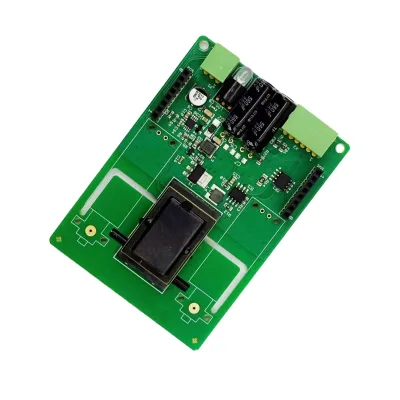


Automatic PCBA Electronics Assembly Soldering Machine PCB Soldering Robot Welder
$2500.00 - $6000.00
MOQ: 1 Pieces

Comprehensive Sourcing Guide
Strategic Sourcing Guide for Green SMT Soldering Assembly
The global demand for Green SMT (Surface Mount Technology) soldering assembly has surged as manufacturers seek to integrate high-density electronic components with environmentally compliant processes. For procurement professionals, navigating this sector requires a granular understanding of technical specifications, material standards, and the rigorous verification of supplier capabilities. This guide provides a structured approach to sourcing, grounded in observable product attributes and established industry standards, ensuring that buyers can make informed decisions without relying on unverified marketing claims.
Technical Specifications and Process Capabilities
When evaluating Green SMT Soldering Assembly solutions, the primary focus must be on the machine's ability to handle complex board geometries while maintaining precision. The core technical parameters define the operational ceiling of the assembly line. Buyers should verify that the equipment supports a maximum PCB width of 300mm, which is critical for accommodating large-format industrial and automotive boards. The wave height capability is a specific metric that influences solder joint quality; observed ranges indicate a functional window of 0-8mm, allowing for fine-tuning based on component density.
The thermal profile is equally vital. The heating system typically utilizes electric mechanisms to ensure consistent temperature distribution. Precision in temperature control is non-negotiable, with acceptable accuracy often cited within a range of ±2 degrees. This level of control prevents thermal shock to sensitive components while ensuring proper solder flow. Furthermore, the preheating length is a key design feature, with standard configurations offering a 600mm preheat zone. This length allows for gradual temperature ramping, which is essential for activating flux and preventing voids in the solder joints.
Component compatibility is another critical technical dimension. The machinery must accommodate a wide range of component heights, specifically designed to handle parts ranging from under 8mm to above 130mm. This versatility ensures that the assembly line can process mixed-technology boards containing both small surface-mount devices and large through-hole connectors. The installation mode is typically vertical, which optimizes space utilization and facilitates gravity-assisted soldering in specific wave soldering configurations.
Material Standards and PCB Substrate Requirements
The foundation of any successful assembly lies in the substrate material. For Green SMT applications, the base material is predominantly FR4, a glass-reinforced epoxy laminate known for its excellent electrical insulation and mechanical strength. The standard specification often references FR-4 with silicon components, indicating a compatibility with high-performance circuits. The number of layers is a decisive factor; multilayer boards are the norm for complex assemblies, requiring precise alignment and drilling capabilities.
Drilling and trace specifications must be scrutinized to ensure the assembly can meet the density requirements of modern electronics. The minimum hole size is a critical tolerance, with observed capabilities reaching down to 0.15mm. Similarly, the minimum line spacing, which dictates the density of the circuit traces, typically falls within the 0.075mm to 0.09mm range. These dimensions are essential for high-frequency applications where signal integrity is paramount.
The solder mask color is a visible indicator of the assembly's aesthetic and functional standards. While the core keyword specifies "green," the market offers a variety of options including white, black, yellow, red, and blue. However, for Green SMT specifically, the solder mask is often green, though purple and black silk screen colors are also available for specific identification needs. The metal coating process, typically involving copper, ensures reliable conductivity and solderability. Buyers must confirm that the material grade meets the specific thermal and electrical demands of their application, as FR4 variants can differ in Tg (glass transition temperature) and moisture absorption rates.
Compliance, Certification, and Regulatory Adherence
In the B2B electronics sector, compliance is not merely a formality but a prerequisite for market access. Suppliers must provide verifiable documentation regarding their certifications. The most common standards observed in this sector include ISO and CE, which indicate adherence to international quality management and European safety directives. Additionally, RoHS (Restriction of Hazardous Substances) and CCC (China Compulsory Certification) are frequently cited, ensuring that the assembly process and final products do not contain restricted hazardous materials.
The certification landscape extends beyond the machine itself to the production process. A "Certificate Guarantee" is often provided, affirming that the manufacturing service adheres to strict quality protocols. The standard product specifications may list "CE ISO SGS," suggesting a multi-layered approach to quality assurance. Buyers should verify that the supplier's certifications are current and applicable to the specific region where the assembled boards will be deployed. For instance, while ISO is a global standard, specific industry sectors like automotive or medical may require additional, niche certifications that are not always listed in general product summaries.
It is crucial to distinguish between the machine's certifications and the PCB assembly service's capabilities. The machine may be CE certified for safety, but the assembly service must demonstrate compliance with RoHS to ensure the final product is environmentally compliant. Procurement teams should request copies of these certificates and verify their validity with the issuing bodies to avoid relying on unverified claims.
Cost Drivers and Economic Factors
The total cost of ownership for Green SMT Soldering Assembly is influenced by several dynamic factors. The initial capital expenditure is driven by the machine's specifications, such as the electric heating system, the precision of the temperature control, and the robustness of the frame, which often weighs around 650kg. The dimensions of the equipment, typically around 1400mm in length, 1000mm in width, and 1500mm in height, also impact logistics and facility requirements.
Beyond the hardware, the cost is heavily influenced by the customization level. While standard models are available, the "Customized" attribute indicates that many suppliers offer tailored solutions. Customization can significantly alter the price, as it involves engineering time and specialized tooling. The packaging method is another cost variable; options range from plywood cases to wooden cases, and for smaller components, vacuum packaging within carton boxes. The choice of packaging affects shipping costs and the risk of damage during transit.
The Minimum Order Quantity (MOQ) is a critical economic lever. Observed ranges vary from 1 to 100 units, depending on the supplier and the specific configuration. For large-scale production, negotiating a lower unit cost through volume commitments is standard practice. However, for prototyping or low-volume runs, the flexibility of a low MOQ is essential. Buyers must also consider the lead time, which is often linked to the customization level and the supplier's location. Products originating from major manufacturing hubs like Beijing or Shenzhen may have different logistical timelines compared to those from other regions.
Typical Applications and Industry Alignment
Green SMT Soldering Assembly is not a one-size-fits-all solution; it is tailored to specific industry needs. The primary application sectors include the automotive industry, where reliability and durability are paramount. The lighting industry also relies heavily on these assemblies for LED drivers and control units. Furthermore, the electrical and electronics industry, along with the communication industry, are major consumers of high-quality SMT services.
In the automotive sector, the ability to handle multilayer boards with high component density is crucial for engine control units and infotainment systems. The lighting industry requires precise thermal management, making the temperature accuracy of ±2 degrees a key selling point. The communication industry demands high-speed signal integrity, which is supported by the fine line spacing capabilities of the assembly process.
The "Service" attribute often encompasses a full turnkey solution, including PCB fabrication, assembly, and component sourcing. This integrated approach reduces the supply chain complexity for buyers. The testing services provided, such as electrical testing, flying probe testing, and functional testing, ensure that the final product meets the rigorous standards of these high-stakes industries. The mode of production, often DIP (Dual In-line Package) mixed with SMT, allows for the assembly of hybrid boards that are common in industrial equipment.
Supplier Evaluation and Quality Control Protocols
Selecting the right supplier requires a rigorous evaluation of their quality control (QC) protocols. The "Condition" of the equipment should be verified as "New" to ensure optimal performance and longevity. The warranty period, typically 12 months, is a standard benchmark that buyers should confirm in the contract. However, the warranty should cover not just the hardware but also the software and technical support.
Quality control extends to the testing phase. A "100% E-Testing" (Electrical Testing) mandate is a strong indicator of a supplier's commitment to quality. This ensures that every single board is electrically verified before shipment. The use of flying probe testers allows for flexible testing of complex circuits without the need for dedicated fixtures, which is cost-effective for low-to-medium volume runs. Functional testing further validates that the board performs as intended in its specific application environment.
When evaluating suppliers, buyers should look for evidence of their production standards. The "prod_standard" may list specific material grades like "FR-4 SILICON COMPONENTS," which indicates a focus on high-quality substrates. The installation process, described as vertical, should be supported by detailed operational manuals and training materials. Additionally, the "Automatic Grade" of the machinery ensures consistent production output, reducing the variability associated with manual assembly.
Long-Term Procurement and Maintenance Considerations
Sourcing for Green SMT Soldering Assembly is a long-term investment that requires planning for maintenance and scalability. The "Customized" nature of many solutions means that spare parts availability and technical support are critical. Buyers should ensure that the supplier provides a comprehensive after-sales service package, including troubleshooting and software updates.
The packaging and shipping logistics must be planned carefully. The use of plywood or wooden cases suggests a need for robust handling to prevent damage during international shipping. For smaller components, vacuum packaging within carton boxes is essential to prevent moisture damage and electrostatic discharge. The origin of the product, whether from Beijing, Shenzhen, or other locations in China, will influence the lead time and import duties.
Scalability is another consideration. As production volumes increase, the ability to ramp up output without compromising quality is vital. The machine's capacity to handle components up to 130mm in height and PCBs up to 300mm in width provides a buffer for future product lines. Buyers should also consider the environmental impact of the assembly process, ensuring that the supplier adheres to green manufacturing principles beyond just the solder mask color.
In conclusion, successful procurement of Green SMT Soldering Assembly requires a balanced approach that weighs technical specifications against compliance requirements and cost factors. By focusing on verified attributes such as material standards, certification status, and testing protocols, buyers can mitigate risks and ensure a reliable supply chain. The detailed understanding of these factors empowers procurement professionals to make strategic decisions that align with their organization's long-term goals and quality standards.
FAQs
What is the maximum PCB width this assembly line can handle?
The assembly line supports a maximum PCB width of 300mm. This capacity allows for processing large-format industrial and automotive boards while maintaining precision during the soldering process.
Which certifications are standard for these green soldering machines?
Standard certifications include ISO, CE, RoHS, and CCC. These verify adherence to international quality management and European safety directives, ensuring the equipment is compliant for global deployment.
How precise is the temperature control system on the machine?
The temperature accuracy is maintained within plus or minus 2 degrees. This precision prevents thermal shock to sensitive components while ensuring proper solder flow across the circuit board.
Can the equipment accommodate components taller than 130mm?
Yes, the machine handles components ranging from under 8mm to above 130mm in height. This versatility supports mixed-technology boards containing both small surface-mount devices and large through-hole connectors.
What is the minimum hole size capability for the assembly process?
The process supports a minimum hole size of 0.15mm. This tolerance is essential for high-density circuits and high-frequency applications where signal integrity is paramount.
How are the products typically packaged for shipping?
Products are shipped in plywood cases, wooden cases, or vacuum-packed within carton boxes. The specific packaging method depends on the order size and the need to prevent transit damage.
What warranty period is provided for the new equipment?
A standard warranty of 12 months is provided for new equipment. This coverage typically includes the hardware, software, and technical support required for optimal long-term performance.